How to Get Ink Out of Bed Sheets in 5 Easy Steps
To get ink out of your bed sheets, start by figuring out what kind of ink you’re dealing with and what type of fabric your sheets are made from. This helps you choose the best cleaning method without damaging the material.
Next, grab a clean cloth and gently blot the stain right away. This stops the ink from spreading further and makes cleaning easier.
Then, apply a remover that’s safe for your fabric—something like rubbing alcohol or dish soap works well. Just be sure to test it on a small, hidden area first to avoid any surprises.
After that, wash your sheets in the hottest water that’s safe for the fabric along with a good detergent.
If the stain is still there, don’t worry! Just repeat the treatment and washing process.
Keep reading for more handy tips on tackling stubborn ink stains and caring for different types of fabrics. You’ll have your sheets looking fresh in no time!
Key Takeaways
- Identify the ink type and fabric to choose a safe, effective cleaning method without damaging the sheets.
- Blot the ink stain immediately with a clean cloth to prevent spreading and set the stain.
- Apply a suitable stain remover like rubbing alcohol or dish soap, testing it on a hidden area first.
- Wash the sheets in the hottest water safe for the fabric using heavy-duty detergent and avoid machine overloading.
- Inspect the sheets after drying and repeat stain treatment and washing if ink remains.
Identify the Type of Ink and Fabric

Before you begin treating ink stains on your bed sheets, you need to identify the type of ink and fabric involved. Different inks—ballpoint, gel, or permanent marker—react differently to cleaning methods.
Identify the ink type and fabric before treating stains to choose the best cleaning method and protect your sheets.
For example, water-based inks like those in ballpoint pens often respond well to soap and water, while permanent ink requires stronger solvents. Next, check your bed sheet’s fabric. Natural fibers like cotton absorb ink differently than synthetic ones like polyester, affecting what cleaning agents you can safely use.
You can usually find fabric information on the care label. Knowing both the ink type and fabric helps you choose the right treatment, preventing damage.
Take a moment to assess these details before moving forward to effectively remove the stain without ruining your sheets.
Blot the Ink Stain Immediately
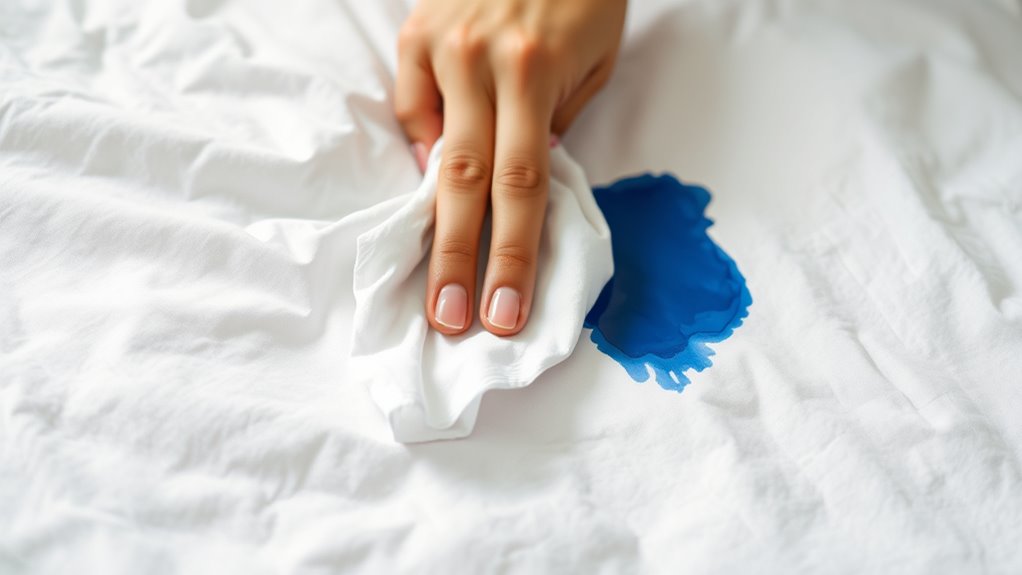
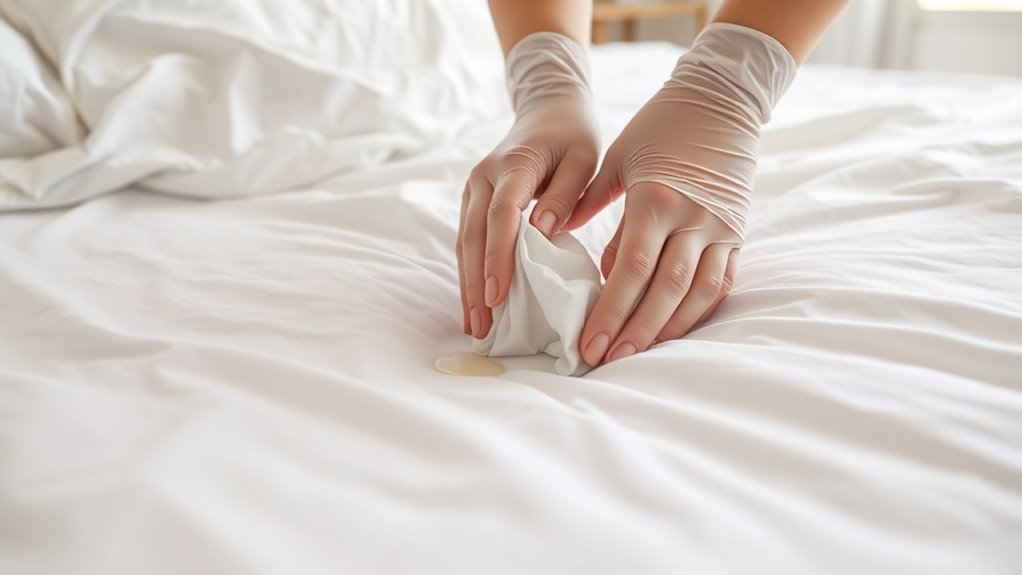
Once you notice the ink stain, act quickly to blot it with a clean cloth or paper towel. Don’t rub the stain, as that can spread the ink and push it deeper into the fabric fibers.
Instead, gently press the cloth onto the stain to soak up as much ink as possible. Use a fresh section of the cloth each time it becomes saturated to avoid re-depositing ink.
Blotting immediately helps prevent the stain from setting, making removal easier later. If you don’t have a cloth handy, paper towels work well too.
Apply a Suitable Stain Remover
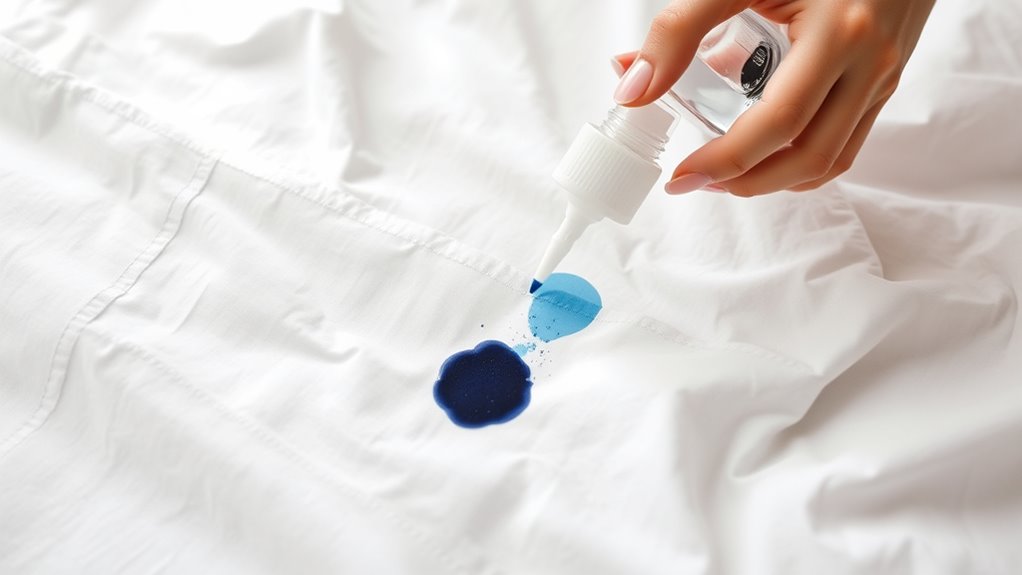
After blotting up as much ink as you can, choose a stain remover that suits your sheets’ fabric. Different materials react differently to cleaning agents, so picking the right one is vital to avoid damage.
Always match your stain remover to your fabric to prevent damage and ensure effective ink removal.
Test the remover on a hidden spot first to make sure it won’t discolor or weaken the fabric. Apply the remover directly to the ink stain, gently working it in with your fingers or a soft cloth.
Here are some stain removers to think about:
- Rubbing alcohol for most fabrics (avoid silk and wool)
- Hairspray with high alcohol content
- Commercial ink stain removers
- Milk soak for delicate fabrics
- Dish soap mixed with water for mild stains
Using the right remover really improves your chances of lifting the ink effectively without harming your sheets. Give it a go and see how it works!
Wash the Sheets Thoroughly
How should you wash your sheets to remove ink stains effectively? Start by setting your washing machine to the hottest water temperature safe for the fabric. Check the care label to avoid damaging the sheets.
Use a heavy-duty detergent that targets stains and add a stain remover if needed. Avoid overloading the machine so the sheets have enough room to move and get clean.
Once washed, don’t put the sheets in the dryer immediately; heat can set any remaining ink stains permanently. Instead, air dry them or dry on a low heat setting.
This thorough washing method helps break down ink particles and lifts the stain away. Following these steps ensures your sheets get as clean as possible before you check if the stain is fully gone.
Inspect and Repeat if Necessary
Carefully check your sheets for any remaining ink stains once they’re dry or nearly dry. If you spot lingering marks, don’t worry—treating them again can improve results. Sometimes, ink needs multiple treatments to fully lift from fabric fibers.
Inspect sheets after drying; repeat treatment on stubborn ink stains for better removal results.
Here’s what to do next:
- Identify stubborn stains that didn’t disappear after washing.
- Reapply your chosen ink remover or stain treatment directly on these areas.
- Let the treatment sit for the recommended time to penetrate ink residues.
- Gently blot or rub the stain with a clean cloth or soft brush.
- Wash the sheets again following the same thorough process.
Repeating these steps can considerably increase your chances of restoring your sheets to their original state.
Frequently Asked Questions
Can Ink Stains Cause Permanent Damage to Bed Sheets?
Yes, ink stains can cause permanent damage if you don’t treat them quickly.
You’ll want to act fast and use the right methods to prevent the ink from setting deep into your bed sheets’ fibers.
If you wait too long, the stain might become impossible to remove. So, timing really matters here!
Is It Safe to Use Bleach on Colored Bed Sheets?
Sure, go ahead and bleach your colored sheets—if you want a modern art piece instead of bedding!
Seriously though, you shouldn’t use bleach on colored sheets; it fades and damages the fabric.
Stick to color-safe alternatives instead. They’ll keep your sheets looking fresh without the risk!
How Long Can You Wait Before Treating an Ink Stain?
You should treat an ink stain as soon as possible—ideally within a few hours. The longer you wait, the harder it becomes to remove.
Are There Natural Alternatives to Commercial Stain Removers?
Imagine your child’s ink-stained sheets; you can try natural alternatives like lemon juice and baking soda. They break down ink gently, and you won’t worry about harsh chemicals damaging your fabric or the environment.
Plus, these ingredients are usually already in your kitchen, so it’s super convenient. Just mix a little lemon juice with baking soda to make a paste, apply it to the stain, and let it sit for a bit before washing.
Can Ink Stains Transfer to Other Laundry Items During Washing?
Yes, ink stains can transfer to other laundry items during washing. To prevent this, you should wash ink-stained sheets separately or use color-catching sheets.
Don’t overload the washer, and treat stains promptly for best results. Taking these steps helps keep your laundry looking fresh and stain-free.
Conclusion
Now that you’ve tackled that stubborn ink spot, imagine your sheets as a blank canvas, free from any smudges or marks. Just like an artist who carefully removes unwanted paint, you’ve restored your bedding’s fresh, clean look.
Remember, acting quickly and choosing the right method makes all the difference. If one try doesn’t work, don’t worry—persistence will bring your sheets back to their original, spotless state every time.
Getting ink out of bed sheets doesn’t have to be a headache. With these simple steps, you can easily remove ink stains and keep your bedding looking fresh. So next time ink strikes, you’ll know exactly how to get ink out of bed sheets quickly and effectively!