
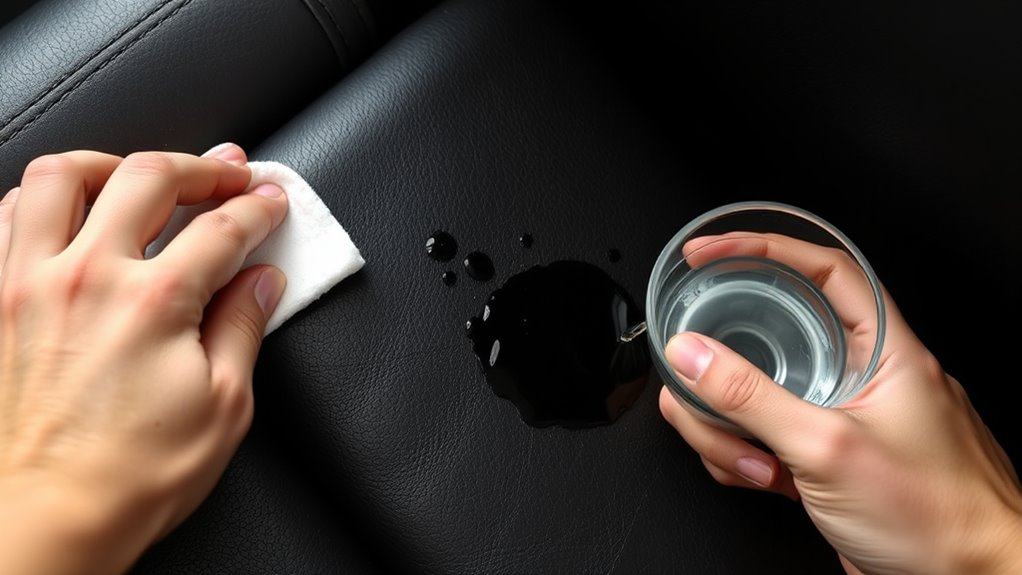
How to Get Ink Out of Faux Leather Step by Step
First, identify your ink type and the kind of faux leather you’re dealing with. This is important because some inks and materials react differently to cleaning agents.
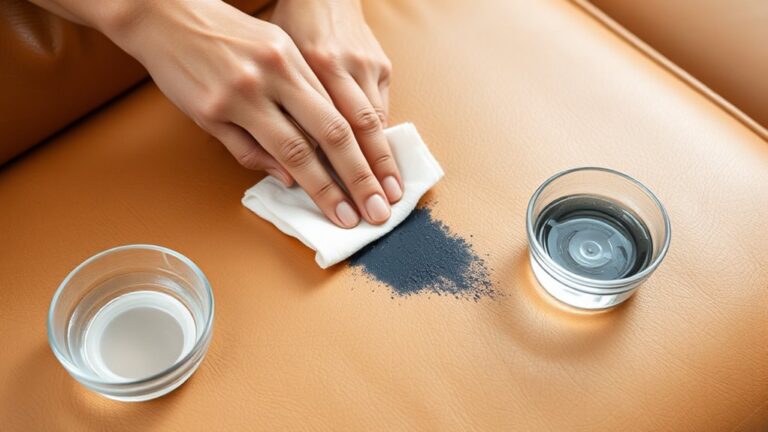
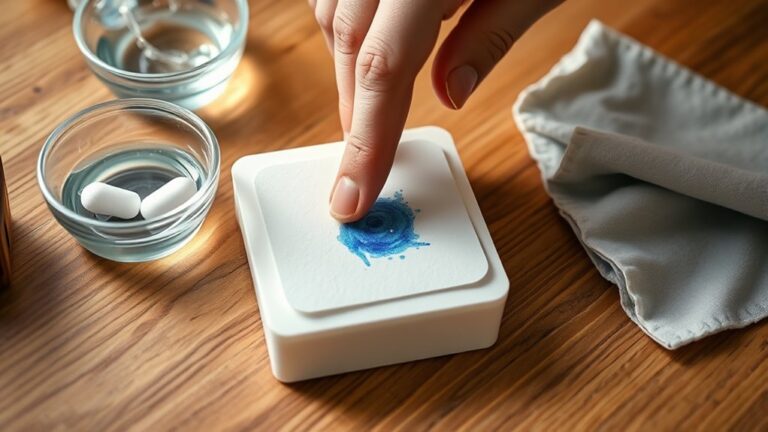
Next, gather your supplies: mild soap, diluted rubbing alcohol, a soft cloth, and cotton swabs.
Before you start, test your cleaner on a hidden spot. You want to avoid any damage or discoloration on the visible parts.
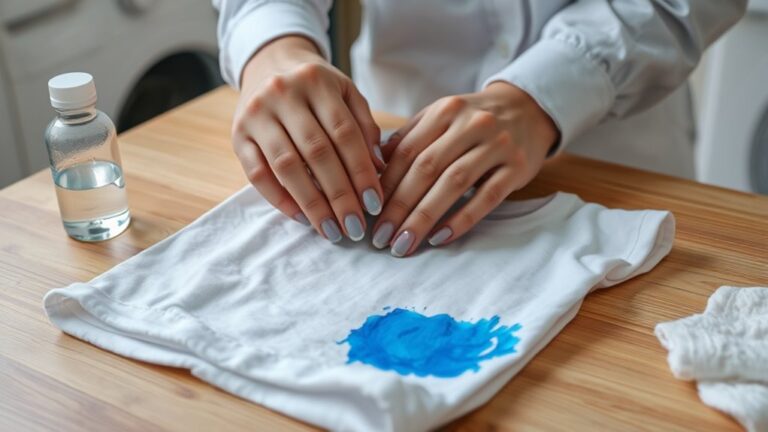
Now, gently apply the cleaning solution to the ink stain. Use dabbing motions instead of rubbing to lift the ink without spreading it further.
Once the stain is removed, condition the faux leather. Then, lightly buff the surface to restore its look and protect it from future wear.
Keep reading to discover more techniques that will help you care for your faux leather and keep it looking great for a long time!
Key Takeaways
- Identify the ink type and test a small hidden area of the faux leather with your cleaning solution to prevent damage.
- Gently dab the ink stain with a soft cloth or cotton swab soaked in diluted isopropyl alcohol or mild soap solution.
- Avoid harsh chemicals and excessive moisture; blot the stain carefully to lift ink without spreading or damaging the surface.
- After ink removal, let the faux leather dry completely before lightly buffing with a dry cloth to restore texture.
- Maintain faux leather regularly by cleaning gently, conditioning every few months, and protecting it from direct sunlight and sharp objects.
Identify the Type of Ink and Faux Leather
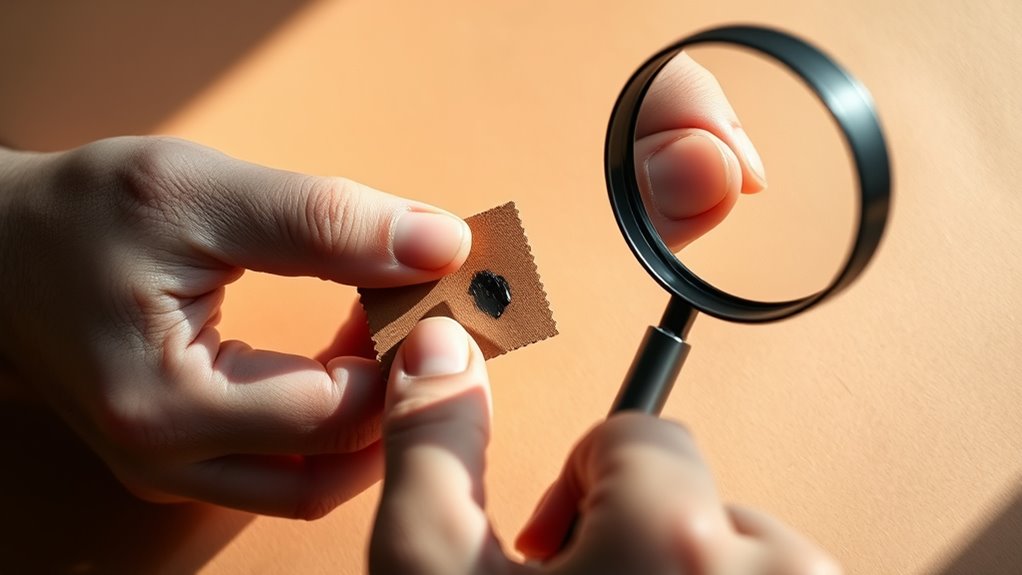
Before you start cleaning, you need to identify the type of ink and faux leather you’re dealing with. Different inks—ballpoint, gel, or permanent markers—react differently to cleaning methods.
Ballpoint ink is usually oil-based and easier to remove, while permanent marker ink requires stronger treatments. Next, check the faux leather material. Some are made of polyurethane, others of polyvinyl chloride (PVC), and each reacts differently to cleaners.
You can usually find this info on the product tag or manufacturer’s site. If you’re unsure, test a small hidden spot with water to see if it affects the finish.
Identifying these factors upfront helps you pick the safest and most effective cleaning method, preventing damage to your faux leather item while targeting the ink stain properly.
Gather Necessary Cleaning Supplies
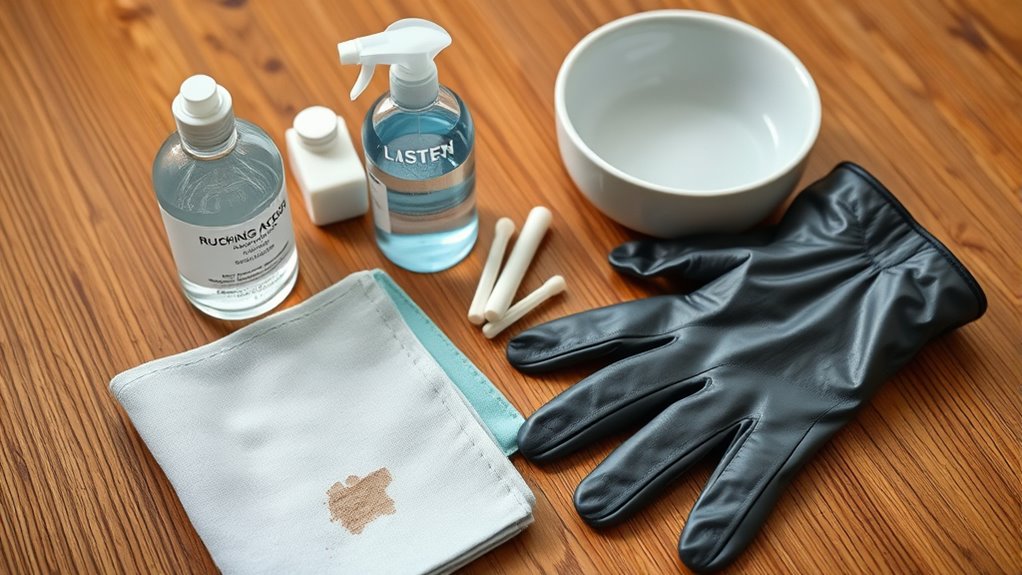
Once you know what type of ink and faux leather you’re dealing with, you can gather the right cleaning supplies to tackle the stain effectively. Start with a soft, clean cloth or microfiber towel to avoid scratching the surface.
Identify the ink and faux leather type, then use a soft cloth to gently begin cleaning the stain.
Grab a mild liquid soap or dish detergent, which works well on many faux leather types. You’ll also want isopropyl alcohol or rubbing alcohol for more stubborn ink stains—just be sure it’s diluted if necessary.
Keep cotton swabs handy for targeted application, and a small bowl of water to rinse your cloth. Avoid harsh chemicals like bleach or acetone, as they can damage faux leather.
Having paper towels nearby helps blot excess moisture quickly. With these supplies ready, you’ll be set for the cleaning process ahead.
Test Cleaning Solution on a Hidden Area
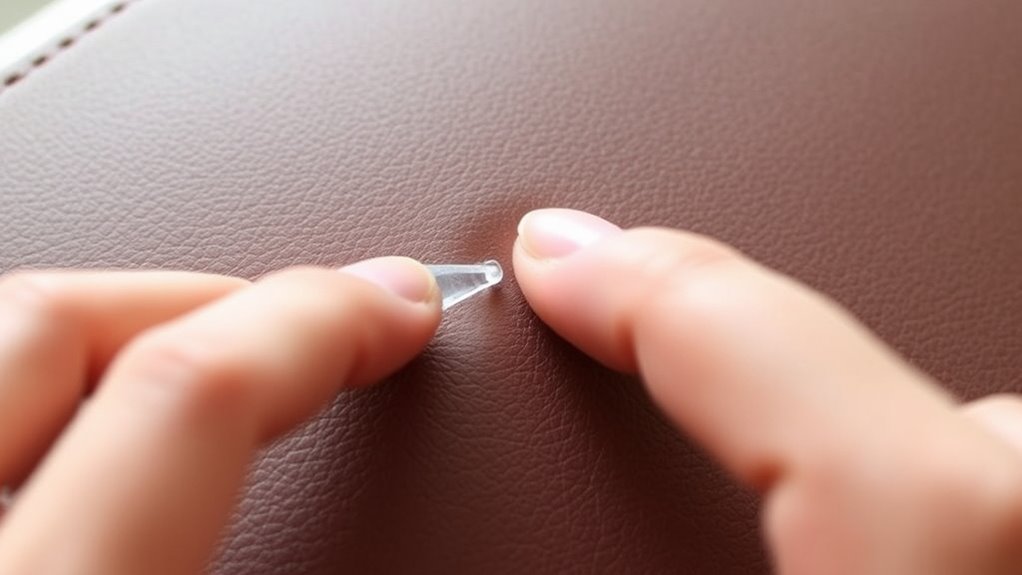
Though it might seem like an extra step, you’ll want to test your cleaning solution on a hidden area of the faux leather first. This helps verify the product won’t damage or discolor the material.
Choose a spot that’s out of sight, like the underside or inside seam. Apply a small amount of the solution using a cotton swab or soft cloth. Wait a few minutes and check for any changes in texture, color, or finish.
If you notice any fading, cracking, or stickiness, stop using that solution immediately and try a milder alternative. Testing first protects your faux leather from unintended harm and saves you from larger problems down the line.
Only proceed once you’re confident the cleaner is safe to use.
Apply Cleaning Solution to Ink Stain
Choose a cleaner that’s safe for faux leather and matches the ink type. After testing it on a hidden spot, apply the solution evenly over the stain.
This helps prevent damage and guarantees the ink lifts properly. It’s all about being gentle but effective!
Choosing the Right Cleaner
Because ink can be stubborn, you’ll want to pick a cleaner that’s strong enough to break down the stain without damaging the faux leather. Look for gentle solutions like rubbing alcohol or a mixture of mild dish soap and water.
Avoid harsh chemicals like bleach or acetone—they can ruin the texture and color. Commercial leather cleaners designed for faux leather also work well, as they balance effectiveness with safety.
When selecting your cleaner, consider what’s easily available and suits your comfort level. Keep in mind, less is more; applying too much cleaner can saturate the material and cause peeling or discoloration.
Choosing the right cleaner is key to removing ink efficiently while preserving the look and feel of your faux leather item.
Testing on Hidden Area
Before you tackle the ink stain directly, test your cleaning solution on a hidden spot of the faux leather. This step helps verify the cleaner won’t discolor or damage the material.
Apply a small amount of the solution using a cotton swab or soft cloth, then wait a few minutes. Check the area closely for any changes in color, texture, or finish.
If the spot looks the same as before, it’s safe to proceed. But if you notice fading, cracking, or any other damage, try a gentler cleaner or a different method.
Taking this precaution saves you from worsening the stain or ruining your faux leather item. Always remember, a quick test can prevent costly mistakes.
Applying Solution Evenly
Once you’ve confirmed the cleaning solution is safe, apply it evenly to the ink stain using a soft cloth or cotton swab to avoid spreading the ink further. Dab gently, focusing on the stained area without rubbing aggressively, which could damage the faux leather’s surface.
Use small, controlled motions, ensuring the solution saturates the stain evenly. If the stain covers a larger area, work in sections to maintain control over the application.
Avoid pouring or spraying the solution directly onto the material, as excess liquid can seep into seams and cause damage. After applying, let the solution sit briefly to break down the ink before moving on to blotting or wiping.
This careful approach helps lift the ink effectively while preserving the faux leather’s texture and appearance. It’s all about being gentle and patient here!
Gently Wipe and Blot the Stain
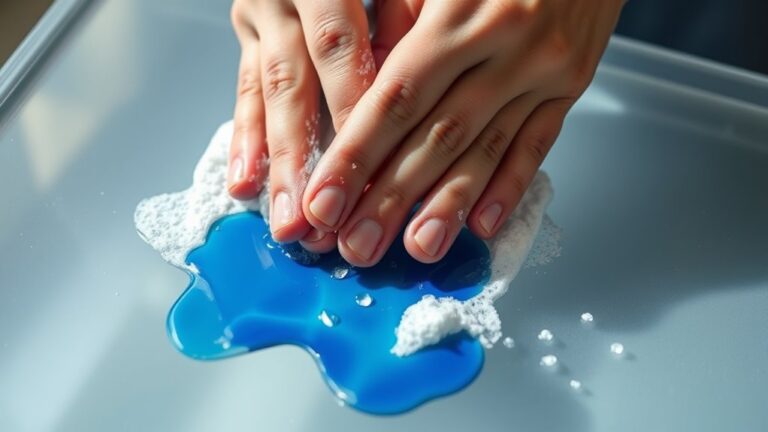
When you notice the ink stain, gently wipe the area with a soft, damp cloth to avoid spreading the ink further. Use light, dabbing motions instead of rubbing, which can push the ink deeper into the faux leather.
Blot the stain carefully to lift as much ink as possible without damaging the surface.
Keep these tips in mind while you work:
- Use a clean, lint-free cloth to prevent additional smudges.
- Avoid excessive moisture; too much water can harm faux leather.
- Change cloth sections frequently to prevent reapplying ink.
- Work from the outside of the stain toward the center to contain it.
Taking these steps helps reduce the stain effectively before moving on to further treatment. Just be patient and gentle with the process!
Condition and Protect the Faux Leather
Once you’ve removed the ink, it’s important to condition your faux leather with a product designed for synthetic materials. Apply an even layer to keep the surface soft and protected from future damage.
Make conditioning a regular habit to maintain its look and durability over time. Trust me, your faux leather will thank you for it!
Choose Suitable Leather Conditioner
Although faux leather isn’t real leather, you still need to treat it with care by choosing a suitable leather conditioner that restores moisture and prevents cracking. Picking the right product guarantees your faux leather stays supple and looks fresh longer.
When selecting a conditioner, consider these factors:
- Opt for a conditioner specifically designed for synthetic or faux leather.
- Avoid products with harsh chemicals that can damage the material.
Look for conditioners that offer UV protection to prevent fading. Also, choose a formula that doesn’t leave a greasy residue or alter the texture.
These little details make a big difference in keeping your faux leather looking great!
Apply Even Protective Layer
Since protecting faux leather helps extend its lifespan, you should apply an even layer of conditioner to keep it nourished and shielded. After selecting the right conditioner, use a soft, clean cloth to scoop a small amount and spread it gently across the surface.
Work in circular motions to ensure the product absorbs evenly without saturating any area. Avoid applying too much, as excess conditioner can leave a sticky residue or attract dirt.
Focus on covering all ink-removed sections as well as surrounding areas to maintain a uniform look and protection. Let the conditioner sit for the recommended time before buffing lightly with a dry cloth.
This step not only restores suppleness but also forms a protective barrier against future stains and cracking. It’s a simple way to keep your faux leather looking great for longer.
Regular Maintenance Tips
Applying a protective layer helps keep your faux leather nourished, but maintaining its condition requires regular care. You’ll want to establish a simple routine that prevents damage and preserves its look.
Consistent upkeep makes removing ink stains easier in the long run.
Here are some essential maintenance tips to follow:
- Clean gently with a damp cloth weekly to remove dust and dirt.
- Avoid harsh chemicals; use mild soap solutions when needed.
- Keep faux leather away from direct sunlight to prevent fading.
- Condition with a specialized product every few months to maintain flexibility and shine.
Frequently Asked Questions
Can Ink Stains on Real Leather Be Removed the Same Way?
You can try similar methods on real leather, but be gentler since it’s more delicate. Always test a small area first to avoid damage, and consider using leather-specific cleaners for better results and protection.
It’s kind of like giving your leather a little extra TLC. Just take it slow and steady, and you’ll be good!
How Soon Should I Treat an Ink Stain for Best Results?
You should treat an ink stain on faux leather as soon as you notice it. The quicker you act, the easier it is to remove the ink without damaging the material or leaving a permanent mark.
Honestly, waiting too long makes the stain set deeper. So, it’s best not to delay once you see the ink. That way, you’ll have a much better chance of getting it out completely.
Are There Any Homemade Cleaning Solutions Safe for Faux Leather?
Like a knight in shining armor, a homemade mix of equal parts water and gentle dish soap can rescue your faux leather.
You can also try diluted white vinegar, but always test a small spot first to avoid damage. It’s a simple trick that works wonders without harsh chemicals.
Will Repeated Cleaning Damage the Faux Leather Surface?
Yes, repeated cleaning can wear down faux leather if you use harsh chemicals or scrub too hard.
You should gently clean with mild solutions and soft cloths to protect the surface and keep it looking good longer.
Taking it easy with your cleaning routine really helps maintain that nice look over time.
Can Professional Cleaning Services Remove Tough Ink Stains?
Yes, professional cleaning services can remove tough ink stains from faux leather. They use specialized products and techniques, so you’ll have a better chance of restoring your item without damaging its surface or texture.
It’s definitely worth considering if you want to keep your faux leather looking great. Plus, leaving it to the pros means less risk of making the stain worse yourself.
Conclusion
Now that you know how to nix nasty ink on your faux leather, you can confidently clean and care for your cherished chair or couch. By carefully choosing your cleaning concoction and cautiously testing it, you’ll avoid any damage while tackling those stubborn stains.
Consistently conditioning your material is key to keeping your faux leather looking fresh and flawless. Remember, routine restoration paired with responsible removal really revives your piece.
So, stay savvy and stay spotless! With these simple steps, you can savor your sleek, stain-free surface and enjoy your faux leather furniture for years to come. Regular care and the right techniques make all the difference in maintaining that beautiful, ink-free finish.