
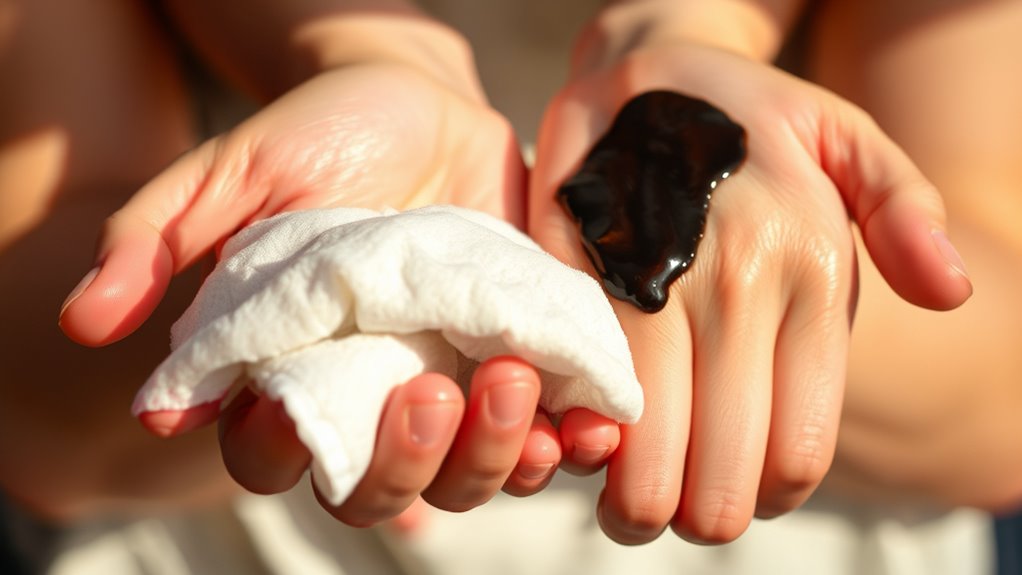
How Do You Get Ink Off Your Hands Quickly and Easily
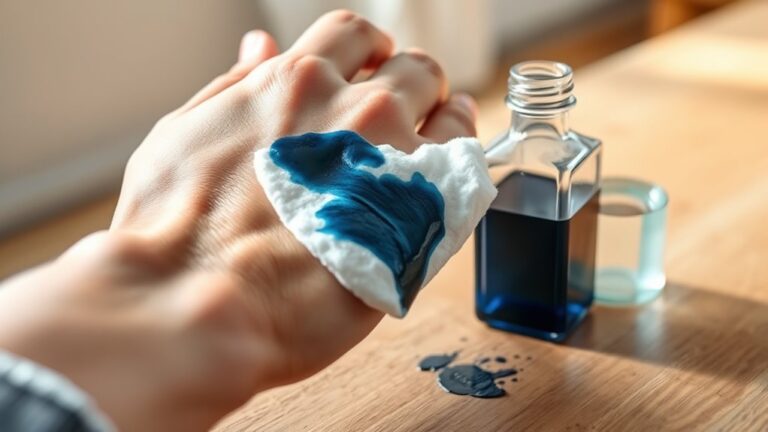
To get ink off your hands quickly and easily, start by washing with warm water and soap, scrubbing areas with ink. This simple step can often remove fresh ink stains effectively. If that doesn’t work, don’t worry—there are other tricks you can try.
Next, apply rubbing alcohol or hand sanitizer and rub gently, then rinse. These products break down the ink, making it easier to wash away.
You can also make a baking soda paste to scrub stubborn stains or try lemon juice for a natural option. Both are gentle yet effective.
Another tip is to use baby oil or olive oil combined with toothpaste; this mixture lifts ink gently without harsh scrubbing.
Keep going to discover even more simple, effective ways to clean those ink marks and have your hands looking fresh again!
Key Takeaways
– Wash hands with warm water and soap, scrubbing thoroughly on stained areas for quick, chemical-free ink removal.
This simple method works well if you catch the ink early.
– Apply rubbing alcohol or hand sanitizer, rub gently for 30-60 seconds, then rinse to dissolve ink efficiently.
It’s a quick fix and usually does the trick without much hassle.
– Create a baking soda and water paste, scrub ink stains gently, and rinse to lift ink without skin irritation.
This is great if you want something gentle but effective.
– Use fresh lemon juice on ink spots, rub gently, rinse, and moisturize to remove ink while protecting skin.
Just be careful if you have sensitive skin, since lemon juice can be a bit strong.
– Rub baby oil or olive oil combined with toothpaste on ink stains, wipe off, then wash hands for gentle removal.
This combo helps break down the ink while keeping your skin soft.
Using Soap and Warm Water
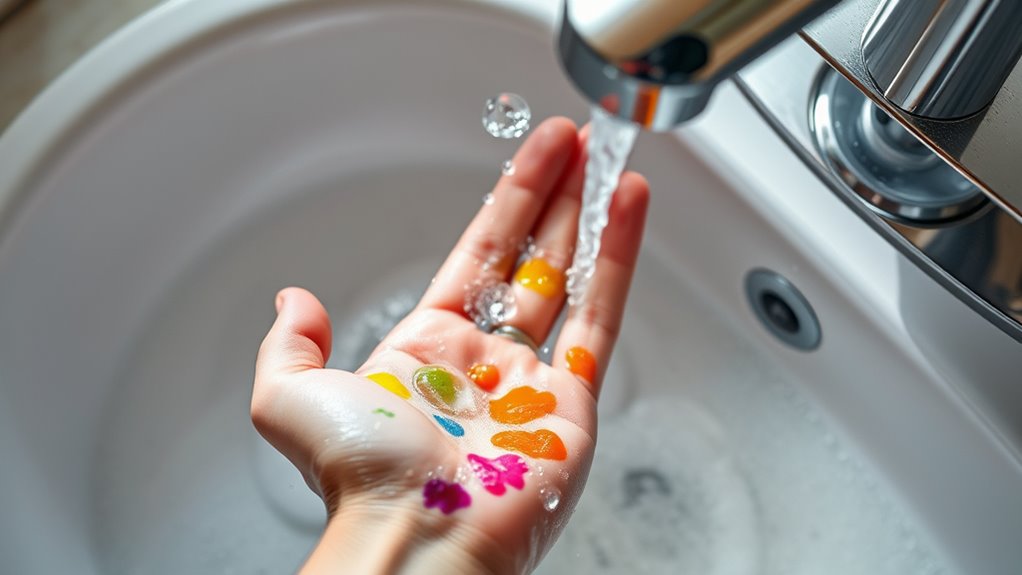
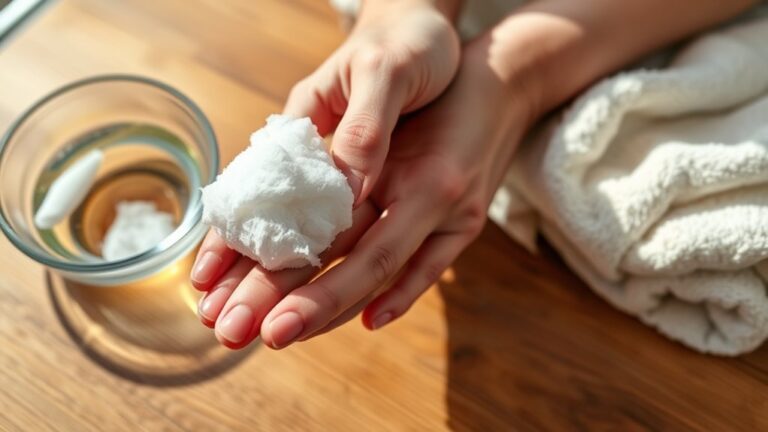
Although it might seem simple, using soap and warm water is one of the most effective ways to remove ink from your hands. Start by rinsing your hands under warm water to loosen the ink.
Next, apply a generous amount of soap and rub your hands together vigorously, paying close attention to the stained areas. The warm water helps break down the ink, while the soap lifts it off your skin.
Apply plenty of soap and rub thoroughly to lift ink from your skin with the help of warm water.
Don’t forget to scrub between your fingers and under your nails, where ink often hides. You might need to repeat this process a couple of times if the ink is stubborn.
Finally, rinse thoroughly and dry your hands. This method is gentle, safe, and usually removes most ink stains without harsh chemicals.
Applying Rubbing Alcohol or Hand Sanitizer
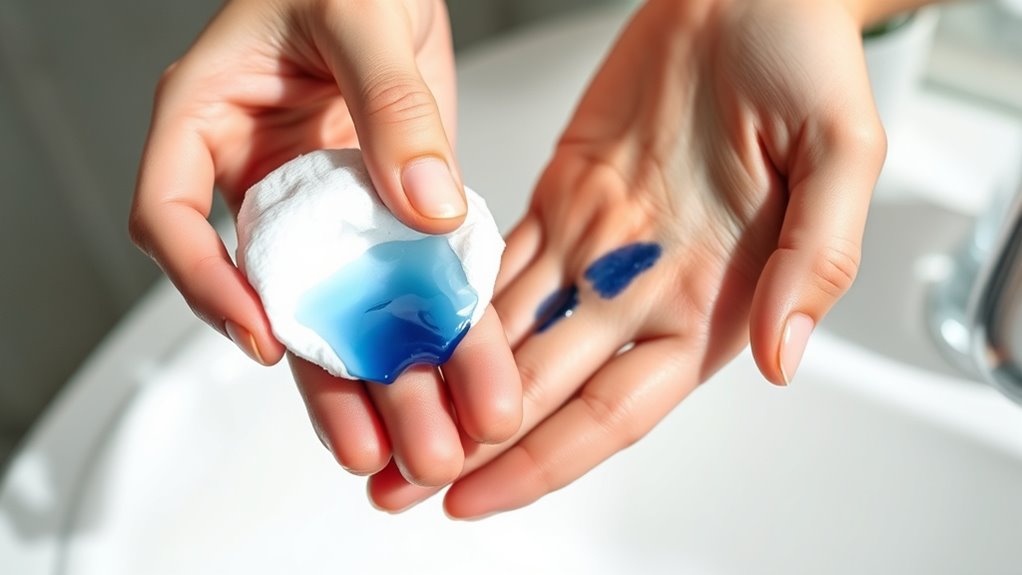
If soap and warm water don’t fully remove the ink, you can turn to rubbing alcohol or hand sanitizer for a stronger solution. Apply a small amount of rubbing alcohol or hand sanitizer directly onto the ink-stained areas of your hands.
Gently rub the liquid into your skin using circular motions, allowing it to break down the ink. Keep rubbing for about 30 seconds to a minute.
Once the ink starts to lift, rinse your hands with warm water to wash away the residue. If some ink remains, just repeat the process, but try not to over-scrub to avoid irritating your skin.
Afterward, moisturize your hands since alcohol can dry out your skin. This method works well because alcohol dissolves the ink’s pigments, making it easier to remove.
Using Baking Soda and Water Paste
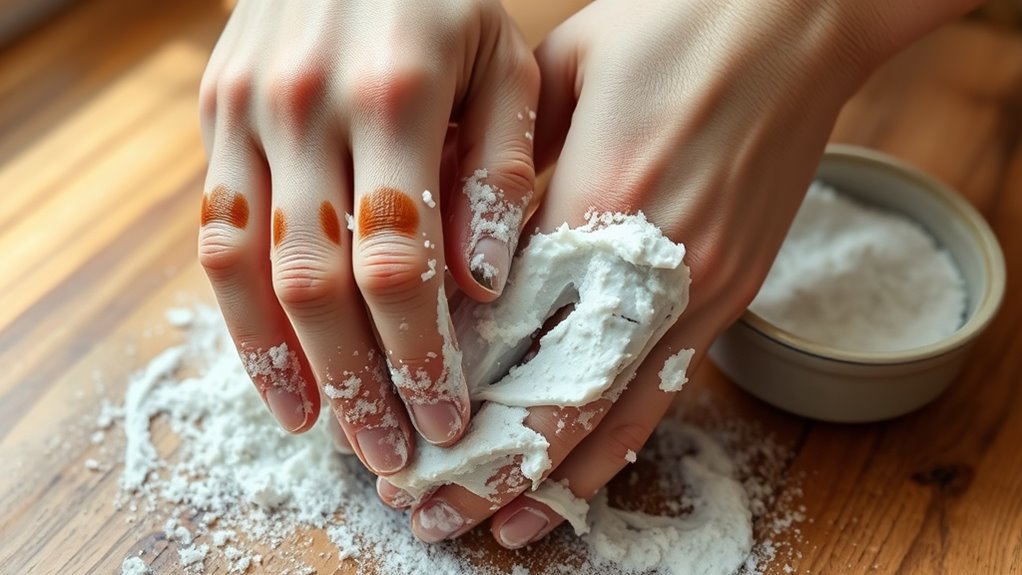
When rubbing alcohol isn’t available, you can make a simple paste using baking soda and water to tackle ink stains on your hands. Mix equal parts baking soda and water until you get a thick, spreadable paste.
Apply it directly onto the ink-stained areas, gently scrubbing in circular motions. The mild abrasiveness of baking soda helps lift the ink from your skin without causing irritation.
After scrubbing for about a minute, rinse your hands thoroughly with warm water. If some ink remains, just repeat the process once more.
This method is gentle and effective, especially if you want to avoid harsh chemicals. Plus, baking soda is readily available in most households, making it a convenient go-to solution when ink gets on your hands unexpectedly.
Removing Ink With Lemon Juice
Baking soda works well, but lemon juice offers another natural option to remove ink from your hands. Its natural acidity breaks down ink molecules, making it easier to wash away.
To use lemon juice effectively, squeeze fresh lemon juice onto the ink-stained area. Then, gently rub your fingers together, letting the juice soak in for a minute. After that, rinse your hands with warm water and repeat if needed.
Apply fresh lemon juice to ink stains, rub gently, soak for a minute, then rinse with warm water.
Just be mindful not to overuse lemon juice, especially if you have sensitive skin. It can cause dryness or irritation.
Afterward, apply a moisturizer to keep your skin soft. This method is quick, natural, and uses ingredients you probably already have in your kitchen, making it a handy solution for unexpected ink stains.
Using Baby Oil or Olive Oil
Although ink can be stubborn, you can easily break it down using baby oil or olive oil. Both oils work by loosening ink’s grip on your skin, making it easier to wipe away.
Start by applying a small amount of baby oil or olive oil to the stained area. Gently rub the oil into your skin using circular motions for about a minute. You’ll notice the ink beginning to lift.
Afterward, use a clean cloth or paper towel to wipe off the oil and ink residue. Finally, wash your hands with warm water and soap to remove any leftover oil.
This method is gentle, safe for your skin, and effective, especially if you want to avoid harsh chemicals. It’s a simple trick that really works!
Cleaning Ink Stains With Toothpaste
If you want a quick and effective way to remove ink stains, toothpaste can come to the rescue. Grab a non-gel, white toothpaste and apply a small amount directly onto the ink-stained skin.
Then, gently rub the toothpaste into the stain using your fingers or a soft cloth. The mild abrasives in toothpaste help lift the ink without harsh chemicals.
Here’s how you do it:
- Squeeze a pea-sized amount onto the ink spot.
- Massage in circular motions for about a minute.
- Rinse thoroughly with warm water.
If the stain persists, just repeat the process once more. Toothpaste is handy, affordable, and usually available in your bathroom.
Frequently Asked Questions
Can Ink Stains on Hands Cause Skin Irritation?
Yes, ink stains on your hands can sometimes cause skin irritation, especially if you have sensitive skin or allergies. You should wash the area promptly and use gentle cleansers to prevent redness, itching, or discomfort.
It’s a good idea to keep an eye on how your skin reacts. If irritation persists or gets worse, you might want to consult a healthcare professional. Taking care of your skin early can help avoid any bigger issues.
Are There Natural Alternatives to Chemical Ink Removers?
Imagine your hands as a garden, and ink as stubborn weeds. You can pull them out gently using natural helpers like lemon juice, olive oil, or baking soda paste.
These alternatives cleanse without harsh chemicals, nurturing your skin’s health. It’s like giving your skin a little love while getting rid of the mess.
How Long Does Ink Typically Stay on Skin Without Washing?
Ink typically stays on your skin for several hours to a couple of days without washing, depending on the ink type and your skin’s oiliness. You’ll notice it fading naturally but washing speeds removal considerably.
Can Ink on Hands Transfer to Clothes or Surfaces?
Yes, ink on your hands can sneakily stain surfaces and clothes.
To stop spreading, swiftly scrub with soap and water or use rubbing alcohol. Don’t delay—dirt and dye don’t wait!
Is It Safe to Use Nail Polish Remover on Ink Stains?
Yes, you can use nail polish remover on ink stains, but be careful. It’s strong and might irritate your skin, so don’t overuse it.
Always wash your hands thoroughly afterward to avoid dryness or damage. It’s a good idea to test it on a small area first, just to be safe.
Conclusion
Just like ink marks on your hands, mistakes and stains in life can feel stubborn and hard to remove. But with the right approach—whether it’s soap, lemon juice, or a bit of oil—you can wash away what no longer serves you.
Remember, every mark fades with patience and care, leaving behind a fresh canvas. So, embrace the process; your hands—and your journey—can always start clean again.
Getting ink off your hands quickly and easily is much like navigating challenges in life. A simple remedy like soap or lemon juice works wonders, just like a fresh perspective clears your mind. When you treat those ink stains gently, you’re reminded that even stubborn problems can be resolved with a little effort and the right tools. So next time you find ink on your skin, or a tough spot in life, remember: patience and the right approach help you start anew—clean hands, clear mind.