Day: October 10, 2026

  • When Was Ink Invented and How Can You Trace Its Origins?

    Ink was invented over 5,000 years ago, with its earliest use in Mesopotamia and Egypt for writing laws and records.

    You can trace its origins by examining natural materials like soot and plant dyes used in ancient inks. Scientists also use techniques like spectroscopy and radiocarbon dating to analyze ink’s chemical makeup.

    These methods reveal how ink evolved from simple pigments to complex formulas. Discovering these details also sheds light on how ink shaped writing and art through time.

  • What Will Take Ink Off Leather Step by Step

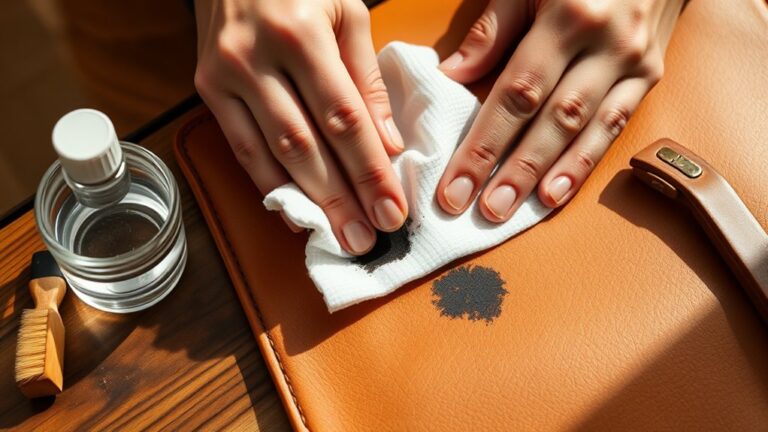
    First, identify your leather type and ink stain to pick the right cleaning method. Gather safe materials like mild soap, rubbing alcohol, and soft cloths.

    Test your chosen solution on a hidden spot to avoid damage. Then, gently dab the stain with rubbing alcohol or a cleaner, avoiding harsh scrubbing.

    Blot with a clean cloth until the ink fades. Finally, apply conditioner to keep leather soft and shiny.

    If you want to know more precise tips, keep exploring.

  • How Will You Get Ink Out of Leather Step by Step

    First, identify your leather type and ink stain to choose the right cleaning method. Gather soft cloths, cotton swabs, and mild leather cleaner or 70% isopropyl alcohol.

    Test your cleaner on a hidden spot, like inside a seam, waiting 10-15 minutes for any damage. Then, gently blot the ink stain with a cotton swab dipped in cleaner, avoiding rubbing.

    Once clean, apply leather conditioner to restore moisture. Keep following for detailed tips to protect your leather further.

  • How Does Pigment Ink Work?

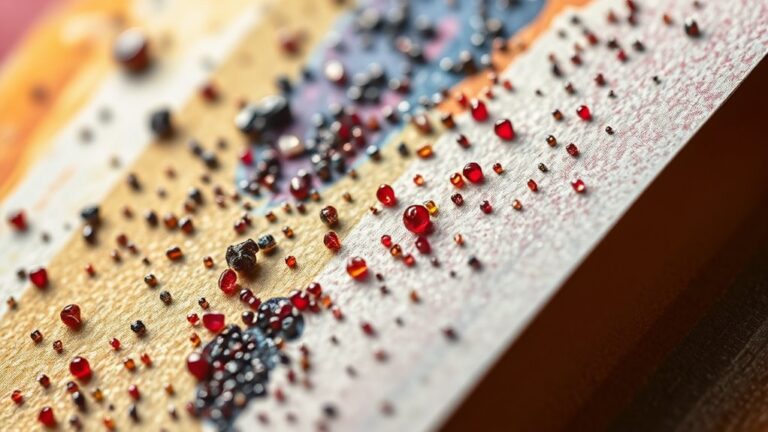
    Pigment ink works by suspending tiny solid particles, often carbon or colored pigments, in a liquid carrier that you apply to paper. These particles sit on the surface and stick firmly to the paper fibers rather than soaking in.

    This helps your prints resist fading, water, and smudging over time. So, it’s perfect for sharp, long-lasting images. If you want to protect your prints and understand their benefits fully, there’s more useful information ahead to explore.

  • Is Printer Ink Toxic and How Can You Handle It Safely?

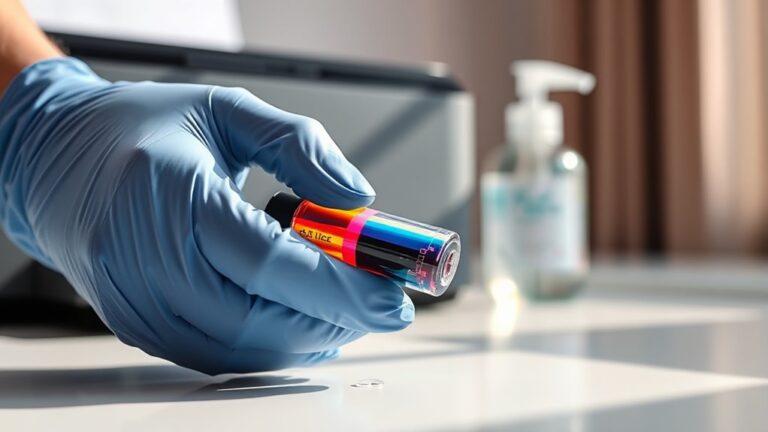
    Printer ink can be toxic if you handle it carelessly, as it contains chemicals that may irritate your skin, eyes, or lungs. To stay safe, always use gloves when replacing cartridges.

    Work in well-ventilated spaces, and store ink away from kids and pets. Dispose of used cartridges properly to avoid environmental harm.

    Choosing eco-friendly inks also reduces health risks and pollution. If you want to keep printing safely while protecting yourself and the planet, there’s more to discover.