When Was Ink Invented and How Can You Trace Its Origins?
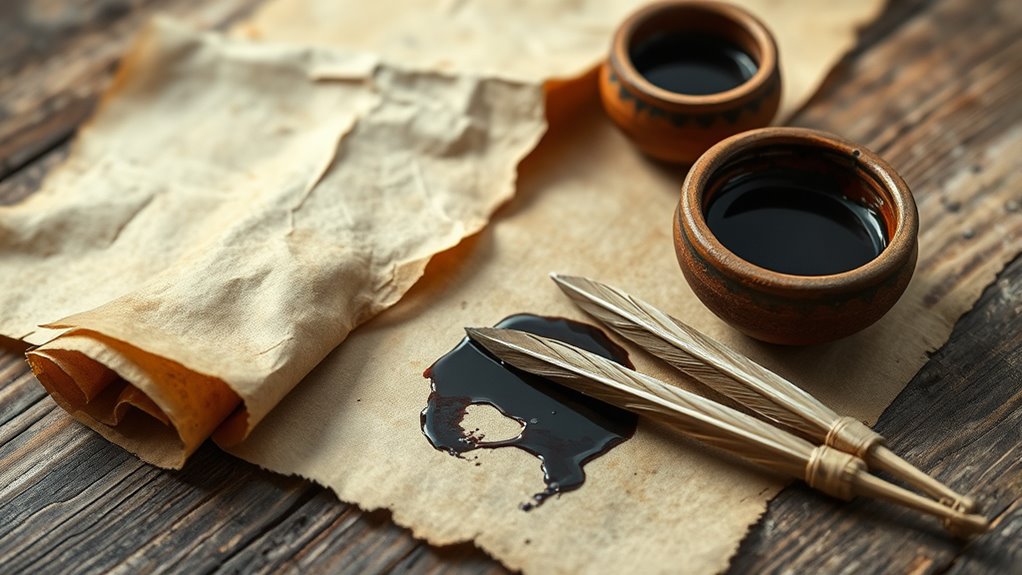
Ink was invented over 5,000 years ago, with the earliest use in Mesopotamia and Egypt for writing laws and records. This fascinating invention laid the groundwork for written communication as we know it.
You can trace its origins by examining natural materials like soot and plant dyes used in ancient inks. Scientists also use techniques like spectroscopy and radiocarbon dating to analyze the chemical makeup of ink.
These methods reveal how ink evolved from simple pigments to more complex formulas. Learning about ink’s history also shows us how it influenced writing and art throughout the ages. It’s pretty amazing how something as simple as ink shaped human culture so profoundly!
Key Takeaways
- Ink was first used over 5,000 years ago in ancient Mesopotamia and Egypt for writing laws and religious texts. Early inks were made from natural ingredients like carbon black soot, oak galls, iron salts, and plant dyes.
- You can trace ink’s origins by analyzing its molecular and elemental composition using spectroscopic and chromatographic techniques. Radiocarbon dating and X-ray fluorescence also help determine the age and elemental makeup of ancient ink samples.
- Understanding ink’s composition is really helpful for historical research, preservation, and authentication of ancient manuscripts and artworks. It gives us a window into how people created and used writing materials long ago.
The Earliest Evidence of Ink Use
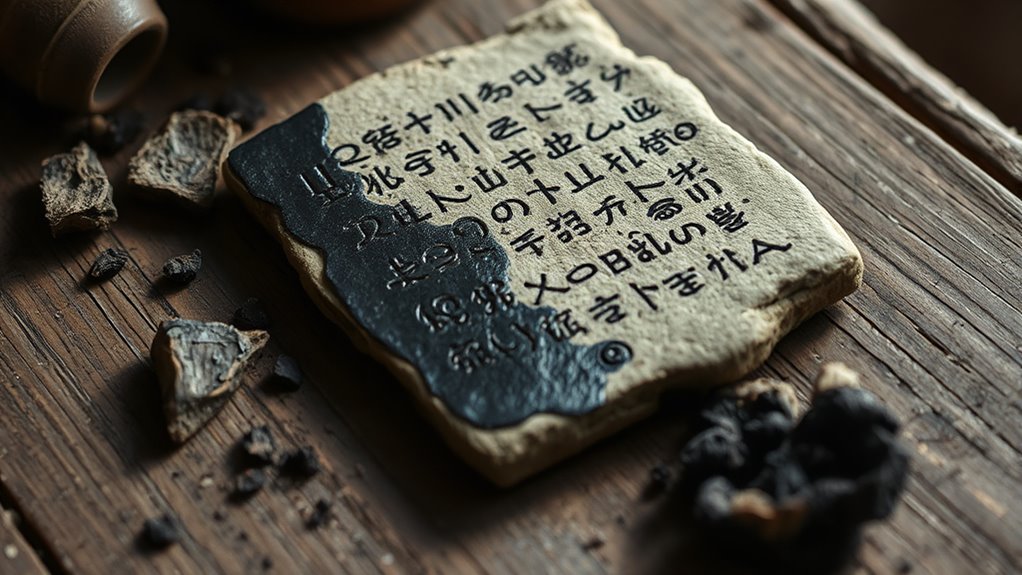
The earliest evidence of ink use dates back over 5,000 years, showing that ancient civilizations valued writing and record-keeping. When you look closely, you’ll find traces of ink on pottery shards and ancient papyrus.
People in Mesopotamia and Egypt used ink to document laws, trade, and religious texts. You can imagine scribes carefully applying ink to clay tablets and papyrus scrolls, preserving knowledge for generations.
This early use reveals how important communication was, even then. You don’t just see ink as a tool but as a bridge between past and present, connecting you to ancient cultures.
Materials and Ingredients in Ancient Inks
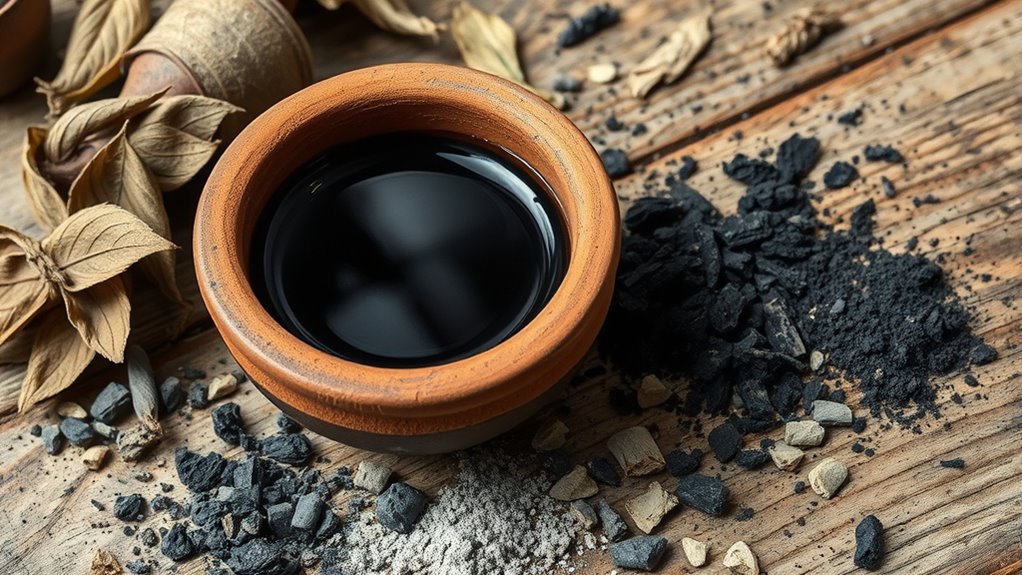
Ancient civilizations didn’t just develop writing; they also crafted the materials needed to bring their words to life. You’ll find that ancient inks were made from natural ingredients, each chosen for durability and availability.
Carbon black, derived from soot, was a common pigment. It was mixed with water and gum arabic to create a smooth ink. Other inks used iron gall, made from tannin-rich oak galls and iron salts, which produced a dark, lasting script.
Here’s a quick look at typical ancient ink ingredients:
| Ingredient | Purpose |
|---|---|
| Carbon Black | Pigment for black color |
| Gum Arabic | Binder to hold pigment |
| Oak Galls | Source of tannin for iron gall ink |
You can see how these components combined to form inks that stood the test of time. Pretty clever, right?
Ink in Different Ancient Civilizations
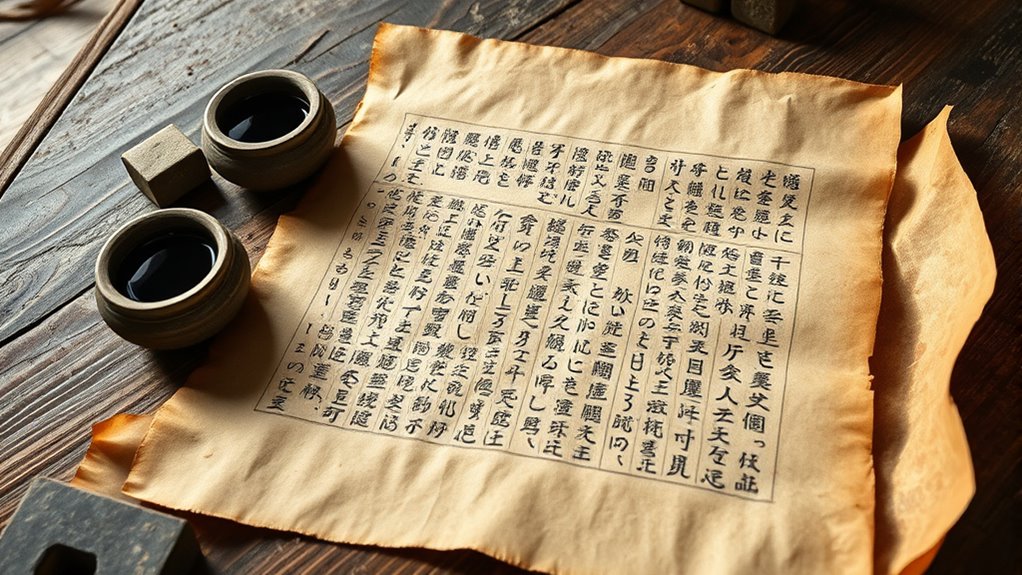
Although ink ingredients varied, many civilizations developed unique formulas that suited their writing needs and available resources.
Civilizations crafted distinct ink formulas tailored to their writing styles and local materials.
When you look at ancient Egypt, you’ll find they used carbon-based inks made from soot mixed with water and gum arabic. In China, you’d discover ink sticks crafted from soot and animal glue, essential for calligraphy.
Meanwhile, the ancient Greeks and Romans favored iron gall ink, made from oak galls, iron salts, and tannins, which gave their writing durability. You’ll also see that in India, natural dyes from plants and minerals were common.
Each civilization tailored its ink to local materials and cultural practices, which not only preserved their texts but also shaped their distinct writing traditions. Understanding these differences helps you trace the rich history of ink across the ancient world.
Evolution of Ink Formulations Through History
You’ll see how ink started with simple natural ingredients in ancient times, then evolved through medieval innovations that improved its quality.
Later, modern synthetic developments transformed ink into the versatile tool we use today.
Understanding these changes helps you appreciate the science and creativity behind every drop of ink.
Ancient Ink Ingredients
Since writing has been a fundamental part of human communication for millennia, ink formulations have evolved considerably to meet different needs and materials. When you explore ancient inks, you’ll find they relied on natural ingredients easily available at the time.
These basic components shaped how ink behaved and how long it lasted.
- Carbon black – derived from soot or charred organic materials, it provided a deep, lasting black pigment.
- Gum arabic – a natural binder from acacia trees that helped ink adhere to surfaces.
- Water – the universal solvent, it mixed the ingredients into a fluid form suitable for writing.
- Plant extracts or iron salts – sometimes added to alter color or improve drying time.
Understanding these ingredients helps you appreciate ink’s humble, organic origins.
Medieval Ink Innovations
As ink recipes moved beyond basic natural ingredients, medieval craftsmen began experimenting with new compounds to improve durability and color vibrancy. You’d find iron gall ink becoming prominent, made by combining tannin-rich oak galls, iron salts, and gum arabic.
This ink wasn’t just dark and bold—it also adhered well to parchment, making manuscripts last centuries. You’d also see carbon-based inks refined with soot and organic binders, offering deep black tones perfect for detailed illustrations.
These innovations weren’t random; they were responses to the needs of scribes and artists who demanded inks that resisted fading and smudging. By understanding these medieval formulations, you can trace how ink evolved from simple mixtures to complex recipes that shaped the art of writing and record-keeping throughout the Middle Ages.
Modern Synthetic Developments
How did ink transform from natural concoctions to the high-performance formulas we use today? You can trace this evolution back to the 19th and 20th centuries when chemists developed synthetic pigments and dyes, revolutionizing ink production.
Today, ink combines durability, vibrancy, and fast drying times, thanks to these modern advancements. Here’s how you can understand this shift:
- Introduction of synthetic dyes replaced organic pigments, offering more consistent colors.
- Development of polymer-based inks enhanced adhesion and water resistance.
- Invention of solvent and UV-curable inks improved drying speed and environmental safety.
- Digital printing inks emerged, optimized for precision and various surfaces.
Scientific Techniques for Dating and Analyzing Ink
You can uncover ink’s secrets by analyzing its composition to identify materials used. Radiocarbon dating helps pinpoint the age of organic components within the ink.
Spectroscopic techniques then reveal its chemical fingerprint, letting you trace its origin and history. It’s like giving the ink a voice to tell its own story.
Ink Composition Analysis
Scientific techniques for analyzing ink composition help uncover its age and origin, giving you valuable insights into historical documents. By examining the chemical makeup, you can identify specific ingredients that correspond to certain time periods or regions.
To do this effectively, you’ll use:
- Chromatography – separates ink components, revealing the pigments and dyes used.
- Spectroscopy – measures light absorption to determine molecular composition.
- X-ray fluorescence (XRF) – detects elemental composition without damaging the sample.
- Fourier-transform infrared spectroscopy (FTIR) – identifies organic compounds in the ink.
These methods let you pinpoint the materials and techniques used in ink production, helping you verify authenticity and trace its historical context. This scientific approach sharpens your understanding of when and where ink was made.
Radiocarbon Dating Methods
Although ink composition analysis reveals the materials used, determining the exact age of ink requires radiocarbon dating methods. When you want to pinpoint when ink was made, radiocarbon dating measures the decay of carbon-14 isotopes in organic components like plant-based binders or carbon pigments.
Since carbon-14 decays at a known rate, you can calculate the time elapsed since the ink’s creation. You’ll need a tiny ink sample, and the method works best on inks containing natural organic matter.
While this process can’t date inorganic pigments or modern synthetic inks, it’s invaluable for historical documents. By combining radiocarbon dating with other analyses, you can trace ink’s origins more accurately, helping you uncover when and where an ink was produced.
Spectroscopic Ink Identification
Radiocarbon dating offers valuable age estimates for organic ink components, but it can’t reveal detailed chemical makeup or identify inorganic pigments. That’s where spectroscopic ink identification comes in.
This technique lets you analyze the ink’s molecular structure and elemental composition, helping pinpoint its origin and age more precisely. You can use various methods, including:
- Raman Spectroscopy: Detects molecular vibrations to identify organic and inorganic compounds.
- Infrared Spectroscopy (FTIR): Reveals functional groups in ink binders and dyes.
- X-ray Fluorescence (XRF): Measures elemental composition, especially inorganic pigments.
- Mass Spectrometry: Breaks down ink components for detailed chemical profiling.
Impact of Ink on Writing and Artistic Traditions
Since ink allowed people to record thoughts and stories with ease, it revolutionized both writing and artistic traditions. You can see how ink transformed communication by making it possible to preserve knowledge beyond oral storytelling.
It empowered you to create detailed manuscripts, maps, and legal documents that shaped civilizations. In art, ink enabled intricate calligraphy and detailed illustrations, enriching cultural expression.
As you use ink, you connect with a legacy that spans millennia, from ancient scrolls to modern prints. Through its versatility—whether in brush strokes or fountain pens—ink continues to influence how you express ideas visually and textually.
Understanding its impact helps you appreciate how ink became fundamental to education, history, and creativity, anchoring human progress through written and artistic forms.
Frequently Asked Questions
Can Ink Be Made From Natural Materials at Home?
Yes, you can make ink from natural materials at home. Just crush berries, mix with water and a bit of vinegar or salt, and you’ve got homemade ink perfect for simple writing or art projects.
It’s pretty easy to do and a fun way to experiment. Plus, you get to use stuff you probably already have around the house!
What Are Modern Eco-Friendly Ink Alternatives?
You’ll find modern eco-friendly inks made from soy, algae, and vegetable dyes. They’re not only sustainable but coincidentally vibrant, helping you reduce environmental impact while enjoying rich, natural colors in your printing or artwork.
These alternatives are gaining popularity because they balance eco-consciousness with quality. So, you don’t have to compromise on color or performance to be green. It’s a win-win for your projects and the planet!
How Does Ink Affect Paper Preservation Over Time?
Ink can cause paper to deteriorate faster, especially if it contains acidic or corrosive substances. You’ll want to choose archival-quality, pH-neutral inks to help preserve paper and prevent fading or damage over time.
It’s kind of like giving your paper a little extra protection. Using the right type of ink can really make a difference in how long your documents last. So, when you’re picking out ink, think about the long-term!
What Role Does Ink Play in Digital Printing Technology?
Imagine your printer throwing a colorful tantrum—ink’s the diva making it sing!
You rely on ink in digital printing to transfer vibrant images and text precisely, ensuring your documents don’t end up looking like abstract art.
Are There Health Risks Associated With Handling Ink?
Yes, handling ink can pose health risks if you’re exposed to toxic chemicals or solvents. You should always wear gloves, work in ventilated areas, and avoid ingesting or inhaling ink to stay safe.
It’s pretty important to keep those precautions in mind. Taking simple steps like these can really protect you from any harmful effects.
Conclusion
You can trace ink’s origins from ancient smudges on papyrus to the precise strokes of modern pens, revealing a journey of evolving materials and cultures. While early inks were simple mixtures of soot and water, today’s formulas blend chemistry with art.
This contrast between humble beginnings and sophisticated science shows how ink has shaped human expression across millennia. It connects the past’s faded marks with your fresh, vivid words.
From the earliest scribbles to the advanced inks used today, the history of ink demonstrates its vital role in communication. Understanding when ink was invented and how it has evolved helps us appreciate the rich legacy behind every written word. Ink isn’t just a tool; it’s a bridge linking ancient civilizations to modern creativity and knowledge.