How Do You Get Pen Ink Out of Leather in 5 Easy Steps?
To get pen ink out of leather in 5 easy steps, start by identifying the type of leather and ink you’re dealing with. This helps you pick the right cleaner without causing damage.
Next, gather gentle supplies like mild soap, cotton swabs, and leather conditioner to handle the stain carefully.
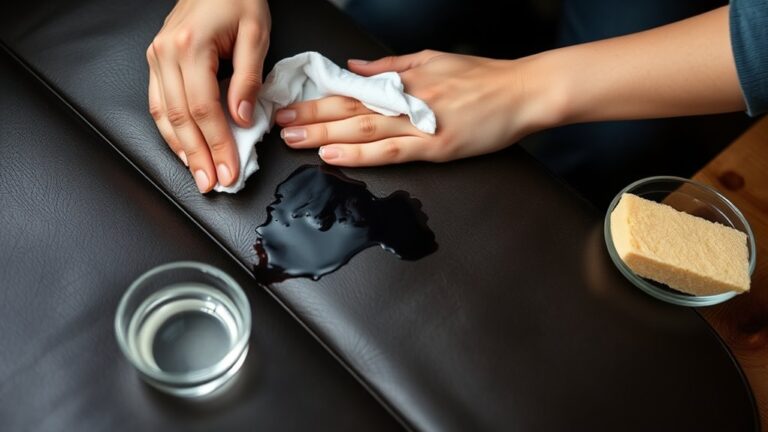
Before you dive in, test your cleaner on a hidden spot to make sure it won’t harm the leather. Then, gently dab the ink stain from the edges inward—avoid soaking the leather as that can make things worse.
Once the stain is gone, apply a leather conditioner to restore moisture and keep your leather looking great.
Stick with me for detailed tips on tackling ink stains on different types of leather! It’s easier than you think to save your favorite leather items from those pesky pen marks.
Key Takeaways
- Identify the leather type and ink to choose a safe cleaning method and avoid damage.
- Gather mild soap, cotton swabs, soft cloths, and leather conditioner before starting.
- Test the cleaning solution on a hidden spot to ensure no discoloration or damage occurs.
- Gently dab the ink stain with the cleaning solution using a cotton swab, working from outside inward.
- After cleaning, apply leather conditioner and let it absorb to restore moisture and protect the leather.
Assess the Type of Leather and Ink
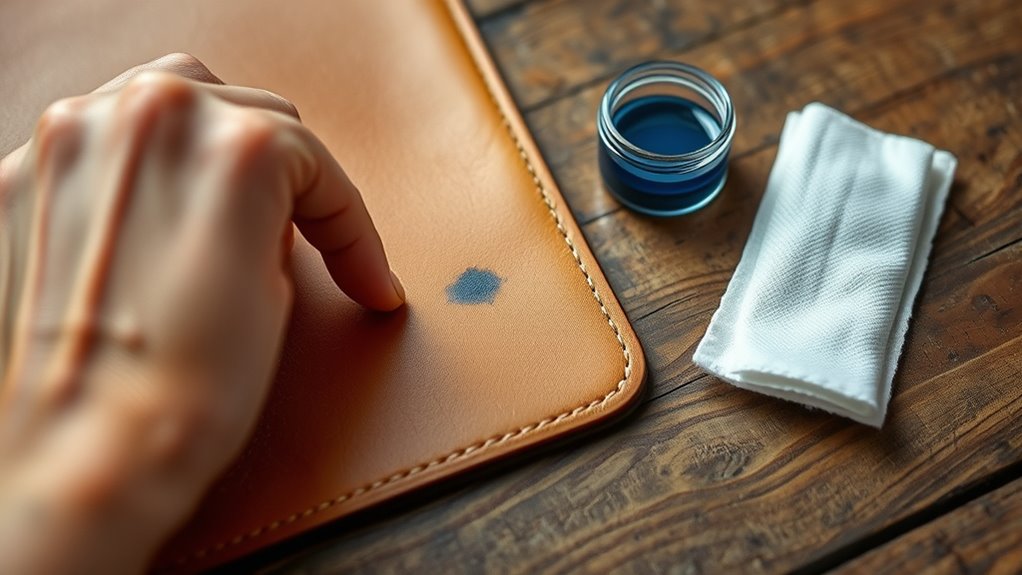
Before you try to remove pen ink from your leather item, you need to identify both the type of leather and the kind of ink involved. Different leathers react differently to cleaning methods; for example, smooth leather can handle gentle cleaning better than suede, which is more delicate and porous.
Identifying leather type and ink kind is crucial before attempting ink removal to prevent damage.
Also, recognize the ink type—ballpoint, gel, or permanent marker—as each demands a different approach. Ballpoint ink often sits on the surface, while permanent marker can deeply penetrate.
Knowing this helps you avoid damage, like discoloration or staining. Take a close look at your leather’s texture and finish, then test a small, hidden area with water or cleaner to ensure it won’t react poorly.
Understanding these details sets you up for effective and safe ink removal.
Gather the Necessary Cleaning Supplies
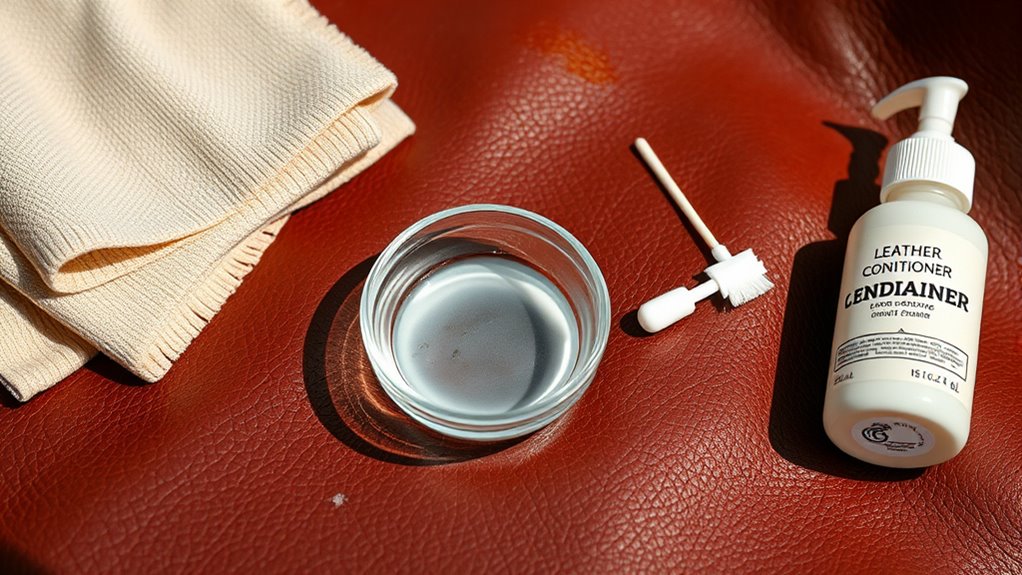
Once you know what kind of leather and ink you’re dealing with, you can gather the right cleaning supplies to tackle the stain effectively. Having the proper tools ready will make the process smoother and protect your leather from damage.
You’ll need gentle, non-abrasive items that can lift ink without harming the material.
Here’s a quick list of essential cleaning supplies:
| Cleaning Supply | Purpose |
|---|---|
| Mild Soap (like Castile) | Cleans surface dirt gently |
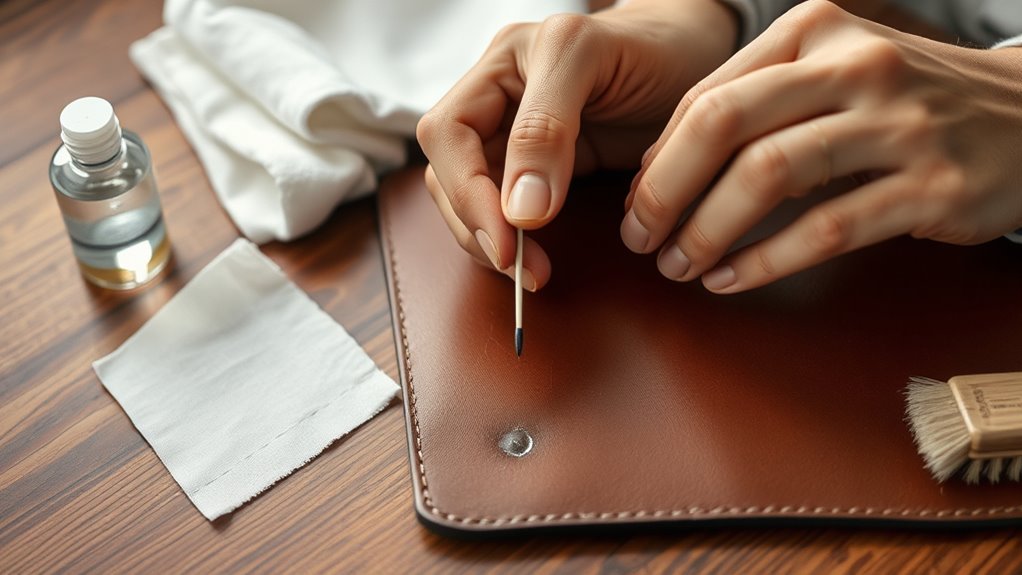
| Cotton Swabs | Targets small ink spots precisely |
| Leather Conditioner | Restores moisture post-cleaning |
Make sure you have soft cloths on hand for blotting and drying as well. Avoid harsh chemicals or scrubbing tools; they can worsen the stain or ruin the leather’s finish.
Test a Small Hidden Area First
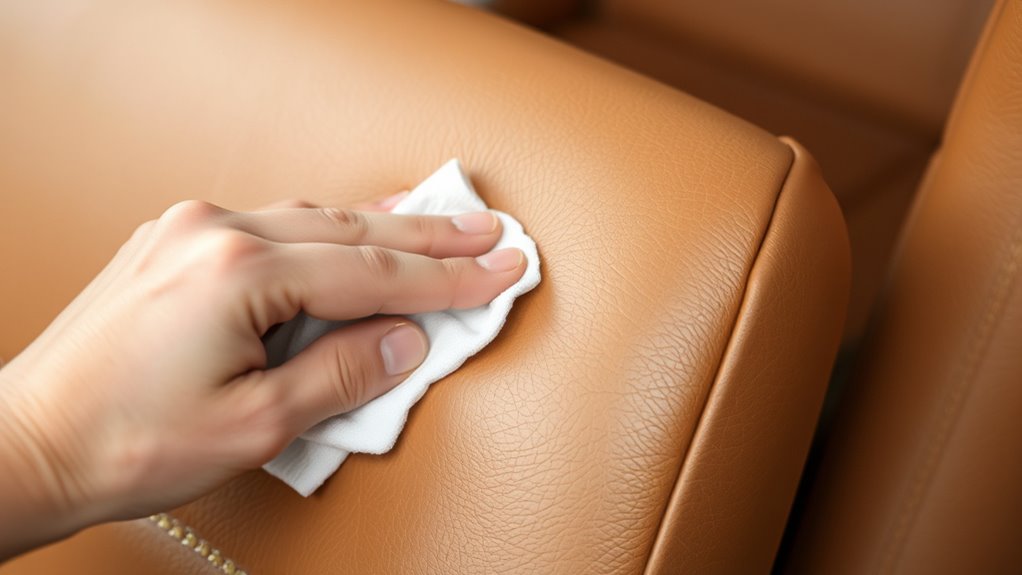
A crucial step you shouldn’t skip is testing your cleaning solution on a small, hidden area of the leather first. This precaution helps you see how the leather reacts before applying the solution to the ink stain.
Choose a spot that’s less visible, like under a flap or inside a seam. Apply a small amount of the cleaner, wait a few minutes, then check for any discoloration, damage, or texture changes.
If the leather looks unaffected, you can proceed confidently. However, if you notice fading or roughness, stop immediately and try a gentler method or a different product.
Testing first protects your leather from unintended harm and ensures the cleaning process won’t worsen the appearance. This way, you save yourself time and frustration in the long run.
Gently Apply the Cleaning Solution
Although it might be tempting to scrub hard, you’ll want to apply the cleaning solution delicately to avoid damaging the leather’s surface. Use a soft, clean cloth or cotton swab to lightly dab the ink stain with the solution.
Avoid soaking the leather; too much moisture can cause stains or warping. Work from the outside of the stain toward the center to prevent spreading the ink further.
Let the solution sit for a minute or two to break down the ink. If necessary, repeat the process carefully, but don’t rub aggressively.
Always monitor the leather’s reaction—if you notice any discoloration or texture changes, stop immediately. Gentle application ensures effective ink removal without harming your leather item.
Condition and Protect the Leather After Cleaning
Since cleaning can dry out leather, you’ll want to condition it promptly to restore moisture and flexibility. Choose a high-quality leather conditioner and apply a small amount using a soft cloth. Rub it in gently, covering the entire cleaned area to ensure even absorption.
Conditioning prevents cracking and keeps the leather supple. After applying, let the leather rest for about 30 minutes to fully soak in the conditioner. Once dry, buff the surface lightly with a clean cloth to bring out a natural shine.
Finally, protect your leather by applying a leather protector or water repellent spray. This adds a barrier against future stains and damage. It helps your leather item stay clean and beautiful longer.
Frequently Asked Questions
Can Pen Ink Stains on Leather Cause Permanent Damage?
Yes, pen ink stains on leather can cause permanent damage if you don’t act quickly. Ink seeps deep into the leather fibers, making it tough to remove.
Is It Safe to Use Alcohol-Based Cleaners on Leather?
You shouldn’t use alcohol-based cleaners on leather because they can dry it out and cause damage.
Instead, opt for a leather-specific cleaner or conditioner to safely treat stains without harming the material’s natural oils and texture.
How Quickly Should I Treat a Fresh Ink Stain?
They say, “strike while the iron is hot.” You should treat a fresh ink stain on leather immediately to prevent it from setting.
Acting quickly increases your chances of removing the ink completely and preserving the leather’s look. Don’t wait around—grab a clean cloth and start treating the stain as soon as you notice it.
Are There Specific Leather Types More Prone to Ink Stains?
Yes, you’ll find suede and unfinished leather more prone to ink stains because they absorb liquids quickly.
Smooth, finished leather resists ink better, but you still need to act fast to prevent permanent damage.
Can Professional Cleaning Services Remove Ink From Leather Better?
Absolutely, pros can zap ink stains like superheroes, but don’t expect them to conjure a magic eraser.
If you want your leather flawless, you’d better trust their skills instead of your questionable DIY hacks.
Conclusion
Now that you’ve tackled pen ink like a pro, your leather will look so flawless people might think you’ve got a magic wand hidden somewhere!
Just follow these simple steps, and you’ll banish those stubborn stains faster than a superhero on a mission.
Remember, a little care goes a long way—your leather deserves the royal treatment, and with this method, you’re basically its knight in shining armor.
Getting pen ink out of leather doesn’t have to be stressful or complicated. With these easy steps, you can restore your leather’s natural beauty quickly and effectively.
So, whether it’s a favorite jacket, bag, or sofa, this simple leather ink removal guide is your go-to solution.
Easy, quick, and totally worth it!