How Do You Get Ink Out of Carpet Step by Step
To get ink out of your carpet, the first step is to identify the type of ink you’re dealing with. This helps you choose the right cleaner and avoid making the stain worse.
Start by blotting the stain gently with a clean cloth—remember, don’t rub! Rubbing can spread the ink and push it deeper into the fibers.
Next, apply a suitable cleaning solution. For ballpoint pen ink, rubbing alcohol usually works well. If it’s a water-based ink, mild soap and water should do the trick.
Use a soft brush to scrub the stained area lightly. After that, rinse with clean water and blot the carpet dry.
You might need to repeat these steps a few times. Just be patient and let the carpet fully dry between treatments to prevent damage.
Keep going, and you’ll find the best way to restore your carpet looking fresh and clean again!
Key Takeaways
- Identify the ink type and test cleaning solutions on a hidden carpet spot before full application.
- Blot the stain gently with a clean cloth. Avoid rubbing to prevent spreading or damaging fibers.
- Apply an appropriate solvent like rubbing alcohol for ballpoint ink or mild soap solution for water-based ink.
- Gently scrub the stain in circular motions with a soft brush, then rinse and blot with clean water until residue is gone.
- Allow carpet to dry completely using air circulation or a fan. Avoid direct heat or walking on the area.
Identify the Type of Ink Stain
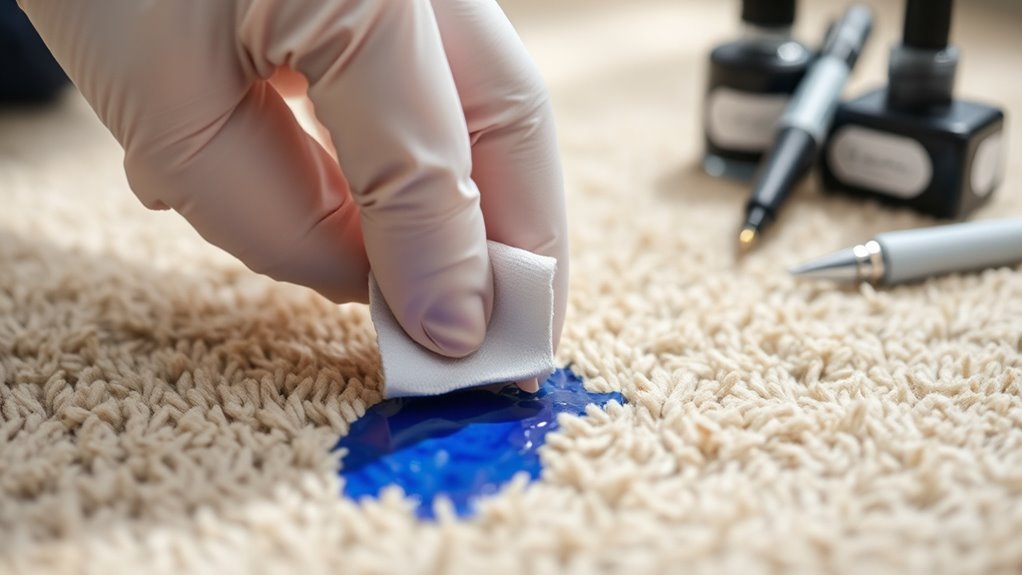
How do you know which method will work best for your carpet ink stain? First, identify the type of ink you’re dealing with. Different inks—ballpoint, gel, permanent marker, or fountain pen—require different treatments.
For example, ballpoint ink is oil-based and might respond well to rubbing alcohol, while gel ink tends to be thicker and may need a stronger solvent. Permanent marker ink is more stubborn and often requires specialized stain removers.
Check the color and texture of the stain: bright blue or black usually indicates ballpoint, while shiny or raised ink could be gel. Knowing the ink type helps you choose the right cleaning agent, preventing damage to your carpet and improving your chances of a successful removal.
Blot the Ink With a Clean Cloth
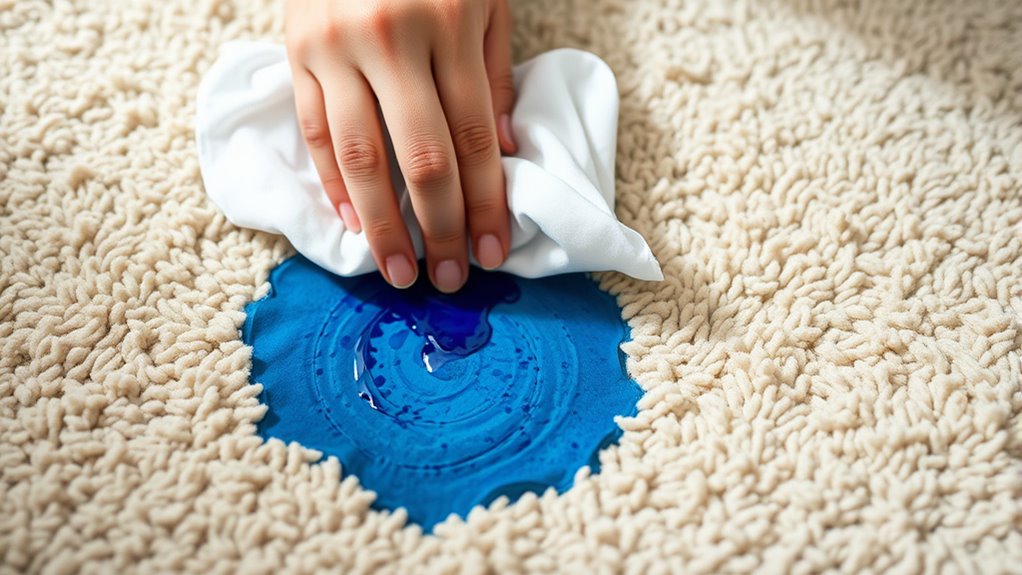
Start by grabbing a soft, clean cloth to gently dab the ink stain—never rub, as that can spread it further.
You’ll want to press lightly and lift the ink out of the fibers. When the cloth becomes saturated, swap it for a fresh one to keep blotting effectively.
Choose Soft Cloth
Selecting a soft cloth is essential when blotting ink from your carpet to prevent damage to the fibers. You want to pick a cloth made of gentle materials like microfiber or cotton, which absorb ink effectively without roughening the carpet’s surface.
Avoid using abrasive fabrics or paper towels, as they can push the ink deeper or cause fraying. Make sure the cloth is clean and dry before you begin, so you don’t introduce additional stains.
Having a soft cloth on hand allows you to carefully lift the ink using a blotting technique, which helps minimize spreading. It’s a good idea to keep several cloths nearby to switch out as they become saturated.
That way, you can continue absorbing the ink efficiently without smearing it across the carpet.
Dab, Don’t Rub
Once you have a soft cloth ready, gently dab the ink stain instead of rubbing it. Rubbing can push the ink deeper into the carpet fibers, making the stain harder to remove.
Press the cloth lightly on the affected area, allowing it to absorb the ink. You’ll notice the cloth darkening as it lifts the ink away. Keep blotting until you see no more ink transferring onto the cloth.
Be patient and avoid applying too much pressure; gentle dabbing is more effective. This method prevents spreading the stain and protects the carpet’s texture.
Replace When Saturated
Although you’ve been dabbing gently, you’ll need to replace the cloth as soon as it becomes saturated with ink. Using a soaked cloth will only spread the stain further instead of lifting it.
Keep a stack of clean, white cloths or paper towels nearby so you can swap them out quickly. Each time you blot, press lightly and lift to absorb the ink, then switch to a fresh cloth.
This prevents re-depositing ink onto the carpet fibers and helps you see the stain’s progress clearly. Remember, patience matters here—changing cloths regularly ensures you’re actually removing the ink rather than pushing it deeper.
Apply a Cleaning Solution
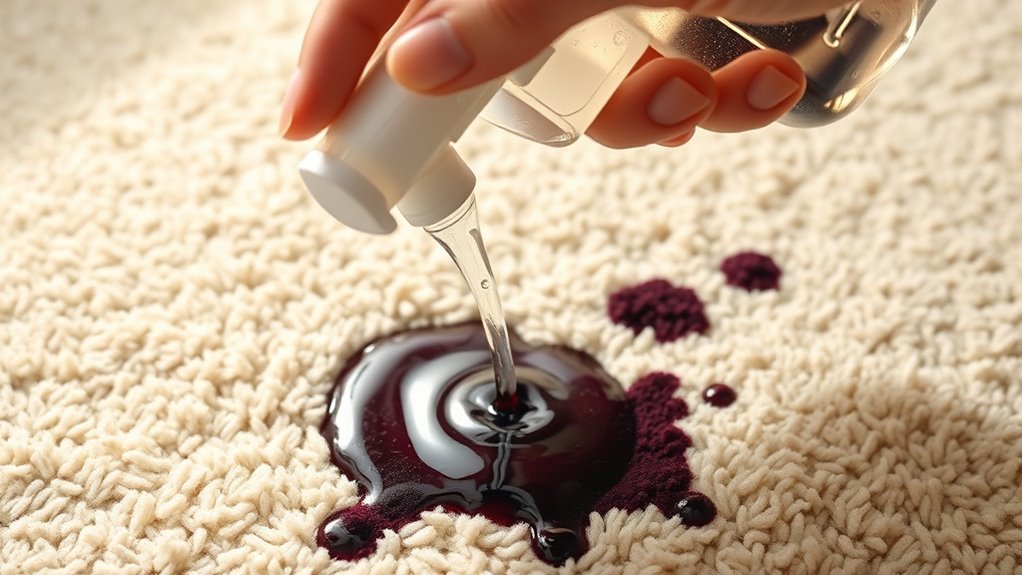
Next, pick a cleaning solution that’s safe for your carpet type. Always test it on a small, hidden area first to avoid damage.
Then, apply the solution carefully to the ink stain without soaking the carpet. Just be gentle with it, alright?
Choose Suitable Cleaning Products
Since ink stains can vary in type and severity, you’ll need to select a cleaning product that’s effective yet safe for your carpet fibers. For water-based ink, a mixture of mild dish soap and warm water often works well.
If you’re dealing with permanent ink, consider using rubbing alcohol or a specialized carpet stain remover formulated to break down tougher pigments. Avoid harsh chemicals like bleach, which can damage or discolor your carpet.
Always choose products labeled safe for your carpet type—whether nylon, polyester, or wool. Using a gentle, appropriate cleaner guarantees you won’t harm the fibers while tackling the stain.
Having the right product ready before you start makes the cleaning process smoother and increases your chances of removing the ink completely.
Test Solution on Carpet
Once you’ve selected the right cleaning product for your ink stain, it’s important to test it on a small, hidden area of your carpet first. This helps guarantee the solution won’t damage or discolor your carpet fibers.
Choose a spot that’s discreet—under furniture or along a wall. Apply a small amount of the cleaner and wait a few minutes.
Then, check for color fading or bleeding, carpet texture changes, residue or sticky patches, and any unpleasant odors.
If the test area looks unaffected, you can proceed confidently. But if you notice any damage, try a different product or consider a professional cleaner.
Testing first saves you from bigger problems and keeps your carpet looking its best. It’s definitely worth the extra step!
Apply Solution Carefully
Before you apply the cleaning solution, make sure to blot the ink stain gently with a clean cloth to lift as much ink as possible without spreading it further.
Next, pour a small amount of your tested cleaning solution onto a clean white cloth or sponge rather than directly onto the carpet. This approach prevents oversaturation that could damage carpet fibers or backing.
Dab the stain carefully, working from the outside in to avoid spreading the ink. Use gentle, blotting motions instead of rubbing, which can push the ink deeper.
After applying the solution, let it sit for a few minutes to break down the ink. Remember to keep checking the stain’s progress, and if necessary, repeat the process until the ink lifts.
Always avoid over-wetting to protect your carpet.
Gently Scrub the Stained Area
Although you’ve applied a cleaning solution, you’ll need to gently scrub the stained area to lift the ink from the carpet fibers. Use a soft-bristled brush or an old toothbrush to avoid damaging the carpet.
Start from the outer edges of the stain and work toward the center to prevent spreading. Scrub with light, circular motions, allowing the solution to penetrate and loosen the ink.
Begin at the stain’s edges, moving inward with gentle circular scrubs to lift the ink effectively.
Keep these tips in mind:
- Hold the brush at a slight angle for better control
- Don’t press too hard to avoid pushing ink deeper
- Focus on small sections at a time for thorough cleaning
- Pause occasionally to check progress and adjust pressure
Gentle scrubbing maximizes ink removal without harming the carpet’s texture. Just take it slow and steady, and you’ll see the stain start to fade.
Rinse and Blot Dry
After gently scrubbing the stain, you’ll want to remove any leftover cleaning solution and loosened ink by rinsing the area with clean water. Use a damp cloth or sponge to apply water gently, avoiding soaking the carpet.
Next, blot the area with a dry, absorbent cloth or paper towel to soak up moisture and prevent spreading the ink further.
Here’s a quick guide to effective rinsing and blotting:
| Step | What to Use | Purpose |
|---|---|---|
| Rinse | Clean water, sponge | Remove cleaning residues |
| Blot Dry | Absorbent cloth | Soak up moisture, stop spread |
| Avoid Rubbing | N/A | Prevent fiber damage |
| Repeat Gently | Water & cloth | Ensure thorough removal |
This method helps keep your carpet safe and clean. Just take your time and be gentle!
Repeat if Necessary and Allow to Dry Fully
If the ink stain remains visible, you’ll want to repeat the cleaning and rinsing steps until it fades completely. Don’t rush—sometimes stubborn stains need a few rounds.
Each time you treat the spot, be gentle to avoid damaging the carpet fibers. After the final cleaning, allow the area to dry fully before walking on it or placing furniture back.
To help the carpet dry thoroughly, open windows for better air circulation. You can also use a fan directed at the damp spot.
Avoid direct heat, since that can actually set stains. Another trick is to place a clean, dry towel over the area and press gently to soak up moisture.
Frequently Asked Questions
Can Ink Stains Cause Permanent Damage to Carpet Fibers?
Yes, ink stains can cause permanent damage to carpet fibers if you don’t act quickly. The longer you wait, the harder it becomes to remove.
This can potentially leave a lasting discoloration or even weaken the fibers. So, it’s really important to tackle ink stains as soon as you spot them.
Are There Specific Ink Types That Are Impossible to Remove From Carpet?
Yes, permanent markers and some gel inks are notoriously tough to remove from carpet. You might not fully get rid of these stains, so act fast and try specialized cleaners to improve your chances.
These inks really soak in deep, making them tricky to tackle. So, don’t wait around—grab a stain remover designed for these types of ink as soon as you spot the mark.
How Soon Should I Treat an Ink Stain for Best Results?
You should treat an ink stain as soon as you notice it. The quicker you act, the better your chances of removing it completely before it sets deep into the carpet fibers.
Don’t wait! The longer the ink stays, the harder it becomes to get rid of. So, grab your cleaning supplies and start tackling that stain right away.
Can Professional Carpet Cleaning Remove Stubborn Ink Stains?
When stubborn ink stains seem like a permanent tattoo, don’t worry—professional carpet cleaning can often erase them. They use powerful treatments and expertise, so you’ll get your carpet looking fresh again without the hassle or guesswork.
Seriously, these pros know their stuff. They have the right tools and solutions to tackle those tough ink marks that just won’t budge on your own. So, next time you spot an ink stain, remember help is just a call away!
Is It Safe to Use Homemade Cleaning Solutions on All Carpet Types?
You shouldn’t use homemade cleaners on all carpet types since some fibers react poorly. Always test a small, hidden area first.
If you’re unsure, it’s best to check your carpet’s care guide or ask a professional. This way, you can avoid any damage or discoloration.
Conclusion
Removing ink from your carpet is like tending a small garden after a storm—each careful step you take nurtures the fabric back to health. By identifying the stain and blotting gently, you’re starting the healing process right.
Next, apply the right cleaning solution and patiently repeat as needed. This careful approach guides the carpet toward renewal, much like a gardener trusts the process.
You’ll see the ink fade away, leaving your carpet refreshed and ready to welcome new memories. With these steps, removing ink from carpet becomes manageable and effective, restoring your space without a trace of the past spill. Just take it slow and steady, and your carpet will look as good as new in no time.