
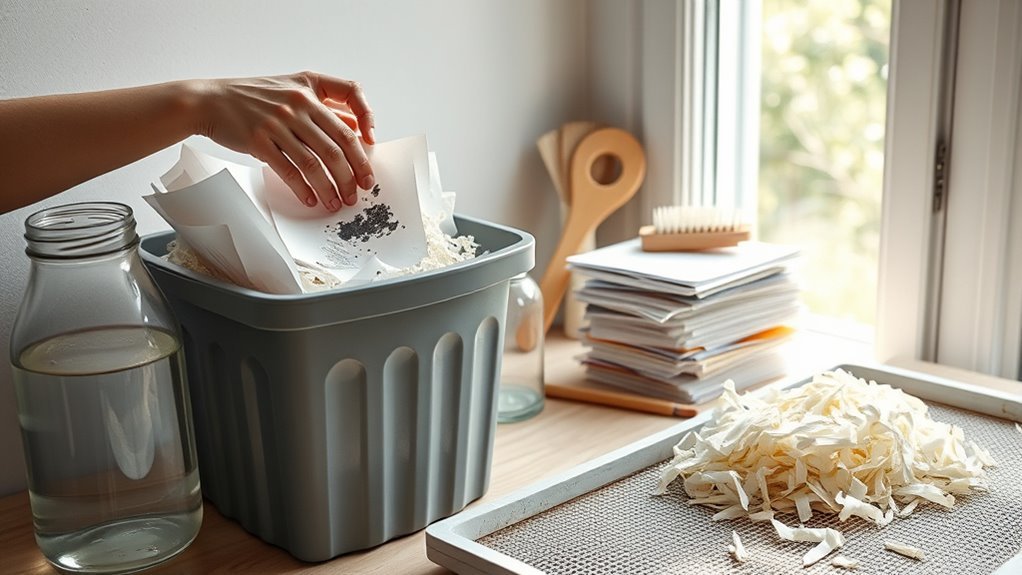
How You Can Recycle Paper With Ink on It Step by Step
You can recycle paper with ink by first sorting it based on ink and paper type, separating water-based inks from solvent or metallic ones. It’s important to remove staples or plastic covers and then flatten the paper to make handling easier.
Next, shred the paper and mix it with water to create pulp. Using deinking agents and air bubbles helps lift ink from the fibers, resulting in cleaner pulp. Proper preparation and process control not only improve the quality of recycled paper but also reduce the environmental impact.
Keep going to discover tips that make recycling inked paper even more efficient. With the right steps, recycling paper with ink can be simple and rewarding!
Key Takeaways
- Separate paper by ink type, such as water-based, soy-based, or solvent-based inks, to improve recycling quality. This step helps ensure the recycled paper turns out better and cleaner.
- Remove contaminants like staples, tape, and plastic covers before recycling inked paper. These things can mess up the recycling process, so it’s best to get rid of them first.
- Shred paper into small pieces and soak in water to create pulp for easier ink removal. Breaking it down like this makes it simpler to get the ink off.
- Use deinking chemicals and air bubbles to lift and remove ink flakes from the pulp. This is a key part of cleaning the paper during recycling.
- Sort and store prepared paper dry and flat to prevent moisture damage and contamination. Keeping it in good shape helps make sure it’s ready for the next recycling step.
Understanding the Types of Ink on Paper

How do different inks affect the recycling process? When you recycle paper, the type of ink matters because some inks break down easier than others.
Water-based inks, like those in magazines or newspapers, wash off quickly during pulping, making recycling smoother. On the other hand, solvent-based inks, often used in packaging or labels, can be tougher to remove and might contaminate the recycled pulp.
Soy-based inks are eco-friendly and deink well, so they’re great for recycling. You should also know that metallic or glitter inks don’t dissolve easily and can cause issues in recycling equipment.
Understanding these differences helps you realize why some printed papers recycle more efficiently, ensuring the final recycled product stays clean and high quality. It’s pretty interesting how the type of ink can make such a big difference!
Sorting and Collecting Inked Paper for Recycling

Knowing the types of ink on paper helps you sort and collect materials more effectively for recycling.
Start by separating paper with water-based inks from those with oil-based or solvent-based inks, as they require different recycling processes. Keep glossy magazines, newspapers, and printed office paper in distinct piles.
Avoid mixing coated and uncoated papers to maintain recycling quality.
| Paper Type | Ink Type | Collection Tips |
|---|---|---|
| Newspapers | Water-based Ink | Bundle loosely, keep dry |
| Magazines | Oil-based Ink | Stack flat, avoid folding |
| Office Paper | Solvent-based Ink | Use clean bins, avoid contamination |
| Cardboard | Mixed Ink | Flatten, remove tape or labels |
Preparing Inked Paper Before Recycling

Before recycling inked paper, you’ll need to remove any contaminants like staples, tape, or plastic covers that can interfere with the process. Carefully take out these materials to prevent damage to recycling machinery and guarantee higher-quality recycled paper.
Next, flatten the paper to make handling easier and save space. If the ink is heavily applied or glossy, you don’t need to remove it; recycling facilities can handle most common inks.
However, avoid recycling paper with excessive paint or non-standard coatings. Keep different types of paper separated—newsprint, office paper, and cardboard—since mixing them can reduce the recycling outcome.
Finally, store the prepared paper in a dry container or bag to prevent moisture damage before you take it to a recycling center or put it out for collection. This way, you’ll help ensure the best results from your recycling efforts!
The Recycling Process for Paper With Ink
Once you’ve prepared your inked paper properly, the recycling process kicks into gear. First, the paper is shredded into small pieces to make it easier to break down. Then, it’s mixed with water in a pulping machine, turning it into a slurry.
This slurry undergoes a deinking step, where chemicals and air bubbles lift the ink off the fibers. The cleaned pulp is then washed and filtered to remove any remaining contaminants.
After that, the pulp is pressed and dried to form new sheets of paper. Throughout the process, quality checks ensure the recycled paper meets standards.
Common Challenges in Recycling Inked Paper
When you recycle inked paper, removing ink without damaging the fibers can be tricky. You’ll also need to contemplate how the process affects the paper’s quality and the environmental impact of the chemicals used.
Understanding these challenges helps you make smarter recycling choices. It’s all about finding the right balance between cleaning the paper and keeping it strong. Plus, being aware of the environmental side keeps your recycling efforts truly green.
Ink Removal Techniques
How do recyclers effectively remove ink from paper without damaging the fibers? They use a process called deinking, which separates ink particles from paper pulp. You’ll find that the paper is first mixed with water and chemicals to loosen the ink.
Then, air bubbles are injected to lift ink flakes to the surface, where they’re skimmed off. Sometimes, enzymes or solvents help dissolve stubborn inks. Mechanical agitation also breaks apart ink clusters, making removal easier.
Keep in mind, different inks require tailored methods; for example, some printers use toner instead of liquid ink, needing specialized treatments. By mastering these techniques, recyclers ensure the ink is removed efficiently while preserving the paper’s structure, allowing the fibers to be reused in new paper products.
Impact on Paper Quality
Although deinking removes most ink from recycled paper, some residual ink particles can still affect the final quality. When you recycle paper with ink, you might notice a slight discoloration or a grayish tint in the finished product.
This happens because tiny ink fragments sometimes remain trapped in the pulp, impacting brightness and whiteness. You’ll also find that recycled paper can have a rougher texture or reduced strength compared to virgin paper.
These issues arise from fiber damage during the recycling process and the presence of ink residues. To maintain better quality, you need to carefully control deinking methods and possibly use additives that improve fiber bonding.
Understanding these challenges helps you set realistic expectations for recycled paper’s appearance and performance. It’s all about balancing quality and sustainability, you know?
Environmental Considerations
Since ink contains various chemicals and pigments, recycling inked paper poses unique environmental challenges you should consider. Some inks include heavy metals and volatile organic compounds (VOCs) that can contaminate water and air during processing.
You’ll need specialized treatments to remove or neutralize these substances, which can increase energy use and waste byproducts. Also, removing ink completely is tough, so some recycled paper retains discoloration, affecting reuse.
Here’s a quick look at common challenges:
| Challenge | Impact |
|---|---|
| Chemical Contamination | Pollutes water and air |
| Ink Removal Difficulty | Increases processing energy |
| Residual Ink | Lowers recycled paper quality |
| Waste Generation | Adds to landfill and pollution |
Being aware of these helps you recycle responsibly and advocate for better ink formulations. It’s all about making smarter choices for the environment!
Tips to Improve Inked Paper Recycling Efficiency
To boost the efficiency of recycling paper with ink, you’ll need to focus on optimizing the ink removal process. Start by sorting the paper according to ink type and color since some inks are easier to remove than others.
Enhance paper recycling by sorting sheets by ink type and color to optimize ink removal efficiency.
Use appropriate deinking agents and maintain proper pH levels to break down ink effectively. Make sure the paper is well-shredded to increase the surface area exposed to chemicals, which helps improve ink removal.
Control water temperature and agitation during washing to enhance ink detachment without damaging fibers. It’s important to regularly monitor and adjust your processes based on the output quality you see.
Finally, reuse recycled pulp promptly to prevent ink from sticking back on. By following these tips, you’ll improve the quality of recycled paper while reducing waste and saving energy.
Frequently Asked Questions
Can Recycled Paper With Ink Be Used for Food Packaging?
You can use recycled paper with ink for food packaging, but it must meet safety standards. Make certain the ink is food-safe and the paper is properly processed to avoid contamination.
This way, you guarantee it’s safe for food contact. So, always check the materials carefully before using them. It’s better to be safe than sorry!
Does Ink Recycling Affect the Final Paper Color?
When a recycling plant removes ink, like in a case study from Sweden, the final paper often turns brighter or lighter.
Are There Environmental Benefits to Recycling Inked Paper?
Yes, you’ll reduce landfill waste and save trees by recycling inked paper.
Plus, you cut energy use and pollution since fewer raw materials are needed. It’s an eco-friendly choice that helps protect the environment.
Can Inked Paper Be Composted Instead of Recycled?
You can compost inked paper, but only if it uses soy-based or vegetable inks; about 80% of inks are safe.
Avoid glossy or colored inks, as they may contain harmful chemicals that disrupt compost quality.
How Long Does the Inked Paper Recycling Process Take?
The inked paper recycling process usually takes a few days to a couple of weeks, depending on the facility. You’ll see it broken down, cleaned, and reformed into new paper during this time.
It’s a pretty efficient way to reduce waste. Plus, recycling helps save resources and energy, which is always a good thing.
Conclusion
Recycling paper with ink on it might seem like a tricky puzzle, but just like turning a page in a good book, each step brings you closer to a greener world. By sorting, prepping, and understanding the process, you’re playing your part in an ongoing story of sustainability.
So, don’t let ink hold you back—embrace the challenge and recycle smartly. Every recycled sheet writes a brighter chapter for our planet.
Remember, recycling paper with ink on it is not only possible but essential. It reduces waste, saves trees, and conserves energy. By following simple steps like sorting your paper, removing non-paper elements, and using proper recycling bins, you contribute to a cleaner, healthier environment.
So go ahead, recycle paper with ink confidently and help create a sustainable future. Every little effort counts when it comes to recycling paper with ink on it. Let’s make a difference together!