
How to Remove Ink From a Rug Step by Step
To remove ink from your rug effectively, start by identifying the type of ink and the material of your rug. This is important because different inks and fabrics need different treatments to avoid damage.
Next, gather your supplies: clean cloths, a mild cleaner, and gloves to protect your hands.
Begin by gently blotting the stain—remember, don’t rub! Rubbing can push the ink deeper into the fibers. Use a clean cloth to absorb as much excess ink as possible.
After that, apply a safe cleaning solution, but always test it on a hidden spot first to make sure it won’t cause discoloration or damage.
Once you’ve treated the area, rinse it with cold water and blot dry thoroughly.
Want to know the best cleaners for different ink types or how to prevent ink stains in the future? Keep reading for more detailed tips and tricks to keep your rug looking fresh and clean!
Key Takeaways
- Identify the ink type and rug material to choose a safe and effective cleaning method. This step is important because different inks and fabrics react differently to cleaning agents.
- Blot the ink stain gently with a clean cloth. Be sure to avoid rubbing, as that can spread the ink and make the stain worse.
- Apply a suitable cleaning solution, such as isopropyl alcohol or dish soap. But first, test it on a hidden area of the rug to make sure it won’t cause any damage.
- Rinse the treated area with cold water using a damp cloth. This helps remove any leftover cleaning residues that might attract dirt later on.
- Dry the area thoroughly with towels and allow for good air circulation. Make sure it’s completely dry before putting the rug back in use to prevent any mold or mildew.
Assess the Type of Ink and Rug Material
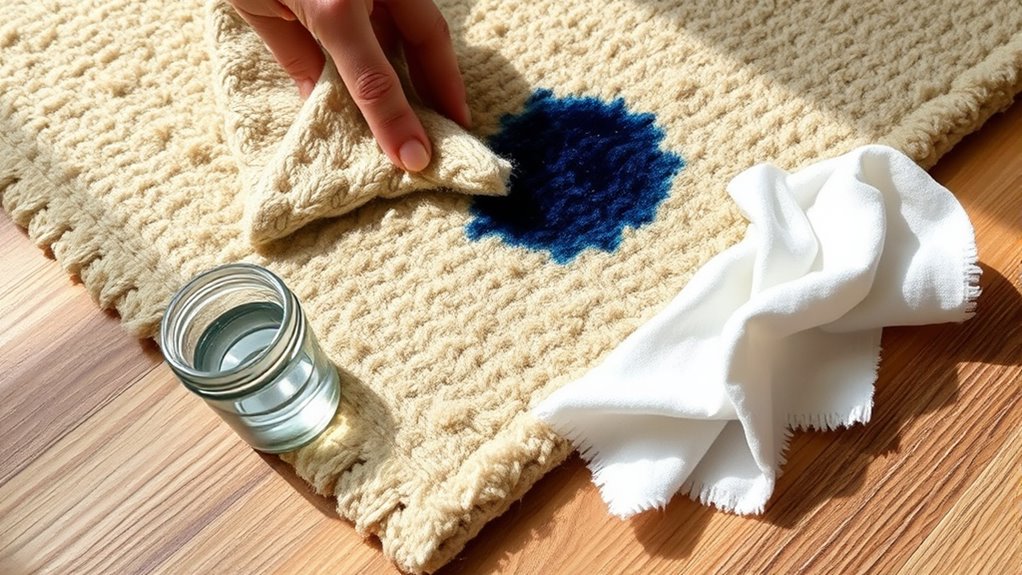
Before you begin removing ink from your rug, it’s important to identify both the type of ink and the rug material. Knowing whether the ink is water-based, like from a washable marker, or permanent, like from a ballpoint pen, helps you choose the right removal method.
Next, check what your rug is made of—natural fibers like wool or cotton react differently to cleaning agents than synthetic fibers like nylon or polyester. You can usually find this info on the rug’s label or by contacting the manufacturer.
If you’re unsure, test a small hidden area with water first to see how it reacts. Evaluating these details first prevents damage and increases your chances of completely removing the ink without harming your rug’s texture or color.
Gather Essential Cleaning Supplies
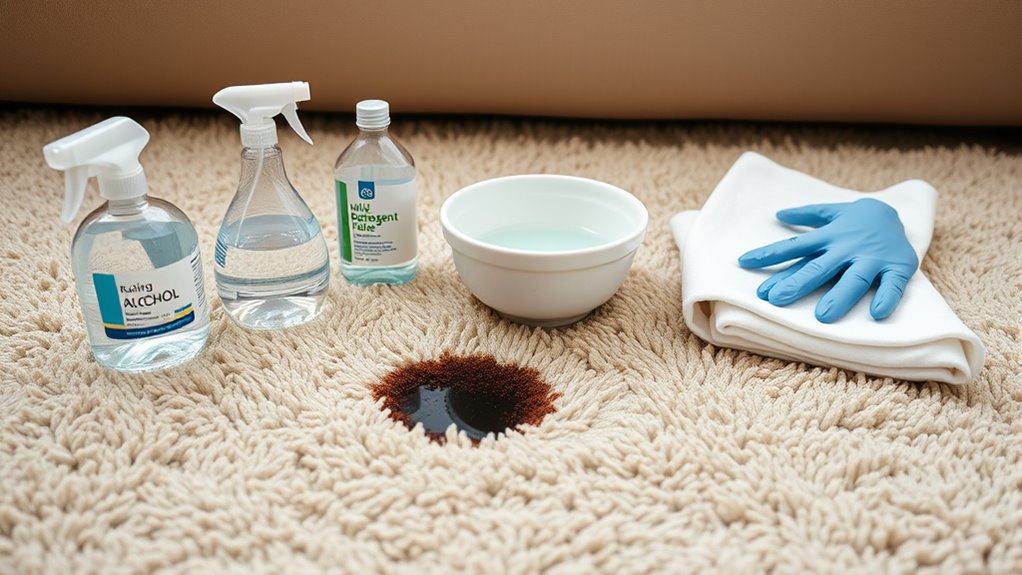
Before you start, make sure you have the right tools on hand. You’ll need essentials like clean cloths, a soft brush, and mild cleaning solutions suited for your rug type.
Having these ready will make removing the ink much easier and more effective. It really helps to be prepared before diving in!
Must-Have Cleaning Tools
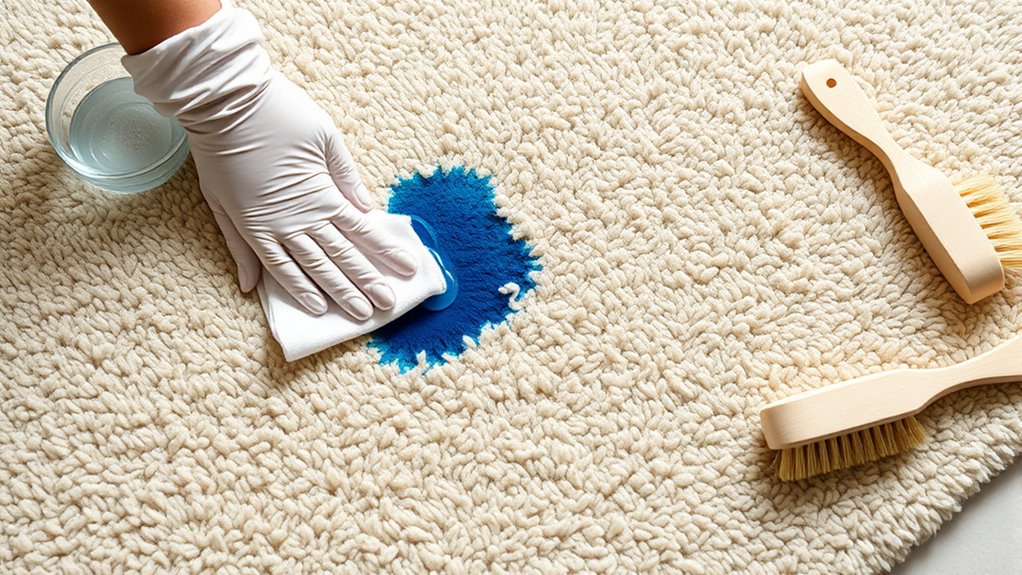
To tackle ink stains effectively, you’ll need a few essential cleaning tools on hand. Start with white cotton cloths or paper towels to blot the stain without spreading it.
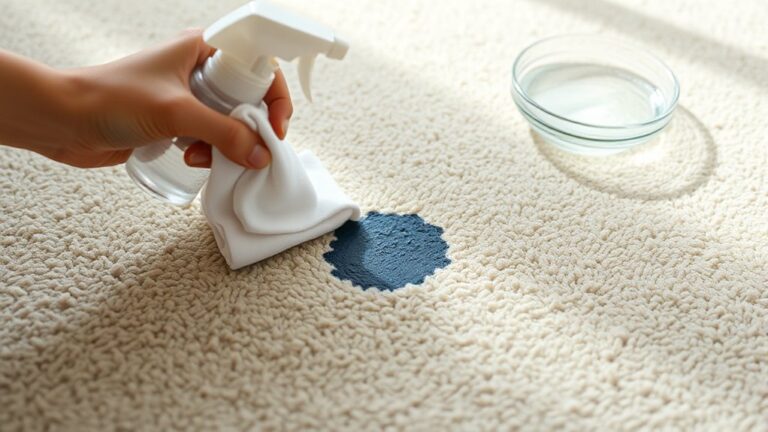
A soft-bristled brush helps gently lift ink from the rug fibers without causing damage. Have a spray bottle ready for applying cleaning solutions evenly.
Rubber gloves protect your hands from harsh chemicals, while a small bowl or container is useful for mixing any homemade remedies. You might also want a vacuum cleaner for final cleanup after the stain is removed.
Ultimately, keep a set of old towels nearby to absorb excess moisture. Having these tools ready ensures you can act quickly and efficiently to remove ink from your rug.
Recommended Cleaning Solutions
Although ink stains can be stubborn, having the right cleaning solutions on hand makes a huge difference in removing them effectively. Start by gathering rubbing alcohol or isopropyl alcohol, which breaks down ink pigments without damaging most rug fibers.
You’ll also want some mild dish soap to tackle any leftover residue. For tougher stains, a commercial carpet cleaner designed for ink or dye can be very helpful.
Keep a spray bottle filled with water nearby to dilute and rinse the area as needed. Just avoid using bleach, as it can discolor your rug.
Having these solutions ready means you can act quickly, which really boosts your chances of removing the stain completely and keeping your rug looking clean and fresh.
Blot the Ink Stain Carefully
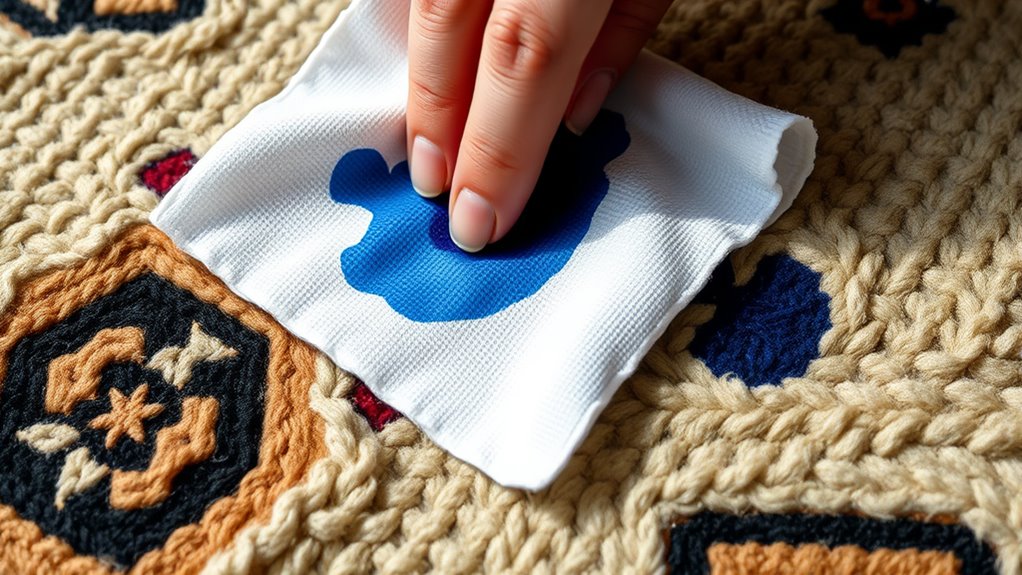
When you notice the ink stain, gently blot it with a clean cloth or paper towel to absorb as much ink as possible without spreading it further. Avoid rubbing or scrubbing, as this can push the ink deeper into the rug fibers and make the stain worse.
Use light, dabbing motions and replace the cloth or paper towel as it becomes saturated. Blot from the outside edges of the stain toward the center to prevent the ink from spreading.
Be patient and persistent, continuing to blot until no more ink transfers to the cloth. This initial step is essential because it reduces the amount of ink that needs to be treated later, increasing the chances of complete removal and protecting your rug from permanent damage.
Apply an Appropriate Cleaning Solution
You’ll want to pick a cleaner that’s safe for your rug’s material. Before applying it fully, test the solution on a small, hidden area to avoid damage.
Then, apply the cleaner gently and evenly over the ink stain. It’s best to be careful here so you don’t spread the stain around or harm the fibers.
Choose Suitable Cleaners
Since ink stains vary in type and severity, selecting the right cleaner is essential for effective removal. You want a solution that targets ink without damaging your rug’s fibers or colors.
Common household items can often do the trick, but knowing which to choose depends on your rug’s material and the ink type.
Consider these options:
- Isopropyl alcohol: Great for ballpoint ink, but use sparingly.
- Dish soap mixed with water: Gentle on most rugs, effective on fresh stains.
- Hydrogen peroxide: Works on tougher stains, but test first.
- Vinegar and cornstarch paste: Natural and safe for delicate fibers.
- Commercial ink removers: Designed specifically for ink, follow instructions carefully.
Picking the right cleaner will make the stain removal process smoother and protect your rug’s appearance. It’s all about being careful and choosing what works best for your rug.
Test Solution First
A crucial step before fully treating an ink stain is to test your chosen cleaning solution on a small, hidden area of the rug. This helps verify the solution won’t damage or discolor the fibers.
Apply a small amount of the cleaner using a cotton swab or cloth and wait a few minutes. Then, check for any changes in color, texture, or fabric integrity.
If you notice fading, bleeding, or fabric weakening, switch to a gentler cleaner or consult a professional. Testing first prevents unintended damage and saves time and effort.
Always follow the manufacturer’s instructions and avoid using harsh chemicals without testing. Once you confirm the solution is safe, you can confidently proceed with treating the visible stain.
Apply Gently and Evenly
Although it might be tempting to scrub the ink stain aggressively, apply your chosen cleaning solution gently and evenly to avoid spreading the ink or damaging the rug fibers. Use a soft cloth or sponge to dab the solution carefully onto the stained area.
Remember, blotting works better than rubbing, which can make the stain worse. Take your time and be patient as you treat the spot.
To apply the solution effectively:
- Use a small amount to prevent saturation
- Work from the outside of the stain inward
- Dab repeatedly rather than rub vigorously
- Replace the cloth or sponge frequently
- Let the solution sit briefly before blotting it up
This approach helps lift the ink without harming your rug’s texture.
Rinse and Dry the Treated Area
Once you’ve treated the ink stain, you’ll want to rinse the area thoroughly to remove any leftover cleaning solution that might attract dirt or cause discoloration. Start by dampening a clean cloth with cold water and gently blot the treated spot. Avoid scrubbing, as this can damage the rug fibers.
Change to a fresh cloth as it absorbs the cleaning residue, repeating until no cleaner remains. Next, use a dry towel to blot excess moisture from the rug. To help it dry faster, open windows or use a fan to increase air circulation.
Make sure the rug is completely dry before walking on it or replacing furniture to prevent new stains or damage. Proper rinsing and drying finish the cleaning process effectively.
Prevent Future Ink Stains on Your Rug
After thoroughly rinsing and drying your rug, taking steps to prevent future ink stains will save you time and effort down the line. You want to create a barrier against spills and act quickly when accidents happen.
Here’s how you can protect your rug:
- Use a fabric protector spray designed for rugs.
- Keep pens and markers away from high-traffic areas.
- Establish a no-eating or drinking zone near the rug.
- Clean spills immediately with a damp cloth.
- Regularly vacuum to remove dirt that can trap ink.
Frequently Asked Questions
Can Ink Stains Cause Permanent Damage to Rugs?
Yes, ink stains can cause permanent damage to rugs if you don’t act quickly.
If the ink sets in, it becomes much harder to remove, so you’ll want to treat stains as soon as you notice them.
The sooner you start cleaning, the better the chances of saving your rug from lasting marks. Don’t wait around—get on it right away!
Are Professional Cleaning Services Worth It for Ink Stains?
Yes, professional cleaning services are worth it for ink stains because they have specialized tools and expertise to remove stubborn stains effectively.
They can save your rug from permanent damage and preserve its appearance better than DIY attempts.
Honestly, tackling ink stains on your own can be tricky and sometimes makes things worse.
How Long Do Ink Stains Take to Set in Rugs?
Ink stains can set in rugs within minutes, harden in hours, and become permanent in days.
Is It Safe to Use Homemade Cleaning Solutions on All Rugs?
You shouldn’t use homemade cleaning solutions on all rugs because some materials react poorly. Always test a small, hidden area first to avoid damage.
And if you’re unsure, it’s a good idea to check the care labels or ask a professional. Better safe than sorry!
Can Ink Stains Trigger Allergies or Health Issues?
Yes, ink stains can trigger allergies or health issues, especially if they contain harmful chemicals. You should clean them promptly to avoid skin irritation, respiratory problems, or allergic reactions caused by ink particles or fumes.
It’s a good idea to wash off ink stains as soon as possible. This helps reduce the chance of any reaction or discomfort. If you notice any unusual symptoms, it’s best to consult a healthcare professional.
Conclusion
Removing ink from your rug is like tending a delicate garden—you carefully assess the soil and choose the right tools to nurture it back to health. By patiently blotting and applying the perfect cleaning solution, you’re coaxing the stain to fade away like weeds under gentle care.
With a little attention and timely action, your rug will bloom fresh and vibrant again. This process ensures that your rug looks clean and inviting, free from any signs of ink stains. Remember, the key to successful ink removal from a rug lies in acting quickly and using the right techniques to avoid spreading the stain.
By following these steps carefully, you can restore your rug’s beauty and keep it looking its best for years to come. So, don’t stress over ink mishaps—just treat your rug with gentle care, and it will brighten your space without a trace of yesterday’s mishap.