How to Take Ink Off Leather in 7 Easy Steps
To take ink off leather in 7 easy steps, start by identifying your leather type and the nature of the stain. This helps in choosing the right cleaning method and prevents any damage to your leather item.
Gather a gentle cleaner, some cotton swabs, and rubbing alcohol to prepare for the cleaning process.
Before you dive in, test your cleaning solution on a hidden spot. This step is crucial to make sure it won’t harm or discolor your leather.
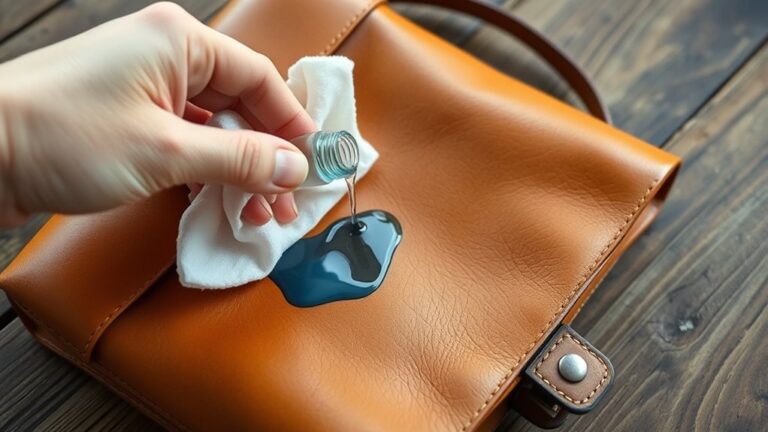
Now, dab the ink stain gently with the solution—avoid rubbing because that can spread the stain or damage the leather’s surface.
After that, wipe the area with a damp cloth to remove any leftover cleaner and ink residue.
Make sure to dry the leather thoroughly to prevent moisture damage.
Finally, finish by conditioning your leather. This will restore its softness and shine, keeping your leather looking great.
Follow these steps carefully, and you’ll protect your leather while effectively removing ink.
And if you want to learn more, there are plenty of deeper care methods to explore for keeping your leather in top shape.
Key Takeaways
- Identify your leather type and ink stain characteristics before selecting a cleaning method to avoid damage.
- Test cleaning solutions like mild soap or rubbing alcohol on a hidden leather area first for safety.
- Gently blot ink with a soft cloth, then dab stain with cleaner using cotton swabs without rubbing.
- After ink removal, wipe residue with a damp cloth and let the leather dry naturally, avoiding heat.
- Condition the leather with a compatible product post-cleaning to restore moisture and maintain flexibility.
Assess the Type of Leather and Ink Stain
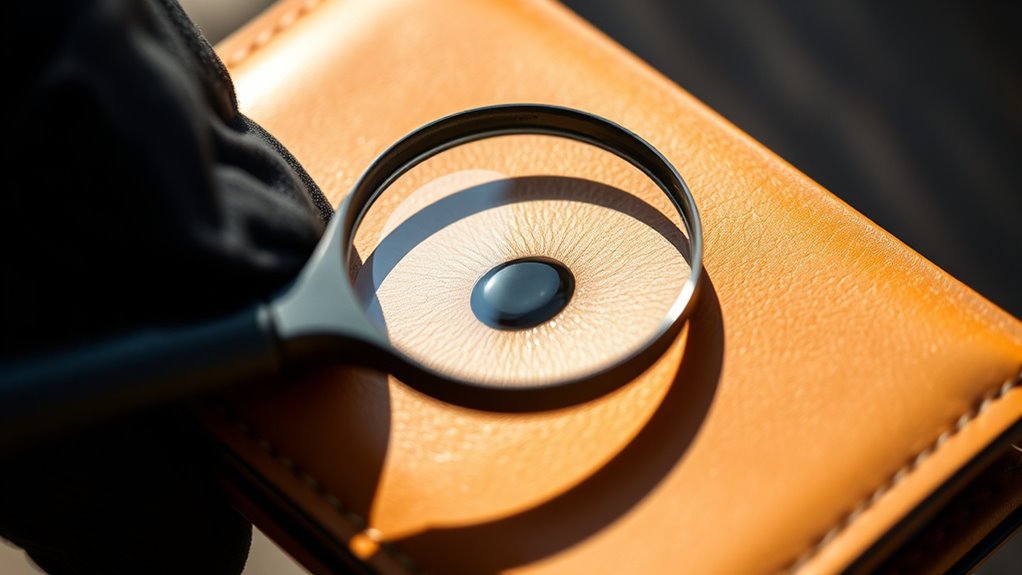
Before you begin removing ink from leather, you need to identify both the leather type and the ink stain. Different leathers—like aniline, semi-aniline, or pigmented—react uniquely to cleaning methods.
For instance, aniline leather is delicate and absorbs ink quickly, so you must be gentle. Next, examine the ink stain: is it fresh or dried? Water-based inks might come off easier than permanent markers or ballpoint pen ink.
Take a close look at the stain’s size and color intensity, as this affects your approach. By understanding these factors first, you avoid causing damage or spreading the ink. This careful assessment sets you up to choose the right technique and prevents costly mistakes on your leather item.
Gather Necessary Cleaning Supplies
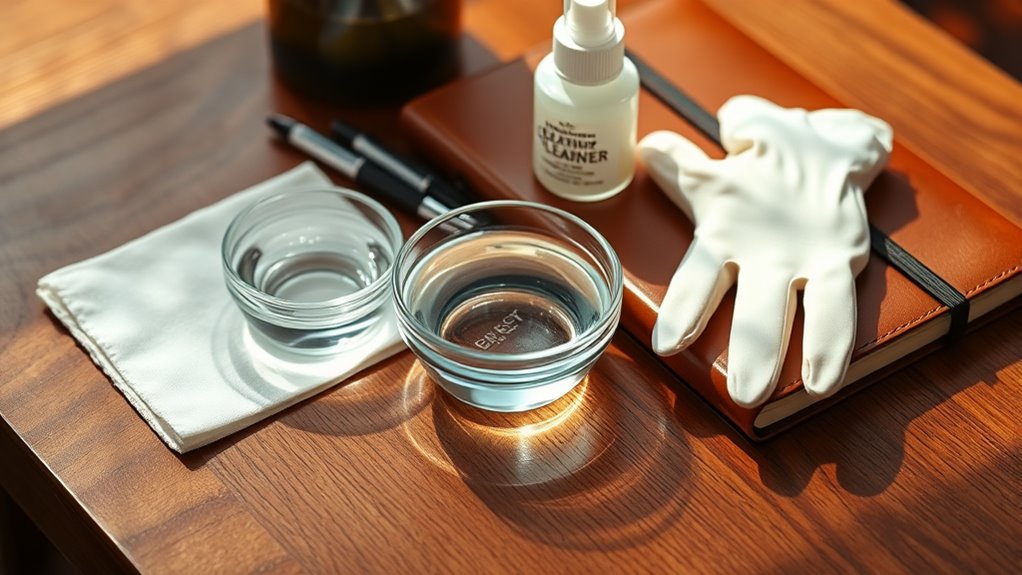
You’ll need a few essential cleaning supplies to safely remove ink from your leather. Start with a soft, clean white cloth or microfiber towel to avoid any color transfer.
Gather cotton swabs for precise application of cleaning solutions. You’ll also want a gentle leather cleaner or a mild soap like dish detergent diluted with water.
Rubbing alcohol or isopropyl alcohol can be useful, but use it sparingly and cautiously. Have a small bowl of clean water ready for rinsing and a dry towel for blotting excess moisture.
Avoid harsh chemicals or abrasive tools that can damage the leather’s surface. By preparing these supplies ahead of time, you’ll be ready to tackle the ink stain effectively without risking further damage.
Test the Cleaning Solution on a Hidden Area
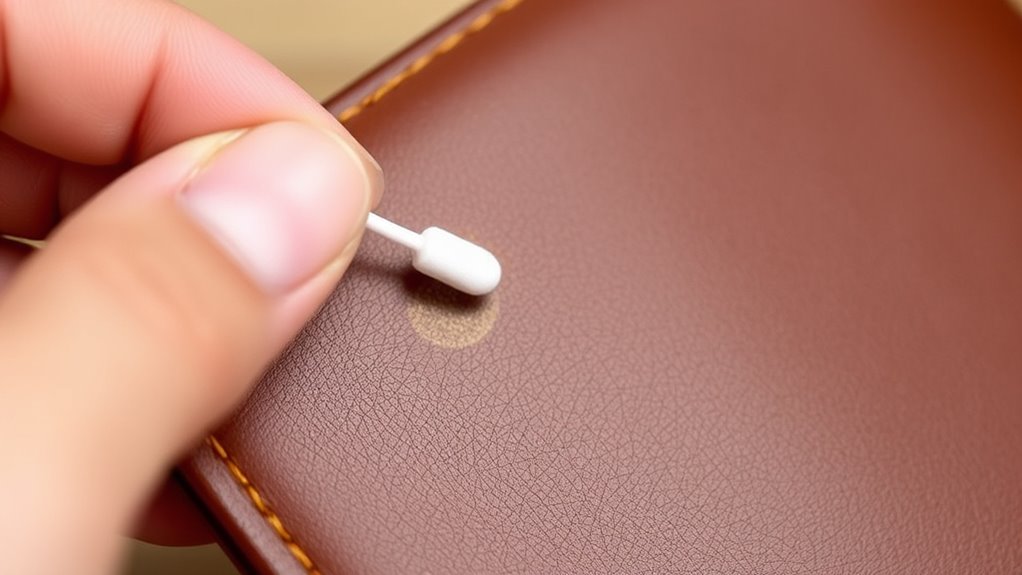
Before you start cleaning, try your solution on a hidden spot to avoid visible damage. Watch closely for any color changes or texture issues.
Give it some time to see how the leather reacts before moving forward. Better safe than sorry, right?
Choose Inconspicuous Spot
Although cleaning ink from leather requires care, testing your solution on a hidden spot guarantees you won’t damage the visible area.
Before applying any cleaner, find a discreet section like the inside seam, under a flap, or the back of the leather item. These areas won’t be noticeable if the solution causes discoloration or texture changes.
Dab a small amount of your chosen cleaner onto a cotton swab, then gently apply it to the concealed spot. Wait a few minutes to see if there’s any reaction.
If the leather shows no sign of damage, you can go ahead and treat the ink stain confidently. Choosing this inconspicuous spot helps protect your leather’s appearance and prevents costly mistakes during cleaning.
Observe for Discoloration
When you apply the cleaning solution to the hidden spot, watch closely for any discoloration or texture changes. This test helps verify the product won’t damage or stain your leather.
If you notice the color lightening, darkening, or any unusual spots, avoid using that solution on the visible areas. Also, feel the leather’s surface—if it becomes rough, sticky, or brittle, the cleaner isn’t suitable.
Remember, leather varies by type and finish, so what works on one piece might not on another. Testing lets you proceed confidently, preventing further damage.
If the hidden area looks and feels unchanged after applying the cleaner, you’re good to move forward with the ink removal on the stained part of your leather item.
Wait Before Proceeding
Since different leather types react uniquely, you should always wait a few minutes after applying the cleaning solution to a hidden area to see how it affects the material. This step guarantees you don’t accidentally damage or discolor your leather.
Here’s how to proceed:
- Choose an inconspicuous spot, like the inside seam or underside.
- Apply a small amount of the cleaning solution gently.
- Wait 5 to 10 minutes to observe any changes.
- Check for discoloration, texture changes, or residue.
If the leather looks unharmed, you can confidently continue with the full cleaning process. But if you notice any damage, try a different solution or consult a professional to avoid ruining your leather item.
Patience here really saves your leather from irreversible harm. So, take your time!
Gently Dab the Ink Stain With a Cotton Swab
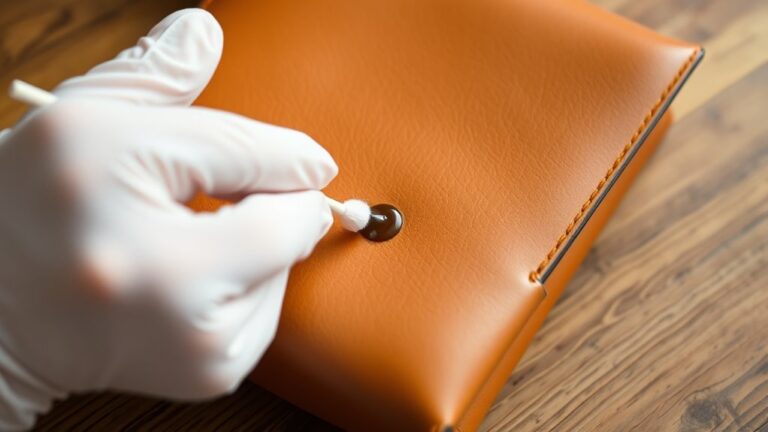
Choose soft cotton swabs to avoid damaging your leather. Gently dab the ink stain without rubbing to prevent spreading it further.
This careful approach helps lift the ink while protecting the leather’s surface. Just take your time and be gentle!
Choose Soft Cotton Swabs
A soft cotton swab works perfectly for gently dabbing at the ink stain without spreading it further. When selecting cotton swabs, focus on softness to avoid damaging the leather’s surface.
Here’s what to think about:
- Choose tightly wound cotton tips for precise control and minimal shedding.
- Opt for swabs with a flexible stem to easily maneuver around curves and edges.
- Avoid overly dense or rough swabs, which can scratch or irritate the leather.
- Pick swabs made from natural cotton fibers, as synthetic ones may be less absorbent.
Using the right cotton swab makes it easier to carefully lift ink without pushing it deeper or causing abrasion. It’s a good idea to keep several on hand so you can switch to a fresh one as it absorbs the ink.
Dab Without Rubbing
When you gently dab the ink stain with a cotton swab, you prevent the ink from spreading and embedding deeper into the leather. Instead of rubbing, which can push the ink further, use light, quick dabs to lift the stain.
Dip the swab in your chosen cleaning solution, then press it softly against the ink spot. Change to a clean swab frequently to avoid reapplying ink back onto the leather.
Keep dabbing until the ink starts to fade, but stop if the leather shows signs of distress. This careful technique preserves the leather’s texture while effectively removing the stain.
Patience is key—rushing or scrubbing can damage the surface or worsen the stain, so stay gentle and consistent throughout the process.
Apply Leather Cleaner or Rubbing Alcohol Carefully
Although leather is delicate, you can safely remove ink stains by applying leather cleaner or rubbing alcohol with care. Start by testing the product on a hidden spot to verify it doesn’t damage or discolor the leather.
Next, use a cotton swab or soft cloth to apply a small amount of cleaner or rubbing alcohol directly onto the ink stain. Avoid soaking the leather to prevent damage.
Gently dab the stain, letting the solution break down the ink without spreading it. Remember, don’t rub or soak the leather—that can make things worse.
- Test cleaner on an inconspicuous spot first.
- Use a cotton swab or soft cloth for application.
- Apply a small amount directly to the stain.
- Dab gently—don’t rub or soak the leather.
Taking it slow and steady like this helps protect your leather while effectively tackling that ink stain.
Wipe the Area With a Damp Cloth and Dry
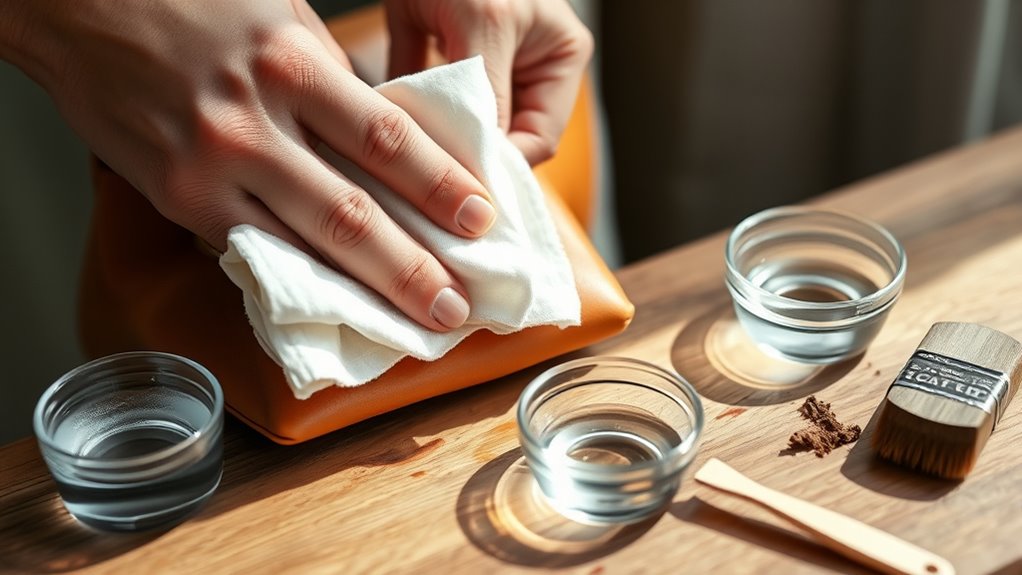
After gently dabbing the ink stain with cleaner or rubbing alcohol, you’ll want to remove any residue to prevent further damage. Take a clean, soft cloth dampened with plain water—make sure it’s just slightly wet, not soaked.
Carefully wipe the treated area to lift away leftover cleaner and loosened ink. Be gentle to avoid rubbing the stain deeper or damaging the leather’s surface.
Once you’ve wiped it, use a dry, soft cloth to pat the area dry. This step helps prevent moisture from seeping into the leather, which could cause warping or discoloration.
Allow the leather to air dry completely before touching it again. This ensures that the surface is clean and ready for any further care or treatment you plan to apply.
Condition the Leather to Restore Its Finish
Since cleaning can strip leather of its natural oils, you’ll want to condition it to restore moisture and maintain its supple finish. Conditioning helps prevent cracking and keeps your leather looking its best after removing ink stains.
Here’s how to do it effectively:
- Choose a leather conditioner suitable for your leather type.
- Apply a small amount of conditioner to a soft, clean cloth.
- Gently rub the conditioner into the leather using circular motions.
- Let the leather absorb the conditioner for a few hours, then buff with a dry cloth to restore shine.
Frequently Asked Questions
Can Ink Stains on Leather Be Prevented?
Yes, you can prevent ink stains on leather by keeping pens away, using protective sprays, and handling leather items carefully.
Don’t let ink come near your leather, and clean spills immediately to avoid permanent stains. It’s really all about being cautious and acting fast!
Is It Safe to Use Household Cleaners on Leather?
You shouldn’t use household cleaners on leather since they can damage it.
Instead, opt for products specifically designed for leather care. Or gently clean with a damp cloth and mild soap to keep your leather safe and supple.
How Long Does the Ink Removal Process Usually Take?
When Sarah removed ink from her leather bag, it took about 30 minutes. You’ll usually spend 20-40 minutes gently applying cleaner and wiping until the stain fades.
It really depends on the type of ink and how sensitive the leather is. So, just take your time and be patient with the process.
Can Professional Cleaning Restore Heavily Inked Leather?
Yes, professionals can often restore heavily inked leather using specialized solvents and techniques. However, results vary depending on the leather type and ink severity, so don’t expect a perfect fix every time.
That said, it’s definitely worth trying if you want to bring your leather back to life. Just keep in mind that some stains might be stubborn and require multiple treatments or alternative solutions.
Will Ink Removal Affect the Leather’s Color Permanently?
Yes, ink removal can sometimes lighten or alter your leather’s color permanently.
You’ll want to test any cleaning method on a hidden spot first to avoid noticeable damage or discoloration before treating the visible area.
Conclusion
Now that you’ve gently guided the ink stain away, your leather is ready to shine like new. By taking these thoughtful steps, you’ve given your leather a fresh start without harsh disruptions.
Remember, a little patience and care go a long way in preserving its natural charm. Keep nurturing your leather’s beauty, and it’ll continue to age gracefully, turning everyday wear into timeless elegance.
You’ve done a wonderful job restoring its gentle glow. Taking ink off leather isn’t always easy, but with the right approach, your leather can look as good as new. Keep these tips in mind to maintain that smooth, clean finish and protect your leather from future stains. Your effort truly pays off in the long run!