
How Do You Get Ink Off Leather?
To get ink off leather, it’s important to first identify what type of leather you have and the kind of ink you’re dealing with. This helps you choose the best cleaning method without damaging your leather.
Start by testing rubbing alcohol on a hidden spot to make sure it won’t cause any harm.
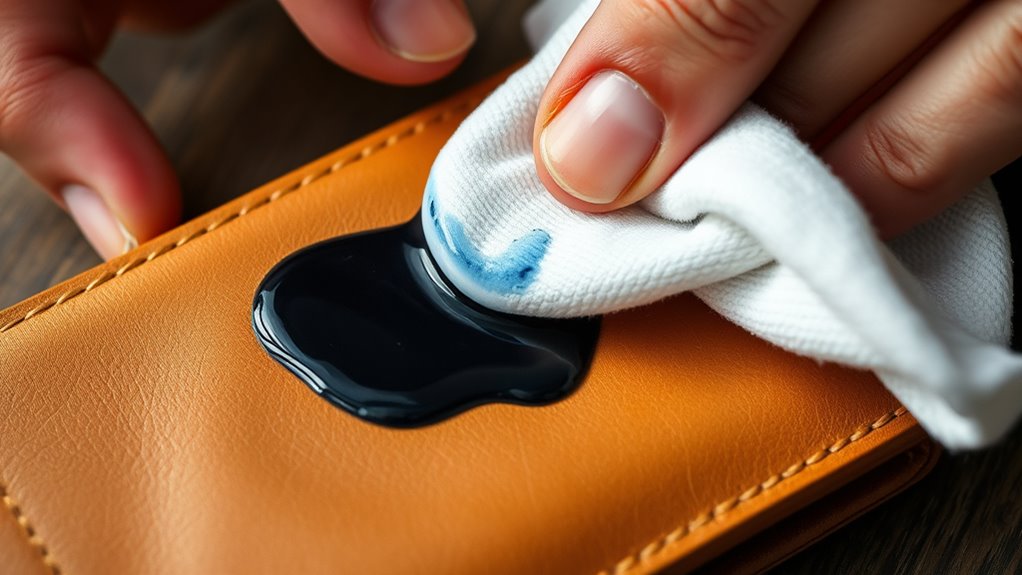
Then, gently dab the ink stain with a cotton swab soaked in rubbing alcohol. Be careful not to rub or soak the leather, as this can make things worse.
After you’ve treated the stain, clean and condition the leather to bring back its moisture and softness.
If rubbing alcohol isn’t safe for your leather, don’t worry. You can try home remedies like mild soap or vinegar instead.
The key is to act quickly and use the right care techniques.
There’s plenty more to learn if you’re dealing with tougher stains or want to prevent ink marks in the future.
Key Takeaways
- Identify your leather type and ink type to choose the safest and most effective cleaning method.
- Test any cleaning solution, like rubbing alcohol, on a hidden area to check for discoloration or damage first.
- Gently dab the ink stain with a lightly dampened cloth or cotton swab, working from the outside inward to avoid spreading.
- Use a mild leather cleaner in circular motions, then wipe off excess and apply conditioner to restore moisture.
- Avoid over-wetting and harsh rubbing; always air dry leather naturally and condition it after cleaning to maintain softness.
Assessing the Type of Leather and Ink
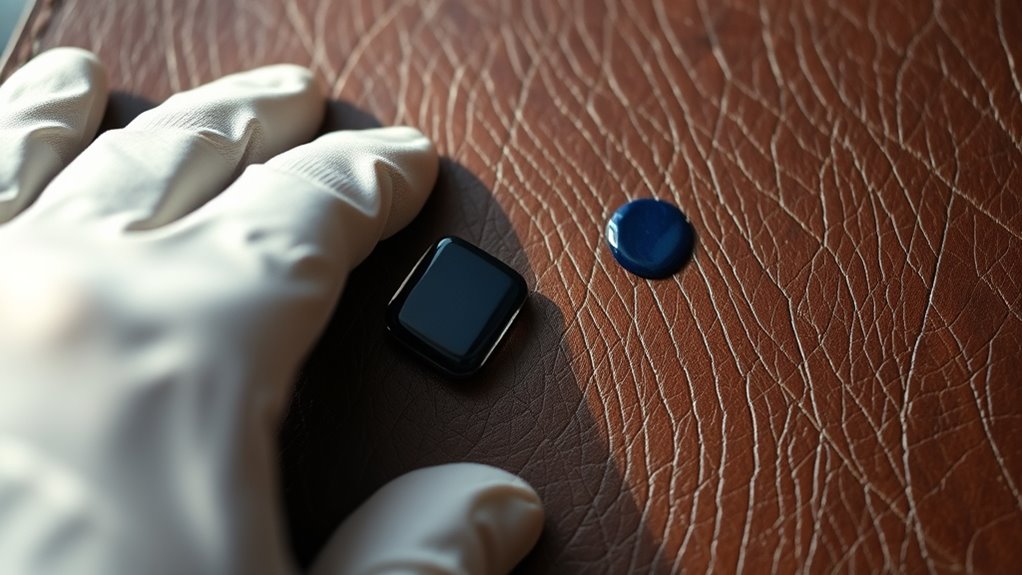
Before you begin removing ink, you need to identify both the type of leather and the kind of ink involved. Different leathers react differently to cleaning methods.
Start by identifying the leather type and ink to choose the safest cleaning method.
For example, smooth leather can handle gentle cleaning solutions better than suede, which is porous and more delicate. Check if your leather is aniline, semi-aniline, or pigmented, as this affects how it absorbs ink.
Next, determine the ink type. Is it ballpoint, gel, or permanent marker ink? Ballpoint ink usually sits on the surface, making it easier to remove, while permanent marker tends to soak deeper, requiring more careful treatment.
Knowing these details helps you choose the safest and most effective method. This way, you can prevent damage and keep your leather item looking great.
Preparing Your Cleaning Supplies
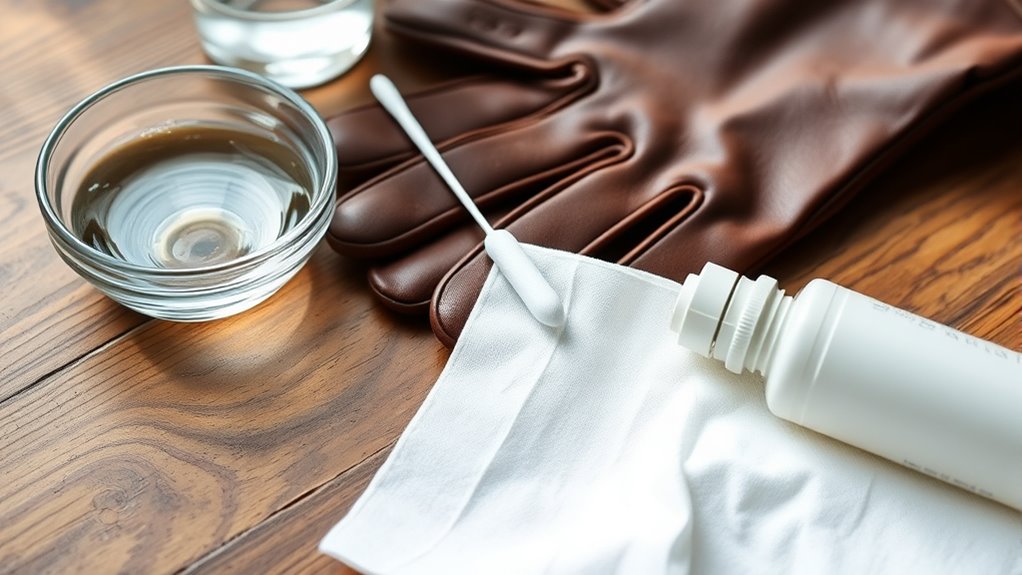
Gathering the right cleaning supplies sets the foundation for safely removing ink from your leather. Before you start, make sure you have everything on hand to avoid interruptions.
You’ll need gentle, effective products that won’t damage the leather’s finish.
| Supply | Purpose |
|---|---|
| Soft cloth | For applying cleaner and drying |
| Cotton swabs | To target small ink spots |
| Mild soap | Cleans surface dirt gently |
| Distilled water | Prevents mineral stains |
| Leather conditioner | Restores moisture post-cleaning |
Having these supplies ready ensures you can act quickly and carefully. Avoid harsh chemicals or abrasive tools, which can worsen the damage.
With your cleaning kit prepared, you’re ready to move on to the next step in ink removal.
Using Rubbing Alcohol to Remove Ink
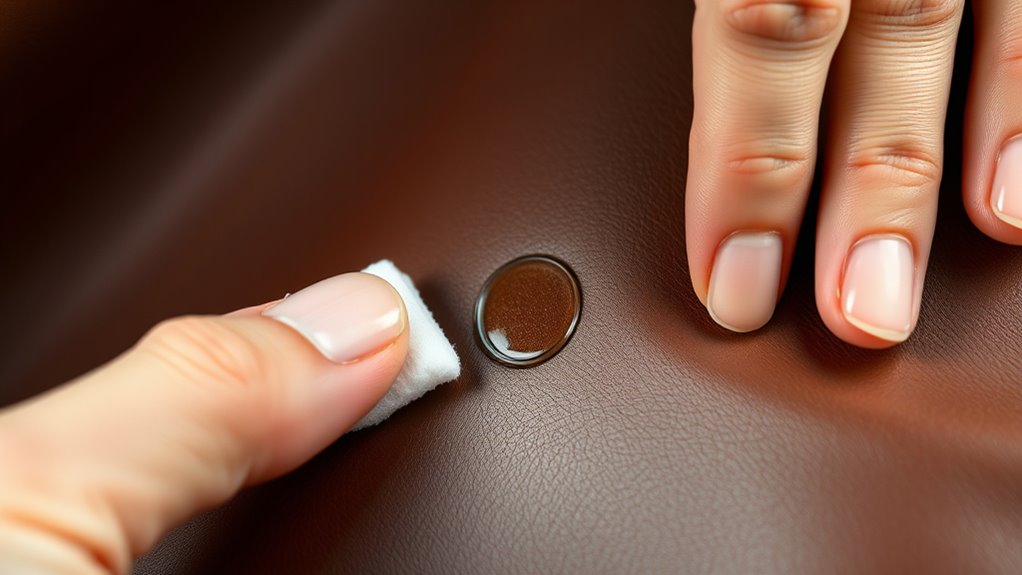
Although rubbing alcohol can be effective at lifting ink stains from leather, you’ll need to use it carefully to avoid damaging the material. Start by testing a small, hidden area to confirm the alcohol doesn’t discolor or dry out the leather.
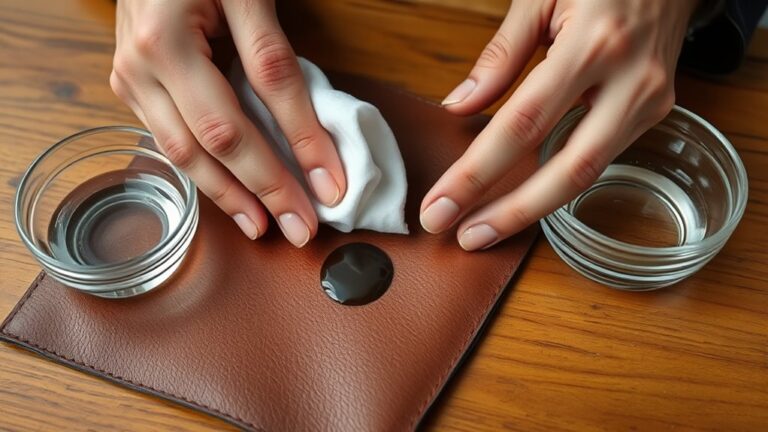
Dampen a cotton ball or soft cloth with a small amount of rubbing alcohol—don’t soak it. Gently dab the ink stain, avoiding rubbing too hard, which can spread the ink or wear down the leather’s finish.
Work from the outside of the stain inward to prevent it from spreading. After the ink lightens or disappears, let the leather air dry naturally.
Be patient and repeat the process sparingly if needed, as too much alcohol can strip oils and cause cracking. Just take your time and handle the leather gently!
Applying Leather Cleaner and Conditioner
Once you’ve treated the ink stain with rubbing alcohol, it’s important to restore the leather’s natural moisture and protect its surface. Start by gently applying a leather cleaner to remove any remaining residue and prepare the leather for conditioning.
After using rubbing alcohol on ink stains, gently clean leather to remove residue and prepare for conditioning.
Use a soft cloth to work the cleaner in circular motions, then wipe away excess. Next, apply a leather conditioner to nourish and soften the material, preventing cracks and dryness.
Here’s what you should do:
- Use a clean, lint-free cloth
- Apply leather cleaner sparingly
- Massage conditioner evenly into the leather
- Let the leather air dry away from direct heat
Following these steps helps maintain your leather’s look and durability after ink removal. It really makes a difference in keeping your leather soft and looking great!
Alternative Home Remedies for Ink Removal
You can try common household ingredients like rubbing alcohol, vinegar, or baking soda to tackle ink stains on leather. Apply these remedies carefully using a soft cloth, testing a small area first to avoid damage.
Always follow precautions to protect your leather and get the best results. It’s a good idea to take it slow and see how your leather reacts before going all in.
Common Household Ingredients
Since professional leather cleaners can be costly, you might want to try common household ingredients to tackle ink stains. These items are often safe and readily available, making them convenient options for quick fixes.
Before applying, always test a small hidden area to ensure no damage or discoloration occurs. Here are some household ingredients you can consider:
- Rubbing alcohol: Dab gently with a cotton swab to lift ink without saturating the leather.
- Hairspray: Spray lightly and wipe quickly; the alcohol content can break down ink.
- Baking soda: Make a paste with water and apply gently to absorb ink.
- Milk: Soak a cloth and blot the stain, as milk’s proteins can help lift ink.
Use these cautiously and avoid over-wetting the leather. Just take your time and be gentle!
Application Techniques
Trying household ingredients is just the start; knowing how to apply them properly makes all the difference in protecting your leather. First, always test your chosen remedy on a hidden spot to check for colorfastness.
Use a cotton swab or soft cloth to apply the solution gently—never pour it directly on the stain. Dab lightly, working from the outside in to prevent spreading the ink.
Avoid rubbing hard, as that can damage the leather’s surface. After treating the area, blot with a dry cloth to absorb excess moisture.
Repeat the process cautiously if needed, allowing the leather to dry between attempts. Finally, condition the leather afterward to restore its natural oils and keep it supple.
Proper application guarantees effective ink removal without harming your leather.
Precautions and Tips
Although many home remedies can tackle ink stains on leather, you should take precautions to avoid worsening the damage. Before applying anything, always test the solution on a hidden area to check for colorfastness.
Use gentle, circular motions instead of scrubbing hard to prevent scratching the leather. And try to avoid soaking the leather with liquids, since excess moisture can cause warping or discoloration.
After treatment, condition the leather to restore moisture and suppleness. It really helps keep your leather looking good as new.
Keep these tips in mind:
- Patch test any remedy on an inconspicuous spot first
- Use soft cloths or cotton swabs for application
- Limit liquid use to prevent saturation
- Apply leather conditioner once the stain is gone
Preventative Measures to Protect Leather From Ink Stains
To keep your leather looking its best, you should take proactive steps to prevent ink stains before they happen. First, avoid placing pens or markers directly on leather surfaces. Use pen holders or cases instead.
When carrying leather bags, keep ink pens capped and stored separately to minimize accidental leaks. Applying a leather protector spray creates a barrier that repels liquids, including ink, making cleanup easier if spills occur.
Be cautious when using newspapers or printed materials near leather, as ink can transfer. Regularly clean and condition your leather to maintain its finish and resistance to stains.
Frequently Asked Questions
Can Ink Stains on Leather Be Removed Professionally?
Yes, you can get ink stains on leather removed professionally. Experts use specialized cleaners and techniques that won’t damage your leather.
Is It Safe to Use Nail Polish Remover on Leather?
You might worry, but no, you shouldn’t use nail polish remover on leather. It contains harsh chemicals that can damage the finish and dry out the material.
Instead, try leather-specific cleaners to protect your item. They’re made to be gentle and effective, keeping your leather looking great without any risk.
How Long Does It Take for Ink Stains to Set in Leather?
Ink stains can start setting in leather within minutes, so you should act quickly.
The longer you wait, the harder it gets to remove. Immediate treatment gives you the best chance to clean it effectively.
Can Ink Damage the Color of Dyed Leather Permanently?
Yes, ink can permanently damage dyed leather’s color if you don’t treat it quickly. You should act fast to clean the stain, or the dye might fade, bleed, or leave an unsightly mark forever.
Think of it like a stain that sets in if ignored. The longer you wait, the harder it is to fix the damage. So, it’s best to deal with ink on leather as soon as you notice it.
Are There Specific Leather Types More Prone to Ink Stains?
If you think your delicate suede is an ink magnet, you’re right! Suede and nubuck soak up stains like sponges.
Smooth, sealed leather’s tougher, so you’ll have less chance of ink ruining your chic look. Just a little ink and your suede could be in trouble! But with sealed leather, you’re in better shape.
Conclusion
Removing ink from leather might seem tricky, but with the right approach, it’s surprisingly simple. While ink can stubbornly stain, your careful cleaning can restore leather’s smooth elegance.
You might expect harsh chemicals, yet gentle rubbing alcohol and leather conditioner work wonders together. By acting quickly and using these methods, you not only erase ink but also protect your leather’s charm.
So, when it comes to how do you get ink off leather, remember this: quick action and the right materials make all the difference. Using rubbing alcohol carefully removes the stain without damaging the leather, and following up with a leather conditioner keeps it soft and supple. This way, you turn a frustrating mishap into a chance to care for your prized belongings and keep your leather looking its best.