
How Can You Tattoo Over Black Ink?
You can tattoo over black ink by choosing colors that contrast well, like dark blues, purples, or bright reds. Using precise layering techniques helps build depth without muddying the design.
Bold shapes and thick outlines work best to mask the dark base. Preparing your skin and following proper aftercare also help the new tattoo heal beautifully.
Keep going, and you’ll discover how to pick ideal colors, designs, and care tips to get the best results. It’s all about patience and the right approach!
Key Takeaways
- Use deep, rich colors like dark blue, purple, or green to blend effectively over dense black ink. These shades work best because they can mask the black without looking muddy.
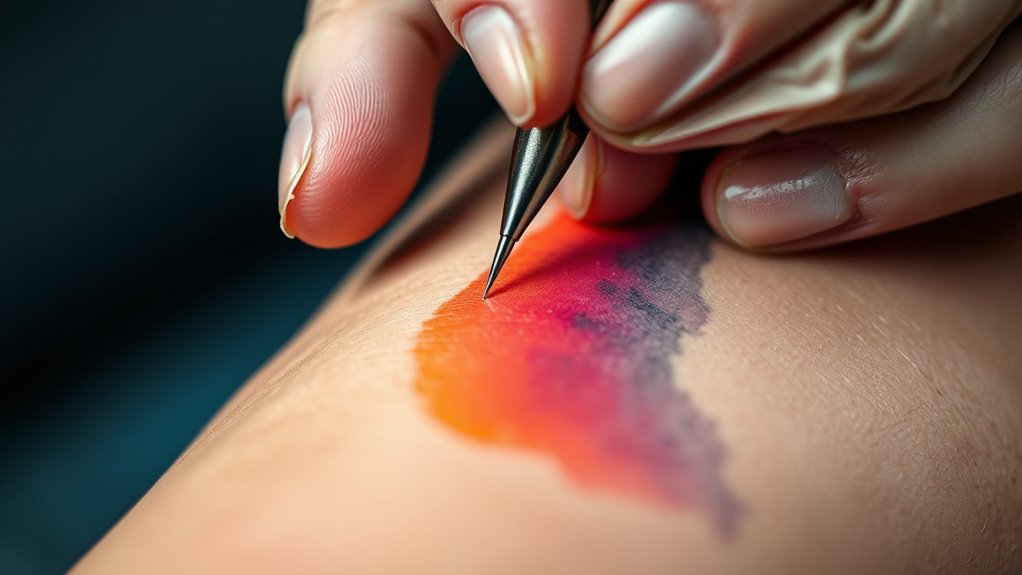
- Apply layering and shading techniques to build pigment gradually and create smooth transitions. Taking your time here really pays off.
- Choose bold designs with thick outlines or geometric patterns to mask black areas clearly. This approach helps cover the old tattoo in a way that’s stylish and intentional.
- Prepare skin by cleansing gently and keeping it hydrated before tattooing over black ink. Healthy skin takes ink better, so don’t skip this step.
- Follow proper aftercare, including moisturizing and avoiding sun exposure, to ensure vibrant healing. Taking care of your tattoo afterward makes all the difference in the final look.
Understanding the Challenges of Tattooing Over Black Ink
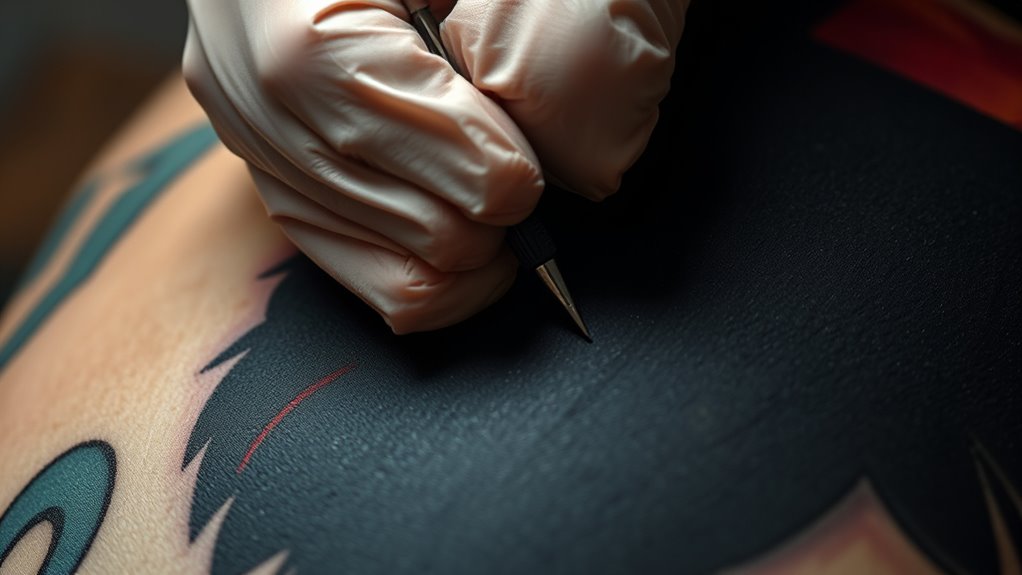
Although tattooing over existing black ink might seem straightforward, it presents unique challenges that you need to understand before starting. Black ink is dense and absorbs most pigments, making it difficult to cover or alter without the right technique.
When you tattoo over black, the new design can easily lose clarity if the underlying ink bleeds through or blends improperly. You also need to consider skin texture changes caused by the original tattoo, as scar tissue can affect how the new ink settles.
Additionally, working over black ink demands precision to avoid muddying the design or creating unwanted shadows. By recognizing these challenges upfront, you can better plan your approach to ensure the cover-up or enhancement looks sharp and vibrant.
Choosing the Right Colors for Covering Black Ink
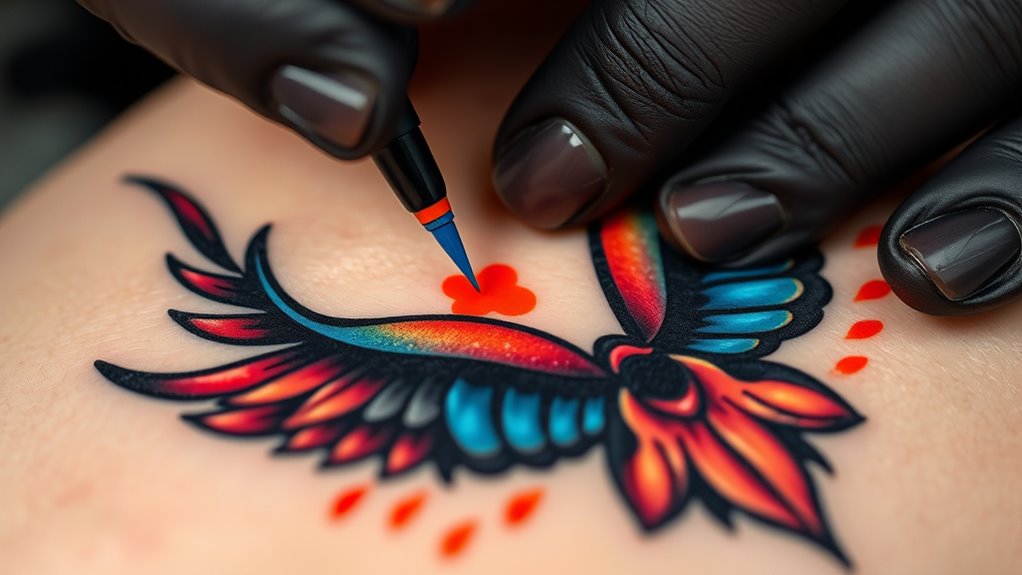
When covering black ink, you’ll want to choose colors that either contrast sharply or blend effectively to mask the darkness beneath. Bright colors like white, yellow, or neon shades can create a striking contrast that helps your new design stand out.
However, keep in mind that lighter colors might sometimes appear muted over black. Alternatively, using deep, rich tones such as dark blues, purples, or greens can blend better with black, helping to create a seamless cover-up.
Avoid pastel colors since they tend to fade or disappear over dark ink. Ultimately, your choice depends on the design and how boldly you want it to show.
It’s a good idea to discuss your color options thoroughly with your tattoo artist to find the best fit for your cover-up.
Techniques for Effective Tattooing on Black Ink
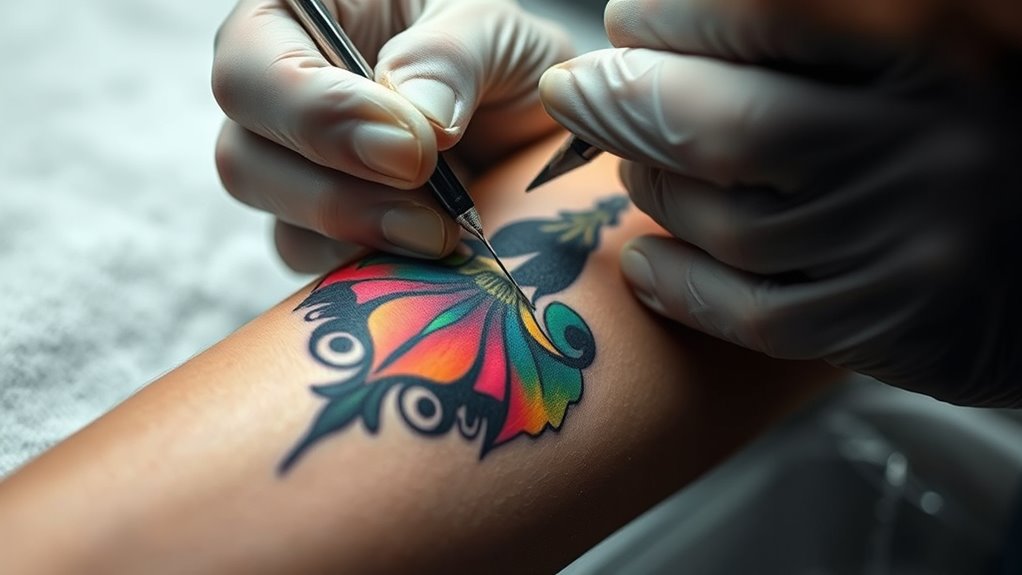
When tattooing over black ink, you’ll want to carefully choose colors that can stand out and complement the existing design. Mastering layering and shading techniques will help you create depth and seamless progression.
Also, selecting the right ink types that work well together guarantees your cover-up lasts and looks vibrant. It’s all about making sure the new tattoo blends perfectly while still popping. Taking your time with these steps really makes a difference!
Color Selection Strategies
Since black ink creates a strong, opaque base, choosing colors that can stand out against it requires careful consideration. You’ll want to focus on bright, vibrant colors like white, neon shades, or pastel tones that contrast sharply with black.
White ink is especially effective for highlighting and creating bold designs over dark areas. Avoid muted or dark colors, as they’ll blend in and become nearly invisible.
Remember, the opacity of black ink limits how much color saturation you can achieve, so pick hues that naturally pop. Also, consider the skin tone underneath, as it influences how colors appear.
Layering and Shading Techniques
Building on your color choices, mastering layering and shading techniques can dramatically enhance how your tattoo stands out over black ink. Start by applying lighter shades on top of the black base to create contrast and depth.
Use gradual shading to soften progressions between colors, ensuring the design doesn’t look flat or harsh. You can layer colors strategically, allowing some black to peek through for texture and dimension.
Avoid heavy saturation in one go; instead, build up pigment in thin layers to prevent overworking the skin. When shading, use smooth, controlled strokes to blend colors seamlessly.
This approach not only maintains clarity but also enriches the tattoo’s visual impact, making your design pop even over challenging black ink backgrounds.
Ink Types and Compatibility
Although tattooing over black ink poses unique challenges, choosing the right ink types can make a significant difference in your results. You want to select inks that contrast well and hold pigment over dark backgrounds.
White and bright colors with high opacity work best, while pastel or translucent inks often fade into the black.
Here’s a quick compatibility guide for your ink selection:
| Ink Type | Compatibility with Black Ink |
|---|---|
| White Ink | High contrast, excellent coverage |
| Bright Colors | Moderate to high, depends on shade |
| Pastel Colors | Low contrast, may blend in |
Design Ideas That Work Well Over Black Tattoos
When you want to tattoo over black ink, choosing the right design is essential to guarantee the new artwork stands out and complements the existing tattoo. Bold geometric shapes and tribal patterns work well because their solid lines can mask the darkness beneath.
Bright colors, like reds, yellows, and whites, create contrast and add vibrancy over black ink. Floral designs with thick outlines offer a natural way to incorporate shading and detail, helping to blend the old tattoo seamlessly.
Mandalas and dotwork pieces also lend themselves to covering black areas by layering intricate patterns that distract from the base. Avoid delicate, fine lines, as they may get lost.
Instead, focus on designs with strong shapes and vivid colors to make your cover-up successful and visually striking. You’ll want something bold enough to really pop and bring new life to the area.
Preparing Your Skin Before Tattooing Over Black Ink
Since tattooing over black ink can be challenging, you’ll want to prepare your skin carefully to make certain the new design adheres well and heals properly. Start by thoroughly cleansing the area with a gentle, fragrance-free soap to remove oils and dirt that might interfere with ink absorption.
Avoid exfoliating harshly, as this can irritate the skin and affect tattoo quality. Keep your skin hydrated in the days leading up to your session; well-moisturized skin is more receptive to tattooing.
Also, avoid sun exposure and tanning, since damaged or sunburned skin can complicate the process. Finally, discuss any skin concerns or sensitivities with your tattoo artist beforehand, so they can adjust their technique and help you achieve the best possible result over your existing black ink.
Aftercare Tips for Tattoos Over Black Ink
Proper aftercare plays a crucial role in preserving the vibrancy and detail of tattoos over black ink, so you’ll want to follow your artist’s instructions closely. Keep the tattoo clean by gently washing it with mild, fragrance-free soap and lukewarm water twice a day.
Gentle cleansing with mild soap and lukewarm water twice daily preserves tattoo vibrancy and detail.
Pat it dry with a clean towel—don’t rub. Apply a thin layer of a recommended ointment or moisturizer to prevent dryness and promote healing.
Avoid soaking the tattoo in water, direct sunlight, and tight clothing that may irritate the area. And remember, don’t pick or scratch scabs, as this can cause fading or infection.
Stay hydrated and eat well to support your body’s healing process. If you notice any unusual redness, swelling, or pain, contact your tattoo artist or a healthcare professional promptly.
Frequently Asked Questions
How Long Should I Wait Before Tattooing Over Old Black Ink?
You should wait at least 6 to 12 months before tattooing over old black ink. This gives your skin enough time to fully recover and guarantees the new ink will settle properly without complications.
It might seem like a long time, but trust me, it’s worth it. Rushing it can lead to issues like poor healing or uneven coloring. So, giving your skin that rest period really helps with the overall look and health of your new tattoo.
Can Laser Removal Enhance Tattooing Over Black Ink?
Did you know laser tattoo removal lightens ink by up to 70%? Yes, it can enhance tattooing over black ink by fading it first, giving your artist a cleaner canvas to work with for better color and detail.
This means your new tattoo can really pop and look sharper. It’s like prepping the surface so the colors don’t get muddied or lost. Pretty cool, right?
Will Tattooing Over Black Ink Cause More Pain?
Yes, tattooing over black ink can cause more pain since your skin’s already sensitive and layered with pigment.
You might feel increased discomfort, but a skilled artist can minimize it by adjusting their technique and needle depth carefully.
Are Certain Skin Types Better for Tattooing Over Black Ink?
Did you know 60% of tattoo artists say oily skin handles cover-ups better?
If your skin’s oily, you’re more likely to get vibrant results over black ink.
Dry or sensitive skin might need extra care and patience.
It’s just something to keep in mind if you’re planning a tattoo cover-up!
How Much Does Tattooing Over Black Ink Typically Cost?
You’ll typically pay between $150 to $500 for tattooing over black ink, depending on the design complexity, artist’s experience, and location.
Prices can vary, so it’s smart to get a consultation and quote first. That way, you know exactly what to expect before committing.
Conclusion
Tattooing over black ink can seem tricky, but with the right colors, techniques, and preparation, you can create stunning new art. Remember, patience and proper aftercare play key roles in achieving the best results.
So, why settle for hiding your old tattoo when you can transform it into something extraordinary? By understanding the process and choosing your design wisely, you’re well on your way to turning that black ink into a fresh masterpiece.
Covering black ink requires skill and the right approach, like using lighter colors or bold designs that can mask the darkness. With careful planning and a talented artist, tattooing over black ink can breathe new life into your skin art, making it vibrant and unique. Don’t hesitate to explore this creative option—your next tattoo could be a bold, beautiful transformation!