
How to Take Ink Off Leather Step by Step
First, identify your leather type and the source of the ink stain. This helps you choose the right cleaner for the job. Gather supplies like a mild leather cleaner, cotton swabs, and leather conditioner before you start.
Always test your cleaner on a hidden spot first to avoid any damage. Then, gently blot the stain with the cleaner—be careful not to soak the leather.
After cleaning, apply a leather conditioner to restore moisture and keep the leather soft.
Let the leather dry naturally, away from heat or direct sunlight.
If you want to remove ink safely, following a careful routine like this is essential. Taking these steps ensures your leather stays in good shape while getting rid of those stubborn ink marks.
Key Takeaways
– Identify the leather type and ink source to choose an appropriate cleaning method.
This step helps you pick the best way to clean without damaging your leather.
– Gather mild leather cleaner, cotton swabs, rubbing alcohol, distilled water, and leather conditioner.
Having everything ready makes the process smoother and quicker.
– Test your chosen cleaning solution on a hidden leather spot to check for adverse reactions.
It’s better to be safe and avoid surprises on your visible leather areas.
– Gently blot the ink stain with a dampened cloth or cotton swab, working from edges to center.
Don’t rub harshly; just blot carefully to lift the ink without spreading it.
– Apply leather conditioner after cleaning and let the leather dry naturally away from sunlight.
This keeps your leather soft and prevents drying or cracking.
Identify the Type of Leather and Ink Stain
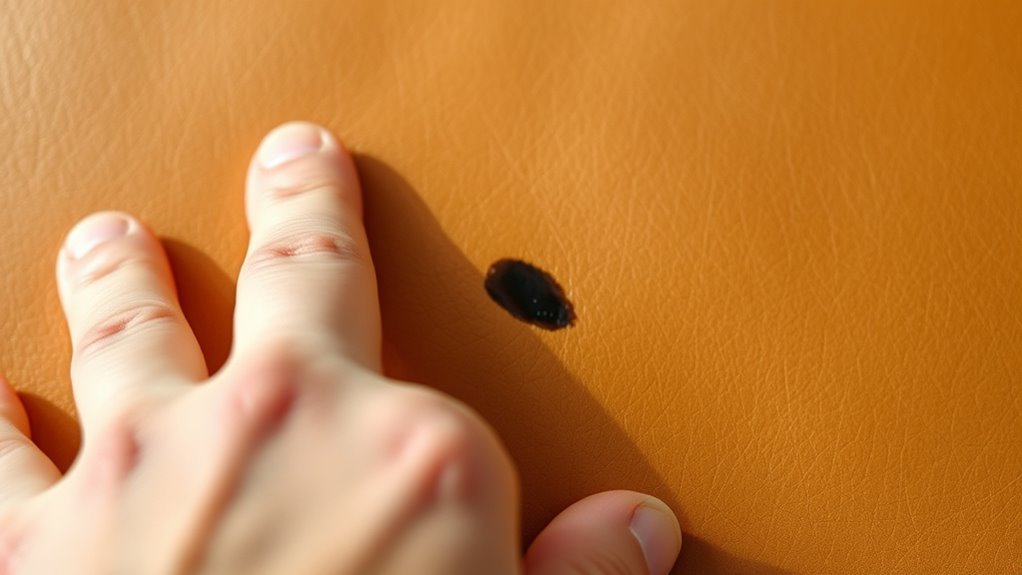
Before you begin removing ink from leather, you need to identify the type of leather and the kind of ink stain you’re dealing with. Is your leather smooth, suede, or nubuck? Each type reacts differently to cleaning methods.
Identify your leather type and ink stain before cleaning to ensure proper and safe ink removal methods.
Smooth leather usually handles gentle cleaning better, while suede and nubuck require extra care to avoid damage. Next, consider the ink source—is it ballpoint, gel, or permanent marker?
Ballpoint ink is oil-based and might lift easier, whereas permanent marker tends to be more stubborn. Knowing this helps you select the right approach that won’t harm your leather.
Also, check how fresh the stain is; a recent spill is much easier to tackle than an old, set-in mark. Taking these steps first sets you up for successful ink removal.
Gather Necessary Cleaning Supplies
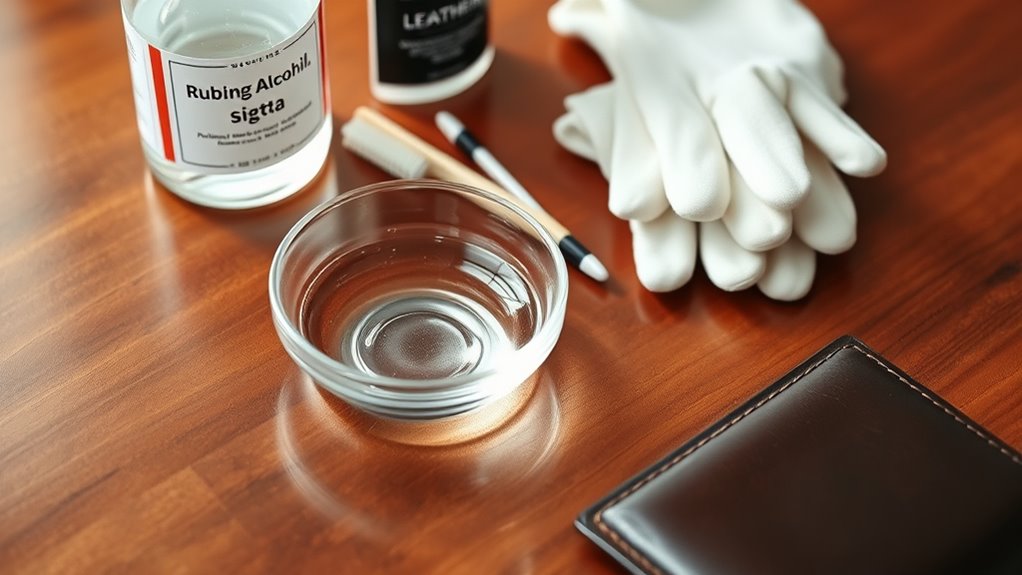
Since effective ink removal depends on using the right tools, you’ll need to gather specific cleaning supplies suited for your leather type and ink stain. Having everything ready will help you work efficiently and avoid further damage.
Here’s what you should collect:
- Mild leather cleaner or saddle soap
- Cotton swabs or soft cloths
- Rubbing alcohol or non-acetone nail polish remover (for stubborn stains)
- Distilled water (to dilute solutions if necessary)
- Leather conditioner (to restore moisture after cleaning)
Make sure the cloths are lint-free to prevent residue, and use gentle products tailored for leather to maintain its texture and color. With these supplies, you’re set to tackle the ink stain carefully and effectively.
Test Cleaning Solution on a Hidden Area
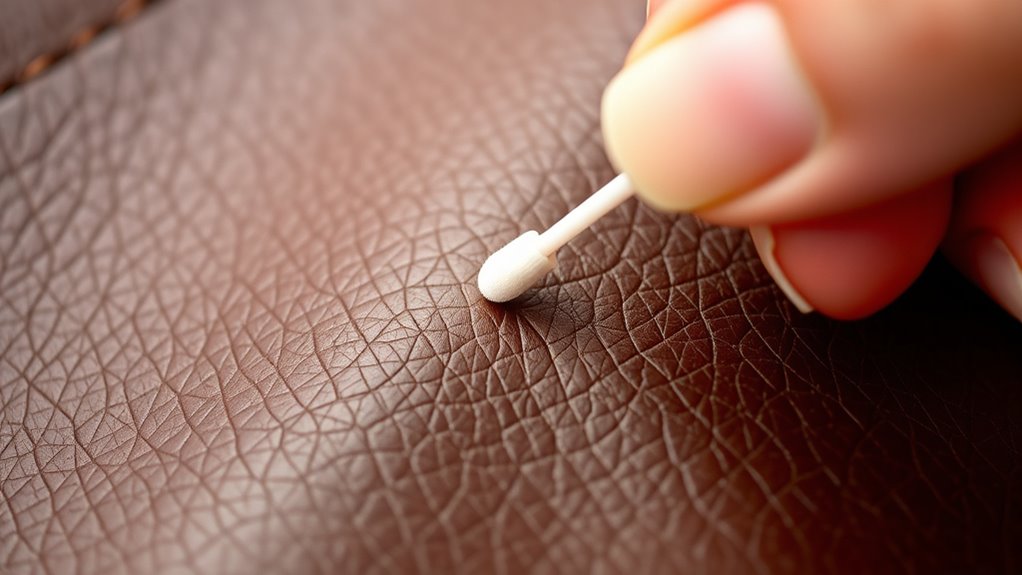
Although you’re enthusiastic to remove the ink stain, you should always test your cleaning solution on a hidden area of the leather first. This step guarantees the solution won’t discolor, damage, or dry out the leather.
Choose a spot that’s inconspicuous, like inside a seam or under a flap. Apply a small amount of the solution using a cotton swab or soft cloth, then wait a few minutes to observe any changes.
If the leather’s texture, color, or finish changes negatively, stop and try a different cleaning product. Testing protects your leather item from unintended harm and guarantees a safer cleaning process.
Once you’re confident the solution is safe, you can proceed with treating the visible ink stain.
Gently Blot the Ink Stain With Cleaning Solution
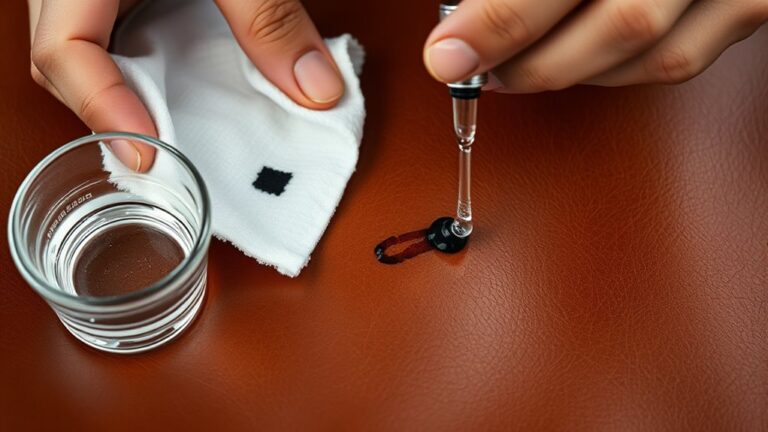
Choose a cleaning solution that’s safe for leather to avoid damage. Apply it carefully using a soft cloth or cotton swab directly on the ink stain.
Then, gently blot the area without rubbing to lift the ink without spreading it. This way, you’ll be more likely to remove the stain effectively without making things worse.
Choose Suitable Cleaning Solution
Before you start removing the ink stain, pick a cleaning solution that’s gentle enough for leather but effective against ink. Choosing the right product guarantees you won’t damage the leather while tackling the stain.
Here are some options you can consider:
- Rubbing alcohol diluted with water (test first)
- Mild dish soap mixed with warm water
- Leather-specific cleaner from a trusted brand
- White vinegar diluted with water (use sparingly)
- Commercial ink remover designed for leather
Always test your chosen solution on an inconspicuous spot before applying it to the stain. This helps you avoid discoloration or damage.
Apply Solution Carefully
Once you’ve picked a cleaning solution that’s safe for your leather, it’s time to apply it carefully to the ink stain. Dampen a clean, soft cloth or cotton swab with a small amount of the solution. Avoid soaking the leather, as too much moisture can damage it.
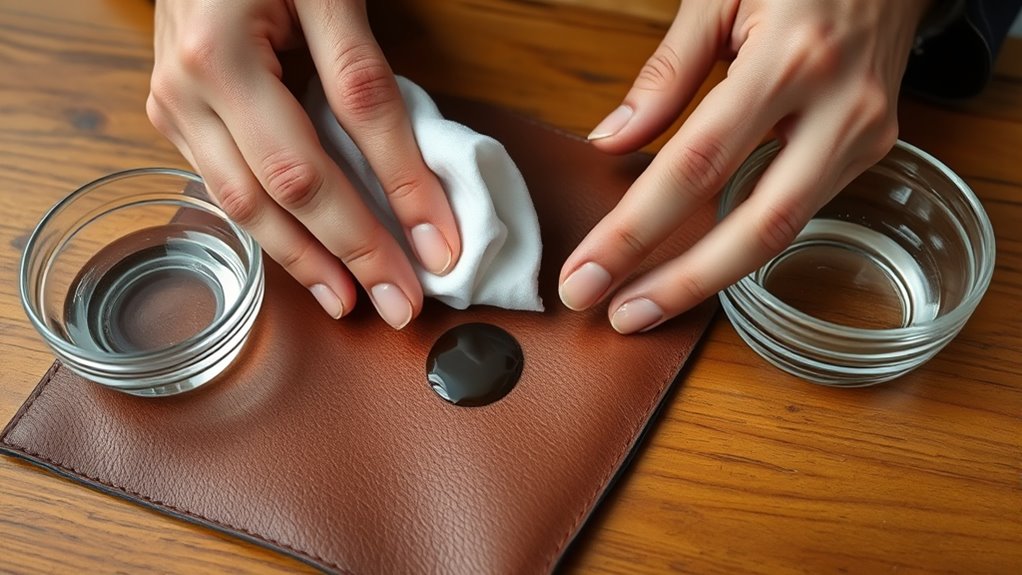
Gently press the cloth onto the ink stain, allowing the solution to absorb and loosen the ink. Work from the outside edges toward the center to prevent the stain from spreading. Take your time and use light pressure—this isn’t the moment for scrubbing.
If needed, reapply the solution sparingly, ensuring the leather stays just damp. Applying the solution carefully helps protect your leather’s surface while effectively targeting the ink stain. Just be patient, and you’ll see the stain start to lift without hurting your leather.
Blot Without Rubbing
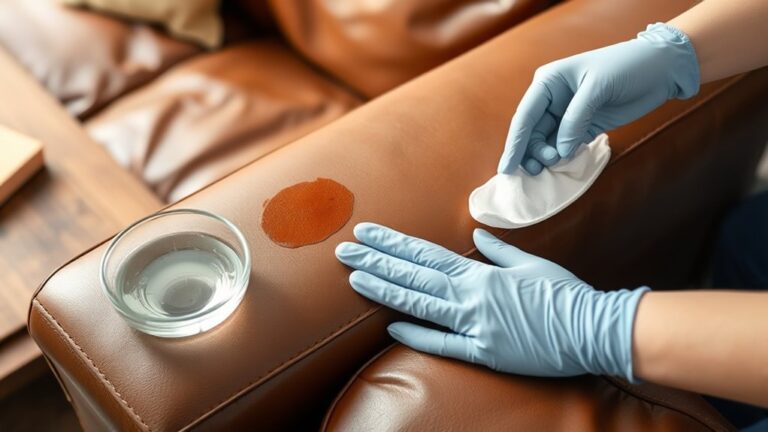
Although it might be tempting to scrub the stain, you should gently blot the ink with your cleaning solution instead. Rubbing can spread the ink or damage the leather’s surface.
To effectively blot without rubbing, follow these steps:
- Use a clean, white cloth or cotton pad to avoid color transfer.
- Dab the cloth lightly onto the stain, absorbing the ink.
- Replace the cloth frequently to prevent reapplying ink.
- Work from the outside of the stain toward the center.
- Be patient and repeat as necessary rather than applying excessive pressure.
This gentle approach helps lift the ink without harming the leather’s texture or finish. Remember, careful blotting preserves your leather while effectively removing the stain.
Use a Leather Conditioner to Restore Moisture
Even after successfully removing ink stains, your leather may feel dry or stiff. To bring back its natural suppleness, apply a leather conditioner.
Choose one that’s specifically designed for your type of leather and test it on a hidden area first to guarantee it won’t cause discoloration. Use a clean, soft cloth to apply a small amount of the conditioner in gentle, circular motions.
This helps the product absorb evenly and replenishes moisture lost during cleaning. Avoid over-saturating the leather, as too much conditioner can leave residue or attract dirt.
Regular conditioning not only restores softness but also protects the leather from cracking and extends its lifespan. It keeps your leather looking fresh and supple after your ink removal efforts.
Allow the Leather to Dry Naturally
While it’s tempting to speed up the drying process, you should let the leather dry naturally to prevent damage. Rushing this step can lead to stiffness, cracking, or discoloration.
To guarantee the best results, follow these tips:
- Place the leather item in a well-ventilated area away from direct sunlight. Avoid using hair dryers or heaters, as intense heat can harm the leather.
- Keep the leather on a flat surface to maintain its shape. Allow at least several hours, or overnight, for thorough drying.
- Check periodically to ensure it’s drying evenly and hasn’t developed any spots. Just be patient, and your leather will thank you!
Frequently Asked Questions
Can Ink Stains on Leather Cause Permanent Damage?
Yes, ink stains on leather can cause permanent damage if you don’t act quickly. Ink penetrates the material, making it tough to remove.
You’ll want to treat the stain as soon as possible to avoid lasting harm. Don’t wait too long! The sooner you deal with it, the better chance you have of saving your leather.
Is It Safe to Use Alcohol-Based Cleaners on All Leather Types?
You shouldn’t use alcohol-based cleaners on all leather types; you risk drying, discoloring, or damaging them. Always test on a hidden area first, just to be safe.
Choose gentle products whenever possible. And don’t forget to condition the leather afterward to keep it soft and supple. Taking these steps really helps protect your leather’s look and feel.
How Often Should Leather Be Conditioned After Cleaning Ink Stains?
You should condition leather right after cleaning ink stains and then every 3 to 6 months to keep it supple and protected.
If the leather feels dry or stiff sooner, condition it more often to maintain its quality.
It really helps to keep the leather looking and feeling great over time. Just pay attention to how it feels and adjust your routine as needed!
Can Professional Cleaning Remove Ink Stains Better Than Home Methods?
Yes, professionals can remove ink stains better because they use specialized products and techniques.
You might get great results at home, but experts usually handle tough stains more effectively and reduce the risk of damaging your leather.
Are There Any Natural Remedies for Removing Ink From Leather?
Yes, you can try natural remedies like rubbing alcohol diluted with water or using a small amount of coconut oil.
Make sure to test on a hidden spot first. This way, you can avoid any unwanted damage to the leather’s surface.
Gently dab the ink stain instead of rubbing it. That helps protect the leather while you work on removing the ink.
Conclusion
Now that you’ve tackled that stubborn ink stain, your leather looks as good as new—like a blank canvas ready for fresh stories. Remember, treating your leather gently and patiently not only removes ink but also preserves its natural beauty.
With the right care, your leather will continue to age gracefully, glowing with character rather than blemishes. So, take a deep breath, and enjoy the satisfaction of restoring your leather’s charm, one careful step at a time.
Removing ink from leather takes a bit of patience and the right method, but it’s totally worth it. By following these steps, you protect your leather’s texture and color while effectively getting rid of those pesky ink marks.
Keep in mind, consistent care and gentle cleaning are key to maintaining your leather’s look and durability. So next time you face an ink spill, you’ll know exactly how to take ink off leather without causing damage. Your leather will thank you with lasting beauty and charm!