
How to Take Ink off Skin With a Step-By-Step Guide
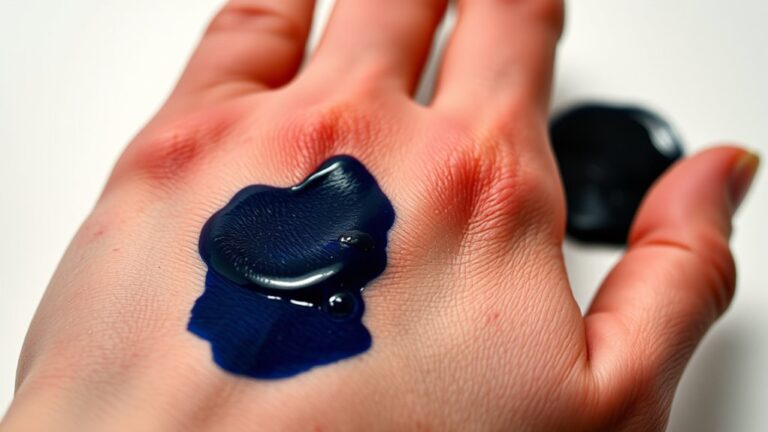
To take ink off your skin, start by gathering rubbing alcohol, mild soap, cotton balls, and warm water. These are your basic tools for tackling those pesky ink stains. Before you dive in, test a small area of your skin with the product you plan to use. This helps avoid any irritation or reaction.
Next, wash the stained spot gently with soap and warm water to loosen the ink.
After that, apply rubbing alcohol or hand sanitizer using a cotton ball in circular motions. This usually helps break down the ink effectively.
If the stain is stubborn, try using an oil like coconut or baby oil to help loosen the ink further.
Once the ink is gone, make sure to moisturize your skin to keep it healthy and protected. Keep exploring different methods to find what works best for you!
Key Takeaways
- Gather rubbing alcohol, cotton balls, mild soap, warm water, and moisturizer before starting the ink removal process. It’s good to have everything ready so you don’t have to stop midway.
- Test a small skin patch with your chosen product to check for irritation or allergic reactions. This step helps keep your skin safe and avoids surprises.
- Gently wash the inked area with mild soap and warm water to soften the skin and loosen ink. Take your time here, as rushing might irritate your skin.
- Apply rubbing alcohol or hand sanitizer on a cotton ball, rub the stain gently, then rinse with soap and water. Be gentle to avoid redness or discomfort.
- Use oil-based products like coconut or baby oil to break down ink, rinse thoroughly, and moisturize to soothe skin. This helps keep your skin smooth and hydrated after cleaning.
Gather Your Supplies
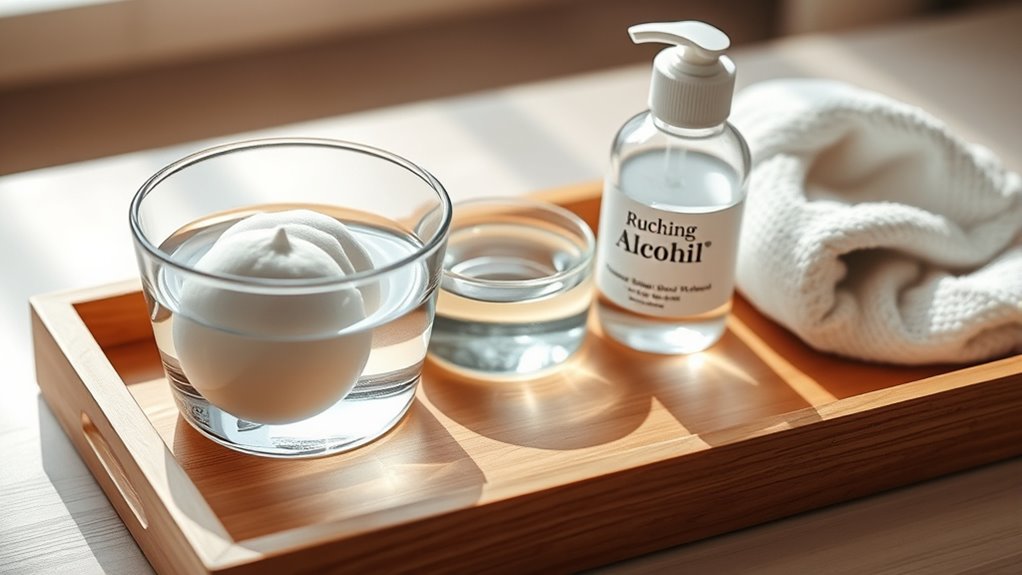
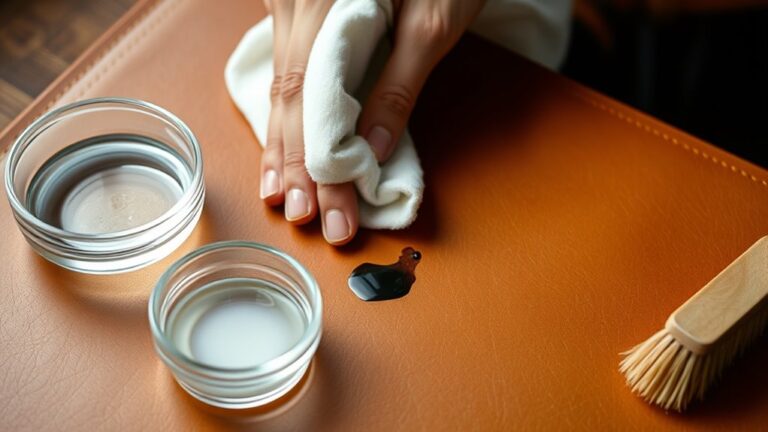
Before you begin removing ink from your skin, gather all the necessary supplies to make the process smoother. You’ll need some rubbing alcohol or hand sanitizer, cotton balls or pads, and mild soap.
Having a clean towel or paper towels nearby will help you dry the area quickly after cleaning. If rubbing alcohol isn’t available, some vegetable oil or baby oil can work as alternatives.
Keep a towel handy for drying, and use vegetable or baby oil if rubbing alcohol is unavailable.
Make sure you have warm water ready for rinsing. Avoid harsh scrubbing tools like abrasive sponges, which can irritate your skin.
Collecting everything upfront saves time and prevents interruptions during the removal process. When everything’s in place, you’ll be ready to tackle the ink efficiently and safely without causing unnecessary skin irritation.
Test for Skin Sensitivity
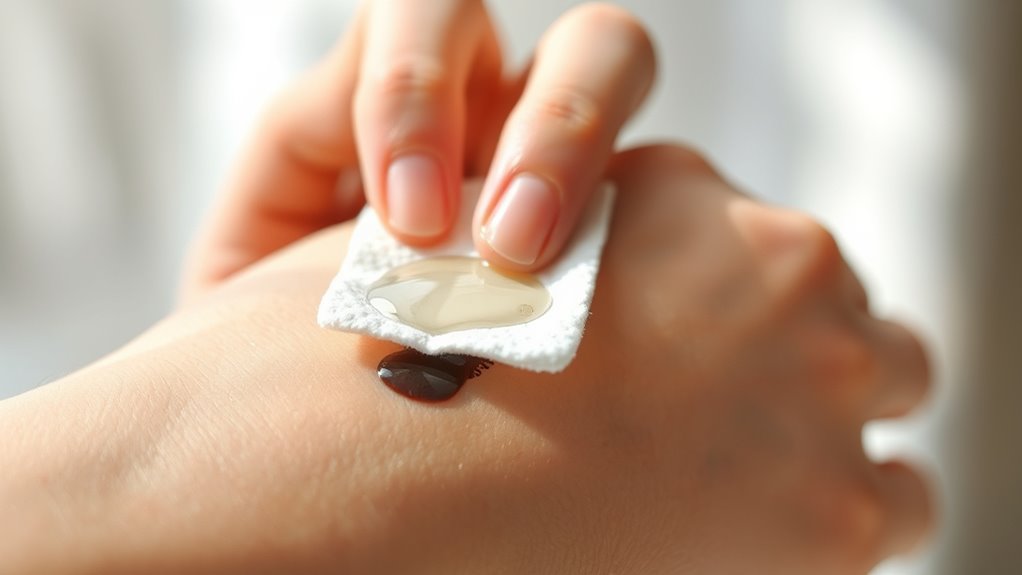
How can you make sure the ink removal method won’t irritate your skin? Before applying any product, test it on a small patch of skin, like your inner wrist or behind your ear.
Apply a tiny amount of the ink remover or household item you plan to use, then wait 10 to 15 minutes. Watch for redness, itching, burning, or swelling.
If you notice any irritation, avoid using that product on larger skin areas. This quick test helps prevent allergic reactions or discomfort.
Everyone’s skin reacts differently, so even if a method worked for others, it might not suit you. Taking this precaution keeps your skin safe while effectively removing ink without causing harm.
Always prioritize your skin’s health during the process. It’s better to be safe than sorry!
Use Soap and Warm Water
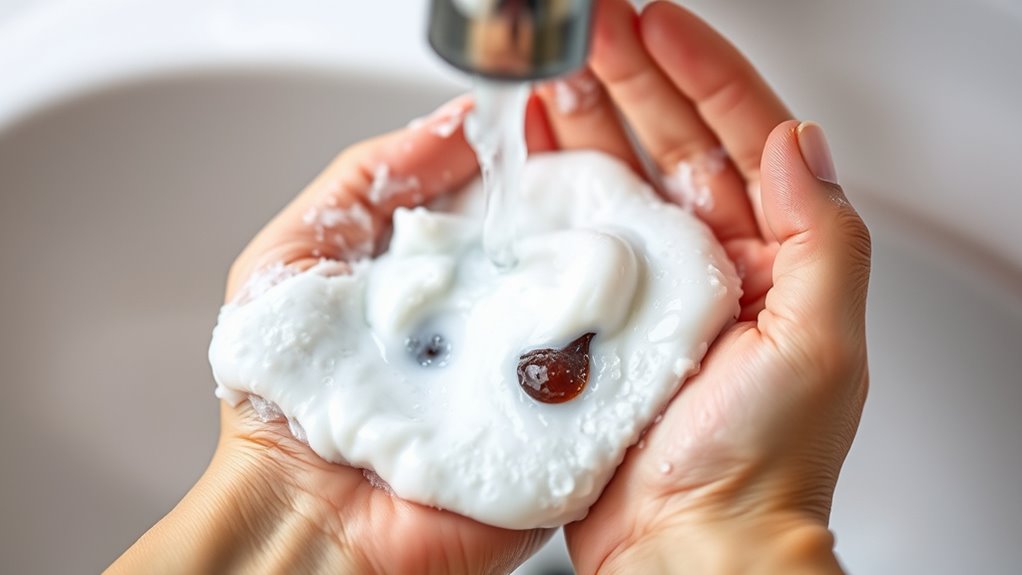
To remove ink from your skin, start with a mild soap to avoid irritation. Warm water helps open your pores, making it easier to wash away the ink.
You’ll find this simple combination effective and gentle. It’s a quick and easy way to get rid of that stubborn ink without harsh scrubbing. Give it a try!
Choose Mild Soap
A gentle soap paired with warm water works effectively to break down ink on your skin without causing irritation. When choosing a soap, opt for one labeled as mild, fragrance-free, or designed for sensitive skin.
These soaps contain fewer harsh chemicals and won’t strip your skin’s natural oils, which helps prevent dryness and redness. Avoid antibacterial or heavily scented soaps, as they can aggravate your skin, especially if you have any cuts or scrapes.
Simply apply a small amount of mild soap to the ink-stained area, lather gently, and rinse with warm water. Repeat if necessary, but don’t scrub too hard to avoid irritation.
Using mild soap ensures you clean your skin safely while effectively lifting the ink. It’s a simple step that really makes a difference!
Warm Water Benefits
Although it might seem simple, using warm water when washing ink off your skin considerably boosts the soap’s effectiveness. Warm water helps open your pores, allowing the soap to penetrate deeper and break down the ink more efficiently.
When you rinse with warm water, it loosens the ink particles, making them easier to wash away. Additionally, warm water softens your skin, reducing irritation that cold water might cause when scrubbing.
Just make sure the water isn’t too hot, or it could dry out or damage your skin. By combining mild soap with warm water, you create the perfect environment to lift ink without harsh scrubbing.
Apply Rubbing Alcohol or Hand Sanitizer
Wondering how to quickly remove ink stains from your skin? Applying rubbing alcohol or hand sanitizer is a reliable method. First, pour a small amount of rubbing alcohol or hand sanitizer onto a cotton ball or directly on the stained area.
Then, gently rub the ink stain in circular motions. You’ll notice the ink starting to lift off as the alcohol breaks down the pigments. Be careful not to scrub too hard to avoid irritating your skin.
After the ink fades, rinse your skin with warm water and mild soap to remove any residual alcohol. Pat the area dry and apply moisturizer to soothe your skin.
This method works well for fresh or stubborn ink marks, offering a quick and effective solution without harsh scrubbing. Give it a try next time you get ink on your skin!
Try Oil-Based Products
If rubbing alcohol doesn’t do the trick, try using oil-based products like coconut oil, olive oil, or baby oil to break down the ink on your skin. These oils work by loosening the ink’s grip, making it easier to wipe away.
Apply a small amount of your chosen oil to a cotton ball or directly onto your skin. Then, gently rub the stained area in circular motions for a minute or two. You’ll notice the ink starting to lift.
Once the ink fades, rinse the area with warm water and mild soap to remove any oily residue. Repeat if necessary, but avoid harsh scrubbing to protect your skin.
Oil-based products are gentle and effective, especially for sensitive skin types. So, give it a try and see how well it works for you!
Moisturize and Care for Your Skin
Once you’ve removed the ink, you should moisturize your skin to restore its natural barrier and prevent dryness or irritation. Skipping this step can leave your skin feeling tight, flaky, or sensitive.
To care for your skin effectively, follow these tips:
- Apply a gentle, fragrance-free moisturizer to soothe and hydrate.
- Use products with ingredients like aloe vera or shea butter for extra nourishment.
Avoid harsh soaps or scrubs that can strip away moisture. Also, keep your skin protected from sun exposure by applying sunscreen if you’re heading outdoors. It really helps keep your skin healthy and happy!
Frequently Asked Questions
Can Ink Stains Cause Allergic Reactions on Skin?
Yes, ink stains can cause allergic reactions on your skin, especially if you’re sensitive to certain chemicals. You might experience redness, itching, or swelling.
If that happens, wash the area gently and avoid further contact. It’s always a good idea to keep an eye on how your skin reacts and maybe try to steer clear of that ink in the future.
Is It Safe to Use Nail Polish Remover on Skin?
It’s generally not safe to use nail polish remover on your skin because it can irritate or dry it out.
Instead, you should try gentler options like soap and water or baby oil to avoid discomfort.
These alternatives are much kinder to your skin and can effectively remove polish without causing harm.
How Long Does Ink Typically Stay on Skin Without Treatment?
Ink typically stays on your skin for several days without treatment, usually fading within 3 to 7 days as your skin naturally exfoliates.
You can speed this up by gently scrubbing or using cleansing products. Just be careful not to irritate your skin while doing so.
Can Ink Stains Be Removed From Sensitive Baby Skin?
Yes, you can remove ink stains from sensitive baby skin gently. Use mild soap and warm water, avoid harsh chemicals, and gently dab the area.
Always test a small spot first to prevent irritation or dryness. This way, you can be sure the skin reacts well before treating the entire stain.
Are There Natural Remedies to Remove Ink From Skin?
Of course, you don’t want to rub lemon juice and baking soda on your skin—that’s exactly what your skin craves, right?
But seriously, natural remedies like coconut oil and aloe vera gently lift ink without harsh chemicals.
Conclusion
Now that you’ve tackled ink like a modern-day alchemist, remember that patience and care are your best allies. Just as a painter gently blends colors to create a masterpiece, treat your skin with kindness throughout the process.
With these steps, you’re not just erasing ink—you’re preserving the canvas that is your skin. So, go ahead and wipe away those marks confidently, knowing you’ve got the magic touch.
Removing ink from skin doesn’t have to be a hassle. By following this step-by-step guide, you can safely and effectively take ink off skin without irritation. Keep your skin healthy and clean while saying goodbye to those stubborn ink stains!