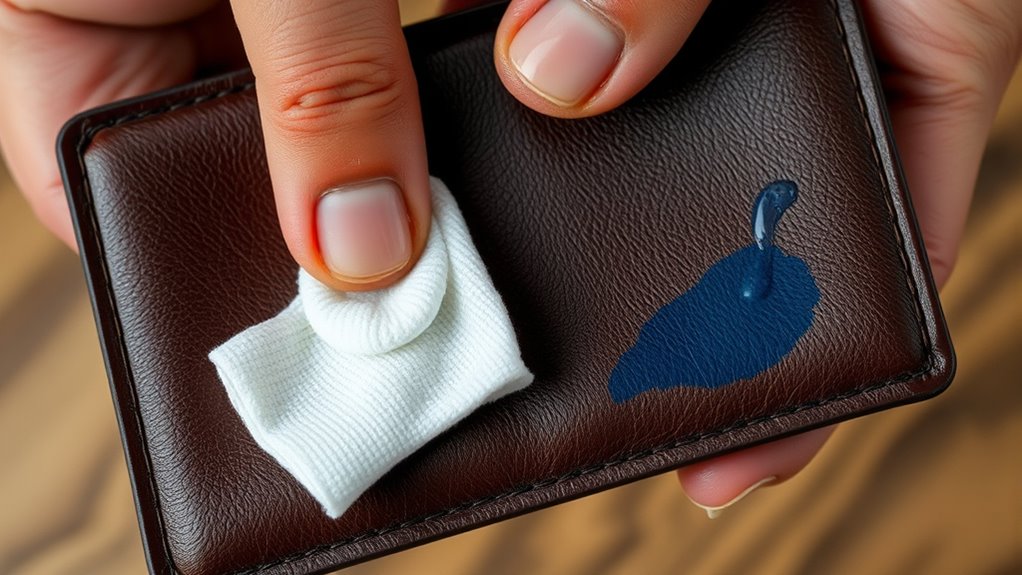
How to Get Ink Pen Off Leather
To get ink pen off leather, start by figuring out what type of leather you have—whether it’s aniline or pigmented. This is important because it affects how you should clean it. You don’t want to accidentally damage your leather by using the wrong method.
Next, grab a soft cloth and always test any cleaning product in a hidden spot first. A little caution goes a long way.
Then, gently dab the ink stain with 70% isopropyl alcohol on a cotton ball. Avoid harsh rubbing as that can make things worse.
After lifting the ink, clean and condition the leather to bring back its moisture and softness.
For tougher stains, you might want to try home remedies like toothpaste or milk.
If you’re interested in protecting your leather and refining your cleaning skills, there’s definitely more to explore.
Key Takeaways
– Identify your leather type and test ink removal methods on a hidden spot to avoid damage or discoloration.
This little step can save you a lot of trouble down the road!
– Dab the ink stain gently with a cotton ball moistened in 70% isopropyl alcohol, avoiding harsh rubbing.
Be gentle here; rubbing too hard might make things worse.
– Wipe the treated area with a damp cloth to remove alcohol residue and let the leather air dry completely.
Patience is key — let it dry naturally.
– Clean the area afterward with a leather cleaner and apply conditioner to restore moisture and protect the leather.
This helps keep your leather looking its best and feeling soft.
– For minor stains, use home remedies like non-gel toothpaste or a lemon juice and cream of tartar paste cautiously.
Just remember to test these out first, so you don’t accidentally harm your leather!
Assessing the Type of Leather and Ink
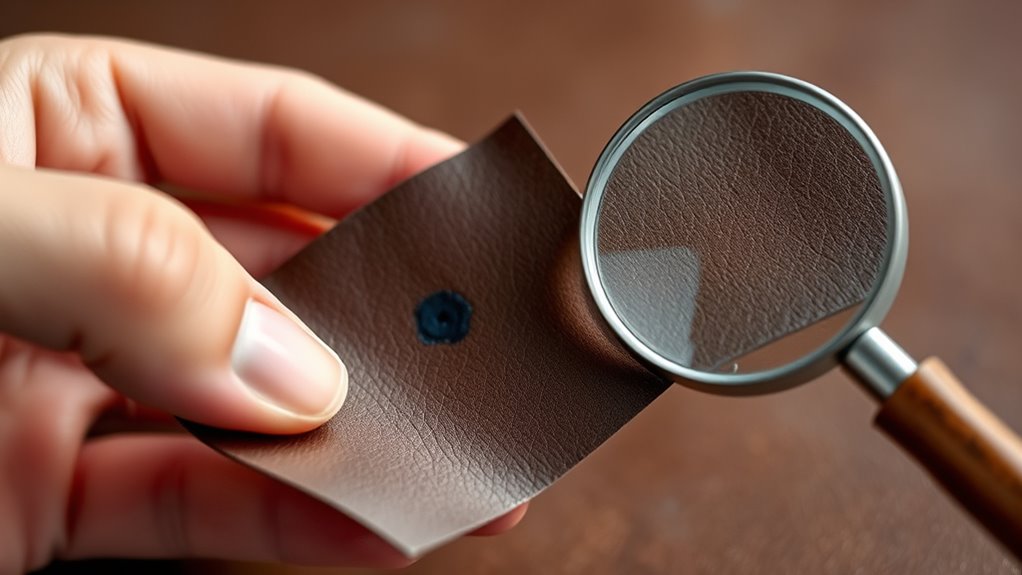
Before you begin removing ink from leather, you need to identify both the type of leather and the kind of ink involved. Different leathers, like aniline, semi-aniline, or pigmented, react differently to cleaning methods.
Aniline leather is more delicate and absorbs ink quickly, so you’ll need gentler techniques. Pigmented leather has a protective coating, making it easier to clean.
Next, check the ink type. Ballpoint ink is oil-based and often easier to remove than permanent or gel ink, which tend to set deeper.
Knowing the ink type helps you choose the right solvent or cleaner. If you’re unsure, test a small, hidden area first to see how the leather responds. This step prevents damage and guarantees effective ink removal.
Preparing Your Cleaning Materials
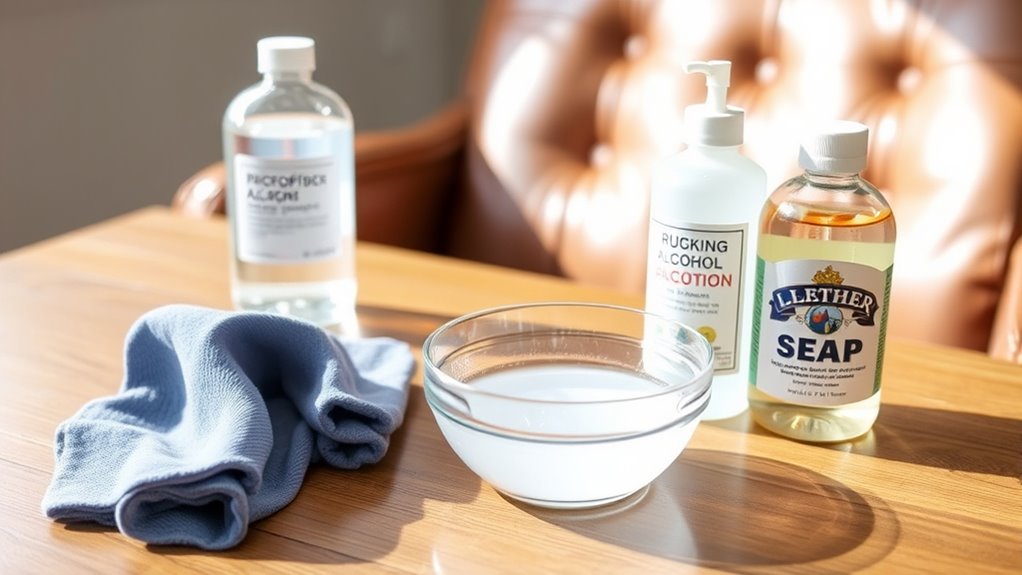
While gathering your cleaning materials, focus on items that are gentle yet effective on leather, such as a soft cloth, mild soap, and a leather-safe ink remover. Choose a microfiber or cotton cloth to avoid scratching the surface.
Mild, pH-balanced soap works well for general cleaning without damaging the leather’s finish. Avoid harsh chemicals that can strip color or dry out the material.
Have a small bowl of lukewarm water ready for mixing soap and rinsing the cloth. Additionally, keep cotton swabs handy for precision cleaning in tight spots.
Before you start, test all products on an inconspicuous area to ensure they don’t cause discoloration. Preparing these materials carefully sets the stage for safe and effective ink removal from your leather item.
Using Rubbing Alcohol to Remove Ink Stains
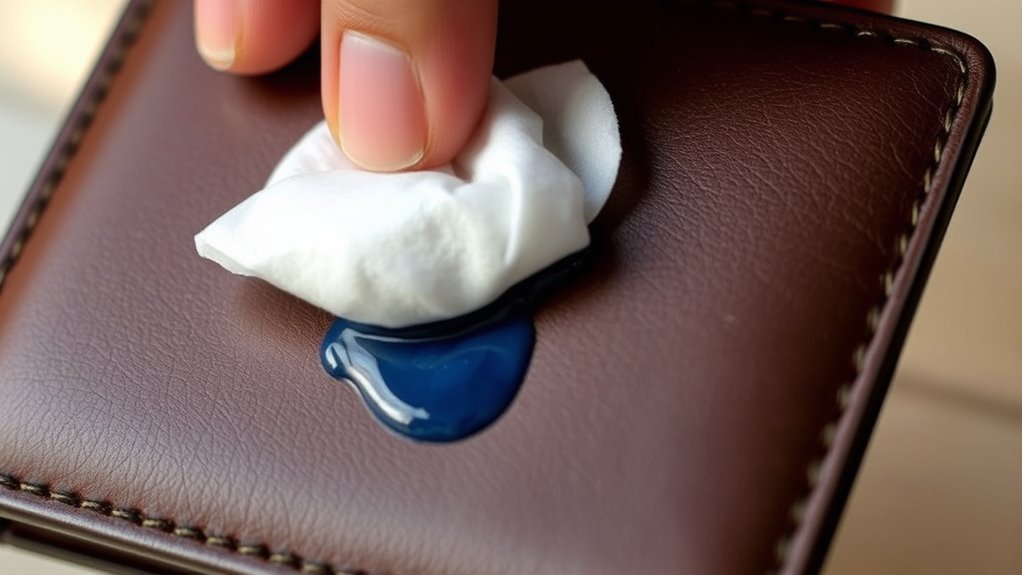
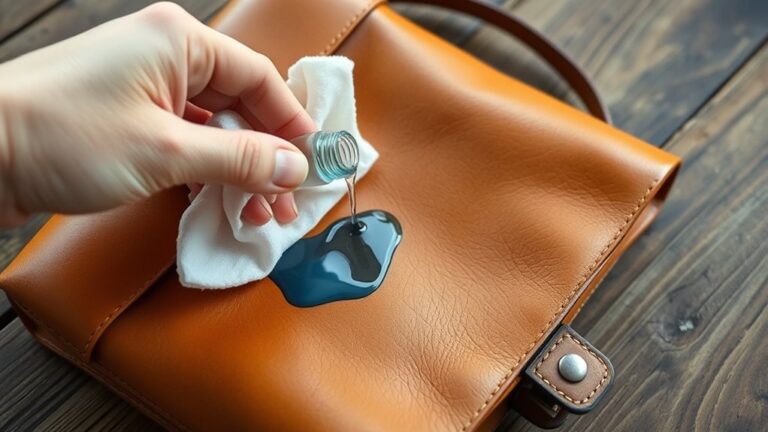
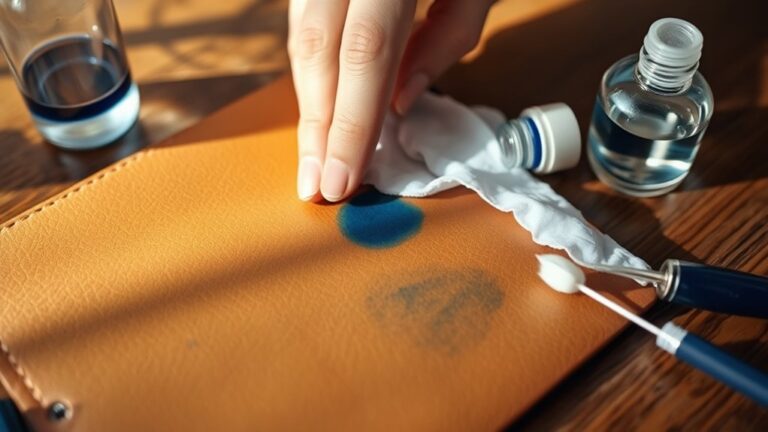
Once you have your materials ready and have tested them on a hidden spot, you can move on to tackling the ink stain using rubbing alcohol. Dampen a cotton ball or soft cloth with rubbing alcohol—don’t soak it—and gently dab the ink stain.
Avoid rubbing harshly to prevent damaging the leather. You should see the ink starting to lift. Continue blotting with clean areas of the cloth until the stain fades. When finished, wipe the area with a damp cloth to remove any alcohol residue.
Keep these tips in mind:
- Use 70% isopropyl alcohol for best results
- Work in small sections to control the process
- Never pour alcohol directly onto leather
- Blot gently, don’t scrub
- Allow the leather to air dry completely before touching
Applying Leather Cleaner and Conditioner
After lifting the ink stain with rubbing alcohol, you should apply a leather cleaner to remove any remaining residue and prepare the surface for conditioning. Use a soft cloth or sponge to gently work the cleaner into the leather, following the product’s instructions.
This step guarantees the ink doesn’t seep deeper and that the leather stays clean and healthy. Once the cleaner has dried, apply a leather conditioner to restore moisture and flexibility.
Conditioning prevents the leather from drying out or cracking after treatment. Use a small amount and rub it evenly over the area with a microfiber cloth. Let it absorb fully before using the item again.
Regular cleaning and conditioning keep your leather looking its best and extend its lifespan. So, make it a habit to care for your leather goods properly!
Home Remedies for Ink Stain Removal
If you don’t have commercial leather cleaners on hand, you can try several effective home remedies to tackle ink stains. These options use common household items and can help lift ink without damaging your leather.
Dab the stain gently with a cotton swab dipped in rubbing alcohol. Apply a small amount of non-gel toothpaste and rub softly with a damp cloth.
You can also use a mixture of lemon juice and cream of tartar to form a paste; apply it carefully. Another trick is to moisten a cloth with milk and blot the ink spot, then wipe with a clean damp cloth.
Or try a small amount of hairspray on a cloth, then gently dab the stain before wiping. Just remember, always test any remedy on a hidden area first to avoid discoloration.
Preventing Future Ink Stains on Leather
To keep your leather looking its best, you should condition it regularly and apply protective sprays designed for leather. These steps create a barrier that helps prevent ink from soaking in.
Plus, if an ink stain happens, acting quickly can stop it from setting permanently. So, don’t wait too long before treating any marks you notice!
Regular Leather Conditioning
While ink stains can be stubborn, you can greatly reduce their occurrence by regularly conditioning your leather. Conditioning keeps the leather supple and creates a protective barrier that repels ink and other liquids.
By maintaining your leather’s natural oils, you prevent cracks and dryness where ink tends to settle. Make conditioning part of your routine to keep your leather looking fresh and resistant to stains.
Here are five tips for effective leather conditioning:
- Use a conditioner designed specifically for your leather type
- Clean the leather gently before applying conditioner
- Apply conditioner evenly with a soft cloth
- Let the leather absorb the conditioner fully before use
- Condition your leather every 3-6 months for best protection
Regular care helps keep ink stains at bay and extends your leather’s life. So, don’t skip it!
Using Protective Leather Sprays
Although regular conditioning protects your leather, using protective leather sprays adds an extra shield against ink stains. These sprays create a thin, invisible barrier that repels liquids, preventing ink from soaking into the leather fibers.
Before applying, make sure your leather is clean and dry. Spray evenly from about six inches away, covering all areas prone to contact with pens or other staining agents.
Let the spray dry completely, usually for a few hours, before using the item. Reapply the spray every few months or after cleaning to maintain protection.
Using these sprays doesn’t just help prevent stains; it also preserves the leather’s natural texture and appearance. By adding this simple step to your routine, you reduce the risk of stubborn ink marks and keep your leather looking fresh longer.
Immediate Ink Stain Response
If you catch an ink stain early, you can stop it from setting into your leather permanently. Acting quickly is key to preventing permanent damage.
As soon as you notice the ink, avoid rubbing it, which can spread the stain. Instead, gently blot the area with a clean cloth to absorb excess ink. Then, use a mild leather cleaner or a damp cloth to carefully treat the spot.
To prevent future ink stains on leather, follow these tips: keep pens capped and away from leather items. Also, store leather separately from writing tools.
Use protective leather sprays regularly. Clean spills immediately with a soft cloth. And make sure you educate yourself on proper leather care products.
Taking these steps helps keep your leather looking pristine. It’s all about staying on top of things!
Frequently Asked Questions
Can Ink Pen Stains Damage Leather Permanently?
Yes, ink pen stains can damage leather permanently if you don’t act quickly. Leather absorbs ink, making stains tough to remove.
You’ll want to treat the stain immediately to prevent lasting damage and preserve your leather’s quality. Don’t wait too long! The sooner you address it, the better your chances of saving the leather.
Is It Safe to Use Nail Polish Remover on Leather?
Using nail polish remover on leather is like playing with fire—you shouldn’t. It contains harsh chemicals that can strip color and damage the surface.
Instead, test a small hidden spot first or opt for leather-specific cleaners to stay safe. Trust me, it’s better to be cautious with leather!
How Long Should I Wait Before Cleaning Fresh Ink Stains?
You should start cleaning fresh ink stains on leather as soon as possible, ideally within minutes. Waiting too long lets the ink set, making removal harder.
Plus, it increases the risk of permanent damage to your leather item. So, don’t delay when you spot that stain!
Can Ink Stains Be Removed From Suede Leather?
Ink stains can be tricky on suede leather, but you can remove them! Don’t let the stain feel like a stubborn mountain; gently dab with rubbing alcohol and a soft cloth, then brush with a suede brush to restore it.
It might take a little patience, but you’ll get there. Just remember to be gentle and avoid soaking the suede. A little care goes a long way!
Are Commercial Ink Removers Effective on Leather Surfaces?
Commercial ink removers can be effective on leather, but you should test them on a small, hidden area first. They might cause discoloration or damage, so always follow instructions carefully.
And hey, it’s a good idea to consider using a leather conditioner afterward. This helps keep your leather soft and looking great.
Conclusion
Removing ink from leather might seem tricky, but with the right approach, it’s surprisingly manageable. While harsh chemicals can damage delicate leather, gentle remedies like rubbing alcohol and leather conditioner work in harmony to restore its beauty.
You’ll find that patience and care turn a frustrating stain into a simple fix. By treating your leather thoughtfully, you not only erase mistakes but also protect its elegance, blending repair with prevention seamlessly.
So, if you’re wondering how to get ink pen off leather, remember to be gentle and use the right products. Taking these steps helps keep your leather looking its best while successfully removing those stubborn ink stains. With a little effort, you can keep your leather items looking clean, fresh, and well-maintained.