How to Remove Pen Ink From a Leather Couch Step by Step
First, identify your leather type and check how fresh the ink stain is. This step is crucial because different leather types react differently to cleaning solutions.
Gather soft cloths, rubbing alcohol or a leather-safe ink remover, and mild soap. Having the right materials on hand makes the process smoother and safer for your couch.
Test your chosen cleaner on a hidden spot to avoid damage. You don’t want to accidentally ruin the leather while trying to remove the ink.
Then, gently dab the ink using a soft cloth, working from the edges inward. This helps prevent the stain from spreading further.
Blot dry carefully and apply leather conditioner once the area’s dry. Conditioning keeps the leather soft and prevents it from drying out after cleaning.
Following these steps will help restore your couch’s appearance and feel, with more detailed tips available.
Key Takeaways
- Identify the ink stain’s size, color, and freshness, and confirm your leather type before starting the cleaning process.
- Gather soft cloths, rubbing alcohol or leather-safe ink remover, mild soap, and water for safe cleaning.
- Test your chosen cleaning solution on a hidden leather spot to check for discoloration or damage.
- Gently dab the ink stain with a soft cloth or cotton swab using circular motions, avoiding excessive moisture and scrubbing.
- Blot the area dry with a soft cloth, air dry away from heat, and apply leather conditioner to restore softness and protection.
Assess the Ink Stain and Leather Type
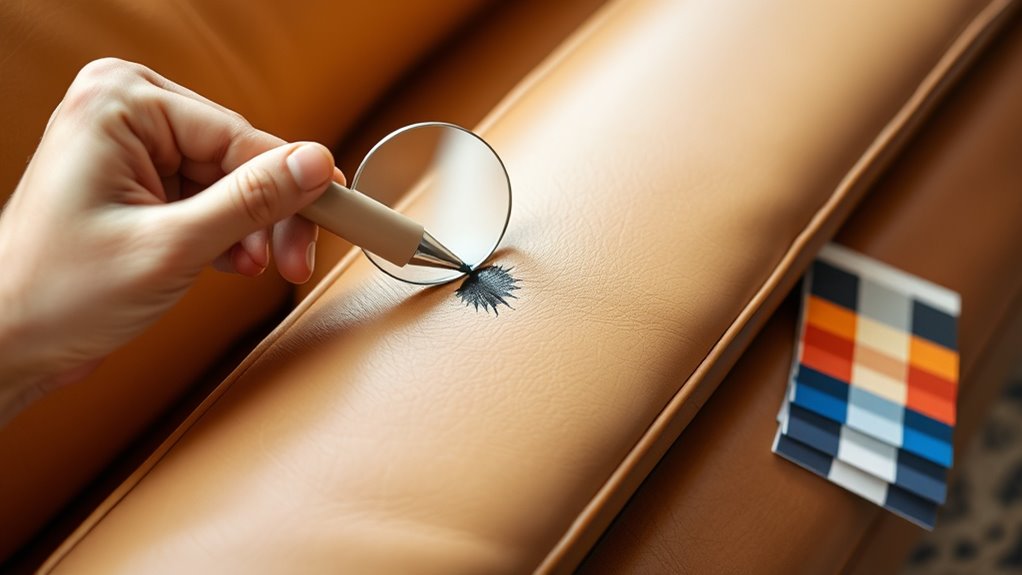
Before you begin cleaning, carefully assess the ink stain and identify your couch’s leather type. Take a close look at the stain’s size, color intensity, and whether it’s fresh or dried. Fresh ink is easier to remove, so acting quickly helps.
Next, determine your leather type—aniline, semi-aniline, or protected leather—because each requires different care. Aniline leather is more delicate and porous, so harsh cleaners could damage it. Protected leather has a coating that offers more resistance to stains.
You can usually find the leather type in your couch’s care manual or by contacting the manufacturer. Understanding both the stain and leather type will help you choose the safest and most effective cleaning approach, preventing further damage while targeting the ink precisely.
Gather Necessary Cleaning Supplies
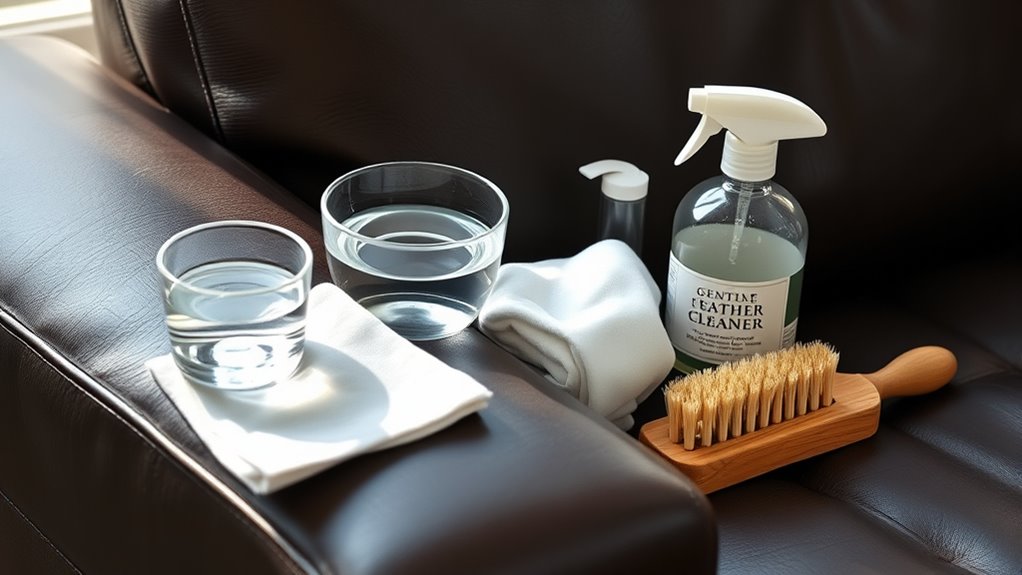
Since tackling ink stains requires the right tools, you’ll want to gather all necessary cleaning supplies before you start. Having everything at hand makes the process smoother and prevents delays that might let the ink set deeper into the leather.
Gathering all your cleaning supplies beforehand ensures a smooth process and prevents ink from setting deeper into leather.
Here’s what you’ll need:
- Soft white cloths or microfiber towels for gentle cleaning
- Rubbing alcohol or leather-safe ink remover to break down the ink
- Mild liquid soap mixed with water for cleansing
- A small bowl or container to hold your cleaning solutions
Make sure these items are clean and ready to use. Avoid harsh chemicals or abrasive tools, as they can damage your leather couch.
With these supplies gathered, you’re prepared to proceed confidently with the next steps in removing that stubborn pen ink.
Test Cleaning Solution on a Hidden Area
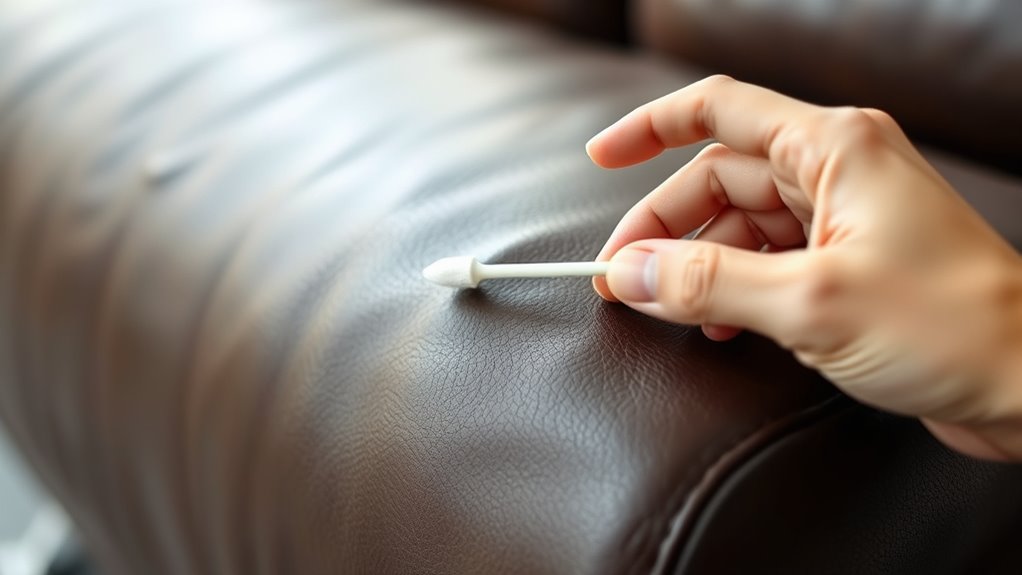
Once you have your cleaning supplies ready, you’ll want to test your chosen solution on a hidden spot of the leather couch. This step is vital to ensure the cleaner won’t discolor or damage the leather.
Pick a small, inconspicuous area, like the underside or back of a cushion. Apply a small amount of the solution using a cotton swab or soft cloth.
Wait a few minutes to see if any color fades, darkens, or the leather texture changes. If you notice any adverse effects, stop immediately and try a different cleaning product.
Only proceed if the leather remains unaffected. Testing first protects your couch from permanent damage and helps you clean safely and effectively when you tackle the ink stain.
Gently Apply the Cleaning Solution to the Stain
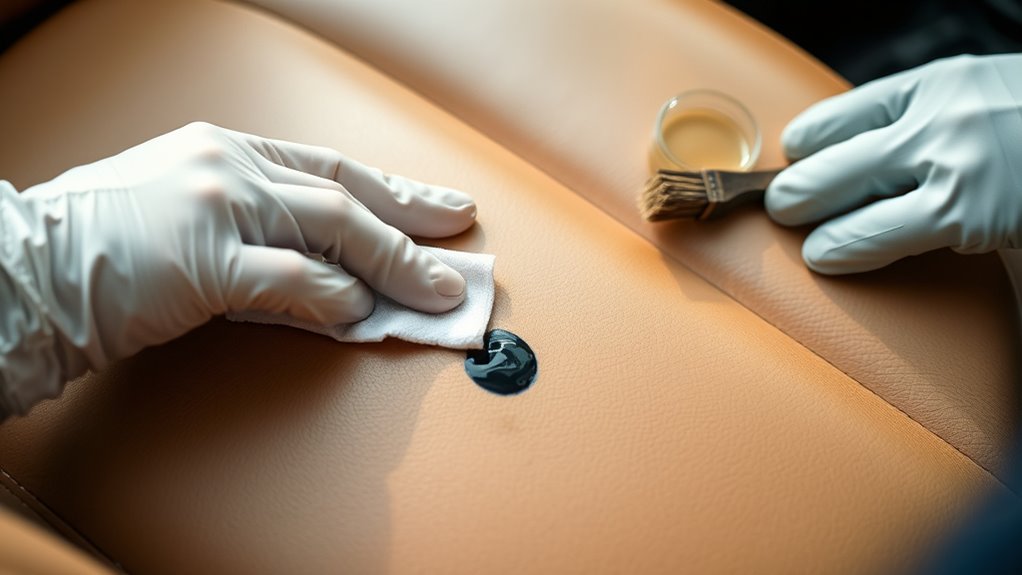
Although it may be tempting to scrub the ink stain vigorously, you should gently apply the cleaning solution to avoid damaging the leather. Instead, use a soft cloth or cotton swab and lightly dab the stain.
Gently dab ink stains with a soft cloth to protect your leather from damage.
This approach helps lift the ink without spreading it or harming the surface.
Keep these tips in mind as you work:
- Apply the solution sparingly; too much moisture can saturate the leather.
- Use gentle, circular motions to coax the ink out.
- Avoid harsh rubbing, which can discolor or roughen the leather.
- Work from the outside of the stain toward the center to prevent spreading.
Wipe and Dry the Treated Area Carefully
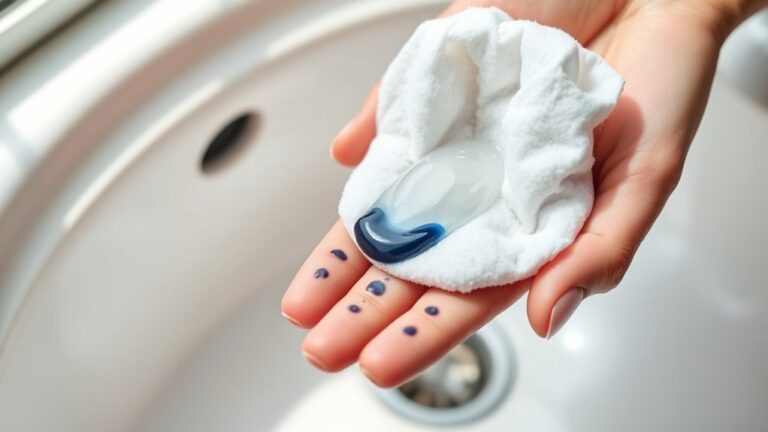
After applying the cleaning solution, use a soft cloth to gently blot the stain without rubbing. Be careful not to spread the ink further or damage the leather.
Let the area air dry naturally to avoid moisture buildup and maintain the leather’s condition. Just give it some time, and try not to rush the drying process.
Use a Soft Cloth
When you’ve applied the cleaning solution to the ink stain, grab a soft cloth to gently wipe the area. Using a soft cloth helps prevent damage or scratches on your leather couch while effectively lifting the ink.
Here’s how to do it right:
- Choose a microfiber or cotton cloth for softness and absorbency.
- Wipe in gentle, circular motions to avoid spreading the ink.
- Avoid pressing too hard; let the cloth absorb the stain gradually.
- After wiping, use a dry section of the cloth to pat the area dry carefully.
This method ensures the leather stays intact and the ink lifts without rubbing deeper into the material. Always handle your couch with care during cleaning to maintain its quality.
Gentle Blotting Technique
Once you’ve gently wiped the ink stain with a soft cloth, you’ll want to carefully blot the area to remove any remaining moisture and cleaning solution.
Take a clean, dry microfiber cloth or paper towel and press it lightly against the treated spot. Avoid rubbing, as this can spread the ink or damage the leather’s surface.
Instead, use a gentle dabbing motion to absorb excess liquid. Change to a fresh section of the cloth as it becomes damp to prevent reapplying ink back onto the leather.
This step is vital because it helps prevent watermarks and guarantees the ink doesn’t seep deeper into the material. By blotting patiently and carefully, you’ll protect your leather while preparing it for the next stage of cleaning.
Allow Natural Air Drying
While you might be tempted to speed up the drying process, letting the leather air dry naturally is essential to preserve its texture and color. After you’ve carefully wiped the treated area with a clean, dry cloth, avoid using heat sources like hairdryers or direct sunlight.
Instead, follow these simple steps to guarantee the best results:
- Gently pat the area with a soft cloth to remove excess moisture
- Place the couch in a well-ventilated room for faster drying
Try not to sit or place objects on the damp spot until it’s fully dry. Also, resist touching or rubbing the area to prevent any damage.
Condition the Leather to Restore Softness
Although you’ve successfully removed the ink, the leather may feel dry or stiff. To bring back its softness and prevent cracking, it’s essential to condition the leather.
Start by selecting a good-quality leather conditioner suitable for your couch type. Apply a small amount to a clean, soft cloth and gently rub it into the leather in circular motions.
Focus on the cleaned areas but don’t forget the rest of the couch to maintain an even finish. Let the conditioner absorb for about 15 to 20 minutes, then buff the surface with a dry cloth to remove any excess.
Conditioning not only restores moisture but also helps protect the leather from future damage. This way, your couch stays looking supple and well-maintained.
Frequently Asked Questions
Can Pen Ink Permanently Damage Leather Couches?
Yes, pen ink can permanently damage leather couches if you don’t act quickly. You’ll want to treat the stain as soon as possible to avoid deep absorption.
Once the ink soaks in deeply, it becomes much harder or even impossible to remove. So, the quicker you address it, the better your chances of saving your couch.
How Long Does It Take for Ink to Set on Leather?
Ink usually starts setting on leather within minutes, but it can fully penetrate and stain in about 24 hours.
You’ll want to act quickly to clean it before it becomes permanent and harder to remove.
The sooner you address the ink, the better your chances of getting it out completely. Don’t wait too long!
Are There Specific Ink Brands That Are Easier to Remove?
Yes, you’ll find some ink brands, like washable or water-based inks, are easier to remove from leather.
Permanent and gel inks tend to set quickly and resist cleaning, so avoid those for better cleanup.
It’s all about choosing the right type of ink if you want an easier removal process later on.
Can Professional Cleaning Services Guarantee Ink Removal?
You won’t find a magic wand, but professionals often promise near-perfect results.
While they can’t guarantee total ink removal, their expertise and tools give you the best shot at restoring your leather’s original beauty.
What Prevention Methods Stop Ink Stains on Leather?
You can prevent ink stains on leather by keeping pens away from the couch, using protective covers, and regularly conditioning the leather to create a barrier.
Quick cleanup of any spills also helps stop stains from setting in.
It’s all about being proactive and treating your leather with care. That way, you keep it looking great for longer!
Conclusion
Now that you’ve assessed the stain, gathered your supplies, and tested your solution, you’re ready to clean confidently. Apply gently, wipe carefully, and dry thoroughly to protect your leather.
Remember to condition afterward to keep it soft, supple, and looking great. By following each step with care, you’ll remove that ink stain effectively, restore your couch’s beauty, and enjoy a fresh, clean space once again.
Keep calm, act smart, and love your leather! Removing pen ink from a leather couch doesn’t have to be stressful. With patience and the right approach, your leather will look as good as new in no time.