
How to Choose Good Tattoo Ink
When choosing good tattoo ink, it’s important to focus on high-quality ingredients that avoid harmful additives. You want ink that supports skin health and won’t cause irritation.
Picking inks with vibrant, long-lasting pigments is key to keeping your tattoo looking bold over time.
Make sure the ink is hypoallergenic and safe, especially if you have sensitive skin. Trust reputable brands known for consistent quality and sterile production.
Also, matching the ink color to your skin tone can make a big difference in how your tattoo turns out.
Keep exploring to discover how to care for and maintain your tattoo’s brilliance. Taking good care of your ink will help your tattoo stay fresh and beautiful for years to come.
Key Takeaways
– Choose tattoo ink with non-toxic, hypoallergenic ingredients free from harmful additives to ensure skin safety and minimize allergic reactions.
You want to avoid anything that might irritate your skin or cause a reaction, right? So, picking inks that are safe and gentle is key.
– Select inks with high-quality pigments that offer vibrant, long-lasting colors resistant to fading and UV damage.
This way, your tattoo stays bright and sharp for years to come, even if you’re out in the sun a lot.
– Research reputable brands known for sterile production, transparent ingredient lists, and positive artist and client feedback.
It’s worth checking reviews and seeing what professionals recommend before making your choice.
– Match ink colors to your skin tone and type to optimize tattoo vibrancy and durability over time.
Sometimes certain colors pop better on specific skin tones, so finding the right match makes a big difference.
– Consult experienced tattoo artists for recommendations on ink types that suit your skin and desired tattoo outcome.
They’ve got the know-how and can guide you toward the best options for your unique needs.
Understanding Tattoo Ink Ingredients
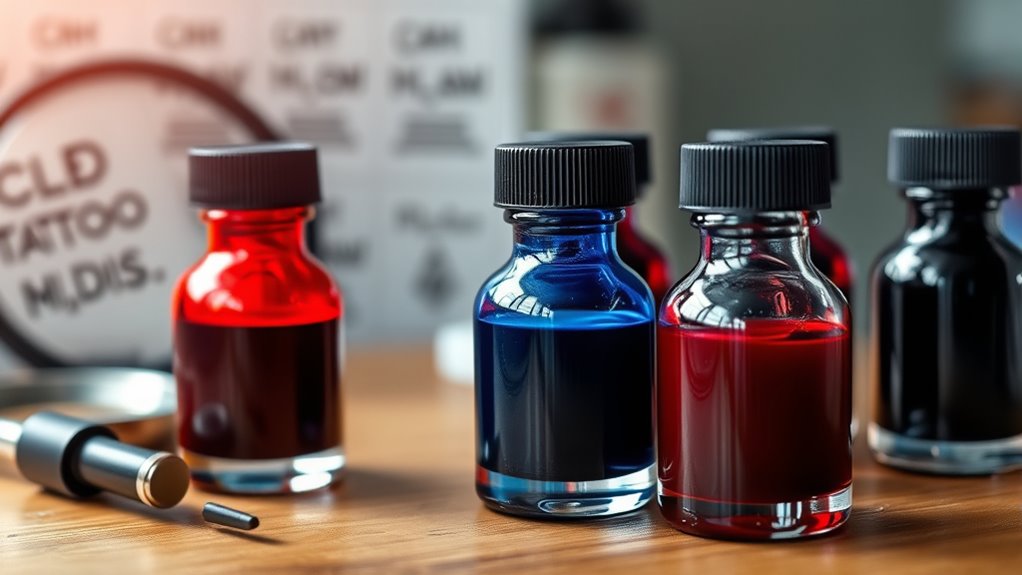
Although tattoo ink might seem straightforward, its ingredients vary widely and can substantially affect your skin’s reaction and the tattoo’s longevity. You’ll find that quality inks typically consist of pigments suspended in a carrier solution.
Pigments come from organic or inorganic sources, each influencing how your tattoo looks and heals. The carrier, often made of water, alcohol, or glycerin, keeps pigments evenly mixed and helps prevent infections.
It’s crucial to avoid inks with harmful additives like heavy metals or allergens, as these can cause irritation or allergic reactions. When choosing ink, make sure it’s sterile and approved for tattooing.
Understanding these ingredients empowers you to pick inks that not only produce vibrant tattoos but also prioritize your skin’s health. So, knowing what’s inside your ink really makes a difference!
Evaluating Color Vibrancy and Longevity
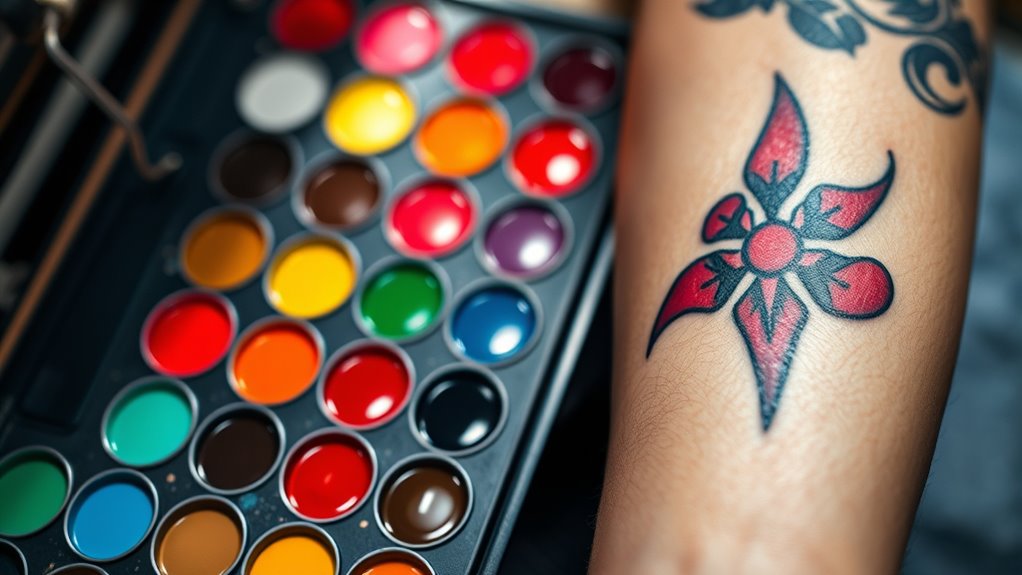
When choosing tattoo ink, you want colors that stay bright and resist fading over time. Look for high-quality pigments known for their stability and long-lasting vibrancy.
This guarantees your tattoo keeps its sharp, vivid appearance for years to come. So, picking the right ink really makes all the difference!
Brightness and Fade Resistance
Because your tattoo’s appearance depends heavily on the ink’s brightness and fade resistance, choosing colors that stay vibrant over time is essential. You want ink that maintains its intensity despite sun exposure, skin oils, and natural aging.
Bright pigments, especially in reds, blues, and greens, are more likely to hold up well. Look for inks specifically formulated to resist fading; these often contain UV-resistant components to protect the color.
Remember, darker inks like black tend to fade less but can still lose sharpness without quality formulation. Avoid inks that appear dull or washed out at first, as they’re less likely to keep their brightness.
Prioritizing fade-resistant ink ensures your tattoo stays bold and eye-catching for years to come. So, it’s worth taking the time to pick inks that will really stand the test of time.
Pigment Quality and Stability
Since pigment quality directly affects how vibrant and long-lasting your tattoo looks, you should carefully evaluate the ink’s composition before selecting it. High-quality pigments maintain their color intensity over time, resisting fading and discoloration.
Look for inks that use stable, non-toxic pigments known for their durability. Synthetic pigments often offer better consistency and longevity than natural ones, which can degrade faster.
Also, consider how well the pigment particles suspend in the carrier solution; stable suspension ensures even application and prevents settling that might affect color uniformity. Ask your supplier about pigment origin and any testing for lightfastness or chemical stability.
Assessing Safety and Allergy Considerations
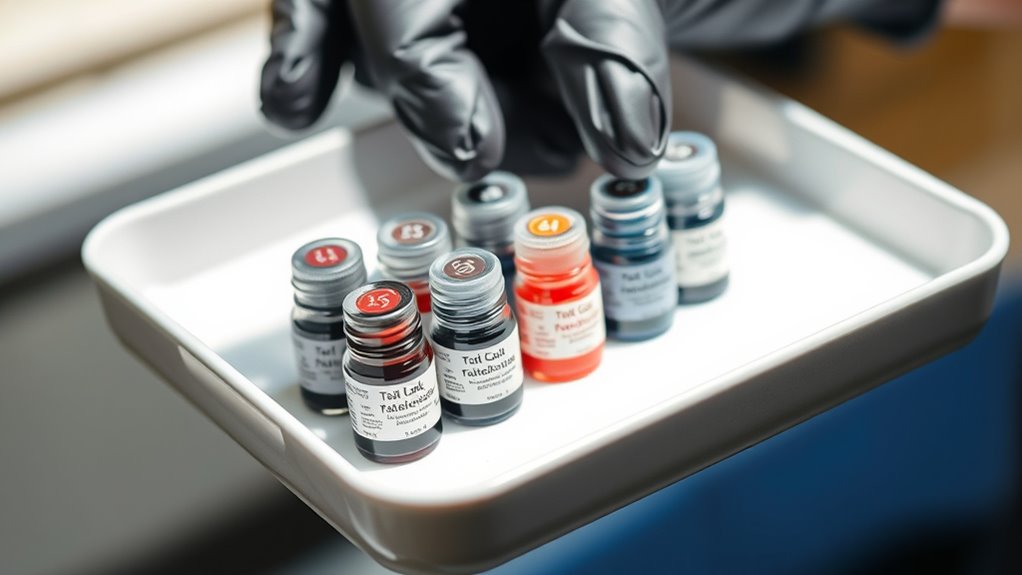
You should check for non-toxic ingredients to keep your skin safe during tattooing. Knowing common allergens helps you avoid reactions that could ruin your experience.
Always do a patch test before committing to a new ink. It’s better to be safe than sorry!
Identifying Non-Toxic Ingredients
When choosing tattoo ink, knowing which ingredients are non-toxic helps protect your skin and overall health. You want ink that won’t cause irritation or long-term harm.
Here’s what to look for:
- Natural pigments: Opt for inks made with plant-based or mineral pigments instead of heavy metals.
- No harmful additives: Avoid inks containing parabens, formaldehyde, or phthalates, which can be toxic.
- Certified safe ingredients: Check if the ink meets safety standards from reputable organizations or dermatological testing.
- Hypoallergenic formulas: Choose inks specifically labeled hypoallergenic to reduce the risk of adverse reactions.
Understanding Common Allergens
Although tattoo ink can really enhance your body art, it sometimes contains common allergens that might trigger reactions. You should know that ingredients like nickel, chromium, cobalt, and certain dyes can cause redness, itching, or swelling.
If you have sensitive skin or a history of allergies, it’s especially important to check out the ink’s composition carefully. Some pigments, like red and yellow, tend to cause allergic reactions more often.
Keep in mind, manufacturers don’t always list every ingredient. So, it’s a good idea to ask your tattoo artist about the ink brands they use and whether they have any safety data available.
Being informed helps you avoid discomfort and complications after your tattoo. Prioritizing hypoallergenic inks or those labeled safe for sensitive skin can really reduce risks and keep your new artwork looking great.
Patch Testing Importance
Since allergens in tattoo ink can cause uncomfortable reactions, testing how your skin responds beforehand can save you from potential issues. Patch testing is a simple, effective way to assess your skin’s sensitivity to the ink.
Before committing to a full tattoo, you should:
- Apply a small amount of the ink on a discreet skin area.
- Cover the spot with a bandage and leave it for 24-48 hours.
- Monitor the area for redness, itching, swelling, or irritation.
- Consult a dermatologist if you notice any adverse reactions.
This process helps you avoid allergic reactions and ensures the ink you choose is safe for your skin. Taking this step seriously can protect both your health and your new tattoo’s appearance.
Researching Reputable Tattoo Ink Brands
Before choosing any tattoo ink, you’ll want to dig into the reputation of different brands. Look for companies with a strong history of safety and quality.
Check if their inks are vegan, cruelty-free, or meet industry standards, which often indicates higher care in production. Read reviews from both artists and clients to gauge consistency and color vibrancy.
Look for vegan, cruelty-free inks and read artist and client reviews for quality and color vibrancy.
Avoid brands with frequent reports of allergic reactions or poor pigment retention. Research whether the ink is produced in sterile environments and if the manufacturer provides detailed ingredient lists.
Don’t hesitate to ask your tattoo artist which brands they trust and why. Doing this homework helps guarantee you pick inks that deliver vibrant, long-lasting results while minimizing health risks.
Matching Ink Types to Skin Tone and Type
Understanding the qualities of reputable tattoo inks helps you make informed choices, but selecting the right ink also depends on how it interacts with your skin. Different skin tones and types absorb and display ink colors uniquely, so matching is vital for vibrant, lasting tattoos.
- Fair Skin: Choose bright, cool colors like blues and purples to create contrast. These shades really pop against lighter skin tones.
- Medium Skin: Rich, warm tones such as reds and oranges work well and maintain visibility. They complement the natural warmth of medium skin beautifully.
- Dark Skin: Opt for bold, saturated colors like white, yellow, and bright green to stand out. These colors provide the best contrast and clarity on darker skin.
- Sensitive or Dry Skin: Use hypoallergenic, organic inks to reduce irritation and guarantee proper healing. This helps keep your skin happy while the tattoo settles.
Tips for Maintaining Tattoo Ink Quality
To keep your tattoo ink looking vibrant and fresh, you need to take proper care during and after the tattooing process. First, always follow your artist’s aftercare instructions carefully—clean your tattoo gently with mild soap and avoid scrubbing.
Keep it moisturized using recommended ointments to prevent dryness and flaking, which can dull the ink. Avoid direct sunlight and tanning beds, as UV rays break down pigments and cause fading.
Stay hydrated and maintain healthy skin by eating well and moisturizing regularly. Resist picking or scratching scabs, as this can pull ink from your skin.
Ultimately, touch-ups may be necessary over time to maintain color intensity, so consult your artist when you notice fading. These steps help preserve your tattoo’s appearance for years to come.
Frequently Asked Questions
Can Tattoo Ink Be Used for Permanent Makeup?
Yes, you can use tattoo ink for permanent makeup, but you shouldn’t.
Permanent makeup requires specialized pigments designed specifically for facial skin. This ensures safety and color stability.
How Does UV Light Affect Tattoo Ink Over Time?
UV light breaks down tattoo ink over time, causing your tattoo to fade and colors to dull.
To keep your ink vibrant, you should protect your tattoo from excessive sun exposure and use sunscreen regularly.
It’s a simple step but makes a big difference in how your tattoo looks down the road.
Is It Possible to Mix Different Tattoo Inks Safely?
Sure, mixing inks is like juggling fire—exciting but risky. You can mix them, but you shouldn’t.
It can cause unexpected colors, allergic reactions, or ink instability. Stick to single, trusted inks for safety and quality.
Can Tattoo Ink Cause MRI Complications?
Yes, tattoo ink can sometimes cause MRI complications, like skin irritation or heating.
You should always tell your technician about your tattoos so they can adjust settings or monitor you closely during the scan to avoid issues.
What Is the Environmental Impact of Tattoo Ink Disposal?
You should know tattoo ink disposal can harm the environment, as some inks contain heavy metals and chemicals that pollute water and soil.
Always dispose of ink responsibly, following local hazardous waste guidelines to minimize impact.
It might seem like a small thing, but every little bit counts when it comes to protecting our planet!
Conclusion
Choosing the right tattoo ink isn’t just about picking a color—it’s about ensuring safety, vibrancy, and longevity that suits your skin.
Have you ever imagined your tattoo fading or causing irritation? By understanding ingredients, considering your skin type, and trusting reputable brands, you’ll keep your ink looking fresh and vibrant for years.
Remember, a little research now saves you from regret later. Choosing high-quality tattoo ink means your design stays bold and beautiful, making your tattoo a true work of art you’ll proudly wear every day. So, take the time to learn about ink ingredients and find a trusted brand that fits your needs—your skin and your style will thank you!