How to Choose the Best Tattoo Ink for Your Skin
To choose the best tattoo ink for your skin, you’ll want to consider your skin type carefully. Whether your skin is oily, dry, or sensitive, picking inks that suit your specific skin type helps ensure proper healing and vibrant results.
It’s also important to select safe inks made with natural pigments and free from harmful metals. Choosing colors that complement your complexion can really make your tattoo pop.
Before getting the full tattoo, always test a small patch to check for any allergic reactions. Using quality brand inks guarantees durability, while proper aftercare maintains the color and appearance over time.
Keep exploring different options and tips to find the perfect ink for your skin and enjoy a beautiful, lasting tattoo experience!
Key Takeaways
– Match ink colors to your skin tone for vibrancy; jewel tones suit medium skin, while bold colors enhance darker skin tones.
Picking the right color really makes a difference in how your tattoo pops.
– Choose inks with safe, natural ingredients like Iron Oxide and Titanium Dioxide to minimize irritation and allergic reactions.
It’s all about keeping your skin happy and healthy.
– Perform a patch test on your skin to check for any allergic reactions before committing to a full tattoo.
Better safe than sorry, right?
– Use high-quality, reputable brand inks to ensure color longevity, safety, and consistent results.
Quality ink means your tattoo will look great for years.
– Follow proper aftercare and apply broad-spectrum sunscreen to protect your tattoo and maintain ink vibrancy over time.
Taking care of your tattoo keeps it fresh and vibrant.
Understanding Different Skin Types and Their Impact on Tattoo Ink

Because your skin type affects how tattoo ink settles and heals, understanding it is vital before choosing your ink. If you have oily skin, your tattoo might need more frequent touch-ups since excess oil can cause the ink to fade faster.
Knowing your skin type helps ensure your tattoo ink settles well and lasts beautifully.
Dry skin, on the other hand, can lead to patchy healing, so keeping your skin moisturized before and after getting inked is essential. Sensitive skin may react more strongly to certain pigments, increasing the risk of irritation or allergic reactions.
Additionally, darker skin tones might require specific ink shades to guarantee vibrant, lasting color. By recognizing your unique skin characteristics, you can better communicate with your tattoo artist and select ink that complements your skin.
That way, you’re more likely to have a tattoo that looks great for years to come.
Key Ingredients to Look for in Safe Tattoo Ink
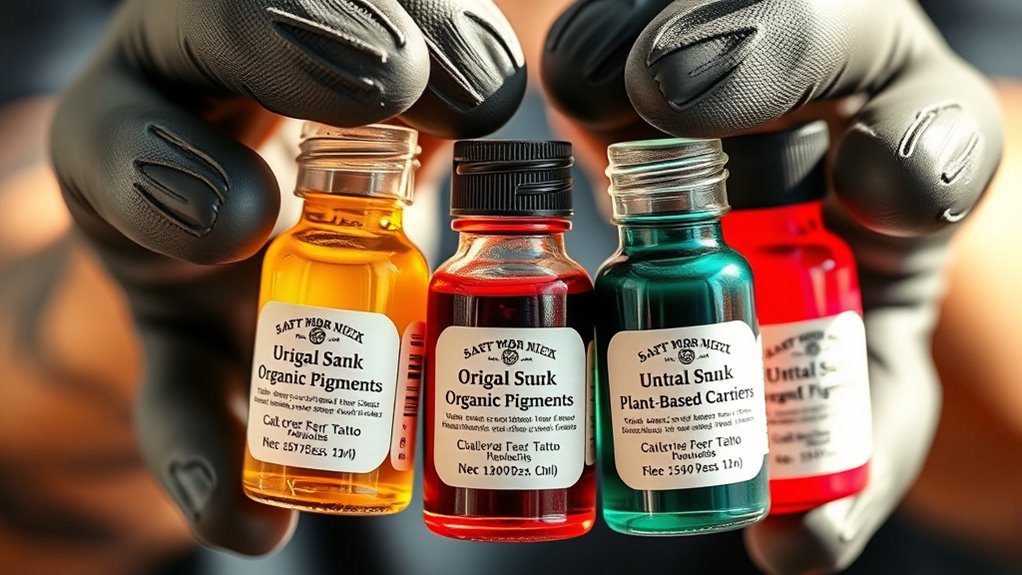
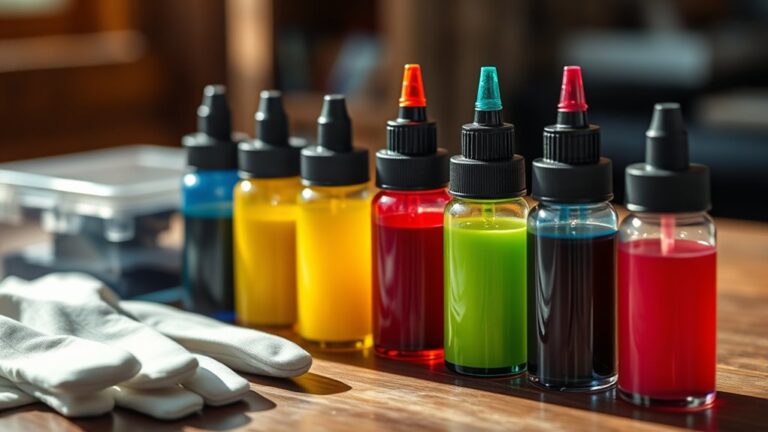
While selecting tattoo ink, you want to prioritize safety by checking its ingredients carefully. Look for inks free from harmful metals and allergens that could irritate your skin or cause long-term health risks.
Natural pigments and organic compounds often offer a safer alternative. Also, verify the ink is sterile and complies with health regulations to avoid infections.
| Ingredient | Purpose | Why It’s Safe |
|---|---|---|
| Iron Oxide | Pigment (reds, browns) | Non-toxic, skin-friendly |
| Titanium Dioxide | White pigment | Stable, hypoallergenic |
| Carbon Black | Black pigment | Pure, minimal additives |
| Plant-based Gums | Binder | Natural, reduces irritation |
| Sterile Water | Solvent | Prevents contamination |
Choosing ink with these ingredients helps protect your skin and ensures a vibrant, lasting tattoo. So, keep these in mind when picking your tattoo ink!
Choosing Colors That Complement Your Skin Tone
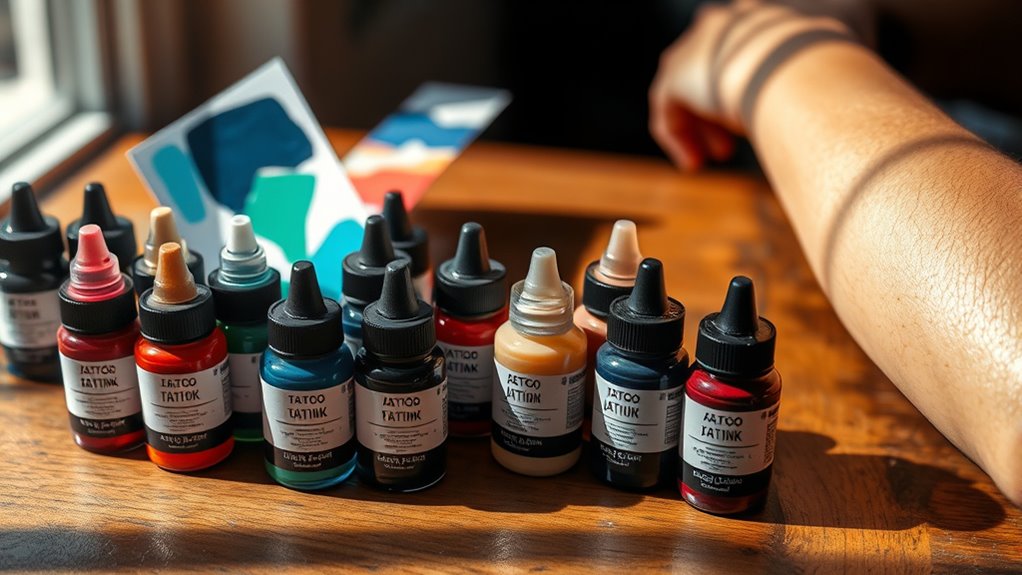
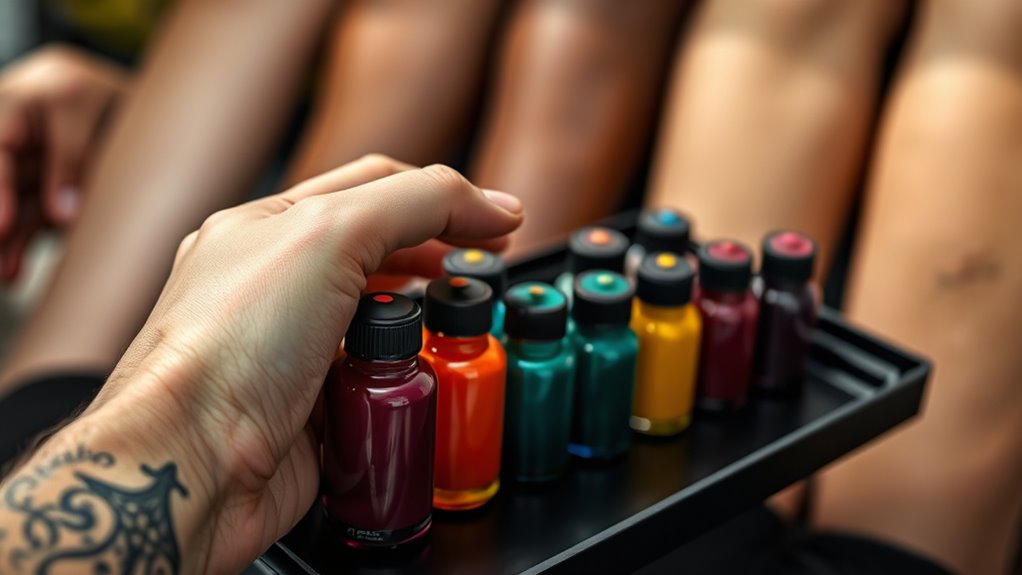
When selecting tattoo colors, you should consider how they interact with your skin tone to guarantee your design stands out beautifully. For lighter skin, vibrant colors like blues, reds, and purples often pop, while softer pastels can complement subtle undertones.
Medium skin tones handle jewel tones—emerald, sapphire, and ruby—well, providing rich contrast without overpowering your natural hue. Darker skin tones shine with bold colors like bright yellows, oranges, and whites, which create striking visibility.
Avoid colors that closely match your skin, as they tend to fade into the background, diminishing the tattoo’s impact. Ultimately, choose shades that enhance your natural complexion, making your tattoo a vivid expression of your style and personality.
Consulting with your tattoo artist can also help tailor colors perfectly to your skin. It’s always good to get their expert opinion to make sure your tattoo looks amazing.
How to Test Tattoo Ink for Allergic Reactions
Before getting your tattoo, you’ll want to do a patch test by applying a small amount of ink on your skin to check for any allergic reactions.
Keep an eye out for redness, itching, or swelling in the area over the next 24 to 48 hours.
If you notice any of these signs, it’s best to avoid that ink to prevent a more serious reaction.
Patch Testing Procedure
Since tattoo ink can cause allergic reactions, performing a patch test is essential to guarantee your skin won’t react negatively. Here’s how you can do it safely at home:
First, clean a small area on your inner forearm with soap and water. Then, apply a tiny amount of the tattoo ink to the cleaned spot.
Cover the area with a bandage and leave it for 24 to 48 hours. After removing the bandage, observe the area for any redness, itching, swelling, or irritation.
If you notice none of these signs, the ink is likely safe for your skin. This simple step helps prevent unpleasant surprises and ensures a smoother tattoo experience.
Always test each new ink color separately. It’s a small effort that can save you a lot of trouble later!
Signs of Allergic Reaction
Performing a patch test helps you spot potential problems early, but knowing the signs of an allergic reaction is just as important. After getting a tattoo, watch for redness, swelling, or itching around the inked area that lasts more than a few days.
You might also notice small bumps, blisters, or a rash developing. If the skin feels warm or painful, or if you experience any unusual discharge, those are clear warning signs.
In some cases, allergic reactions can cause systemic symptoms like fever or fatigue. If you see any of these signs, contact your tattoo artist or a healthcare professional immediately.
Acting quickly can prevent complications and help you manage the reaction effectively, ensuring your tattoo heals safely. So, don’t hesitate to reach out if something feels off.
The Importance of Ink Quality and Brand Reputation
You want to choose tattoo ink that meets strict safety standards and contains high pigment purity to guarantee vibrant, lasting results. Trustworthy brands invest in quality control and transparency, so you can feel confident about what’s going into your skin.
Paying attention to brand reputation helps you avoid low-quality inks that might cause allergic reactions or fade quickly. It’s worth doing a little research to pick inks that professional artists trust. That way, your tattoo not only looks great but stays safe over time.
Ink Safety Standards
Although choosing a vibrant color might catch your eye, prioritizing ink safety standards guarantees your tattoo won’t cause unexpected health issues. You need to pick inks that meet strict safety regulations to protect your skin and overall health.
Here’s what you should look for:
- Certification from recognized health agencies ensuring non-toxicity.
- Compliance with industry safety standards like ASTM or EU regulations.
- Clear ingredient lists, avoiding harmful metals and allergens.
- Positive reviews from professional tattoo artists who prioritize client safety.
Pigment Purity Levels
When selecting tattoo ink, understanding pigment purity levels plays a crucial role in ensuring vibrant, long-lasting results. High-purity pigments mean fewer impurities and contaminants, reducing the risk of allergic reactions and fading over time.
You want inks that maintain their true color without dulling or changing after healing. Lower-quality inks often contain fillers or heavy metals that can cause irritation or compromise your skin’s health.
By choosing ink with high pigment purity, you protect both your artwork and your wellbeing. Always check if the ink’s manufacturer provides transparency about their pigment sources and production processes.
This insight helps you avoid subpar products that could jeopardize your tattoo’s appearance and your skin’s safety. Prioritizing pigment purity is a smart, essential step in your tattoo journey.
Trusted Tattoo Brands
Since the quality of tattoo ink directly affects the final result and your skin’s health, choosing trusted tattoo brands is essential. You want inks that deliver vibrant colors, consistency, and safety.
Reputable brands invest in thorough testing and use high-grade ingredients to minimize risks like allergic reactions or fading. When selecting ink, consider these points:
- Research brands known for strict quality control and positive customer reviews.
- Verify that the ink complies with health regulations and uses non-toxic pigments.
- Choose brands favored by professional tattoo artists for reliability and color longevity.
- Avoid cheap or unknown brands that may compromise your tattoo’s appearance and your skin’s safety.
Aftercare Tips to Maintain Vibrant Tattoo Colors
To keep your tattoo colors vibrant, you need to follow proper aftercare from the start. Begin by gently washing your tattoo with mild, fragrance-free soap and lukewarm water. Pat it dry with a clean towel—don’t rub.
Next, apply a thin layer of a recommended moisturizer or tattoo-specific ointment to keep the skin hydrated and promote healing. Avoid direct sunlight and tanning beds, as UV rays can fade your ink quickly.
Wear loose clothing to prevent irritation and don’t pick at scabs or peeling skin. Also, stay away from swimming pools, hot tubs, and soaking in baths until your tattoo fully heals.
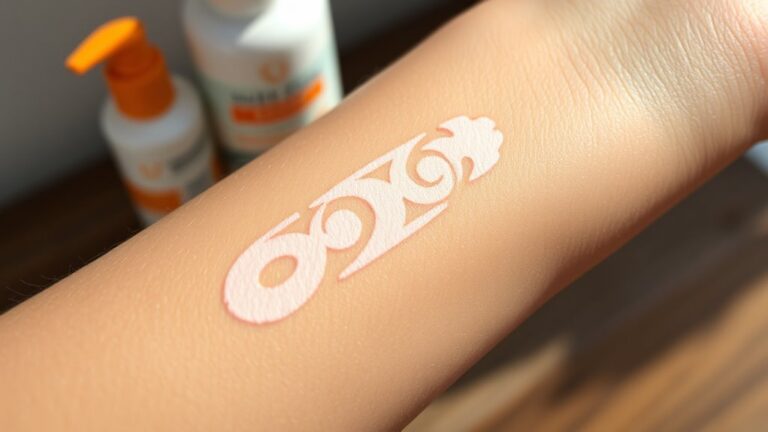
Finally, once healed, always use a broad-spectrum sunscreen on your tattoo when exposed to the sun. This will help maintain those vibrant colors for years to come.
Frequently Asked Questions
Can Tattoo Ink Cause Long-Term Skin Discoloration?
Yes, tattoo ink can cause long-term skin discoloration, especially if you’re allergic or sensitive to certain pigments.
It’s important to choose high-quality ink and do a patch test first. This can help you avoid unwanted permanent changes in your skin tone.
How Does Tattoo Ink Affect MRI Scans?
Tattoo ink can affect MRI scans like static on a radio, causing blurry images or discomfort. You might feel warmth or tingling near tattoos, so always tell your technician about them before the scan for safety.
It’s kind of like when you get interference on a radio — the image on the MRI can get a bit fuzzy. And sometimes, the metal particles in the ink might cause a little warm or tingling feeling on your skin.
Are Vegan Tattoo Inks as Durable as Traditional Inks?
Yes, vegan tattoo inks can be just as durable as traditional ones. You’ll find high-quality vegan inks that hold up well over time.
But it’s important to check reviews and ingredients carefully. That way, you can be sure about their longevity and safety.
Can Tattoo Ink Be Removed With Laser Treatment?
Wondering if laser treatment can remove tattoo ink? Yes, it can, though some colors fade easier than others.
You’ll need multiple sessions, and results vary based on ink type, skin, and tattoo age.
It’s not an overnight fix, but with patience, many people see great results!
What Are the Environmental Impacts of Tattoo Ink Disposal?
You should know tattoo ink disposal can harm water and soil due to heavy metals and chemicals. To minimize impact, you must dispose of ink properly, following local hazardous waste guidelines and avoiding pouring it down drains.
It might seem like a small thing, but improper disposal adds up. So, it’s really important to be careful and responsible with how you get rid of tattoo ink. Doing so helps protect the environment for everyone.
Conclusion
Choosing the best tattoo ink for your skin is like finding the perfect puzzle piece—it just fits and makes everything look right. By understanding your skin type, picking safe ingredients, and testing for allergies, you’ll guarantee your tattoo stays vibrant and healthy.
Don’t forget to select colors that complement your tone and trust reputable brands. With proper aftercare, your tattoo will shine beautifully for years to come, reflecting your unique style perfectly.
Remember, choosing the right tattoo ink is essential for ensuring both safety and long-lasting color. When you pick high-quality inks suited for your skin type, your tattoo’s appearance improves significantly. Always test for allergies beforehand and follow aftercare guidelines closely. This way, your tattoo will not only look vivid but also stay healthy over time. So, take your time when selecting tattoo ink—your skin and style deserve it!