
How Do You Remove Ink From a Leather Couch Step by Step
First, identify the type of ink and leather you’re dealing with to prevent damage. This step is crucial because different inks and leather types react differently to cleaning methods.
Gather soft cloths, mild soap or leather cleaner, and isopropyl alcohol for tough stains. Having the right materials on hand makes the process smoother and more effective.
Test your chosen cleaner on a hidden spot and wait for any discoloration. This little test helps you avoid ruining your leather couch.
Dab the ink stain gently with the solution, then blot carefully to lift the ink without rubbing. Remember, rubbing can spread the stain or damage the leather.
Finally, condition the leather to keep it soft and protected. Conditioning restores moisture and keeps your couch looking great.
You can explore detailed tips to guarantee a spotless finish. Taking these careful steps ensures your leather couch stays beautiful after ink removal.
Key Takeaways
– Identify the ink and leather types to choose the safest cleaning method and avoid damage.
This step is super important because different inks and leathers react differently to cleaning solutions. You don’t want to make the stain worse or ruin your couch!
– Test your chosen cleaning solution on a hidden spot to check for discoloration or damage.
Always do a patch test first. Just dab a little cleaner on a spot that’s not visible, and wait a few minutes to see if anything goes wrong.
– Gently dab the ink stain with a soft cloth or cotton swab soaked in cleaning solution, avoiding soaking.
Don’t rub hard or soak the leather. Instead, lightly tap the stain to lift the ink without pushing it deeper into the material.
– Blot the stained area lightly with a clean cloth to lift ink without rubbing or spreading.
Blotting is key! It helps pull the ink up and out. Be gentle to avoid spreading the stain around.
– Apply leather conditioner after cleaning to restore moisture and protect the leather surface.
Once the stain is gone, put some conditioner on. This keeps the leather soft and stops it from drying out or cracking.
Assess the Type of Ink and Leather
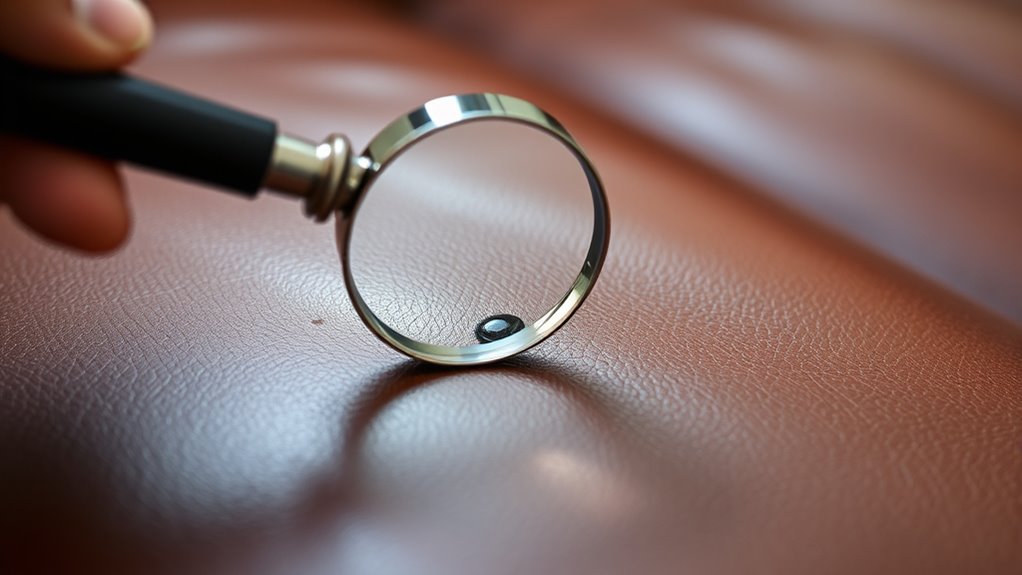
Before you begin removing ink from your leather couch, you need to identify the type of ink and leather you’re dealing with. Different inks like ballpoint, permanent marker, or gel require specific approaches.
Ballpoint ink, for example, often responds better to gentle treatments, while permanent marker ink might need stronger solutions. Knowing your couch’s leather type—whether it’s aniline, semi-aniline, or pigmented—also matters because some leathers absorb ink more deeply and react differently to cleaning agents.
You can usually find leather type information on the manufacturer’s tag or by checking your purchase documents. By evaluating these factors first, you avoid damaging your couch and increase your chances of effective ink removal.
Take your time with this step; it sets the foundation for successful cleaning.
Gather Necessary Cleaning Materials
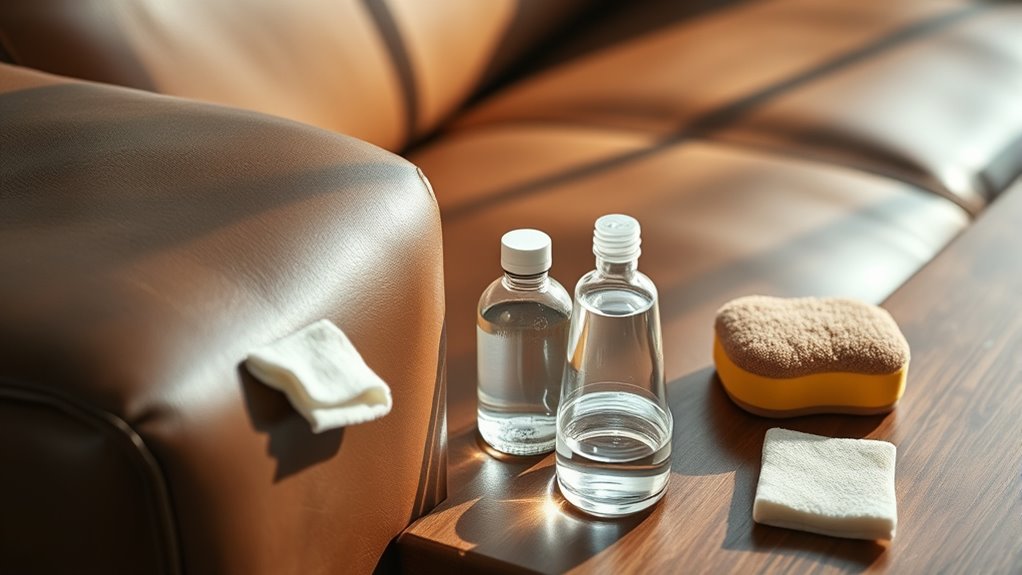
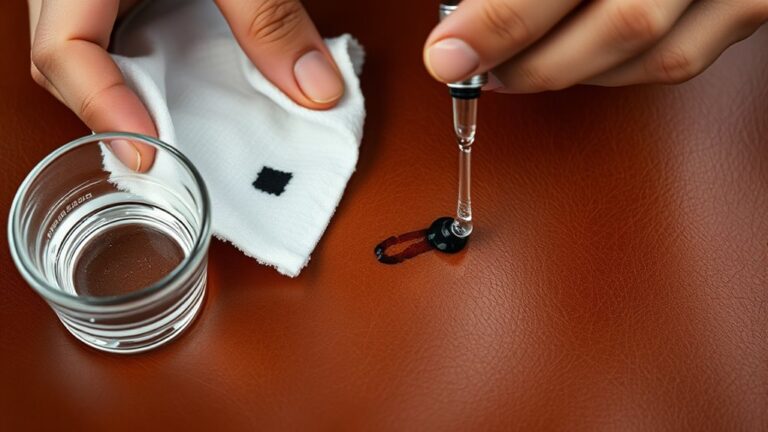
Once you know the type of ink and leather you’re dealing with, gather the right cleaning materials to tackle the stain effectively. You’ll need a soft white cloth or cotton balls, mild soap like dish detergent or a leather-specific cleaner, and distilled water to avoid mineral deposits.
Keep isopropyl alcohol (70%) or rubbing alcohol handy for stubborn ink spots, but use it sparingly. Have a small bowl for mixing solutions and a soft-bristled toothbrush or cotton swabs for gentle scrubbing.
Keep rubbing alcohol nearby for tough stains, but apply it carefully with a soft brush or cotton swab.
Avoid harsh chemicals or abrasive tools that can damage leather. Finally, keep a dry towel nearby to blot excess moisture and a leather conditioner to restore suppleness after cleaning.
With these materials ready, you’re set to safely remove ink without harming your couch.
Test Cleaning Solution on a Hidden Area
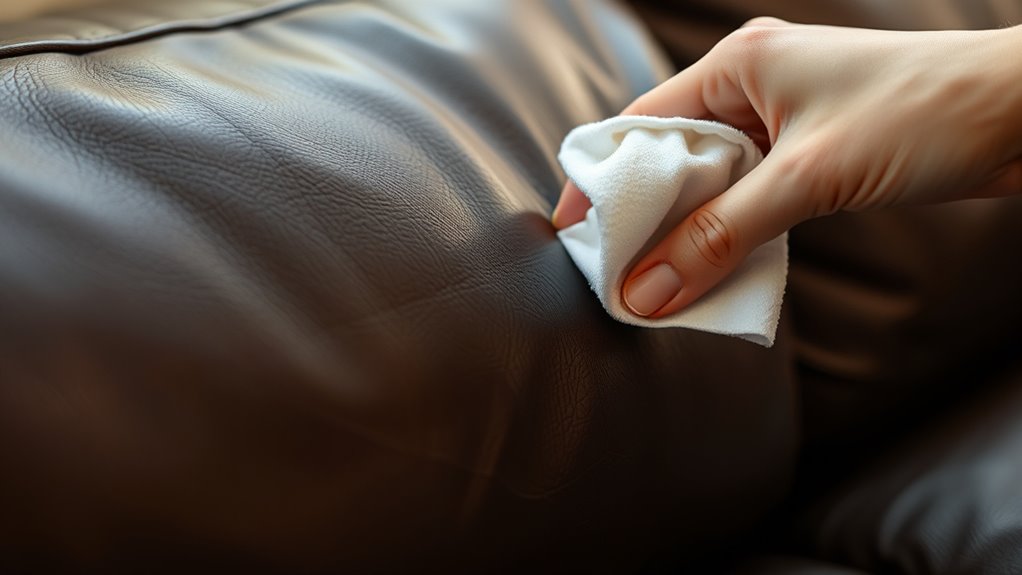
Although it might seem like an extra step, testing your cleaning solution on a hidden area guarantees you don’t damage the leather or cause discoloration when treating the ink stain.
You want to avoid ruining your couch, so pick a spot like under a cushion or behind the armrest. Apply a small amount of the solution and wait a few minutes to observe any changes.
| Emotion | Action | Result |
|---|---|---|
| Anxiety | Testing cautiously | Confidence builds |
| Hope | Small application | Safe cleaning begins |
| Relief | No discoloration | Ready for next step |
| Pride | Protecting your couch | Success feels close |
This careful approach saves you frustration and keeps your leather looking fresh.
Apply Cleaning Solution to Ink Stain
Since you’ve confirmed the cleaning solution won’t harm your leather, you can go ahead and apply it directly to the ink stain.
Here’s how to do it right:
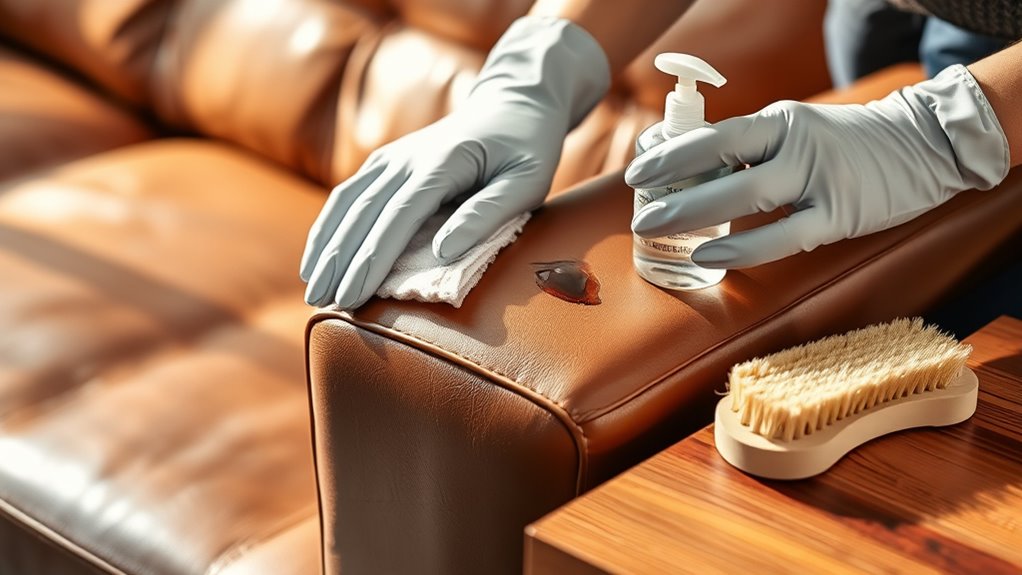
- Pour a small amount of the cleaning solution onto a clean, soft cloth or a cotton swab.
- Dab the ink stain gently, focusing only on the affected area so you don’t spread it around.
- Apply the solution in a circular motion, making sure the stain is fully covered.
- Let the solution sit for about 5 minutes. This helps break down the ink without drying out your leather.
This careful approach lets the cleaning solution soak into the stain, prepping it for removal while keeping your leather couch’s finish safe.
Just remember, don’t soak the area — too much liquid can actually damage the leather.
Gently Blot and Wipe the Affected Area
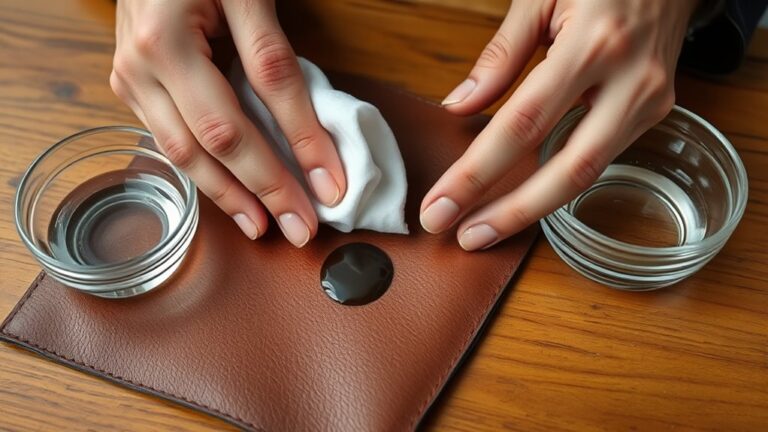
After letting the cleaning solution sit, you’ll want to gently blot the ink stain to lift it from the leather. Use a clean, soft cloth or cotton ball and press lightly on the stain—avoid rubbing, as this can spread the ink or damage the leather’s surface.
Blot repeatedly with fresh sections of the cloth until you see the ink transferring onto it. If the stain persists, dampen the cloth slightly with distilled water and continue blotting carefully.
Always work from the outside of the stain toward the center to prevent spreading. Keep your pressure gentle to protect the leather’s finish.
Once the ink lightens considerably or disappears, stop blotting to avoid over-wetting the leather. This careful approach helps remove the ink without causing harm.
Condition and Protect the Leather After Cleaning
Once you’ve removed the ink stain, you’ll want to condition the leather to restore its natural oils and prevent drying or cracking. Proper conditioning keeps your couch soft and extends its life.
Here’s how to do it right:
- Choose a leather conditioner suitable for your couch type.
- Apply a small amount to a soft cloth and rub it evenly into the leather using circular motions.
- Let the conditioner absorb for about 20 minutes, then wipe off any excess with a clean cloth.
- Avoid direct sunlight and heat sources while the leather is drying to prevent damage.
It’s pretty simple once you get the hang of it. Just be gentle and patient, and your leather will thank you!
Frequently Asked Questions
Can Ink Stains on Leather Cause Permanent Damage?
Yes, ink stains on leather can cause permanent damage if you don’t act quickly.
You’ll want to clean it carefully to avoid discoloration or weakening of the leather.
This helps preserve its look and texture over time.
Is It Safe to Use Alcohol-Based Cleaners on Leather?
“Better safe than sorry” applies here—you shouldn’t use alcohol-based cleaners on leather. They can dry and damage it.
Instead, opt for specially formulated leather cleaners to keep your couch safe and looking great.
How Long Does It Take for Leather to Dry After Cleaning?
It usually takes leather about 1 to 3 hours to dry after cleaning. You should let it air dry naturally.
Avoid heat sources and keep it in a well-ventilated area. This helps prevent damage or stiffness.
Can Professional Leather Cleaning Services Remove Ink Stains?
Oh, sure, professionals can’t remove ink stains—said no one ever.
You’ll find expert leather cleaners have the right tools and expertise to tackle those stubborn marks, restoring your couch’s look without you breaking a sweat.
Are There Specific Inks That Are Harder to Remove From Leather?
Yes, you’ll find permanent inks like ballpoint or marker ink harder to remove from leather than water-based inks. Their deep pigments soak in, so you’ll need stronger treatments or professional help to fully eliminate stains.
It’s kind of like trying to wash out a stubborn paint stain versus a simple water splash. The permanent inks really set into the leather, making them way trickier to get rid of. So, if you’re dealing with those, patience and the right approach are key.
Conclusion
Removing ink from your leather couch might feel like facing a Hydra—each stain seems tough, but with the right approach, you can conquer it.
Start by evaluating the type of ink and the leather material to choose the best cleaning method. Test any cleaning solution on a hidden spot first to avoid damage.
Gently treat the stain using a clean cloth and a mild cleaning agent, being careful not to scrub too hard. Remember, patience and a gentle touch are key to preserving the leather’s finish.
After successfully removing the ink, it’s important to condition your leather couch. Conditioning keeps the leather strong and resilient, preventing it from drying out or cracking.
By following these steps—assessing the ink, testing solutions, treating the stain carefully, and conditioning the leather—you’ll restore your couch’s beauty without causing harm. Your leather couch will look as good as new, ink-free, and ready to be enjoyed again.