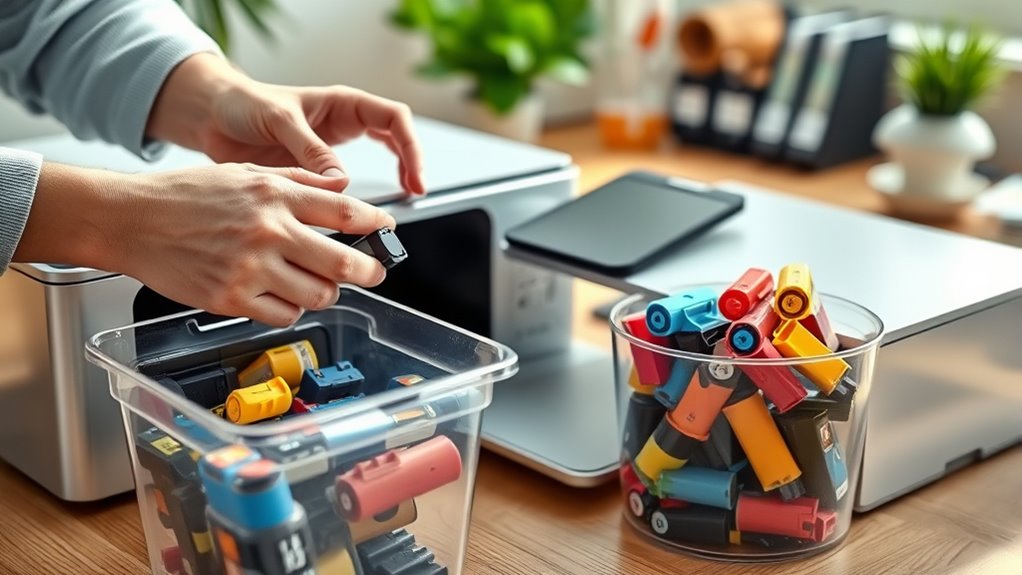
How to Recycle Printer Ink Step by Step
To recycle your printer ink effectively, start by identifying your cartridge type. You can do this by checking the printer model and the cartridge label. This step is important because different cartridges require different recycling methods.
Next, look for a local recycling program, drop-off center, or a manufacturer mail-back option. These programs make it easy to dispose of your used cartridges responsibly.
Carefully remove the cartridge from your printer. Seal it in a plastic bag to prevent any leaks during transport. Then, prepare it according to the recycling guidelines provided.
You also have the option to drop off your cartridges at certain retailers, or even consider refilling them for reuse.
Following these steps not only helps protect the environment but can also save you money in the long run.
There’s more to learn about how to do this easily and effectively, so keep exploring your options!
Key Takeaways
– Identify your printer’s cartridge type and model number for proper recycling or refilling options.
This helps ensure you follow the right steps for your specific cartridge.
– Carefully remove the cartridge, cover nozzles, and place it in a sealed plastic bag to prevent leaks.
This keeps everything clean and avoids any mess.
– Locate local recycling centers, office supply stores, or manufacturer mail-back programs for cartridge drop-off.
There are usually plenty of convenient options depending on where you live.
– Use manufacturer-provided prepaid labels and packaging if mailing back used cartridges for recycling.
It’s super easy and often free to send them back this way.
– Consider refilling cartridges with compatible ink using a refill kit to reduce waste and save costs.
Refilling can be a great eco-friendly choice if you want to stretch your ink budget.
Identify the Type of Printer Ink Cartridge
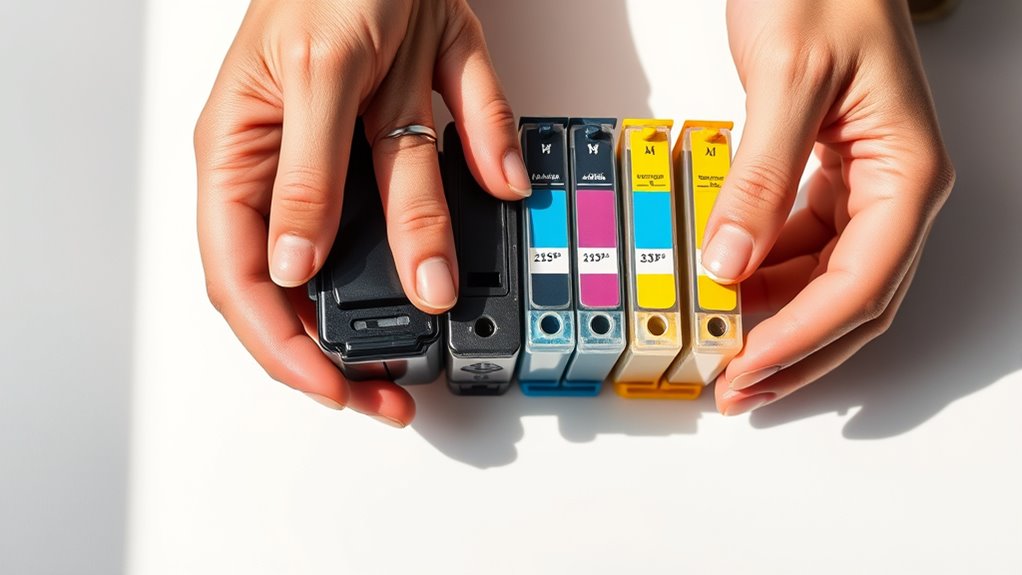
How do you know which printer ink cartridge you have? First, check your printer model, usually found on the front or inside the printer door. Once you have the model, look at the cartridge itself—there’s often a label with a number or code.
You can also consult your printer’s manual or the manufacturer’s website for cartridge compatibility. If your cartridge is color-coded, that’s another clue: black cartridges are for black ink, while tri-color ones combine cyan, magenta, and yellow.
Knowing whether your cartridge is inkjet or laser toner helps too, as they’re recycled differently. By identifying your cartridge type clearly, you’re ready to handle it properly, ensuring you recycle it in the best way possible.
Locate a Recycling Program or Drop-off Center
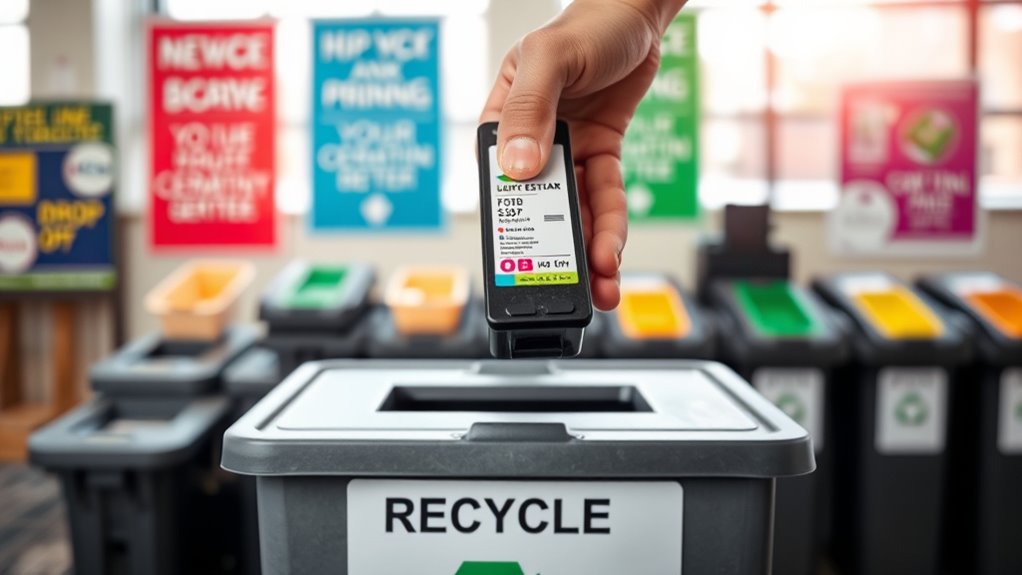
Finding a recycling program or drop-off center near you makes it easy to dispose of your used printer ink cartridges responsibly. Start by checking with local office supply stores, as many offer free recycling for ink cartridges.
You can also visit your city or county’s waste management website to find designated electronic recycling events or permanent drop-off locations. Some manufacturers even provide mail-back programs, letting you send cartridges directly for recycling.
Try searching online for nearby recycling centers or retail partners. It’s also a good idea to contact your printer’s manufacturer for take-back options.
And don’t forget to look out for community recycling events in your area—they’re a great way to recycle and help the environment!
Prepare the Cartridge for Recycling
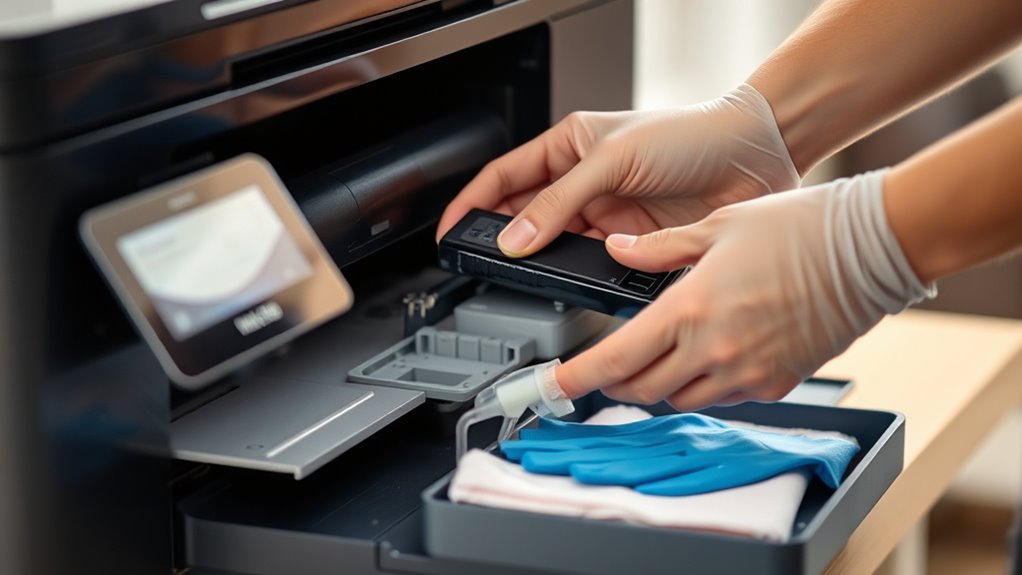
Once you’ve located a recycling program or drop-off center, the next step is to prepare your ink cartridge for recycling. Start by removing the cartridge carefully from your printer, avoiding any spills.
Begin by gently removing the ink cartridge from your printer, taking care to prevent any spills.
Place it on a paper towel or cloth to catch potential leaks. If your cartridge has a protective tape or cover over the ink nozzles, leave it in place to prevent messes during transport.
Avoid disassembling the cartridge, as this can cause damage and complicate recycling. Next, place the cartridge in a sealed plastic bag or its original packaging to contain any residual ink.
Label the bag if required by the recycling center’s guidelines. By prepping your cartridge this way, you ensure it arrives safely and ready for proper recycling.
Mail Back Used Cartridges to Manufacturers
You can often find manufacturer programs that accept used cartridges for recycling. Check the company’s website to see if they provide prepaid mailing labels or specific packaging instructions.
Make sure to prepare your cartridges properly before sending them back. This helps guarantee safe and efficient recycling. It’s a simple step that really makes a difference!
Finding Manufacturer Programs
Although recycling options vary, many printer manufacturers offer convenient mail-back programs that let you send used cartridges directly to them. To find these programs, start by visiting the manufacturer’s official website.
Look for sections like “Recycling,” “Sustainability,” or “Customer Support.” You can also check your cartridge packaging, which often includes recycling details or return labels.
If you’re unsure, contacting customer service can provide clear instructions. Many programs are free or include prepaid postage to make the process easier.
Here’s how to locate these programs efficiently:
- Search the manufacturer’s website for recycling info.
- Check product packaging for return instructions.
- Contact customer support for guidance.
Using these steps ensures you recycle cartridges responsibly and support manufacturer-led sustainability efforts.
Preparing Cartridges for Mailing
Before mailing your used cartridges back to the manufacturer, gather all necessary materials and follow their specific packaging guidelines to guarantee safe and secure delivery.
Start by emptying any excess ink to prevent leaks during transit. Use the original packaging if you still have it, or opt for a sturdy box or padded envelope.
Seal the cartridges individually in plastic bags to contain any spills. Label the package clearly with the return address and any provided shipping labels.
Double-check the manufacturer’s instructions for any special requirements, like prepaid shipping labels or drop-off locations. Finally, drop off your package at the designated courier or post office.
Taking these steps ensures your cartridges arrive safely and get properly recycled or refilled. It’s a simple process that helps keep things eco-friendly!
Explore Local Retailer Recycling Options
When seeking convenient ways to recycle printer ink cartridges, local retailers often offer accessible drop-off points that make the process straightforward. You can quickly find these locations by checking store websites or calling ahead to confirm their recycling programs.
Local retailers provide easy drop-off points for recycling printer ink cartridges—check online or call to find them.
Many retailers even provide incentives like discounts or rewards for participating. It’s a nice bonus that makes recycling even better!
Here’s how to take advantage of local retailer recycling:
- Locate nearby stores such as office supply chains, electronics retailers, or big-box stores that accept cartridges.
- Prepare your cartridges by sealing them in a plastic bag to prevent leaks.
- Drop off your cartridges during store hours at designated collection bins or customer service desks.
Using local retailers saves you time and supports community recycling efforts. Plus, it’s an easy, eco-friendly step you can take today!
Consider Refilling Ink Cartridges for Reuse
You can save money and reduce waste by refilling your ink cartridges instead of buying new ones. Refilling is simple—you just need the right kit and some basic steps to follow.
Let’s look at how to choose refill kits and refill your cartridges properly for the best results. It’s easier than you might think! Plus, it’s a great way to be eco-friendly while keeping your printer running smoothly.
Benefits of Refilling
Why choose refilling ink cartridges instead of buying new ones? Refilling saves you money, reduces waste, and helps the environment.
When you refill, you reuse the cartridge body, cutting down on plastic and metal waste that would otherwise end up in landfills. Plus, refilling is often cheaper than purchasing a brand-new cartridge.
Here are key benefits you’ll enjoy by refilling:
- Cost savings: Refills cost less than new cartridges, stretching your budget.
- Environmental impact: Less waste means a smaller carbon footprint and less pollution.
- Convenience: Many stores and services offer quick refilling options, saving you time.
How to Refill
Refilling ink cartridges involves just a few simple steps that you can easily do at home or have done professionally. First, gather your used cartridge and verify it’s compatible with refilling.
Clean the cartridge’s exterior to avoid ink spills. Next, locate the refill hole or create one carefully using a small drill or needle if necessary.
Use a syringe to slowly inject the appropriate ink type into the cartridge, taking care not to overfill. Once filled, seal the hole with tape or a plug designed for refills.
Finally, wipe off any excess ink and reinstall the cartridge in your printer. Run a cleaning cycle to ensure proper ink flow.
With practice, refilling becomes quick, cost-effective, and helps reduce waste. It’s a great way to save money and be more eco-friendly!
Choosing Refill Kits
Although selecting the right refill kit might seem overwhelming at first, choosing one that matches your printer model and ink type guarantees better results and fewer headaches.
Start by checking your printer’s manual or manufacturer’s website to identify compatible refill kits. Next, consider the ink quality—some kits offer dye-based ink, while others provide pigment-based options.
Finally, look for kits that include all necessary tools, like syringes and gloves, to make the process cleaner and easier.
- Verify compatibility with your printer model
- Choose the appropriate ink type for your printing needs
- Select kits with extensive refill tools included
Frequently Asked Questions
Can Recycled Ink Cartridges Affect Print Quality?
Yes, recycled ink cartridges can sometimes affect print quality because they might not match original specifications perfectly.
However, if you choose reputable brands, you’ll often get reliable results without noticeable differences in your prints.
Are There Environmental Benefits to Recycling Printer Ink?
You might think recycling printer ink makes little difference, but it actually reduces landfill waste and conserves resources.
How Often Should I Recycle My Ink Cartridges?
You should recycle your ink cartridges every time they’re empty to prevent waste and environmental harm. Don’t wait—recycling promptly keeps materials out of landfills and supports sustainability efforts effectively.
It’s a simple step that makes a big difference. Plus, many stores and manufacturers offer easy recycling programs, so you’ve got no excuse not to do it regularly!
What Materials Are Printer Ink Cartridges Made From?
Imagine tiny plastic shells filled with metal springs and electronic chips—that’s what your printer ink cartridges are made from.
You’ll find plastic, steel, and sometimes copper, all working together to bring your prints to life.
Can Ink Cartridges Be Recycled With Regular Plastic Waste?
No, you can’t recycle ink cartridges with regular plastic waste because they contain electronic parts and residual ink.
You should take them to special recycling centers or return programs designed specifically for printer cartridge recycling. It’s a better way to ensure they’re handled properly and don’t harm the environment.
Conclusion
Recycling your printer ink cartridges is easier than you might think, and every little bit helps keep waste out of landfills. By following these simple steps, you’ll not only save the environment but also give your cartridges a new lease on life.
Remember, every cloud has a silver lining—turning your used ink into something useful makes a big difference. So, roll up your sleeves and start recycling today!
Recycling printer ink is a simple yet impactful way to reduce environmental waste. By properly recycling ink cartridges, you help conserve resources and reduce pollution. Plus, many recycling programs offer incentives or discounts for returned cartridges.
Taking the time to recycle your printer ink cartridges benefits both you and the planet. It’s an easy step anyone can take to support sustainability. So why not start recycling printer ink now and contribute to a greener future?