10 Easy Steps to Remove Pen Ink From Your Leather Sofa
To remove pen ink from your leather sofa, start by gathering soft cloths, rubbing alcohol, and a good leather cleaner. It’s important to test any cleaner on a hidden spot first to avoid accidentally damaging the leather. This way, you know it’s safe before you begin tackling the ink stain.
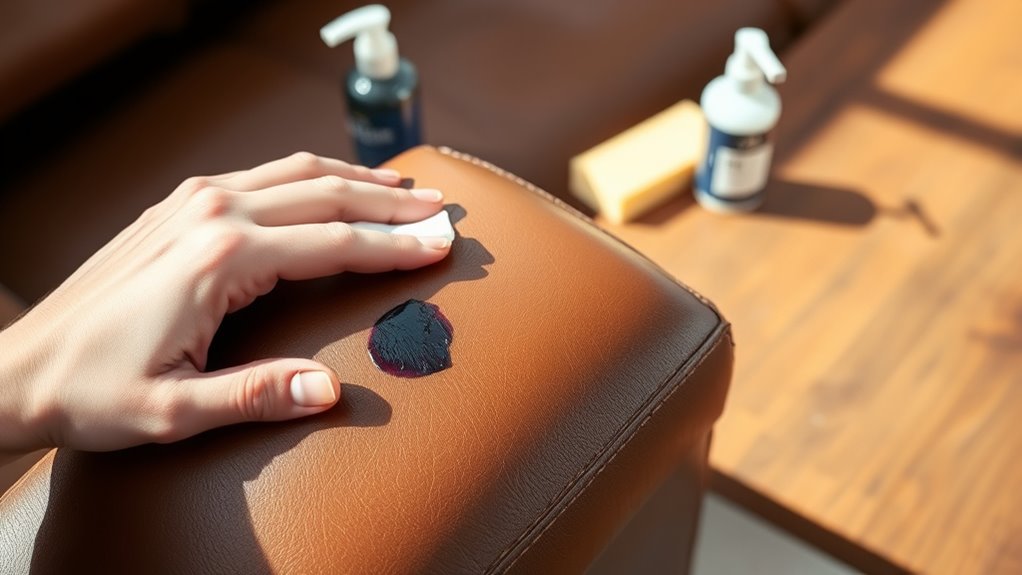
Gently blot the ink—don’t rub it—because rubbing can spread the stain and make things worse. Use a cotton swab dipped lightly in rubbing alcohol to dab at the ink, being careful not to soak the leather.
After that, wipe the area with a damp cloth, but avoid using too much water since excess moisture can harm the leather.
Once everything is dry, apply a leather conditioner to bring back the sofa’s softness and shine. If the stain isn’t completely gone, feel free to repeat the steps.
And remember, protecting your sofa from future stains is key to keeping it looking great!
Key Takeaways
- Test any cleaner on a hidden area first. This helps make sure it won’t damage the color or texture of your sofa before you treat the ink stain.
- Gently blot the ink stain with a dry cloth. Be careful not to spread the ink around. Then, apply a small amount of rubbing alcohol.
- Use a soft microfiber cloth along with a mild leather cleaner. Avoid using too much moisture as you gently lift the ink stain.
- Quickly dry the cleaned area using a dry cloth. Let the leather air dry naturally, keeping it away from any heat sources.
- Once you’re done cleaning, apply a leather conditioner. This helps restore moisture and keeps the leather from cracking or becoming stiff.
Gather Your Cleaning Supplies
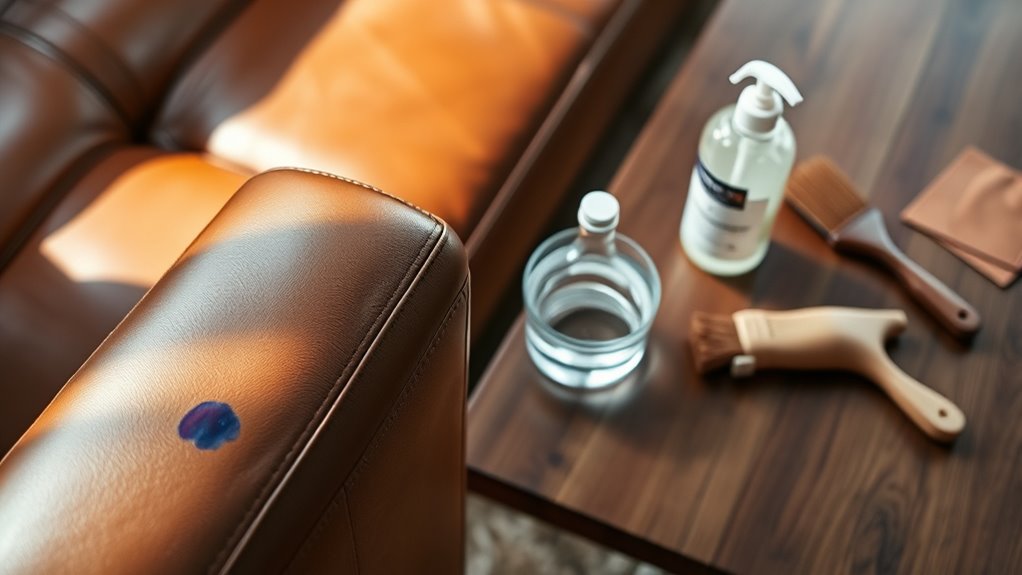
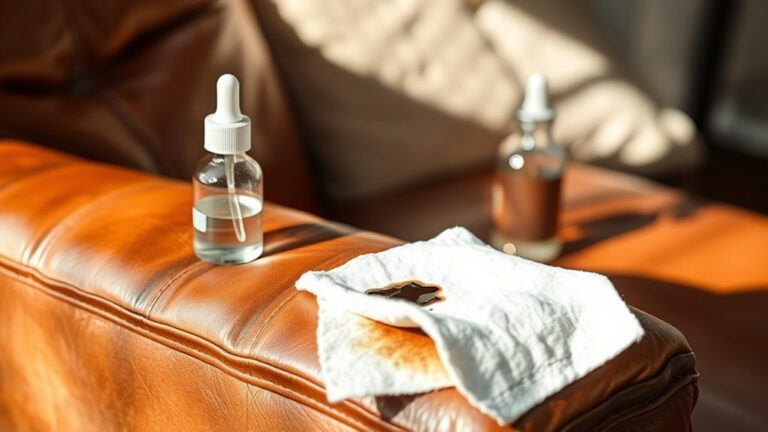
Before you begin removing pen ink from your leather sofa, gather all the necessary cleaning supplies to guarantee a smooth process. You’ll need a soft white cloth or microfiber towel, which won’t scratch the leather.
Start by collecting soft cloths and gentle cleaners to protect your leather while removing ink stains.
Grab some cotton swabs or cotton balls for precise application. Have a small bowl of clean water ready to dampen your cloth as needed.
Get a gentle leather cleaner or a mild soap solution; avoid harsh chemicals that can damage the leather. Keep some isopropyl alcohol handy, but use it sparingly and carefully.
Also, have paper towels or an absorbent cloth nearby for blotting. Finally, prepare a leather conditioner to restore moisture after cleaning.
With these supplies ready, you can tackle the stain efficiently without risking damage to your sofa.
Test the Cleaner on a Hidden Area
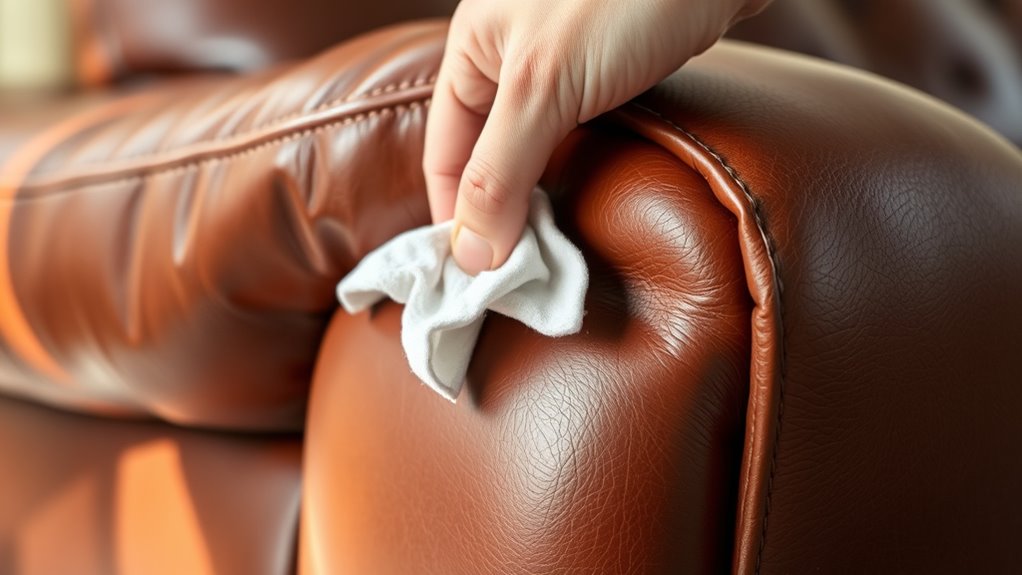
Before applying any cleaner, pick a discreet spot on your leather sofa to test it. Watch closely for any color changes and let the area dry completely.
This step helps you avoid unwanted damage to the visible parts of your sofa. Better to be safe than sorry, right?
Choose Discreet Spot
You’ll want to pick a discreet spot on your leather sofa to test any cleaning product first. Look for areas hidden from plain sight, like under a cushion seam or the sofa’s back edge.
These spots let you safely check how the cleaner reacts without risking visible damage. Apply a small amount of the product using a cotton swab or soft cloth, then wait a few minutes to see if the leather’s color or texture changes.
Testing in a hidden area assures you won’t accidentally worsen the stain or create a new one. By choosing the right spot, you protect your sofa’s appearance while confirming the product’s safety.
This simple step helps you clean confidently without surprises.
Observe Color Reaction
Although you’ve chosen a discreet spot to test, make sure to closely observe how the leather’s color reacts after applying the cleaner. Watch carefully for any discoloration, fading, or unexpected changes.
Leather can be sensitive, so even a small shift in hue or texture can indicate that the cleaner is too harsh. If you notice any negative reaction, avoid using that product on the visible areas of your sofa.
Instead, try a gentler cleaner or consult a professional. Don’t rush this step—it’s vital for protecting your leather’s appearance.
Wait for Drying
After checking how the cleaner affects the leather’s color, give the test spot time to dry completely. This step is vital because wet leather can look different from dry leather, potentially misleading you about the cleaner’s true effect.
Wait at least 30 minutes, or until you’re sure the area is dry to the touch. Once dry, inspect the test spot carefully in good lighting. Look for any discoloration, fading, or changes in texture.
If you notice any damage, avoid using that cleaner on the visible parts of your sofa. Testing and waiting for the cleaner to dry prevents unexpected damage and guarantees you protect your leather sofa’s appearance.
Only proceed with cleaning the ink stain after you’re confident the cleaner is safe for your leather.
Blot the Ink Stain Gently
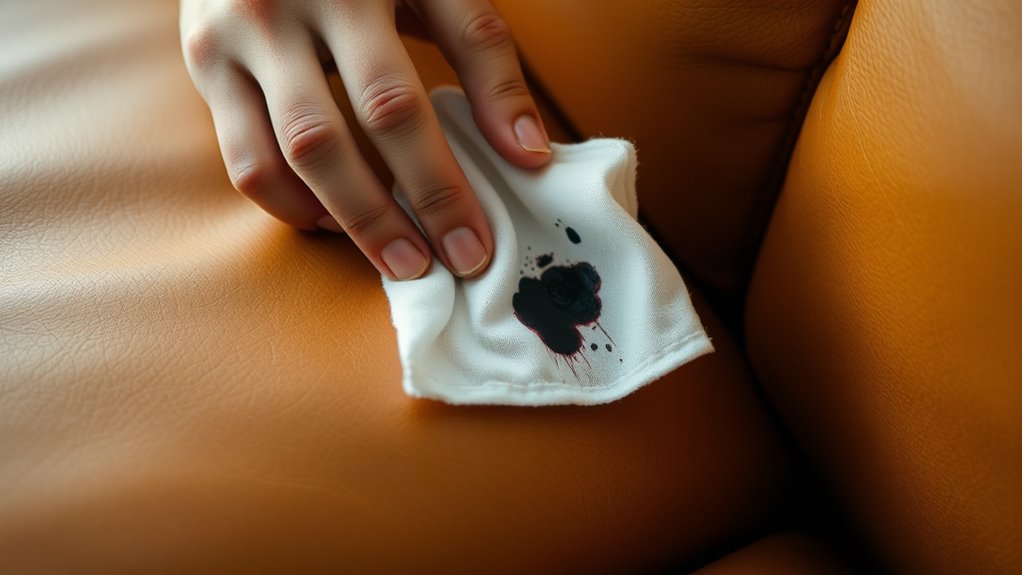
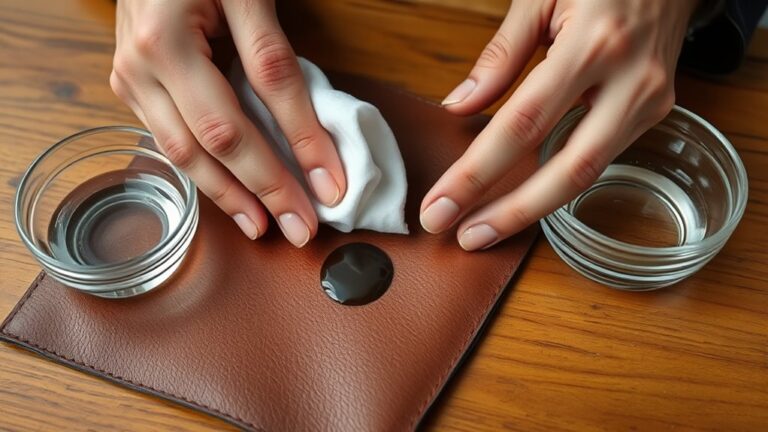
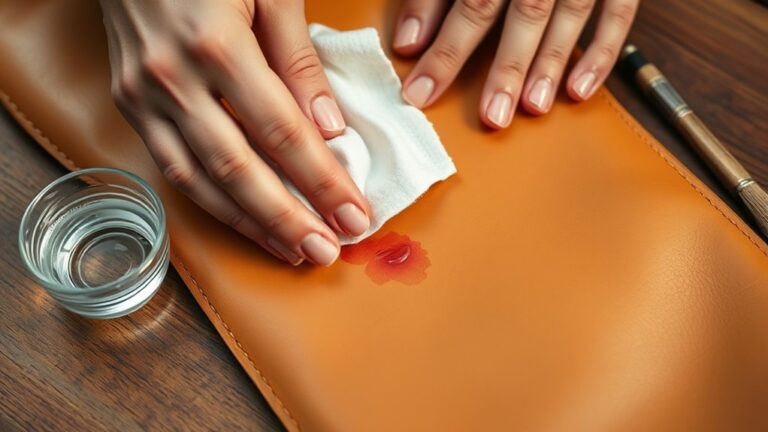
When dealing with ink stains on your leather sofa, start by gently blotting the area to avoid spreading the ink further. Use a clean, dry cloth or paper towel and press lightly on the stain.
Avoid rubbing, as it can embed the ink deeper into the leather fibers. Blotting helps lift excess ink from the surface without damaging the material.
| Do’s | Don’ts |
|---|---|
| Use a soft cloth | Rub vigorously |
| Blot gently and repeatedly | Apply excessive pressure |
| Work from the outside in | Spread the ink around |
| Use clean, dry materials | Use colored or rough cloths |
This careful approach preserves your sofa’s finish while effectively reducing the ink stain’s intensity.
It’s all about being gentle and patient here!
Apply Rubbing Alcohol Sparingly
Once you’ve gently blotted the ink stain, you can move on to using rubbing alcohol to tackle any remaining marks. Pour a small amount onto a cotton swab or ball—never directly onto the leather—to avoid over-saturating the area.
Applying it sparingly is key because too much rubbing alcohol can dry out or damage the leather. Dab the stain lightly, focusing only on the inked spots.
Let the alcohol sit for a few seconds to break down the ink, then blot it away carefully. Always test this method on an inconspicuous area first to make sure your leather won’t discolor.
Use a Soft Cloth to Dab the Stain
You’ll want to grab a soft, lint-free cloth to tackle the ink stain without damaging the leather.
Don’t rub aggressively—gentle dabbing works best to lift the ink. Blot the area carefully to avoid spreading the stain further.
Choose Proper Cloth Material
Although it might seem trivial, choosing the right cloth material is essential for effectively removing pen ink from your leather sofa. You want a soft, lint-free cloth—like microfiber or cotton—that won’t scratch or damage the leather’s surface.
Avoid rough fabrics or paper towels, as these can cause abrasions or leave fibers behind, making the stain worse. When you dab the ink, a gentle cloth ensures you lift the stain without pushing it deeper.
Also, a clean cloth prevents spreading the ink around. Before you start, make sure the cloth is slightly dampened with your chosen cleaning solution, so it absorbs the ink efficiently.
Selecting the proper cloth helps you treat the stain carefully and preserves your sofa’s leather finish.
Avoid Rubbing Aggressively
If you want to protect your leather sofa, don’t rub the pen ink aggressively. Rubbing harshly can spread the stain and damage the leather’s surface.
Instead, use a soft cloth to gently dab the ink spot. This method helps lift the ink without pushing it deeper into the material.
Follow these key tips:
- Use a soft, lint-free cloth like microfiber to avoid scratching.
- Dab gently and repeatedly; avoid circular or back-and-forth motions.
- Apply minimal pressure to prevent abrasion and color fading.
Blot Ink Gently
After avoiding harsh rubbing, the next step is to blot the ink gently using a soft cloth. Grab a clean, white cloth or a microfiber towel to prevent any color transfer.
Lightly press the cloth onto the ink stain, allowing it to absorb the excess ink without spreading it further. Avoid dragging or wiping, as this can push the ink deeper into the leather fibers.
If the cloth starts to pick up ink, switch to a fresh section or use a new cloth. Keep blotting patiently until you see a noticeable reduction in the stain.
This careful approach helps preserve your leather’s surface while effectively lifting the ink. Remember, gentle blotting is key to preventing damage and achieving the best cleaning results.
Try Leather Cleaner for Tough Stains
When home remedies don’t fully remove the pen ink from your leather sofa, you’ll want to reach for a specialized leather cleaner. These products are designed to tackle tough stains without damaging the leather’s surface.
Here’s how to use a leather cleaner effectively:
- Test it first: Apply a small amount on a hidden area to check for colorfastness.
- Apply gently: Use a soft cloth to rub the cleaner in a circular motion on the ink stain.
- Wipe and dry: Remove excess cleaner with a clean cloth and let the sofa air dry naturally.
Using a dedicated leather cleaner can restore your sofa’s appearance quickly and safely when other methods fall short. It’s a handy trick to keep in mind!
Avoid Excess Moisture on the Leather
You’ll want to use as little water as possible when cleaning your leather sofa to prevent damage. Too much moisture can cause the leather to warp, stain, or develop mold.
Importance of Minimal Water
A small amount of water can help loosen pen ink from your leather sofa, but using too much risks damaging the material. When you tackle ink stains, you want to keep moisture to a minimum to protect your sofa’s finish and texture.
Here’s how to manage water use effectively:
- Dampen a soft cloth slightly instead of soaking it. This controls how much water contacts the leather.
- Blot gently rather than rubbing vigorously, which can spread the stain and push moisture deeper.
- Wipe off any excess moisture immediately with a dry cloth to prevent absorption.
Just remember, less water is always better when dealing with leather!
Risks of Excess Moisture
Although water can help lift ink stains, applying too much moisture can seriously damage your leather sofa. When leather absorbs excess water, it may swell, causing the surface to become rough and lose its natural texture.
Overly wet leather is also prone to discoloration, leading to unattractive water spots that are often difficult to remove. Additionally, excess moisture can weaken the leather’s fibers, making it more susceptible to cracking and peeling over time.
You should also know that damp conditions promote mold and mildew growth, which not only harm the leather but pose health risks. To protect your sofa, avoid soaking it with water or cleaning solutions.
Instead, use just enough moisture to treat the stain without saturating the leather surface. That way, you keep your sofa looking great and lasting longer.
Best Moisture Control Methods
When removing pen ink from your leather sofa, controlling moisture is key to preventing damage. Too much water can cause stains, warping, or even mold.
To keep your leather safe, follow these moisture control methods:
- Use a barely damp cloth: Lightly moisten your cleaning cloth with water or a leather cleaner, making sure it’s not soaking wet.
- Blot, don’t rub: Gently blot the ink stain to lift it without spreading moisture or damaging the leather’s surface.
- Dry quickly and naturally: After cleaning, grab a dry microfiber cloth to soak up any extra moisture. Then, let the sofa air dry away from direct heat or sunlight.
Stick to these steps and you’ll remove ink safely while keeping your leather looking great.
Condition the Leather After Cleaning
Since cleaning can strip your leather sofa of its natural oils, you’ll want to apply a conditioner to restore moisture and prevent cracking. Choose a high-quality leather conditioner that’s suitable for your sofa’s finish.
Apply a small amount to a soft, clean cloth and gently rub it into the leather using circular motions. Focus especially on areas that feel dry or stiff. Let the conditioner absorb for about 15 to 20 minutes.
After that, buff the surface lightly with a dry cloth to remove any excess. Conditioning not only keeps your leather soft and supple but also helps maintain its durability and appearance over time.
Make conditioning a regular part of your sofa care routine to keep your leather looking fresh and protected after each cleaning. It’s a simple step that really makes a difference!
Repeat the Process if Necessary
After conditioning your leather sofa, check the ink stain to see if it has fully lifted. If the stain remains, don’t worry—sometimes it takes more than one treatment to completely remove pen ink.
Here’s how to repeat the process effectively:
- Reapply your chosen cleaning solution gently to the affected area, avoiding saturation.
- Use a soft cloth to blot and lift the ink, working in small circular motions.
- Allow the leather to dry and then condition it again to maintain softness and prevent damage.
Repeat these steps until the stain disappears, but always proceed cautiously to avoid harming the leather.
Patience and gentle care will help restore your sofa’s appearance without compromising its finish.
Prevent Future Ink Stains on Your Sofa
To keep your leather sofa looking its best, you’ll want to take steps that prevent ink stains before they happen. Start by keeping pens and markers away from the sofa area, especially if you have kids or guests who might absentmindedly set them down.
Consider providing a designated spot for writing tools, like a desk or side table, to reduce accidental contact. You can also apply a leather protector or conditioner regularly; these products create a barrier that helps resist stains and makes cleaning easier.
Finally, establish a quick-clean routine—wiping spills or marks immediately can prevent permanent damage. By being proactive and mindful, you’ll save yourself the hassle of tough ink stains and keep your leather sofa looking fresh and beautiful for years.
Frequently Asked Questions
Can Ink Stains on Leather Cause Permanent Damage?
Yes, ink stains on leather can cause permanent damage if you don’t act quickly.
You’ll want to treat the stain promptly to avoid it soaking in and ruining the leather’s surface and color.
Is It Safe to Use Nail Polish Remover on Leather?
You shouldn’t use nail polish remover on leather since it contains acetone, which can damage or discolor the surface.
Instead, try a leather cleaner or test a small hidden spot before applying any product widely. It’s always better to be safe with leather!
How Long Does It Take for Ink to Set in Leather?
Oh, wouldn’t it be great if ink took forever to set?
Actually, it usually soaks into leather within minutes to an hour.
Can Professional Cleaning Remove Old Ink Stains Completely?
Yes, professional cleaning can often remove old ink stains completely, especially if the leather isn’t severely damaged.
They’ll use specialized products and techniques that you likely don’t have at home, boosting your sofa’s chances of looking spotless again.
Are There Any Natural Remedies for Removing Ink From Leather?
Ink stains can feel like unwelcome shadows on your leather. You can try natural remedies like lemon juice or white vinegar diluted with water.
Dab gently, don’t soak, and always test a hidden spot first to avoid damage. It’s a bit like tiptoeing—better safe than sorry!
Conclusion
Now that you’ve tackled the ink stain step by step, your leather sofa can shine like new again. Remember, patience is your best ally—each gentle dab is like a brushstroke restoring a masterpiece.
Keep your cleaning supplies handy and act quickly next time to prevent future marks. With a little care, your sofa will stay smooth, supple, and ink-free, inviting you to relax without worry.
So go ahead—bring your leather back to life! Removing pen ink from your leather sofa doesn’t have to be a headache. Just follow these easy steps, and you’ll keep your furniture looking fresh and beautiful for years. Taking care of your leather means it stays comfortable and stylish, ready for all your cozy moments.