
How Do You Remove Ink From a Leather Sofa Easily?
To remove ink from your leather sofa easily, start by identifying the type of leather and ink you’re dealing with. This helps you pick a cleaner that won’t damage your sofa. You’ll want to gather some soft cloths and either a mild leather cleaner or rubbing alcohol.
Before you dive in, test the cleaner on a hidden spot to make sure it won’t harm your leather. When you’re ready, gently dab the ink stain, starting from the edges and moving inward.
After that, wipe the area with a damp cloth and let it air dry naturally.
Don’t forget to finish up by applying a leather conditioner. This step keeps your sofa soft and protected, helping it look great for longer.
Keep reading if you want to learn more detailed steps and handy tips for tackling ink stains on leather!
Key Takeaways
- Identify the ink and leather type to choose a safe, effective cleaning method without damaging the sofa.
- Test any cleaning solution on a hidden leather spot to ensure it won’t cause discoloration or damage.
- Gently dab the ink stain with isopropyl alcohol or a leather-safe cleaner, avoiding rubbing to prevent spreading.
- Wipe the treated area with a damp cloth to remove residue and allow the leather to air dry naturally.
- Apply leather conditioner after cleaning to restore moisture and keep the sofa soft and protected.
It’s a pretty straightforward process once you know what kind of leather you’re working with. Just take it slow and be gentle. That way, you avoid making the stain worse or harming your sofa.
Identify the Type of Ink and Leather
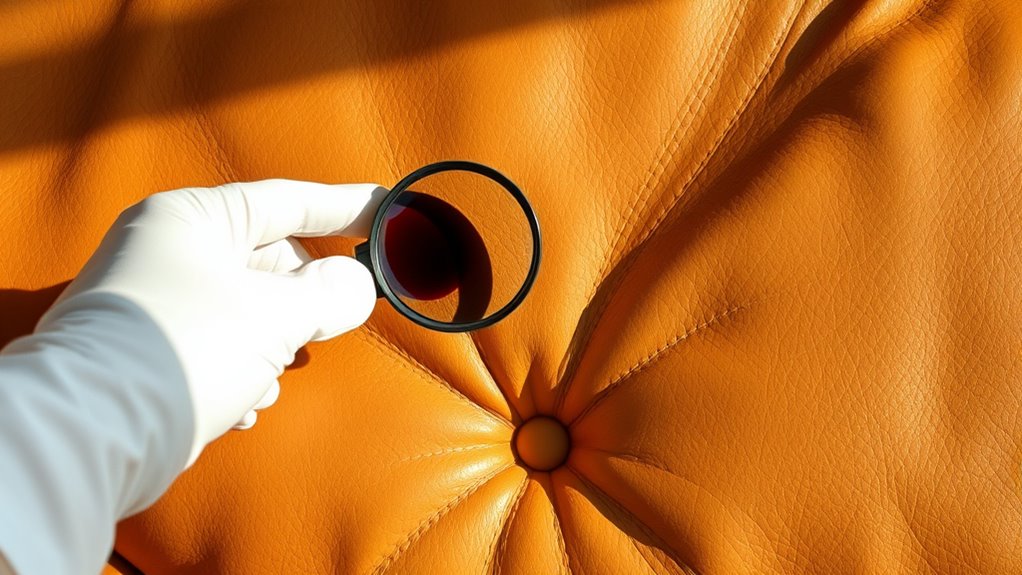
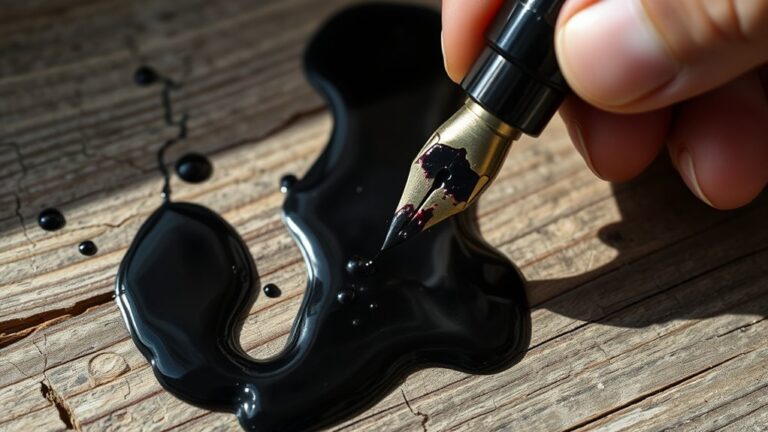
Before you begin removing ink from your leather sofa, you need to identify what kind of ink and leather you’re dealing with. Different inks—whether ballpoint, gel, or permanent marker—react differently to cleaning methods.
Ballpoint ink might come off with gentle treatments, while permanent marker usually requires stronger solutions.
Next, check the type of leather. Aniline leather is more porous and delicate, so harsh chemicals can damage it.
Semi-aniline or protected leather has a finish, making it more resistant to stains and easier to clean. Look for manufacturer tags or consult your sofa’s manual to determine the leather type.
Knowing both ink and leather types helps you choose the safest and most effective cleaning approach, preventing further damage and ensuring your sofa stays in great condition.
Gather Necessary Cleaning Supplies
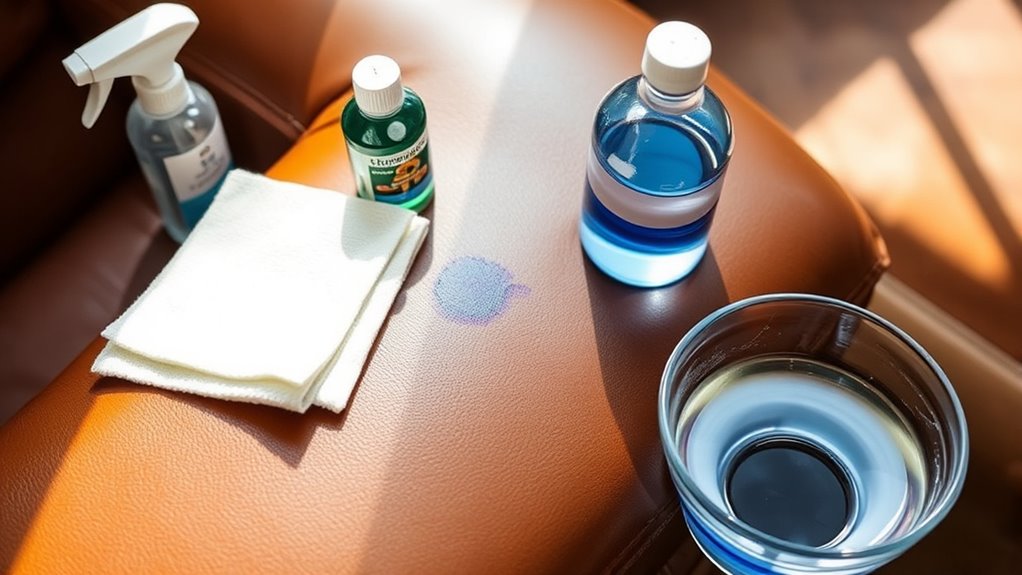
Once you know the type of ink and leather you’re dealing with, you can gather the right cleaning supplies to tackle the stain effectively. Start with a soft white cloth or microfiber towel to avoid scratching the leather.
Identify your ink and leather type first, then use a soft cloth to prevent scratches while cleaning.
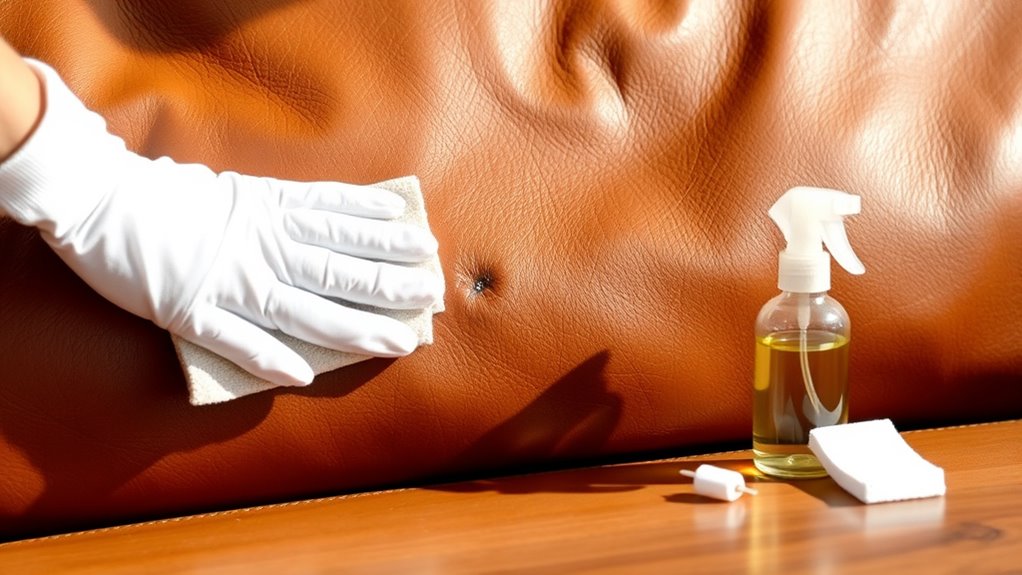
You’ll need a gentle leather cleaner or a mild soap like saddle soap, which is safe for most leather types. For tougher stains, isopropyl alcohol or a commercial ink remover designed for leather may be necessary, but use them sparingly.
Have a small bowl of lukewarm water ready for diluting cleaners and rinsing your cloth. Keep cotton swabs handy for precise application on small ink spots.
Ultimately, a leather conditioner will help restore moisture and protect the sofa after cleaning. Having these supplies on hand ensures a smooth, efficient process.
Test Cleaning Solutions on a Hidden Area
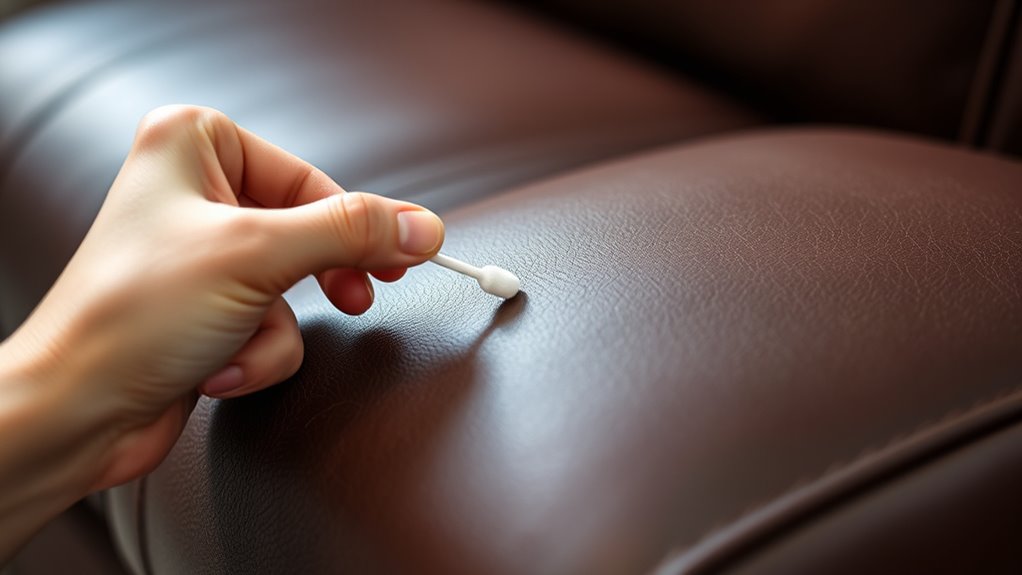
Since leather can react differently to various cleaning agents, you’ll want to verify your chosen solution on a hidden spot first. Pick an inconspicuous area, like the underside of a cushion or inside a seam, where any discoloration or damage won’t be noticeable.
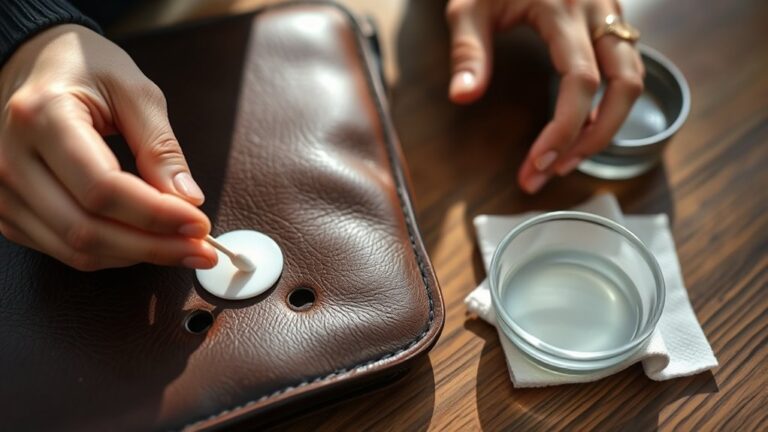
Apply a small amount of the cleaning solution using a cotton swab or soft cloth. Wait a few minutes to see if the leather’s color changes, darkens, lightens, or if the texture feels altered or sticky.
If you notice any adverse effects, don’t use that product on the visible ink stain. Testing first helps you avoid ruining your sofa’s finish and ensures the cleaning method is safe and effective.
Always follow the manufacturer’s instructions and proceed only when confident. It’s better to be safe than sorry!
Apply Gentle Ink Removal Techniques
Start by choosing mild solvents like rubbing alcohol or leather cleaner to tackle the ink stain. Always test your chosen solution on a hidden spot to make sure it won’t damage the leather.
Then, gently apply it to the ink mark using a soft cloth or cotton swab. Take your time with this step to avoid spreading the stain.
Use Mild Solvents
Although ink stains on leather can be stubborn, you can often lift them using mild solvents without damaging the material. Start by dampening a soft cloth with a small amount of rubbing alcohol or a leather-safe cleaner.
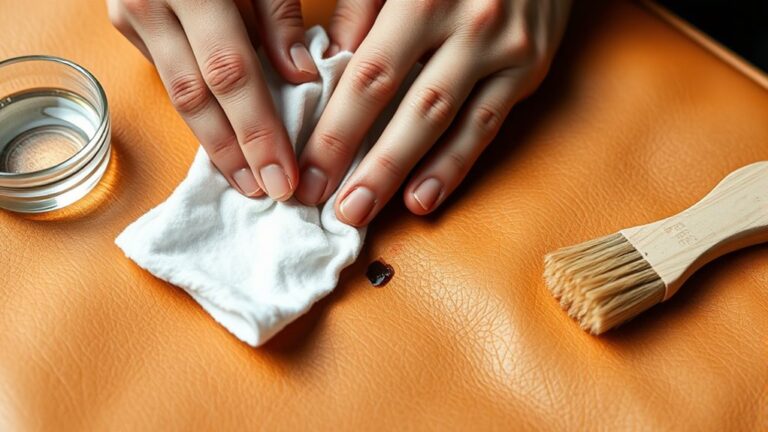
Gently dab the stained area—don’t rub aggressively—to avoid spreading the ink or harming the leather’s finish. Work from the outside of the stain inward to prevent it from spreading.
After treating the spot, wipe it with a clean, damp cloth to remove any solvent residue. Finally, let the leather air dry naturally, then condition it to restore moisture and suppleness.
Using mild solvents carefully helps you tackle ink stains effectively while preserving your leather sofa’s look and feel.
Test Hidden Areas
Before applying any ink removal method to your leather sofa, you should test it on a hidden area first. This step helps you verify the cleaner won’t damage or discolor the leather.
Pick a spot that’s out of sight, like underneath a cushion or on the back panel. Apply a small amount of the chosen mild solvent or cleaning solution gently with a soft cloth.
Wait a few minutes to see if the leather’s color or texture changes. If you notice any adverse effects, stop immediately and try a different product or method.
Testing hidden areas prevents costly mistakes and preserves your sofa’s appearance. Always proceed with gentle ink removal techniques to protect your leather while effectively tackling ink stains.
Use Commercial Leather Cleaners Safely
When you choose to use commercial leather cleaners, make sure you read the instructions carefully to avoid damaging your sofa. Different products have specific formulations, and using them incorrectly can cause discoloration or cracking.
Always test the cleaner on a hidden spot first to ensure it doesn’t harm the leather. Apply the cleaner gently with a soft cloth, avoiding harsh scrubbing that could wear down the finish.
Test cleaners on a hidden area first and apply gently with a soft cloth to protect leather finishes.
Use only the recommended amount to prevent oversaturation, which might lead to stains or watermarks. After application, wipe off any excess cleaner promptly.
If the ink stain persists, avoid repeatedly applying the product; instead, consider professional help. By following these precautions, you’ll clean your leather sofa safely and maintain its look without causing unintended damage.
Condition and Protect Your Leather Sofa
To keep your leather sofa looking its best, you need a regular cleaning routine that removes dirt and oils.
After cleaning, applying a leather conditioner helps maintain its softness and prevents cracking.
This simple step protects your sofa and extends its lifespan.
Regular Cleaning Routine
Although removing ink stains is important, maintaining your leather sofa through a regular cleaning routine will keep it looking fresh and prevent future damage.
You should clean your sofa gently but consistently to avoid dirt buildup, which can weaken the leather over time. Here’s how to keep your leather sofa in top shape:
- Dust weekly with a soft, dry cloth to remove surface dirt and prevent grime accumulation.
- Wipe monthly with a damp cloth using distilled water or a mild leather cleaner to remove deeper dirt.
- Avoid harsh chemicals that can strip the leather’s natural oils and cause cracking.
Doing these simple steps regularly really makes a difference. It keeps your sofa looking great and lasting longer. So, don’t skip out on the care!
Applying Leather Conditioner
Keeping your leather sofa clean sets a solid foundation, but applying a leather conditioner helps maintain its softness and prevents drying or cracking.
After removing ink stains and cleaning the surface, choose a conditioner suited for your sofa’s leather type. Apply a small amount onto a soft cloth and gently rub it into the leather using circular motions.
Don’t over-saturate the area; a light, even layer is enough. Let the conditioner absorb for about 15-20 minutes, then buff the surface with a dry cloth to restore its natural shine.
Conditioning not only protects your sofa from future damage but also keeps it looking fresh and supple. So, make this step part of your regular maintenance every 3-6 months for best results.
Frequently Asked Questions
Can Ink Stains Damage Leather Permanently?
Yes, ink stains can damage leather permanently if you don’t treat them quickly.
You’ll want to act fast and use gentle cleaning methods to avoid worsening the stain or harming the leather’s finish.
It’s all about being careful and quick to keep your leather looking good!
How Long Do I Have to Treat an Ink Stain?
You should treat an ink stain on leather as soon as you notice it—ideally within minutes to prevent permanent damage.
The quicker you act, the better your chances of removing the stain effectively without harming the leather.
Don’t wait too long, because once the ink sets, it’s much tougher to get out. So, grab your cleaning supplies and start right away!
Is It Safe to Use Alcohol on All Leather Types?
Alcohol isn’t always advisable for all leather types. It can cause cracking or color changes, especially on delicate or dyed leather.
You should spot-test first and consider safer, specialized cleaners to safeguard your sofa’s surface. Better safe than sorry, right?
Can Professional Cleaning Remove All Ink Stains?
Professional cleaning can remove most ink stains, but it isn’t guaranteed to erase all of them completely. You should act quickly and consult experts who’ll use specialized techniques tailored to your leather’s type and condition.
It’s best not to wait too long because the longer ink sits, the harder it is to remove. Experts know exactly how to handle different kinds of leather, so getting their help increases the chances of a good outcome.
How Often Should I Condition My Leather Sofa?
You should condition your leather sofa every 6 to 12 months to keep it soft and prevent cracking.
If your home is dry or the sofa gets heavy use, consider conditioning it more often to maintain its appearance. It really helps to keep the leather looking fresh and feeling comfortable.
Conclusion
Now that you know how to identify the ink and leather type, gather your supplies, and test solutions carefully, you’re ready to remove ink stains effectively. Apply gentle techniques, use commercial cleaners wisely, and condition your sofa afterward.
By treating your leather with care and cleaning with patience, you’ll keep your sofa looking fresh. Protecting it regularly will extend its life and preserve its beauty for years to come. Remember, removing ink from a leather sofa doesn’t have to be stressful. With the right approach, you can easily tackle those stubborn ink stains and maintain the elegant look of your leather furniture.