


How Does Ink Poisoning Occur?
Ink poisoning can happen when you get ink on your skin, especially if you have cuts or broken skin, or if you accidentally swallow it. Breathing in fumes from certain inks, like those with solvents or heavy metals, can also cause problems.
Some inks contain harmful chemicals that irritate your body or cause serious health issues if exposed for too long. If you want to protect yourself and spot warning signs early, there’s more you should know about how this happens.
Understanding the risks of ink poisoning is important because it helps you avoid exposure and keep safe. Whether it’s from touching ink, swallowing it, or inhaling fumes, each way can affect you differently.
So, let’s dive into how ink poisoning occurs and what you can do about it.
Key Takeaways
- Ink poisoning happens mainly when ink gets absorbed through the skin, especially if there are cuts or scrapes. Prolonged contact with toxic ink ingredients can also cause problems.
- Breathing in fumes or vapors from ink, sprays, or printing machines can lead to respiratory exposure and cause poisoning symptoms.
- Sometimes, people accidentally swallow ink from pens, markers, or even from food and drinks that got contaminated. This is a common way for internal poisoning to occur.
- Some inks contain heavy metals and solvents, which can increase the risk of toxic effects and cause issues throughout the body.
- Not handling ink properly, skipping protective gear, or storing it the wrong way makes it more likely to get poisoned through skin contact, breathing it in, or swallowing it.
Types of Ink and Their Chemical Components

What makes different inks dangerous? It’s their chemical makeup. When you look at ink types, you’ll find substances like solvents, dyes, pigments, and additives that can be harmful if ingested or absorbed.
For example, traditional fountain pen inks often contain water-based dyes, which are generally less toxic. However, permanent markers use alcohol-based solvents that can irritate your skin or cause poisoning if swallowed.
Some inks include heavy metals like lead or cobalt, which pose serious health risks. Even the pigments in tattoo inks can carry toxic elements.
Knowing these components helps you understand why exposure matters. Not all inks are created equal, so recognizing their chemical ingredients can help you avoid dangerous situations and respond appropriately if you come into contact with them.
Common Routes of Ink Exposure
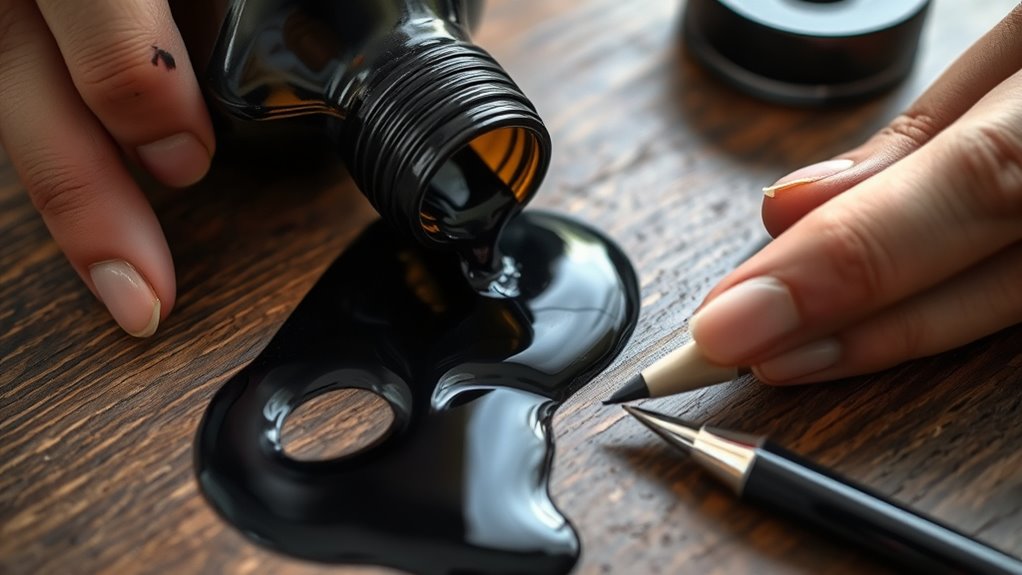
You can be exposed to ink in several ways, and each carries its own risks. Skin contact can allow harmful chemicals to absorb.
Inhaling vapors might irritate your lungs. And swallowing ink accidentally can lead to poisoning.
Understanding these common routes helps you stay safe and avoid potential health issues. So, it’s good to know how exposure can happen and what to watch out for.
Skin Contact Risks
How often do you think about the risks of ink touching your skin? Ink can seep through tiny cuts or be absorbed over time. This might cause irritation or even more serious health issues.
If you handle ink a lot, it’s important to protect your skin. That way, you avoid unwanted exposure.
Here’s a quick look at common skin contact risks:
| Risk Factor | Description |
|---|---|
| Direct Contact | Ink spills or smudges on skin |
| Absorption | Prolonged contact allowing toxins in |
| Cuts & Abrasions | Ink enters through broken skin |
| Allergic Reactions | Sensitivity causing rashes or itching |
Always wash ink off promptly. And whenever you handle large amounts, wear gloves to keep safe.
Inhalation of Vapors
Although ink is often handled as a liquid or solid, its vapors can easily become airborne and enter your respiratory system. When you inhale these vapors, the chemicals in the ink may irritate your lungs or cause more serious health issues over time.
You might not notice right away, but repeated exposure increases risks. Here are common ways you might inhale ink vapors:
- Working in poorly ventilated areas where ink fumes accumulate.
- Using spray inks or aerosol-based ink products.
- Being close to printers or copiers that emit volatile organic compounds (VOCs).
- Handling solvents or cleaning agents associated with ink production.
Protect yourself by ensuring proper ventilation and using masks when necessary to reduce inhalation exposure. It’s a simple way to keep your lungs safe while you work.
Accidental Ingestion Cases
Inhalation isn’t the only way ink can enter your body; accidental ingestion is another common route of exposure. You might swallow ink if you put pens or markers in your mouth, especially if children are involved.
Ink can also contaminate food or drink if you’re not careful, leading to unintentional consumption. Some people accidentally ingest ink while handling ink cartridges or refilling pens without washing their hands afterward.
Even small amounts can cause irritation or mild poisoning, depending on the ink’s chemical makeup. If you suspect you’ve swallowed ink, avoid inducing vomiting and seek medical advice promptly.
Understanding these accidental ingestion risks helps you prevent exposure and protect your health effectively. Just a little caution can go a long way!
Risks Associated With Ingesting Ink

When you accidentally swallow ink, you expose your body to chemicals that can cause a range of health issues. Ink contains pigments and solvents that may irritate your digestive system or lead to more severe complications.
Here are some risks you should be aware of:
- Gastrointestinal irritation – Nausea, vomiting, or abdominal pain may occur due to the chemical irritants in ink.
- Toxicity – Certain inks contain heavy metals or harmful substances that can cause poisoning if ingested in significant amounts.
- Allergic reactions – You might experience itching, swelling, or difficulty breathing if you’re sensitive to specific ink components.
- Long-term effects – Repeated ingestion can lead to organ damage, especially in the liver or kidneys, due to toxin accumulation.
Understanding these risks helps you respond appropriately after accidental ingestion. So, if you ever swallow ink, it’s good to know what might happen and when to seek help.
Ink Absorption Through Skin and Wounds
You might not realize that your skin can absorb ink, especially if you have cuts or wounds. Factors like skin thickness and exposure time play a big role in how much ink gets through.
Understanding these risks helps you avoid potential poisoning from ink contact. So, it’s a good idea to be careful when handling ink, especially if your skin isn’t intact.
Skin Permeability Factors
Although skin acts as a natural barrier, certain factors can increase its permeability, allowing ink to be absorbed more easily. When your skin’s protective layer is compromised or altered, ink particles can penetrate deeper.
Here are key factors that affect skin permeability:
- Skin Integrity: Cuts, abrasions, or wounds create direct entry points for ink.
- Skin Hydration: Moist skin is more permeable than dry skin, facilitating ink absorption. So, keeping your skin hydrated can actually make a difference.
- Chemical Exposure: Solvents or detergents can strip natural oils, weakening the skin’s defense.
- Skin Thickness: Thinner skin areas like the face or neck absorb substances faster than thicker areas. It’s interesting how different parts of your body behave differently!
Ink Exposure Risks
Factors that increase skin permeability set the stage for ink to enter your body, especially through cuts or wounds. When ink contacts broken skin, it can be absorbed more easily, leading to potential poisoning.
Even minor abrasions or eczema can let ink chemicals penetrate deeper layers. Understanding these risks helps you take precautions during ink handling.
| Risk Factor | Description | Prevention Tip |
|---|---|---|
| Open wounds | Ink enters bloodstream | Cover cuts before handling |
| Skin irritation | Increased absorption | Avoid ink on irritated skin |
| Prolonged contact | More ink absorbed | Limit exposure time |
| High concentration | Stronger toxins present | Use diluted ink |
| Sensitive skin | Easier penetration | Wear protective gloves |
Symptoms of Ink Poisoning to Watch For
When ink poisoning occurs, your body quickly reacts with a range of symptoms that signal the need for immediate attention. You might notice discomfort that escalates rapidly, indicating toxins are affecting your system.
Recognizing these signs early can be essential for your health.
Here are four key symptoms to watch for:
- Nausea and vomiting – your body’s way of trying to expel harmful substances.
- Dizziness or headaches – signaling your nervous system is impacted.
- Skin irritation or rash – especially around the contact area.
- Difficulty breathing or chest tightness – a serious sign that requires urgent care.
If you experience any of these symptoms after ink exposure, seek medical help immediately.
Preventive Measures to Avoid Ink Poisoning
Noticing symptoms early can save you from serious health issues, but the best approach is to prevent ink poisoning before it starts. To protect yourself, always handle ink with care—avoid direct skin contact and never ingest it.
Use gloves when working with large amounts of ink and ensure good ventilation in your workspace to minimize inhaling fumes. Keep ink containers tightly sealed and stored out of reach of children and pets.
If you’re using ink around food or drink, be extra cautious to prevent accidental contamination. Finally, wash your hands thoroughly after handling ink to remove any residue.
Frequently Asked Questions
Can Ink Poisoning Cause Long-Term Health Effects?
Yes, ink poisoning can cause long-term health effects if you’re exposed to toxic chemicals repeatedly or in large amounts.
You might experience organ damage, neurological issues, or allergic reactions. So, it’s really important to avoid ingestion or skin contact.
Are Children More Vulnerable to Ink Poisoning Than Adults?
Imagine tiny hands exploring colorful pens—yes, children are more vulnerable to ink poisoning than adults.
Their smaller bodies absorb toxins faster, so you need to keep ink safely away and watch them closely to prevent harm.
What Should I Do if Someone Swallows Ink Accidentally?
If someone swallows ink, you should stay calm and remove any excess ink from their mouth. Avoid inducing vomiting because that can make things worse.
Call poison control or seek medical help immediately. This way, they get the right treatment quickly and safely.
Is Ink Poisoning Treated Differently Than Other Chemical Poisonings?
Yes, ink poisoning is treated similarly to other chemical poisonings. You’ll focus on removing the toxin, supportive care, and monitoring symptoms.
Always seek medical help immediately to guarantee proper treatment and avoid complications. It’s better to be safe and get professional advice right away.
Can Inhaling Ink Fumes Result in Poisoning?
Imagine you’re in a poorly ventilated room using spray ink. Yes, inhaling those fumes can poison you by irritating your lungs and nervous system.
Always guarantee good airflow to avoid harmful effects from ink fumes. It’s better to be safe than sorry!
Conclusion
You might think ink poisoning happens just by touching ink, but it mainly occurs when you ingest it or get it into open wounds. Different inks contain various chemicals, some harmful in large amounts.
By understanding how ink enters your body and recognizing symptoms early, you can avoid serious risks. So, keep ink away from your mouth and broken skin. Always handle it carefully to stay safe and healthy.
Remember, ink poisoning is usually linked to swallowing ink or exposure through cuts, not just skin contact. Being cautious with ink and knowing the risks can help you prevent ink poisoning and protect your health effectively.