
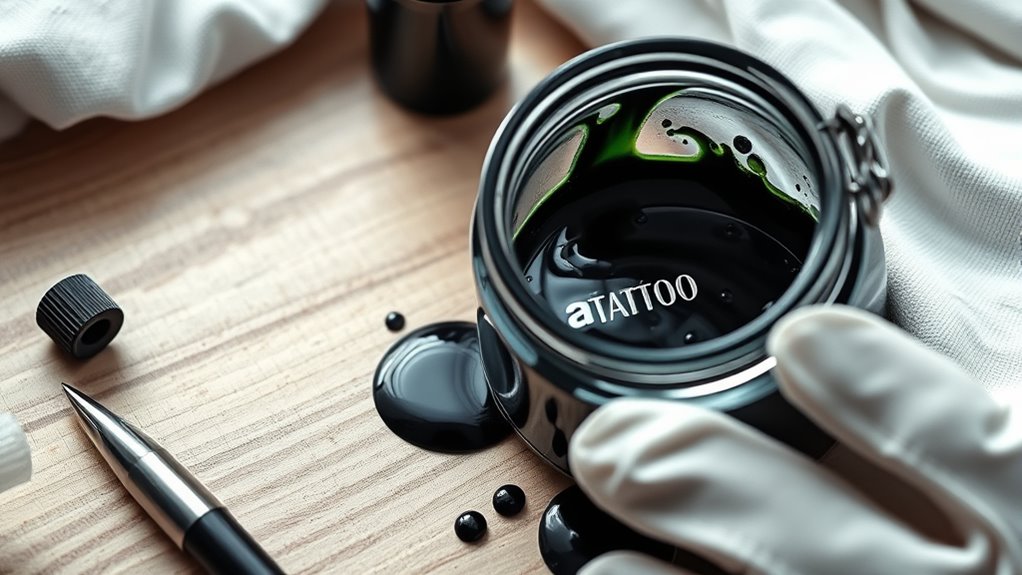
Does Tattoo Ink Go Bad and How Do You Store It Properly?
Yes, tattoo ink does go bad if you don’t store it properly. To keep your ink fresh and ensure your tattoo colors stay vibrant, it’s important to store the ink in the right conditions.
Ideally, keep it in a cool, consistent temperature between 60°F and 75°F, away from sunlight and dust.
Always make sure the bottles are tightly sealed. Avoid contaminating the ink by not touching inside the container.
Using fresh ink not only guarantees vivid colors but also helps prevent any bacterial growth. Old ink can separate or harbor bacteria, which isn’t safe for your skin.
If you want your tattoos to look their best for years to come, there’s definitely more to learn about proper care and storage. Taking these simple steps makes a big difference in both the quality and safety of your tattoo experience.
Key Takeaways
- Tattoo ink can go bad due to pigment degradation, contamination, or chemical changes affecting color and safety. So, it’s important to keep an eye on it.
- Store tattoo ink in a cool, consistent temperature between 60°F–75°F (15°C–24°C) and keep it away from sunlight. This helps maintain its quality over time.
- Keep bottles tightly sealed and upright to prevent contamination, leaks, and drying. It’s a simple step but really makes a difference.
- Avoid touching inside the bottle to minimize bacteria entry. Also, regularly check the ink for any signs of spoilage.
- If you notice separation, clumping, an off odor, discoloration, or if the ink is past its expiration date, it’s best to discard it. That way, you ensure safe and vibrant results every time.
Understanding the Composition of Tattoo Ink
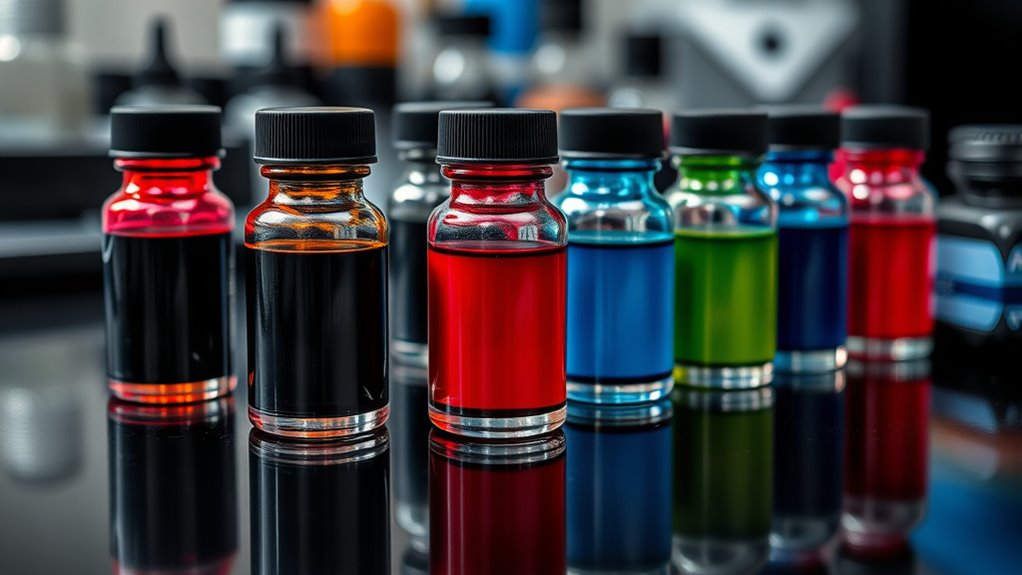
Before you store tattoo ink, it’s important to understand what it’s made of. Tattoo ink typically contains pigments suspended in a carrier solution. The pigments provide color, ranging from organic compounds to metal oxides, each with unique properties.
Tattoo ink combines pigments and a carrier solution, each with unique qualities that affect color and stability.
The carrier solution, often made of water, alcohol, or glycerin, keeps the pigments evenly mixed and prevents contamination. Knowing this helps you recognize why proper storage matters.
Since pigments can settle or clump, and carriers can evaporate or degrade, keeping the ink stable preserves its quality. You’ll want to keep the ink in a cool, dark place to maintain the balance between pigment and carrier.
Understanding these components ensures you handle your tattoo ink with care. This way, you’ll prevent premature spoilage and ensure safe, vibrant results.
Factors That Cause Tattoo Ink to Degrade
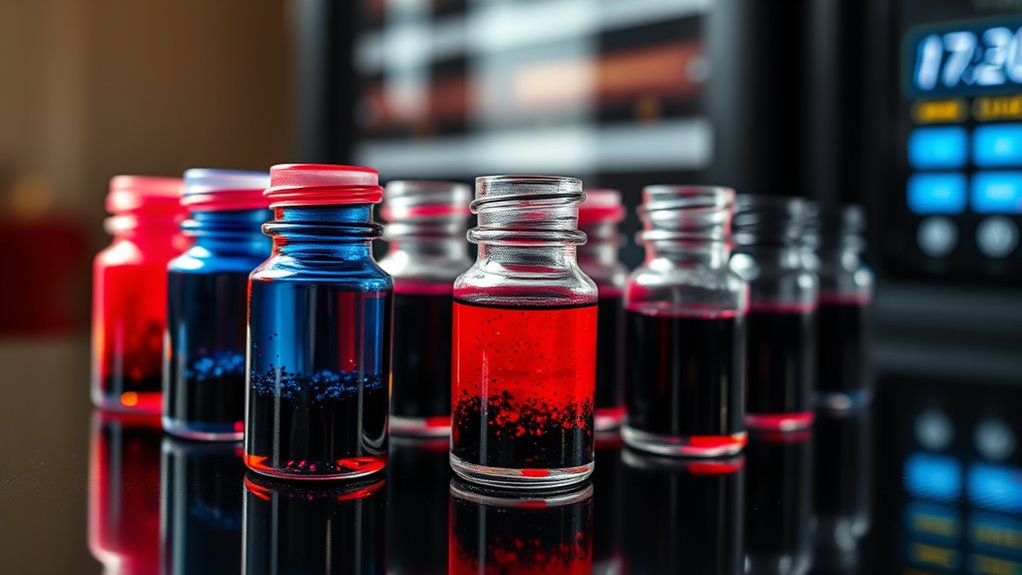
Knowing what’s inside your tattoo ink helps you see why certain conditions can cause it to break down. Exposure to sunlight is a major culprit—UV rays can degrade pigments and alter the ink’s chemical stability.
Temperature fluctuations also play a role; heat speeds up chemical reactions, causing the ink to separate or dry out, while freezing may damage its consistency. It’s kind of like how some things spoil faster when it’s hot or get ruined in the freezer.
Contamination is another factor—introducing bacteria or dust can spoil the ink and promote degradation. Oxygen exposure accelerates oxidation, changing the ink’s color and texture over time.
And don’t forget about improper sealing. When moisture or air sneaks in, it compromises the ink’s integrity. So, by understanding these factors, you can better protect your tattoo ink and keep it looking great for future use.
How to Identify Expired or Compromised Tattoo Ink
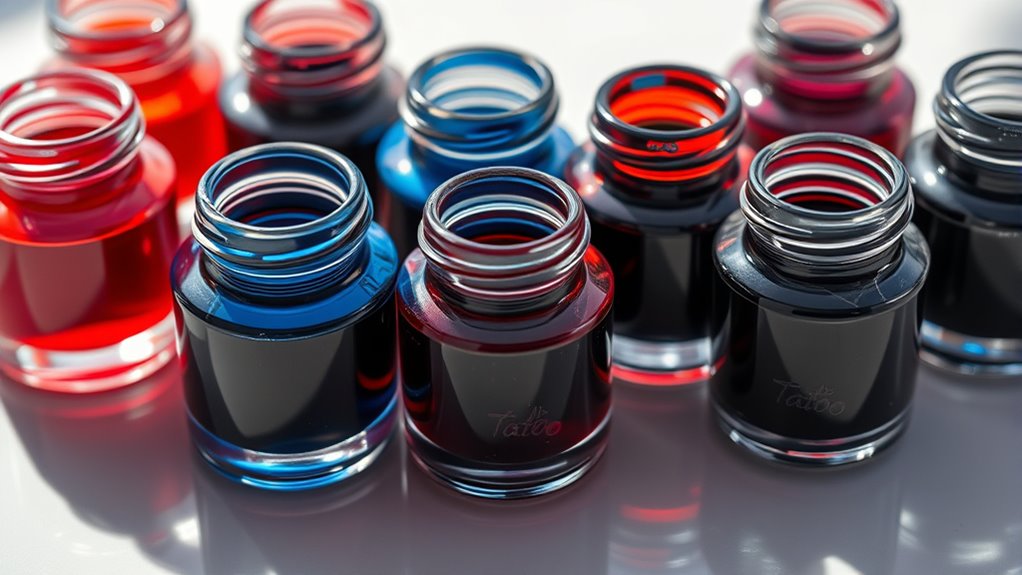
Although tattoo ink can last a long time when stored properly, you’ll need to recognize signs that it’s expired or compromised to avoid poor results or infections. First, check the ink’s color and consistency—if it’s separated, clumpy, or has an unusual texture, it’s likely no longer good.
Faded or discolored ink also signals degradation. Smell the ink; a sour or off odor means bacteria might have grown.
Always inspect the container for cracks, leaks, or bulging, which can indicate contamination. Avoid using ink past its expiration date, as the chemical composition can change over time.
If you notice any of these signs, discard the ink immediately. Using compromised ink risks skin irritation, infection, and poor tattoo quality, so never take chances with your health or artistry.
Best Practices for Storing Tattoo Ink
You’ll want to keep your tattoo ink stored at a consistent, cool temperature to maintain its quality.
Always handle ink carefully to avoid contamination—never touch the inside of the bottle or let it come into contact with unclean surfaces.
Following these simple steps helps make certain your ink stays safe and effective for every use.
Temperature Control Tips
When storing tattoo ink, maintaining a consistent temperature plays a crucial role in preserving its quality and safety. You should keep your ink in a cool, stable environment, ideally between 60°F and 75°F (15°C to 24°C).
Avoid exposing your ink to extreme heat or cold, as temperature fluctuations can degrade pigments and cause the ink to separate. Never leave ink bottles in direct sunlight or near heat sources like radiators.
If you store your ink in the refrigerator, ensure it’s in a sealed container to prevent condensation. Also, bring refrigerated ink to room temperature before use to maintain consistency.
Avoiding Contamination Risks
Since tattoo ink is prone to contamination, you need to handle and store it carefully to prevent bacteria or particles from spoiling the product. Always use clean, single-use gloves when handling ink bottles to avoid introducing germs.
Never dip needles or other tools directly into ink bottles; instead, pour a small amount into a sterile container. Keep ink bottles tightly sealed when not in use to minimize exposure to air and contaminants.
Store ink in a clean, dry area away from dust and direct sunlight. Regularly check your storage area for cleanliness and discard any ink that looks cloudy, separated, or has an unusual smell.
The Importance of Using Fresh Ink for Tattooing
Although it might be tempting to reuse old ink, using fresh tattoo ink guarantees the best quality and safety for your work.
Fresh ink ensures vibrant colors, smooth application, and reduces the risk of infections.
Old ink can separate, thicken, or harbor bacteria, compromising your tattoo’s outcome.
Here’s a quick comparison:
| Aspect | Fresh Ink | Old Ink |
|---|---|---|
| Color Vibrancy | Bright and consistent | Faded or uneven |
| Application | Smooth and easy | Clumpy or thick |
| Safety | Sterile and low contamination risk | Higher risk of contamination |
| Durability | Long-lasting results | Prone to fading and blotching |
Always prioritize fresh ink to deliver top-tier tattoos and keep your clients safe.
Tips for Extending the Shelf Life of Tattoo Ink
To keep your tattoo ink fresh and effective for as long as possible, you need to store it properly and handle it with care. Always keep the ink in a cool, dark place to prevent degradation from heat and sunlight.
Make sure the lids are tightly sealed after each use to avoid exposure to air, which can dry out or contaminate the ink. Avoid dipping needles directly into the original ink bottle; instead, use a separate disposable cup to minimize contamination.
Label your ink bottles with the date you opened them, so you can track their freshness. Finally, store your ink upright to reduce the risk of leaks and maintain consistency.
Following these steps will help you extend your tattoo ink’s shelf life effectively. It’s really worth the little extra effort!
Frequently Asked Questions
Can Tattoo Ink Cause Allergic Reactions Over Time?
Yes, tattoo ink can cause allergic reactions over time. You might not react initially, but your body can develop sensitivities later.
Always test new inks and consult a professional if you notice redness, itching, or swelling. It’s better to be safe and get it checked out!
Is Homemade Tattoo Ink Safe to Use?
You shouldn’t use homemade tattoo ink because it’s often unsafe and can cause infections or allergic reactions.
Professional inks are tested for safety and quality, so stick with those to protect your skin and health. It’s really the best way to keep things safe and avoid any nasty surprises.
How Does Expired Tattoo Ink Affect Healing?
When you use expired tattoo ink, you’re playing with fire—it can cause infections and slow healing.
Your body might react badly, leading to scarring or allergic reactions.
Always choose fresh ink to keep your tattoo healthy.
Are Certain Colors of Tattoo Ink More Prone to Spoilage?
Yes, you’ll find certain colors like white and red inks spoil faster due to their pigment composition.
To keep them fresh, store your inks in a cool, dark place and always seal the bottles tightly after use.
Can Freezing Tattoo Ink Extend Its Shelf Life?
Freezing tattoo ink isn’t a magic bullet; it can extend shelf life but risks altering pigment consistency.
You’ll want to keep it tightly sealed, then thaw slowly to avoid ruining your colors when you’re ready to ink.
Conclusion
Tattoo ink can go bad, and knowing how to store it properly protects your art and your skin. You should keep it cool, sealed, and away from sunlight.
Before each use, check for any changes in color, consistency, or smell. These can be signs that your ink has expired or become contaminated.
Never compromise quality for convenience when it comes to tattoo ink. Using fresh, well-stored ink ensures your tattoos look vibrant and heal safely.
By respecting your ink’s shelf life and proper storage, you preserve its vibrancy, ensure safety, and honor the craft you create every time you tattoo. Proper storage of tattoo ink not only protects your skin but also maintains the quality and longevity of your artwork. So always store your tattoo ink in a cool, dark place, keep it sealed tightly, and inspect it regularly to keep your tattoos looking their best.