How Do You Remove Ink From Carpet Step by Step
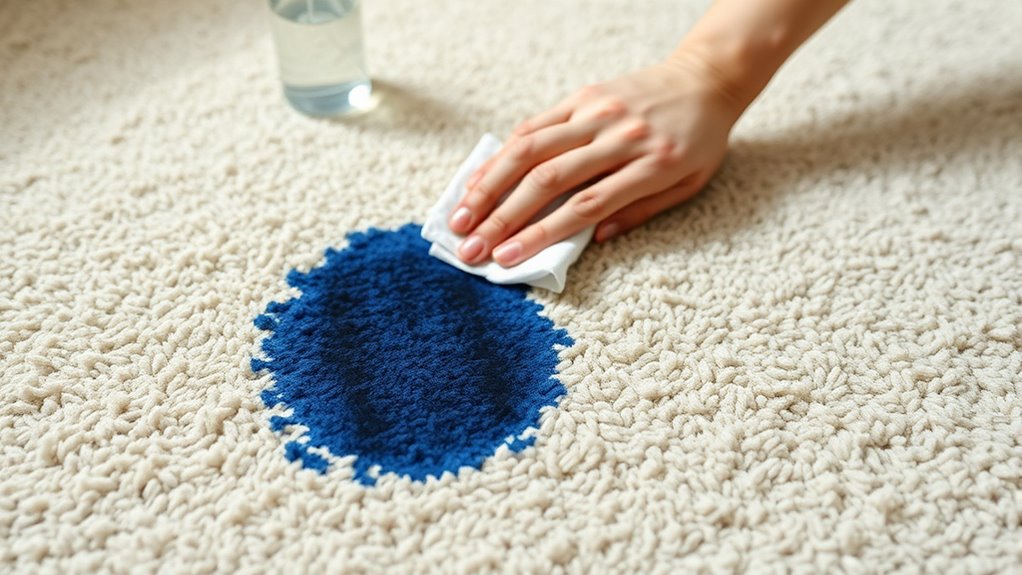
To remove ink from your carpet, start by gathering some white cloths, rubbing alcohol, and cold water. These are your go-to supplies for tackling ink stains effectively.
Blot the stain right away with a cloth—remember, don’t rub it, or you might just spread the ink around.
Next, gently apply rubbing alcohol to a cloth and dab the stain, working from the edges toward the center. This helps to break down the ink without pushing it further into the fibers.
Use a soft brush to lift the ink out of the carpet gently.
After that, rinse the area with cold water and blot it again with a clean cloth. This step helps to remove any leftover cleaning solution.
Let the carpet dry completely before you check how the stain looks.
Keep repeating these steps as needed, and you’ll be surprised how much this simple method can help restore your carpet. Stick with it, and you’ll have even more helpful tips along the way!
Key Takeaways
- Blot the ink stain immediately with a clean, white cloth to absorb excess ink. Avoid rubbing because that can spread the stain around.
- Test rubbing alcohol or a commercial stain remover on a hidden spot of the carpet first. This helps make sure it won’t damage or discolor the carpet.
- Apply the cleaner gently, starting from the edges of the stain and moving inward using a cloth. Then, blot repeatedly to lift the ink out.
- Use a soft-bristled brush for light scrubbing if needed. After that, rinse the area with cold water and blot gently to remove any leftover cleaner.
- Let the carpet dry completely before checking the stain again. If the ink is still there, just repeat the steps until it’s gone.
Gather Necessary Cleaning Supplies
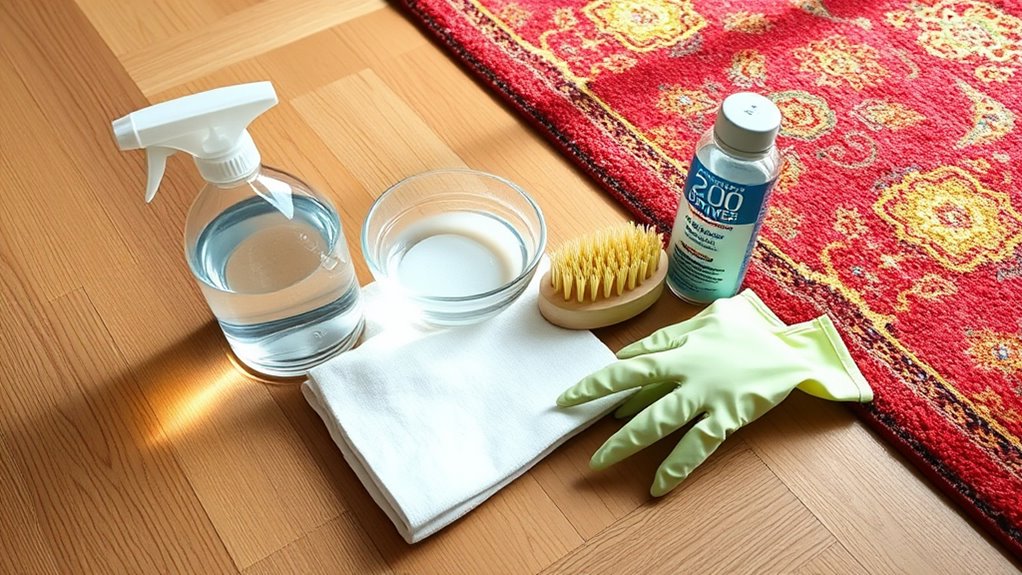
Before you begin removing ink from your carpet, gather all the necessary cleaning supplies to guarantee the process goes smoothly. Start with some clean white cloths or paper towels—colored ones might transfer dye onto your carpet.
Have a small bowl of cold water ready, as it helps dilute the ink without setting the stain. You’ll also need rubbing alcohol or a commercial carpet stain remover, both effective at breaking down ink.
Keep a soft-bristled brush handy to gently work the solution into the fibers if needed. Finally, have gloves to protect your hands and a vacuum cleaner for cleanup after the stain’s removal.
Having these items within reach will save you time and help you tackle the ink stain efficiently. It just makes the whole process easier, really.
Blot the Ink Stain Immediately
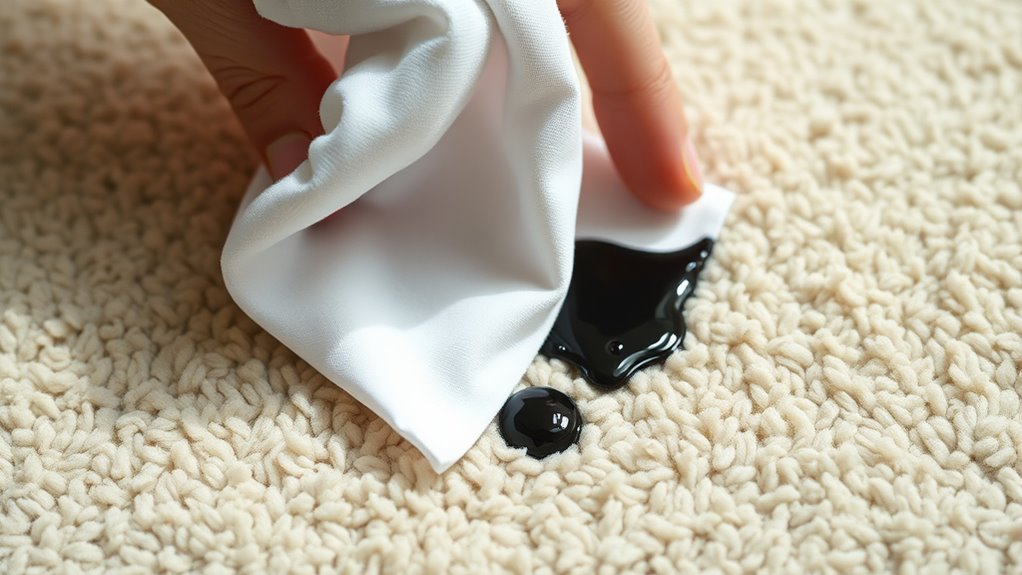
Since ink can quickly seep deep into your carpet fibers, you’ll want to blot the stain immediately to prevent it from setting. Grab a clean, white cloth or paper towel and gently press it onto the ink spot.
Blot ink stains immediately with a clean white cloth to prevent deep setting in carpet fibers.
Avoid rubbing, as this can spread the ink and push it further into the fibers. Instead, use a blotting motion to absorb as much ink as possible.
Make sure to change to a fresh section of the cloth or a new paper towel frequently to avoid reapplying the ink back onto the carpet. Keep blotting patiently until you no longer see ink transferring onto the cloth.
Acting fast here is vital—delaying this step will make the stain harder to remove later on. So, don’t wait around!
Apply a Cleaning Solution to the Stain
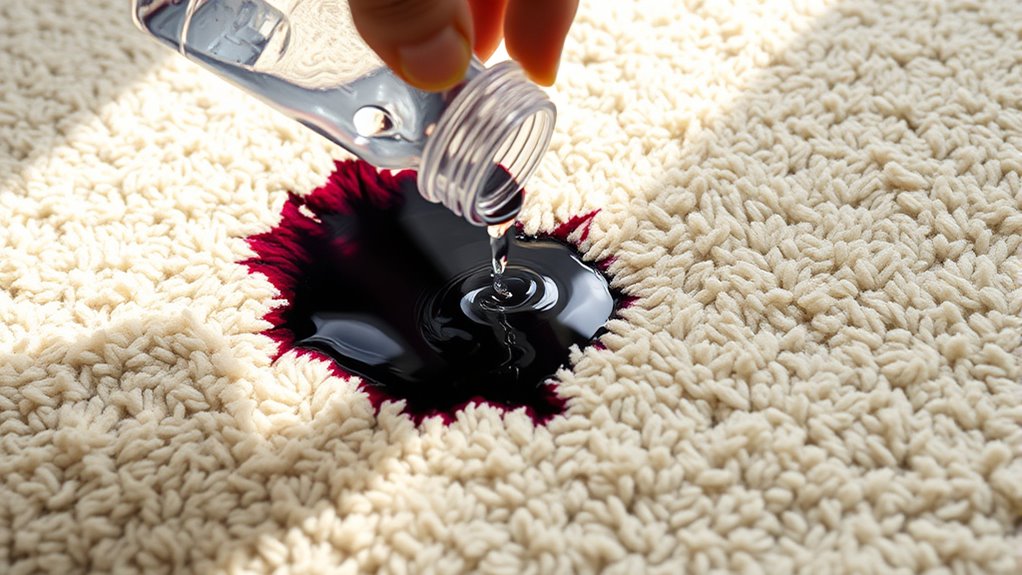
You’ll want to pick a cleaning solution that’s safe for your carpet type but strong enough to break down the ink.
Apply it carefully to avoid spreading the stain further, using a clean cloth or sponge.
Remember to work from the outside in to keep the ink contained.
Choosing Effective Cleaners
When tackling ink stains, selecting the right cleaning solution can make all the difference in restoring your carpet. You’ll want to choose a cleaner that targets ink without damaging your carpet fibers.
Rubbing alcohol, hydrogen peroxide, and commercial stain removers designed for ink are effective options. For delicate or colored carpets, test any cleaner on a hidden spot first to avoid discoloration.
Avoid harsh chemicals like bleach unless you’re dealing with a white carpet and are prepared for potential damage. Natural solutions like vinegar mixed with water can work for mild stains but aren’t always strong enough for fresh or deep ink marks.
Ultimately, pick a cleaner that balances strength with safety for your carpet type to guarantee the best results. It’s all about finding the right fit for your situation!
Application Techniques
Although choosing the right cleaner is essential, applying it correctly guarantees the best chance of removing the ink stain. Start by testing the solution on a hidden carpet area to avoid damage or discoloration.
Use a clean white cloth or sponge—never a colored one that might bleed. Dab the cleaning solution gently onto the stain; don’t pour it directly or rub aggressively, as this can spread the ink or push it deeper.
Work from the outer edges of the stain toward the center to contain it. Let the solution sit for a few minutes to break down the ink, but don’t let it dry completely.
Finally, blot the area with a dry cloth to lift the loosened ink, repeating as needed until the stain fades. This method really helps keep the stain from spreading and makes the cleaning more effective.
Gently Scrub the Affected Area
Before the ink sets deeper into the carpet fibers, gently scrubbing the affected area helps lift the stain without damaging the material.
Here’s how you can do it effectively: Use a soft-bristled brush or a clean cloth to avoid roughing up the carpet fibers. Apply light pressure and move in small circular motions to break up the ink stain gradually.
Make sure to frequently check the progress so you’re lifting the ink and not spreading it further. Easy, right? Just take it slow and steady.
Rinse and Blot the Carpet
Once you’ve treated the stain, rinse the area with cold water to prevent it from setting. Use a gentle blotting technique to lift the ink without pushing it deeper into the fibers.
Avoid rubbing, as it can damage the carpet and spread the stain further. Just take your time and be gentle with it!
Use Cold Water
How can cold water help remove ink from your carpet? Cold water prevents the ink from setting deeper into the fibers, making it easier to lift the stain.
After applying your cleaning solution, use cold water to rinse the area gently. Here’s how you do it:
- Dampen a clean cloth with cold water—avoid soaking it to prevent spreading the ink.
- Blot the stained area carefully to lift the ink without rubbing it further into the carpet.
- Repeat rinsing and blotting until the ink starts to fade, replacing the cloth as it absorbs the stain.
Using cold water controls the stain’s spread and softens the ink, setting you up for successful removal in the next cleaning steps. So, it’s a simple trick but really effective!
Gentle Blotting Technique
Although it might be tempting to scrub, you’ll get better results by gently blotting the ink stain. Start by rinsing the area with cold water to dilute the ink.
Then, take a clean white cloth and gently press it onto the stain, absorbing the ink without spreading it. Repeat rinsing and blotting until the stain lightens.
| Step | Action |
|---|---|
| Rinse | Use cold water to dilute ink |
| Blot | Press with a clean white cloth |
| Repeat | Alternate rinsing and blotting |
| Check | Monitor stain lightening progress |
| Dry | Let carpet air dry after cleaning |
This method prevents the stain from setting while protecting your carpet fibers.
Avoid Rubbing Damage
Since rubbing can push ink deeper into your carpet fibers, you should avoid scrubbing the stain. Instead, focus on rinsing and blotting to lift the ink gently without causing damage.
Here’s what you should do:
- Rinse carefully: Lightly dampen a clean cloth with cold water and press it onto the stain to loosen the ink.
- Blot with care: Use a dry cloth or paper towel to blot the area, absorbing the ink and moisture without rubbing.
- Repeat as needed: Alternate between rinsing and blotting until the stain fades, making sure you never scrub.
Allow the Carpet to Dry Completely
Before you move on to the next step, make sure you let the carpet dry completely. If you rush this process, you risk spreading the ink stain or weakening the fibers further.
To speed up drying, open windows, turn on fans, or use a dehumidifier. Try to avoid walking on the damp area to prevent dirt from settling in or causing uneven drying.
Patience here really pays off. A fully dry carpet gives you a better idea of how effective your cleaning was and whether you need to repeat any steps.
Once dry, you can check if any residual ink remains and decide on further treatment without risking damage to the carpet. Taking this time ensures the best results and keeps your carpet looking clean and fresh.
Frequently Asked Questions
Can Ink Stains Cause Permanent Discoloration on Carpet Fibers?
Yes, ink stains can cause permanent discoloration on carpet fibers if you don’t act quickly.
You’ll want to treat the stain promptly because dried ink becomes harder to remove. It can leave lasting marks on your carpet.
Are Some Carpet Materials More Resistant to Ink Stains?
Imagine your wool carpet resisting ink better than nylon. Yes, some materials like wool are more resistant because their dense fibers absorb less ink.
How Long After an Ink Spill Can You Still Remove the Stain?
You can usually remove an ink stain within 24 to 48 hours for best results. The sooner you act, the easier it is to lift the ink before it sets deep into the carpet fibers.
Is Professional Carpet Cleaning Necessary for Ink Stain Removal?
You don’t always need professional carpet cleaning for ink stains, but if the stain is old or stubborn, professionals have specialized tools and solutions that can remove it effectively.
This can save your carpet from permanent damage. It’s definitely worth considering if DIY methods don’t work.
Can Household Pets Damage Carpets During Stain Cleaning?
Oh, absolutely—your pet’s mission is to sabotage your carpet cleaning efforts!
You’ll find their curious paws and tails spreading stains, so keep them away during cleaning to avoid turning a simple job into a furry disaster.
Conclusion
Removing ink from your carpet might seem like a tough battle, but with the right steps, you can win the war. By acting quickly and using the right cleaning supplies, you’re wiping away the stain like a fresh breeze clearing a cloudy sky.
Remember, patience and gentle care are key—rush, and you might spread the stain. Follow these steps, and your carpet will soon look as good as new.
When it comes to removing ink from carpet, quick action is your best friend. Using the proper techniques and cleaners can save your carpet from permanent damage. So, take your time, be gentle, and before you know it, that stubborn ink stain will be a thing of the past. Your carpet will thank you!