

Can Tattoo Ink Go Bad and How to Store It Safely
Yes, tattoo ink can definitely go bad, especially after two to three years or once it’s been opened. Exposure to air, light, and bacteria can really degrade its quality over time.
You might notice the ink looking dull, developing clumps, or even having unusual smells—that’s a clear sign it’s past its prime.
To keep your tattoo ink safe and fresh, store it tightly sealed in a cool, dark place.
Aim for stable temperatures around 60-75°F to help maintain its quality.
And remember, always use clean gloves when handling the ink to avoid contamination.
Keep these easy tips in mind, and you’ll be able to keep your tattoo ink fresh and safe for every session.
Key Takeaways
- Tattoo ink can go bad, especially once opened. This happens because of exposure to air, bacteria, and other environmental factors.
- To keep your ink in good shape, store it in a cool, dark place away from sunlight. Try to keep the temperature steady between 60-75°F (15-24°C).
- Always keep the ink containers tightly sealed. This helps prevent contamination and oxidation, which can ruin the ink’s quality.
- Before you use ink, check for signs it might be bad. Look out for dull colors, unusual smells, clumps, or a thickened consistency.
- It’s a good idea to label your bottles with the date you opened them. Also, handle the ink with clean gloves to avoid contamination and help it last longer.
Understanding the Shelf Life of Tattoo Ink

Although tattoo ink can last for a long time, understanding its shelf life is essential to guarantee safety and quality. You should know that unopened tattoo ink typically remains stable for about two to three years.
Once opened, however, its longevity shortens because exposure to air and bacteria can affect its composition. Using ink past its prime might lead to poor tattoo results or even infections.
You’ll want to check the manufacturer’s expiration date and store the ink properly to make the most of its usable life. Remember, fresh ink ensures vibrant colors and smooth application.
Keeping track of when you opened the bottle helps you avoid using outdated ink. Staying aware of your ink’s shelf life protects both your work and your clients’ health.
Factors That Cause Tattoo Ink to Degrade
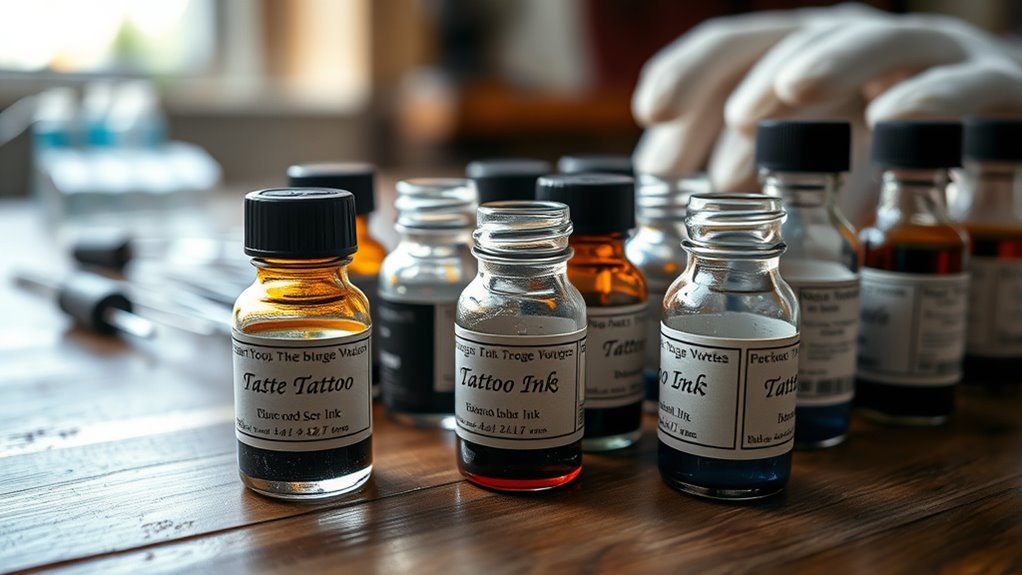
Knowing how long tattoo ink lasts is just part of keeping it safe and effective. Several factors cause tattoo ink to degrade, impacting its quality.
Exposure to sunlight breaks down pigments and carriers, so you should avoid leaving ink in direct light. Temperature fluctuations also harm ink; excessive heat accelerates chemical changes, while freezing can alter consistency.
Oxygen exposure leads to oxidation, which dims color and causes clumping, so always keep containers sealed tightly. Contamination from bacteria or foreign particles can spoil ink quickly, so you need to maintain cleanliness when handling it.
Finally, the ink’s formulation and preservatives influence how long it stays stable. By understanding these factors, you can take steps to preserve your tattoo ink’s freshness and performance.
Signs That Tattoo Ink Has Gone Bad
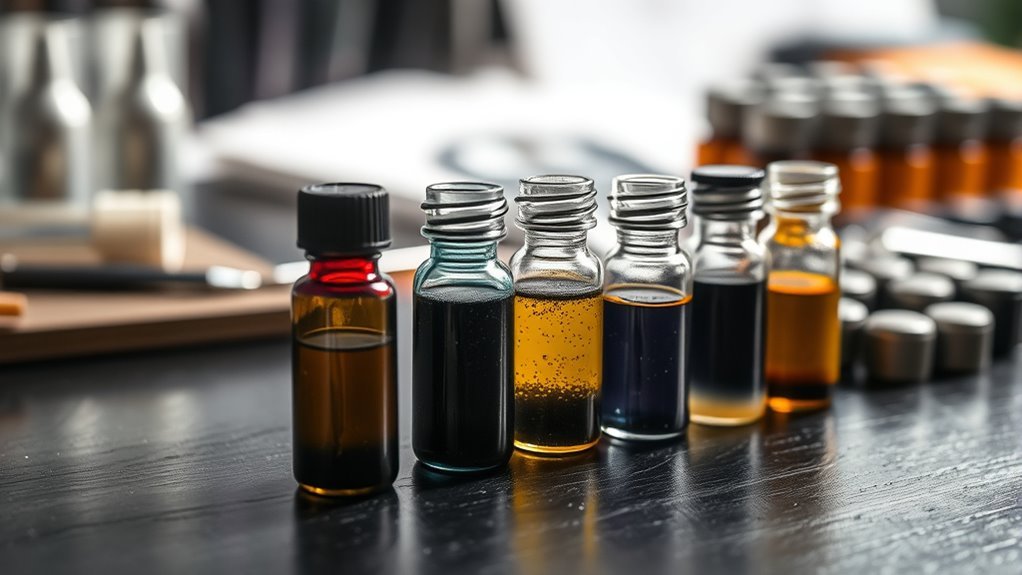
When tattoo ink shows changes in color, texture, or smell, it’s a clear sign that it’s gone bad. You should always inspect your ink before use to verify safety and quality.
Here are four key signs to watch for:
Look out for these four key signs that your tattoo ink may have gone bad before use.
- Color Shift: If the ink looks dull, faded, or has an unusual tint, it’s likely degraded.
- Separation: Noticeable layers or clumps mean the ingredients have broken down.
- Unpleasant Odor: A sour or chemical smell indicates bacterial growth or contamination.
- Thickened Consistency: Ink that’s thicker or sticky can clog needles and won’t flow properly.
If you spot any of these signs, it’s best to discard the ink rather than risk poor results or complications. Better safe than sorry, right?
Risks of Using Expired or Contaminated Ink
If you use expired or contaminated ink, you risk serious health issues and poor tattoo results. Contaminated ink can cause infections, allergic reactions, and skin irritations.
Expired ink may lose pigment quality, leading to faded or uneven tattoos. It’s really important to make sure your ink is fresh and clean before you start.
| Risk | Consequence |
|---|---|
| Infection | Redness, swelling, pus |
| Allergic Reaction | Rash, itching, anaphylaxis |
| Poor Pigment Quality | Fading, blotchy, uneven color |
| Skin Irritation | Burning, itching, discomfort |
| Ink Contamination | Bacterial growth, illness |
Always inspect ink before use to avoid these risks. Using bad ink compromises your safety and tattoo quality, so stay vigilant. Don’t take chances when it comes to your health or your tattoo’s look.
Best Practices for Storing Tattoo Ink
Because tattoo ink is sensitive to environmental factors, you need to store it properly to maintain its quality and safety. Improper storage can lead to contamination or degradation, affecting your tattoos’ final look and client health.
So, follow these best practices to keep your ink in top condition:
- Store ink bottles in a cool, dark place away from direct sunlight to prevent pigment breakdown.
- Keep containers tightly sealed to avoid exposure to air and moisture, which can cause contamination.
- Avoid temperature fluctuations by maintaining a stable environment, ideally between 60-75°F (15-24°C).
- Label each bottle with the date of opening to track freshness and avoid using old ink unknowingly.
Tips for Maintaining Ink Quality During Tattooing
To keep your tattoo ink performing at its best during a session, you need to handle it carefully and consistently. Always use clean, disposable gloves when dipping needles to prevent contamination.
Avoid double-dipping; instead, pour small amounts of ink into a separate sterile cup for each client. Keep the ink containers tightly sealed when not in use to prevent exposure to air, which can degrade pigment quality.
Store ink in a cool, dark place during your session to maintain consistency. Stir the ink gently before use to evenly distribute pigment without introducing air bubbles.
Finally, discard any leftover ink after the session—reusing it increases contamination risk and reduces quality. Following these tips ensures your ink stays vibrant and safe throughout the tattooing process.
Frequently Asked Questions
Can Expired Tattoo Ink Cause Allergic Reactions?
Yes, expired tattoo ink can cause allergic reactions because its chemical composition may change over time.
You should avoid using old ink and always store it properly to reduce risks and keep your skin safe.
Is Homemade Tattoo Ink Safe to Use?
You might want to think twice—homemade tattoo ink isn’t exactly the safest bet. It lacks professional sterilization and consistent ingredients, which could lead to infections or poor results.
Honestly, it’s better to stick to trusted, tested inks for your safety. That way, you avoid unnecessary risks and get the best outcome possible.
How Does Tattoo Ink Affect MRI Scans?
Tattoo ink usually doesn’t affect MRI scans, but some pigments, especially those with metal, might cause slight discomfort or image distortion.
It’s a good idea to always tell your technician about any tattoos you have. That way, they can adjust settings or keep an eye on things during your scan.
Can Tattoo Ink Be Used for Permanent Makeup?
Yes, you can use tattoo ink for permanent makeup, but it’s not ideal.
Permanent makeup uses specialized pigments designed specifically for facial skin. So, using traditional tattoo ink might cause unpredictable results or skin reactions.
It’s better to stick with pigments made just for permanent makeup to keep things safe and looking great.
Are Vegan Tattoo Inks Less Likely to Expire?
Even if you had a time machine like Doc Brown’s, you’d see vegan tattoo inks still expire. They usually last about the same as regular inks, so store them cool, dark, and tightly sealed to keep them fresh.
It’s not like vegan inks have some magical shelf life. Just treat them right, and they’ll be good to use for a while. Otherwise, they can go bad just like any other ink.
Conclusion
You might be surprised to learn that tattoo ink can last anywhere from one to three years if stored properly. But once it goes bad, it risks causing infections or poor-quality tattoos.
By keeping your ink in a cool, dark place and sealing containers tightly, you can maintain its quality and safety. Remember, nearly 70% of tattoo artists report issues from degraded ink—so taking care of your supplies isn’t just smart, it’s essential.
Proper storage is key to extending the life of your tattoo ink and avoiding complications. Ensuring your ink stays fresh not only protects your health but also guarantees vibrant, lasting tattoos. So, always store tattoo ink safely and check expiration dates to keep your artwork looking great and safe to apply.