Does White Ink Hurt More and How to Minimize Tattoo Pain
Yes, white ink tattoos can hurt more because the thicker, denser ink requires multiple layers and firmer needle pressure, especially on sensitive skin. This means the tattooing process might be a bit more intense compared to regular ink. But don’t worry, there are ways to make it more comfortable.
To minimize pain, you can use numbing creams, stay hydrated, and practice deep breathing during your session. These simple steps really help calm your nerves and reduce discomfort.
After your appointment, wearing loose, breathable clothing helps reduce irritation and promotes healing.
Taking these steps can make the tattooing process smoother. And if you’re curious, exploring more tips can help you manage pain and care for your tattoo effectively. So, remember, a little preparation goes a long way in making your white ink tattoo experience better!
Key Takeaways
- White ink is thicker and needs more pressure and layering. This often means it can hurt more compared to other tattoo inks.
- How much a tattoo hurts really depends on your skin sensitivity, where on your body you’re getting inked, and your personal pain tolerance. Places with thin skin or near bones usually feel more uncomfortable.
- Using numbing creams can help a lot. Also, practicing deep, slow breathing during your session makes a big difference in managing pain.
- After your tattoo, wearing loose, breathable cotton clothes is a smart move. It helps prevent irritation and keeps you comfy while your skin heals.
- Taking care of your tattoo properly is key. Gently cleaning and moisturizing the area not only reduces pain but also helps your skin recover faster.
Understanding Tattoo Pain and Its Causes
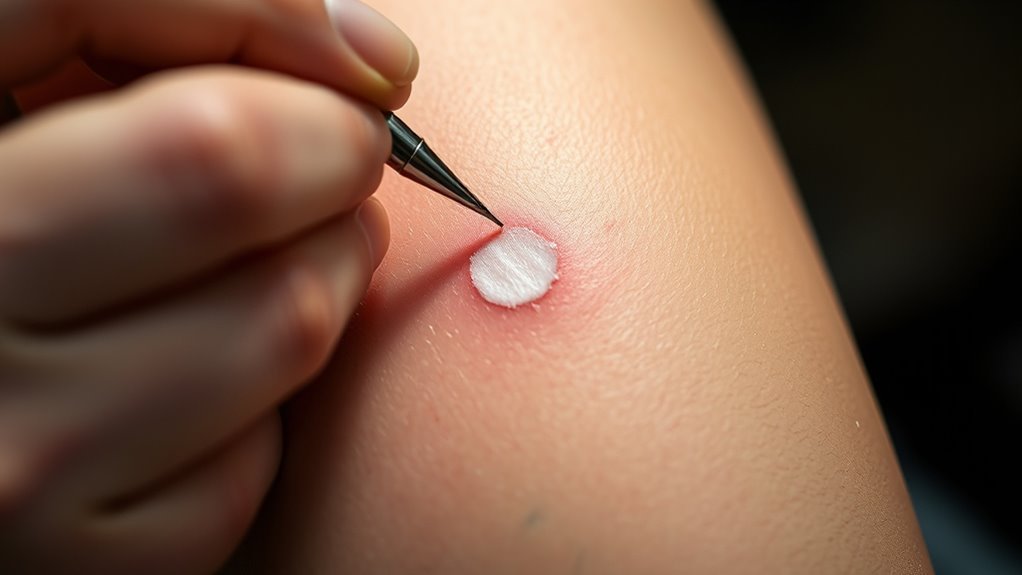
Although everyone experiences tattoo pain differently, understanding what causes it can help you prepare mentally and physically. Tattoo pain primarily stems from the needles repeatedly piercing your skin, triggering nerve endings and causing discomfort.
The location you choose plays a huge role; areas with thinner skin or closer to bones, like ribs or ankles, tend to hurt more. Your skin’s sensitivity also varies, so what feels painful to one person might be bearable to another.
Additionally, factors like your stress level, hydration, and even your mindset can influence how much pain you feel. Knowing these causes lets you anticipate the experience better and take steps—like staying calm and hydrated—to manage the discomfort effectively during your tattoo session.
How White Ink Differs From Other Tattoo Inks
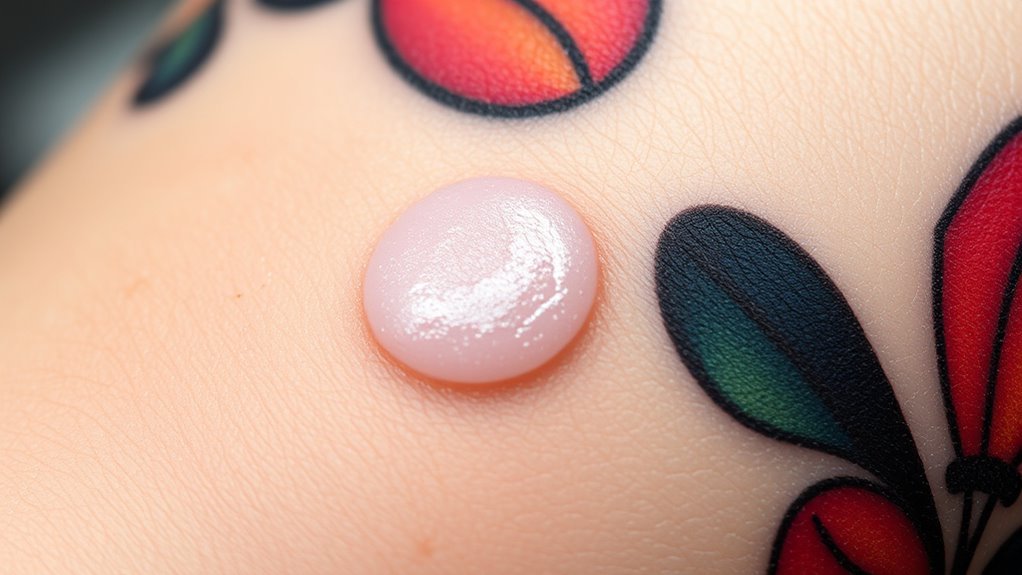
When you choose white ink for your tattoo, you’ll notice it behaves differently than traditional colored inks. White ink is thicker and less transparent, which can affect how it settles in your skin.
It often requires more layers to achieve opacity, and it tends to fade faster than darker inks. These properties influence both the tattoo’s appearance and the sensation during application.
| Aspect | White Ink | Colored Ink |
|---|---|---|
| Consistency | Thick, dense | Usually thinner |
| Visibility | Subtle, less vibrant | Bright, vivid |
| Application | Requires multiple layers | Usually one or two layers |
| Longevity | Prone to quicker fading | More durable over time |
Factors That Influence Pain Levels With White Ink
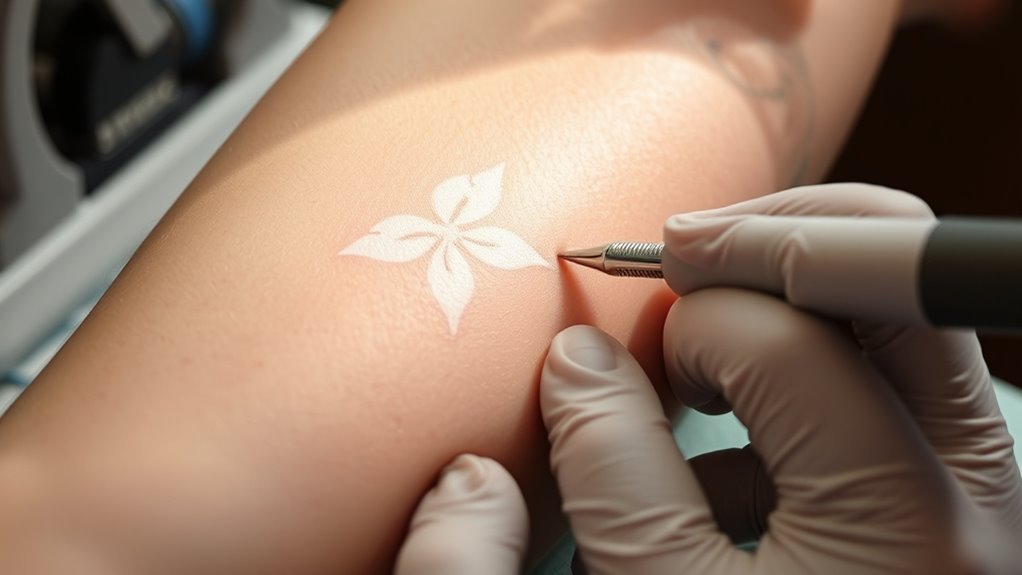
Understanding how white ink behaves differently helps explain why the pain you feel during its application can vary. Since white ink contains titanium dioxide, it’s thicker and requires more pressure to implant into your skin, which may increase discomfort.
Your skin type also plays a role—sensitive or thinner skin can amplify the pain. Additionally, the artist’s technique matters; if they layer white ink multiple times for opacity, you’ll likely feel more irritation.
The area’s blood flow affects sensation too, but we’ll explore placement later. Finally, your personal pain tolerance and hydration levels influence how intense the pain feels.
Placement and Its Impact on Tattoo Discomfort
Since different body areas have varying nerve densities and skin thicknesses, where you get your tattoo considerably affects how much it will hurt. Some spots are more sensitive, making the experience more intense, while others feel relatively mild.
Keep these in mind when choosing your tattoo placement:
Consider your pain tolerance and design when selecting the spot for your tattoo.
- Areas with thin skin and many nerve endings, like ribs and ankles, tend to hurt more.
- Fleshier parts, such as the upper arm or thigh, usually cause less discomfort.
- Bony spots without much padding, like the spine or elbows, amplify pain.
- Regions with frequent movement, such as wrists or fingers, can feel more sensitive.
- Places with fewer nerve endings, like the outer shoulder, often hurt less.
Knowing this, you can pick a location that balances your pain tolerance and desired design. It’s all about finding what works best for you!
Techniques to Reduce Pain During Tattooing
You can make your tattoo session more comfortable by using numbing creams to ease the pain before the needle hits your skin.
Focusing on steady breathing and staying relaxed also helps reduce discomfort during the process.
Let’s explore how these techniques work together to keep pain at bay.
Numbing Cream Benefits
Although tattooing naturally involves some discomfort, applying numbing cream can markedly ease the pain you feel during the process. These creams work by temporarily blocking nerve signals, helping you stay more comfortable as the tattoo needle works.
Using numbing cream offers several benefits:
- Reduces surface pain, especially on sensitive areas
- Helps you remain still, improving tattoo precision
- Allows longer tattoo sessions without excessive discomfort
- Minimizes flinching, which can affect ink placement
- Provides a calmer experience, reducing anxiety around pain
Keep in mind, it’s crucial to follow your artist’s recommendations for application and choose a cream specifically designed for tattooing. This simple step can make your tattoo session much more bearable and help you focus on the art rather than the pain.
Breathing and Relaxation
When you focus on controlled breathing and relaxation techniques, you can considerably reduce the pain experienced during tattooing. Start by taking slow, deep breaths—inhale through your nose, hold for a moment, then exhale fully through your mouth. This helps calm your nervous system and lowers tension in your muscles.
Try to stay present and keep your mind off the discomfort by concentrating on your breath or using visualization methods, like imagining a peaceful place. Progressive muscle relaxation, where you tense and then release different muscle groups, can also ease physical stress.
Before your session, practice these techniques so they become natural. By managing your breathing and staying relaxed, you’ll not only reduce pain but also make the tattoo process smoother and less stressful.
Aftercare Tips to Minimize Discomfort and Promote Healing
To keep your white ink tattoo looking sharp and feeling comfortable, stick to a gentle cleaning and moisturizing routine. Make sure you avoid direct sunlight and soaking in water while it heals.
Wearing loose clothing will also help prevent irritation and promote faster recovery. Taking these steps really makes a difference in how well your tattoo heals.
Cleaning and Moisturizing Routine
Since proper cleaning and moisturizing directly impact how your tattoo heals, establishing a consistent routine is essential. You want to keep your new ink clean to prevent infection and moisturized to reduce itching and promote skin repair.
Follow these simple steps:
- Gently wash your tattoo twice daily with lukewarm water and mild, fragrance-free soap.
- Pat dry with a clean towel—don’t rub or scratch.
- Apply a thin layer of a recommended tattoo aftercare ointment or fragrance-free moisturizer.
Avoid over-moisturizing; too much product can clog pores and cause irritation.
Continue this routine for at least two weeks or until your tattoo fully heals.
Sticking to this will help minimize pain, prevent scabs from cracking, and keep your white ink vibrant.
Avoiding Sun and Water
How long should you steer clear of sun exposure and water after getting your tattoo? Generally, you should avoid direct sunlight and soaking your tattoo for at least two weeks. Sun exposure can fade your tattoo’s colors, especially white ink, and increase irritation, making pain worse.
Water, like pools, hot tubs, and long baths, can introduce bacteria, risking infection and slowing healing. Instead, keep your tattoo dry during showers and avoid swimming. When you do go outside, cover your tattoo with loose clothing or use a broad-spectrum sunscreen once it’s fully healed.
Staying mindful about sun and water helps reduce discomfort and promotes faster, safer healing, ensuring your tattoo looks vibrant and pain-free as it recovers.
Wearing Loose Clothing
When you’re healing a tattoo, wearing loose clothing can make a big difference in reducing irritation and discomfort. Tight clothes can rub against your fresh ink, causing unnecessary pain and potentially slowing the healing process.
Choosing breathable, soft fabrics helps keep the area cool and prevents excessive sweating, which can also irritate your skin. Here are some tips to keep in mind:
- Opt for cotton or other natural fibers that allow air to circulate
- Avoid synthetic materials that trap heat and moisture
- Steer clear of tight waistbands, sleeves, or straps near your tattoo
Also, make sure you change clothes regularly to keep the tattoo clean and dry. Consider loose-fitting shirts, pants, or dresses that won’t stick to your skin.
Following these guidelines helps your tattoo heal smoothly and reduces discomfort. It’s really worth the little extra care!
Frequently Asked Questions
Can White Ink Tattoos Fade Faster Than Colored Tattoos?
Yes, white ink tattoos can fade faster than colored ones because white ink is less pigmented and more prone to sun damage.
You should protect your tattoo with sunscreen and moisturize to keep it vibrant longer.
Taking care of it properly really makes a difference! Just a little extra attention can help maintain that bright look.
Is White Ink More Prone to Allergic Reactions?
Yes, white ink can be more prone to allergic reactions because it often contains titanium dioxide, which some people react to.
You should do a patch test and consult your artist to minimize risks before tattooing. It’s always better to be safe when it comes to your skin!
How Does White Ink Appear on Different Skin Tones?
White ink pops like snow on dark velvet, showing bright on darker skin but sometimes fades or blends on lighter tones.
You’ll want to contemplate contrast and aftercare to keep your tattoo looking crisp and vibrant.
Can White Ink Tattoos Be Easily Removed?
White ink tattoos can be harder to remove than darker ones because the pigment is lighter and less responsive to laser treatments. You’ll need more sessions, and results might be less predictable compared to traditional black ink tattoos.
It’s kind of tricky since the lighter color doesn’t absorb the laser as well. So, if you’re thinking about removal, just keep in mind it might take longer and the outcome might not be as clear-cut.
Does White Ink Require More Touch-Ups Than Other Inks?
White ink tattoos are like delicate whispers on your skin—they usually need more touch-ups than darker inks since they fade faster.
To keep your art vibrant, you’ll want regular care and touch-ups over time. It’s just part of the deal with white ink.
Conclusion
Getting a white ink tattoo might sting a bit more, but with the right care and pain-minimizing techniques, you’ll glide through the process smoothly.
Imagine the gentle hum of the needle, the cool touch of soothing ointments afterward, and the vibrant, glowing design coming to life on your skin.
By understanding pain and preparing well, you can turn your tattoo experience into a beautiful, almost effortless journey of self-expression.
White ink tattoos can be a bit more sensitive due to the way the ink interacts with your skin, but don’t let that discourage you.
With proper aftercare and pain management, the discomfort is manageable, and the stunning result is definitely worth it.
So, whether you’re curious about white ink pain or how to minimize tattoo pain in general, remember: preparation and care make all the difference.