Do Tattoo Inks Expire and How Can You Store Them Safely?
Yes, tattoo inks do expire because pigments and carrier fluids break down over time, especially with exposure to heat, light, and air. This breakdown can affect the color and safety of your ink.
So, storing your tattoo ink properly is really important to keep it fresh and vibrant.
To keep your ink fresh, store it in a cool, dark place between 59°F and 77°F, sealed tightly in airtight containers.
Avoid contamination by using clean tools and never leaving ink open too long.
If you want to guarantee vibrant, safe tattoos, understanding proper handling and storage is essential.
There’s more to discover about keeping your ink at its best, so take good care of it!
Key Takeaways
- Tattoo inks do expire as pigments and carrier fluids degrade over time, affecting quality and safety. It’s something many people don’t realize until they notice a problem.
- Exposure to light, heat, air, and contamination shortens tattoo ink shelf life and causes deterioration. So, keeping the ink in the right conditions really matters.
- Signs of expired ink include separation, clumping, color changes, off smells, and thick or grainy texture. If you spot any of these, it’s best to toss the ink.
- Store inks in cool (15°C–25°C), dark, airtight containers away from direct sunlight and extreme temperatures. This helps keep them fresh for longer.
- Use clean tools, seal bottles tightly, and avoid leaving inks open to prevent contamination and oxidation. Taking these steps can save you from a lot of trouble later on.
Understanding the Composition of Tattoo Inks
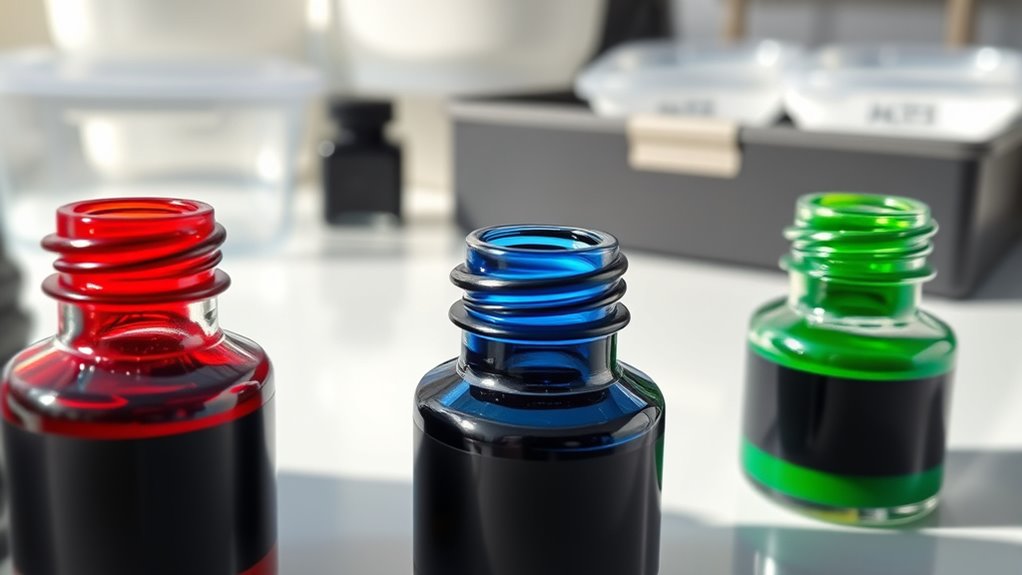
Although tattoo inks might seem simple, their composition is quite complex and directly affects their quality and longevity. When you look closely, tattoo ink isn’t just pigment; it’s a carefully balanced mix of colorants suspended in a carrier fluid.
The pigments provide the color, ranging from organic dyes to finely ground minerals and metals. The carrier fluid, usually made of distilled water, alcohol, or glycerin, guarantees the pigment spreads evenly and prevents clumping.
You’ll find that each ingredient plays an essential role—not only in how the ink appears on your skin but also in how it reacts over time. Understanding this composition helps you appreciate why proper handling and storage matter, guaranteeing the ink remains safe and vibrant for your tattoos.
Factors That Affect the Shelf Life of Tattoo Inks
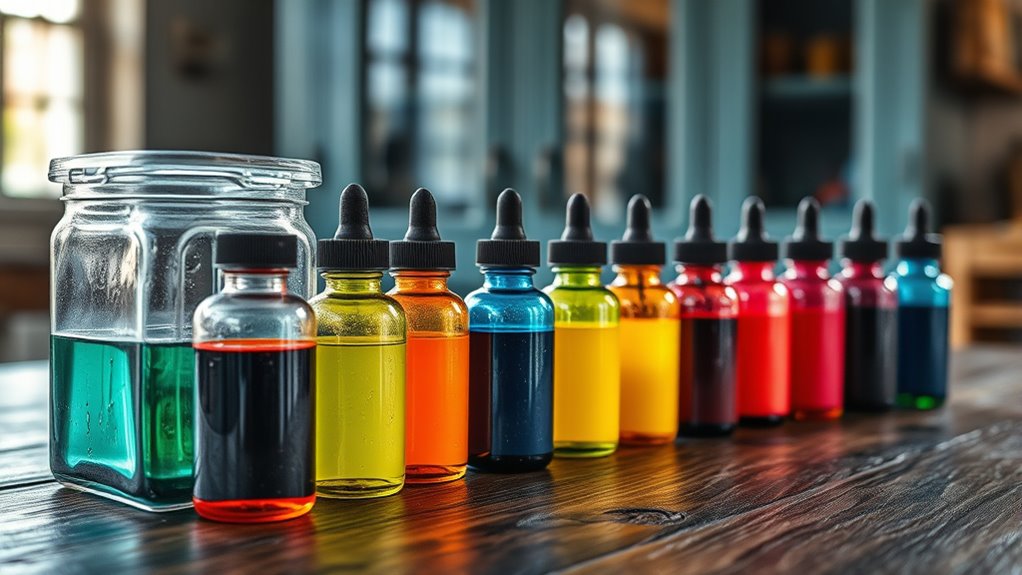
Because tattoo inks contain both organic and inorganic components, several factors influence how long they stay usable. Exposure to light and heat can break down pigments and carrier liquids, so you should store inks in a cool, dark place.
Air exposure leads to oxidation, which degrades the ink’s quality, so keeping containers tightly sealed is essential. Contamination from bacteria or foreign particles also shortens ink life, so always use clean tools and avoid dipping needles directly into ink bottles.
The ink’s original formulation matters too; some pigments are more stable than others, affecting longevity. Finally, temperature fluctuations can cause separation or clumping, impacting consistency.
Signs That Tattoo Ink Has Expired or Degraded
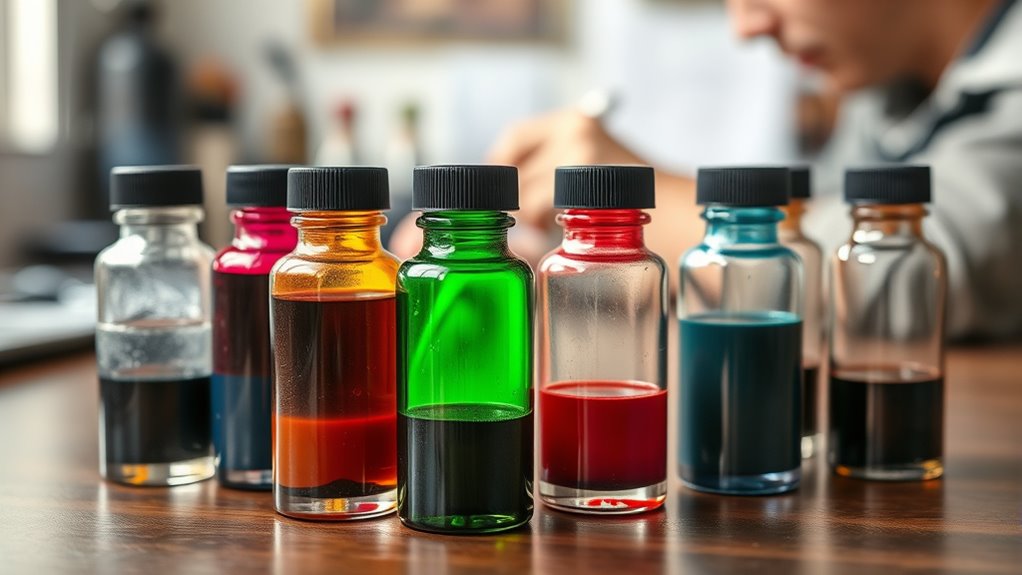
When tattoo ink starts to expire or degrade, you’ll notice clear changes that affect its quality and safety. The ink may separate, showing layers or clumps, which means the pigments and liquids are no longer mixed properly.
You might also see a change in color, often fading or darkening unevenly. If the ink smells off or sour, that’s a strong sign it’s gone bad.
Additionally, if the texture feels thicker or grainy instead of smooth, it’s likely deteriorated. Using expired ink can cause poor tattoo results and increase the risk of infections or allergic reactions.
Always inspect your ink carefully before use, and if you spot any of these signs, it’s best to discard the old ink and get fresh supplies for safe, vibrant tattoos.
Recommended Storage Conditions for Tattoo Inks
To keep your tattoo inks fresh, store them within an ideal temperature range—usually cool but not freezing. You’ll also want to protect them from direct light and limit their exposure to air.
These simple steps help maintain the ink’s quality and prevent premature degradation. Taking a little extra care with storage really makes a difference!
Ideal Temperature Range
Although tattoo inks are designed to be durable, storing them within the ideal temperature range is essential to maintaining their quality and safety. You want to keep your inks stable to prevent color separation, thickening, or spoilage.
The recommended temperature range typically falls between 59°F and 77°F (15°C to 25°C). Temperatures outside this range can cause pigment particles to settle or degrade, impacting the ink’s performance and safety.
To ensure you store tattoo inks correctly, keep in mind:
- Avoid exposing inks to freezing temperatures, which can cause chemical breakdown.
- Keep inks away from extreme heat, which speeds up deterioration.
- Store inks in a cool, consistent environment to maintain their longevity.
Following these tips helps you preserve your inks’ integrity and safety for future use. It’s really all about keeping them comfy, so they last as long as possible.
Light and Air Exposure
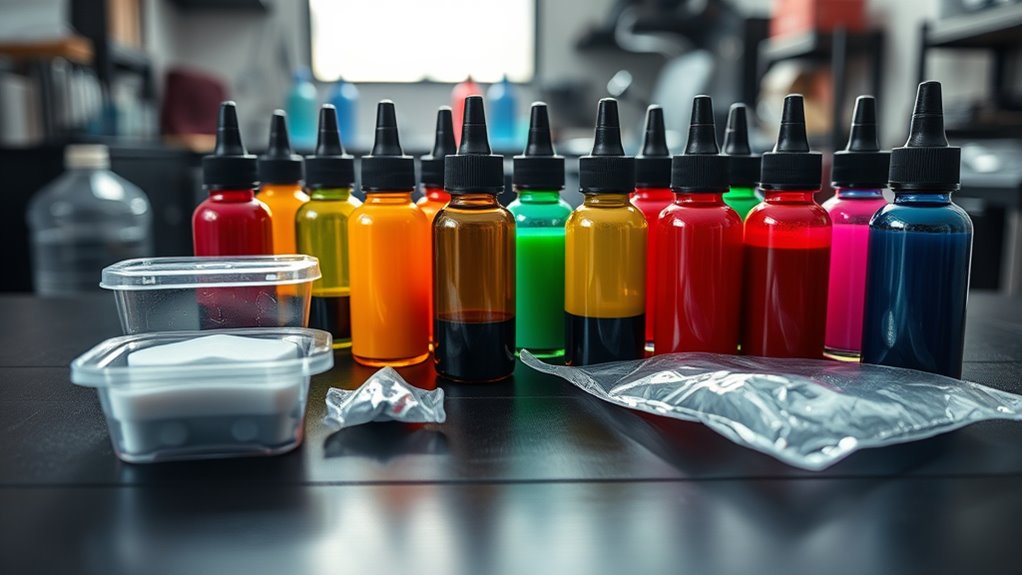
Since tattoo inks react quickly to light and air, you should store them in airtight containers away from direct sunlight. Exposure to UV rays can break down the pigments and alter the ink’s composition, reducing its vibrancy and effectiveness.
Oxygen can also cause oxidation, leading to color changes and a shorter shelf life. To keep your inks fresh, use dark glass or opaque plastic bottles that limit light penetration.
Always seal containers tightly after use to prevent air from getting in. Avoid leaving ink open or partially covered, as even brief exposure can start the degradation process.
How to Properly Handle and Use Tattoo Inks to Maintain Quality
When you handle tattoo inks carefully, you help maintain their quality and guarantee safe, vibrant results. Always use clean tools and avoid touching the ink directly to prevent contamination.
Work in a clean area to reduce the risk of introducing bacteria or debris. Keep the ink container sealed tightly when not in use to minimize exposure to air.
To properly handle and use tattoo inks, remember to:
- Use disposable or sterilized tools for dipping to avoid cross-contamination.
- Shake the ink bottle gently before use to mix pigments evenly.
- Avoid leaving ink open for extended periods to reduce oxidation and drying out.
Tips for Choosing High-Quality Tattoo Inks and Avoiding Expired Products
To guarantee your tattoos stay vibrant and safe, you need to choose high-quality inks and steer clear of expired products. Always buy inks from reputable brands known for strict quality control and transparent ingredient lists.
Check the manufacturing and expiration dates before purchase, and avoid any inks past their expiry. Inspect the ink’s consistency and color—if it looks separated, clumpy, or discolored, don’t use it.
Store unopened inks in a cool, dark place to preserve their shelf life. If you’re unsure about an ink’s quality, trust your instincts and opt for fresher supplies.
Frequently Asked Questions
Can Expired Tattoo Ink Cause Allergic Reactions?
Yes, expired tattoo ink can cause allergic reactions because its chemical composition changes over time. You should avoid using old ink and always store it properly to minimize health risks and guarantee safe tattooing experiences.
It’s really important to pay attention to the ink’s expiration date. Using fresh ink helps ensure the best results and keeps your skin safe from irritation or other issues. So, when in doubt, toss it out!
How Long Does Tattoo Ink Last Once Opened?
Once opened, tattoo ink usually lasts about one to two years. But unlike fresh art, it can degrade or harbor bacteria over time.
You’ll want to store it cool and sealed to keep it safe and effective. That way, your ink stays in good shape for as long as possible.
Are There Specific Brands Known for Longer-Lasting Inks?
Yes, you’ll find brands like Intenze and Eternal Ink known for their long-lasting pigments. They use high-quality ingredients that hold up well over time.
This helps your tattoos stay vibrant longer with proper care and storage. So, if you want your ink to last, these brands are definitely worth checking out!
Can Freezing Tattoo Ink Extend Its Shelf Life?
You might think freezing tattoo ink extends its shelf life, but it actually risks altering pigment quality and consistency.
Instead, keep ink cool, sealed, and away from light to preserve its integrity and vibrancy longer.
That way, your ink stays fresh and ready to use without any surprises.
Is It Safe to Mix Old and New Tattoo Inks?
You shouldn’t mix old and new tattoo inks because it can affect color consistency and increase contamination risk.
Use fresh ink for best results, and always prioritize safety and hygiene during your tattooing process.
It’s really about keeping things clean and making sure your tattoo looks great every time. So, stick with new ink and keep your equipment sterile!
Conclusion
Now that you know tattoo inks do expire, it’s vital to store them properly to keep your art vibrant and safe. Treat your inks like gold—store them in a cool, dark place and always check for signs of degradation before use.
By handling your inks with care and choosing high-quality products, you’ll guarantee every tattoo you create is a masterpiece that stands the test of time. Don’t let your ink run dry or go stale!
Proper storage not only preserves the ink’s color and consistency but also ensures safety by preventing contamination. So, keep your tattoo inks sealed tightly and away from heat or direct sunlight. This way, you maintain the quality and longevity of your tattoo inks, making every piece you create look fresh and vibrant for years to come.