7 Steps to Get Printer Ink Out of Carpet
Act quickly by blotting excess printer ink gently with a dry cloth. Be sure not to rub, as this can spread the stain further.
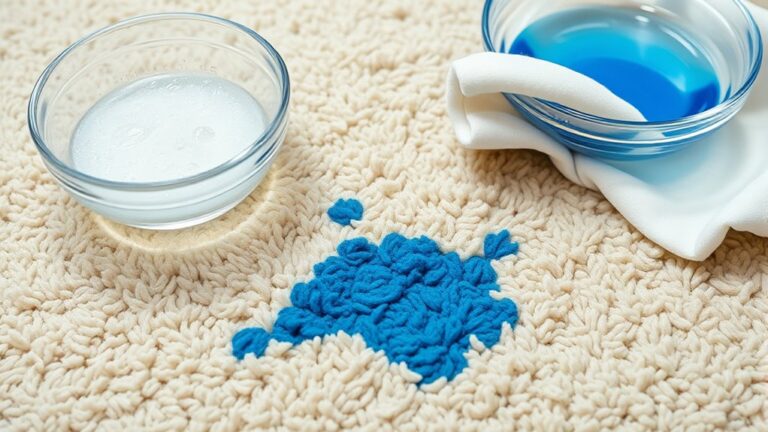
Next, prepare a mild cleaning solution using rubbing alcohol and dish soap. Before applying it to the stain, test the solution on a hidden spot of your carpet to make sure it won’t cause any damage.
When you’re ready, apply the solution to the ink stain using a clean cloth. Work from the outside of the stain toward the center. Then, blot the ink away softly to lift it out.
After treating the stain, rinse the area with warm water.
Dry thoroughly using towels and some airflow to help the carpet dry faster.
Keep going to discover more detailed tips for a spotless carpet!
Key Takeaways
- Immediately blot excess ink gently with a dry cloth without rubbing to prevent spreading the stain.
- Test a mild solvent like rubbing alcohol on a hidden carpet spot to check for colorfastness before full application.
- Apply a cleaning solution of rubbing alcohol, dish soap, or vinegar with minimal moisture, blotting from outside inward.
- Rinse the area with a damp cloth to lift residual ink, then blot dry and allow the carpet to air dry completely.
- Repeat the cleaning and blotting process if needed, and consider professional cleaning if the stain remains after multiple attempts.
Act Quickly to Blot the Ink
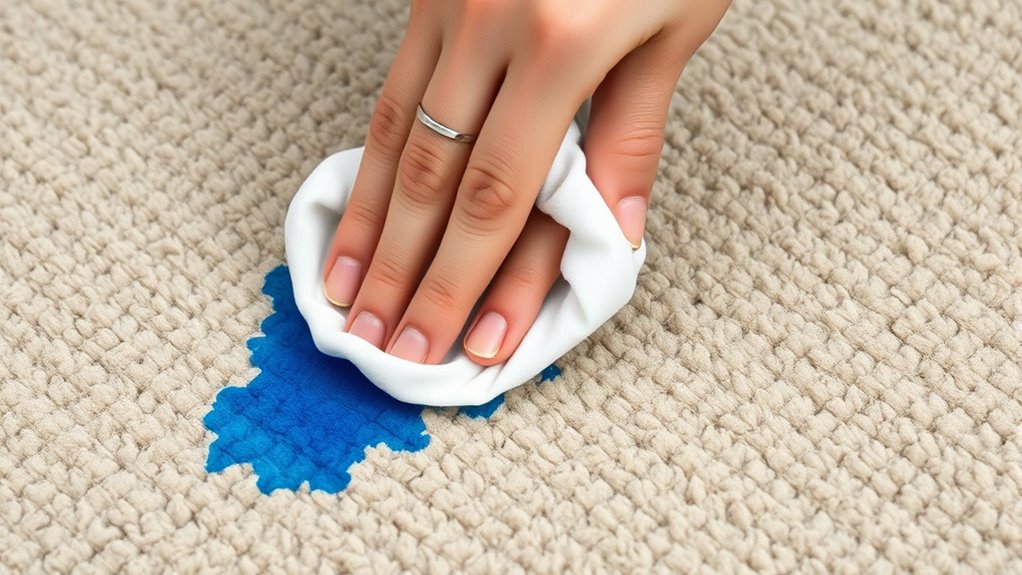
Since fresh ink stains are easier to remove, you should act quickly to blot the ink as soon as you notice it. Grab a clean, white cloth or paper towel and gently press it onto the stain to soak up as much ink as possible.
Avoid rubbing; rubbing can spread the ink and push it deeper into the carpet fibers. Instead, blot repeatedly with a fresh section of the cloth until no more ink transfers. If the cloth becomes saturated, switch to a new one to prevent reapplying ink to the carpet.
Acting promptly reduces the stain’s intensity and makes the cleaning process more manageable. Remember, patience and gentle blotting are key to preventing the ink from setting permanently into your carpet.
Prepare a Cleaning Solution
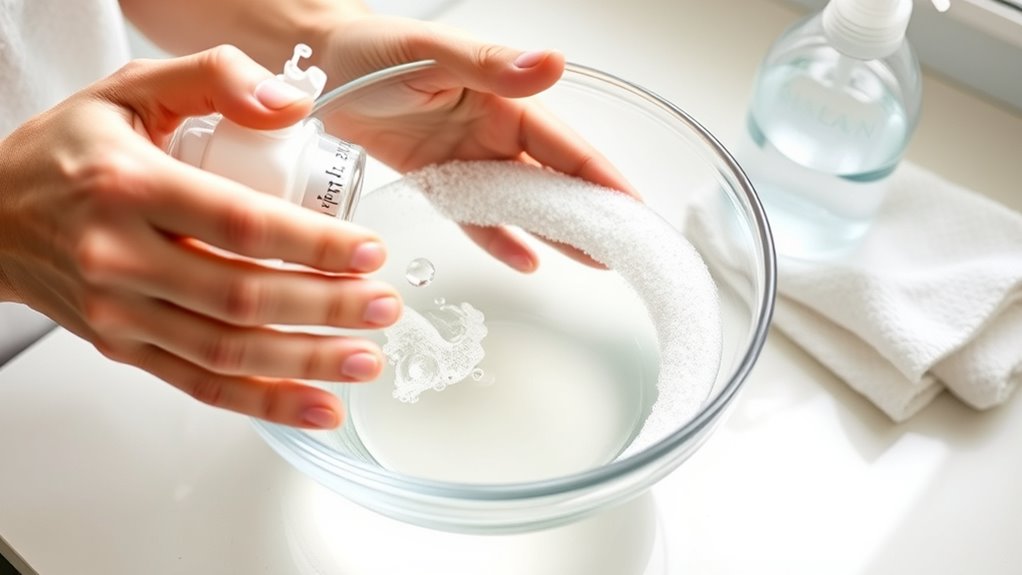
You’ll need to pick the right ingredients to tackle the ink without damaging your carpet. Make sure you mix the solution carefully, following the right proportions for the best results.
Preparing this properly sets the stage for effective stain removal. It’s all about getting it just right!
Choose Effective Ingredients
Before tackling the stain, gather ingredients that effectively break down printer ink without damaging your carpet fibers. You want components that lift ink while being gentle on your carpet’s material.
Choose items that are commonly available and safe for most carpets.
Consider these effective ingredients:
- Rubbing alcohol: Breaks down ink quickly and evaporates fast.
- Dish soap: Cuts through oily ink residues and lifts stains.
- White vinegar: Neutralizes and loosens ink pigments.
- Baking soda: Absorbs excess moisture and helps deodorize.
With these ingredients on hand, you’ll be well-prepared to create a potent cleaning solution that targets printer ink stains efficiently and safely.
Just be sure to avoid harsh chemicals that might damage or discolor your carpet.
Mix Solution Properly
Although it might seem straightforward, mixing your cleaning solution correctly guarantees it works effectively without harming your carpet. Start by measuring your ingredients precisely—too much detergent or solvent can damage fibers or leave residues.
Use a clean container and lukewarm water to help dissolve the cleaning agents evenly. Stir gently but thoroughly until the solution is well combined. Avoid shaking vigorously, which might create unwanted bubbles that reduce cleaning efficiency.
If your recipe calls for multiple ingredients, add them in the order specified to ensure proper chemical interaction. Once mixed, test a small amount of the solution on an inconspicuous carpet area to check for discoloration or damage.
Proper preparation sets the stage for successful ink removal while protecting your carpet’s texture and color. It’s worth taking the time to do it right!
Test the Solution on a Small Area
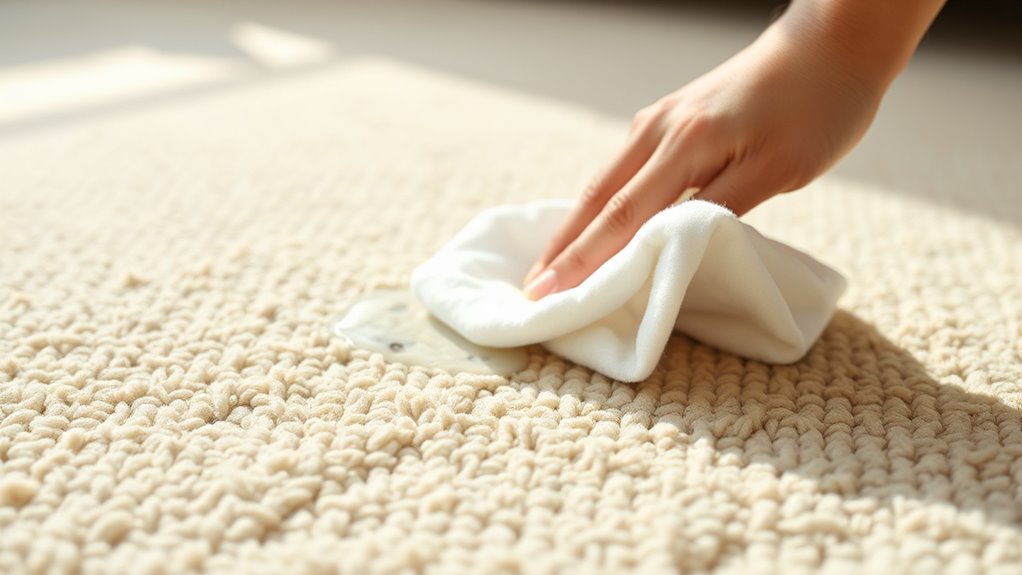
Since cleaning solutions can sometimes damage carpet fibers or colors, test your chosen solution on a small, hidden area first. This step guarantees the solution won’t cause discoloration or weaken the carpet.
Here’s how to do it effectively: Pick a spot under furniture or along a baseboard where stains won’t be noticeable. Apply a small amount of the solution using a clean white cloth or cotton swab.
Wait 5-10 minutes to observe any changes in color or texture. If you notice fading, discoloration, or fiber damage, stop and choose a gentler solution.
Testing prevents unexpected damage and gives you confidence before treating the ink stain directly on your carpet. So, it’s definitely worth the quick check!
Apply the Cleaning Solution to the Stain
Now that you’ve tested your solution, it’s time to apply it carefully to the ink stain. Choose a cleaning agent that’s safe for your carpet type and use a clean cloth or sponge to gently blot the area.
Avoid rubbing, as that can spread the ink and make the stain worse. Just take your time and be gentle with it.
Choosing the Right Solution
Before you apply any cleaning solution, you’ll want to choose one that effectively targets printer ink without damaging your carpet fibers. Not all solutions work the same, so picking the right one is key to avoiding further stains or fiber damage.
Consider these options:
- Isopropyl alcohol: Breaks down ink quickly but test on a hidden spot first.
- Dish soap and water: Gentle and safe for most carpets, great for fresh stains.
- Commercial carpet stain removers: Formulated for tough spots but check ingredients.
- White vinegar solution: Natural and less harsh, good for delicate fibers.
Choosing the right solution really makes all the difference. It guarantees you’ll remove the ink effectively while preserving your carpet’s look and feel.
Proper Application Techniques
Although it might be tempting to pour the cleaning solution directly onto the stain, you should apply it carefully to avoid spreading the ink further. Instead, pour a small amount onto a clean white cloth or sponge.
Gently dab the stained area, working from the outside in to prevent the ink from spreading. Avoid rubbing, as this can push the ink deeper into the carpet fibers.
If the stain is stubborn, apply a bit more solution to the cloth and continue dabbing patiently. Allow the solution to sit for a few minutes to break down the ink before blotting again with a dry cloth.
Blot the Stain Gently With a Clean Cloth
When you notice the ink stain, start by gently blotting it with a clean cloth to prevent the ink from spreading further. Avoid rubbing, as this can push the ink deeper into the carpet fibers.
Instead, press down lightly and lift the cloth repeatedly to absorb as much ink as possible. Use a fresh section of the cloth each time to avoid reapplying the stain.
Press lightly and lift the cloth repeatedly, using fresh sections to absorb as much ink as possible.
Keep these tips in mind while blotting:
- Use a white or colorfast cloth to avoid transferring dyes.
- Blot from the outside of the stain inward to contain it.
- Apply light pressure; heavy pressing can damage fibers.
- Change cloth sections frequently to maximize absorption.
This careful blotting step is key to minimizing the stain before further cleaning. It really makes a difference!
Rinse the Area With Warm Water
Since ink can settle quickly, you’ll want to rinse the stained area with warm water to help lift any remaining residue from the carpet fibers. Grab a clean sponge or cloth, dampen it with warm water, and gently dab the spot.
Avoid soaking the carpet, as too much water can push the ink deeper. Instead, use just enough moisture to loosen the stain. Rinse the sponge or cloth frequently to prevent spreading the ink back onto the carpet.
Keep rinsing until the water appears clear and the stain starts to fade. This step helps dilute the ink and prepares the area for drying.
Dry the Carpet Thoroughly
After rinsing, you need to dry the carpet thoroughly to prevent any remaining ink from spreading or soaking deeper into the fibers. Start by blotting the area with a clean, dry towel to absorb as much moisture as possible. Avoid rubbing, as it can push the ink further into the carpet.
Next, place a fan or open windows to increase air circulation, which speeds up the drying process. If you have one, a wet/dry vacuum can be really handy to suck out excess water efficiently.
Finally, try not to walk on the damp spot until it’s completely dry. This helps keep dirt from sticking and keeps your carpet looking great.
- Blot gently with a dry towel
- Use fans or open windows for airflow
- Employ a wet/dry vacuum if possible
- Keep the area clear until fully dry
Frequently Asked Questions
Can Printer Ink Cause Permanent Damage to Carpet Fibers?
Yes, printer ink can cause permanent damage to carpet fibers if you don’t act quickly. The pigments can stain deeply, so you’ll want to treat the spot immediately to avoid lasting discoloration or fiber damage.
It’s kind of like when you spill something dark on your clothes—you want to get it out before it sets. The same goes for your carpet. The faster you respond, the better your chances of saving those fibers.
What Types of Ink Are Easiest to Remove From Carpet?
Water-based inks are easiest to remove from carpet, unlike stubborn oil-based ones that deeply stain fibers. You’ll find water-based ink fades quickly with mild soap, while oil-based demands stronger treatments and more effort.
Seriously, water-based inks are a real relief when it comes to cleaning. Just a bit of gentle soap and some patience usually does the trick.
Oil-based inks? Not so much. They dig deep into the carpet fibers and need a lot more elbow grease and stronger cleaners to get out. So, if you spill ink, fingers crossed it’s water-based!
Are Professional Carpet Cleaners Better for Ink Stains?
Yes, professional carpet cleaners are better for ink stains because they use specialized products and equipment that remove deep-set ink.
You’ll get a thorough, effective cleaning that’s hard to achieve with DIY methods.
Plus, they know the right techniques to avoid damaging your carpet while tackling those tough stains.
How Long Should I Wait Before Cleaning an Ink Stain?
Don’t wait forever, but don’t rush either—you should start cleaning the ink stain as soon as you notice it.
Acting quickly prevents it from settling, but a few minutes to gather supplies won’t hurt your chances.
Can Ink Stains Be Removed From All Carpet Materials?
You can’t always remove ink stains from all carpet materials completely. Some fabrics absorb ink deeply, making it tough.
But acting quickly and using the right cleaner can greatly improve your chances of saving your carpet.
Conclusion
Now that you know how to tackle that stubborn printer ink stain, don’t let it linger like an unwelcome guest. Act fast, follow each step carefully, and you’ll see the mark fade away like a shadow at noon.
Remember, patience and gentle care are your best tools. With a little effort, your carpet will look as good as new, proving that even the toughest stains can be beaten with the right approach.
Removing printer ink from carpet might seem tricky, but by using these 7 steps, you’re well on your way to restoring your carpet’s beauty. Just take your time, be gentle, and keep at it.
Before you know it, that pesky printer ink won’t stand a chance, and your carpet will be spotless again!