How to Do Remove Ink From a Leather Purse Step by Step
First, identify your leather type to choose the safest cleaner. Knowing whether your purse is made of smooth, suede, or nubuck leather helps prevent damage during cleaning.
Gather supplies like mild soap, cotton swabs, and leather conditioner to tackle the ink stain effectively.
Next, test your cleaning solution on a hidden area to avoid damage. This little step can save your purse from unwanted discoloration or texture changes.
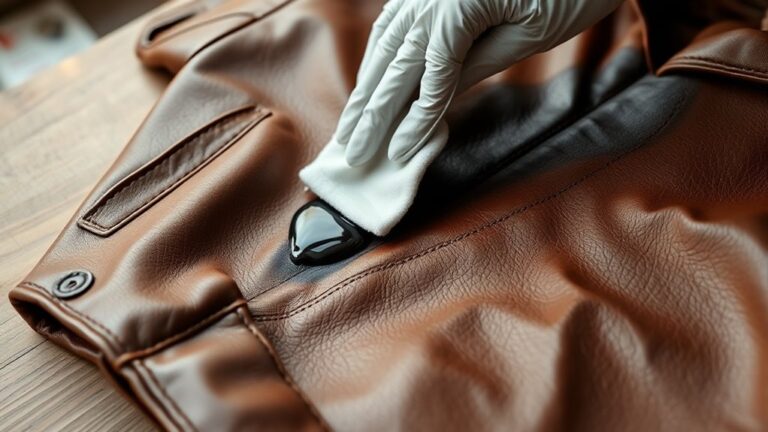
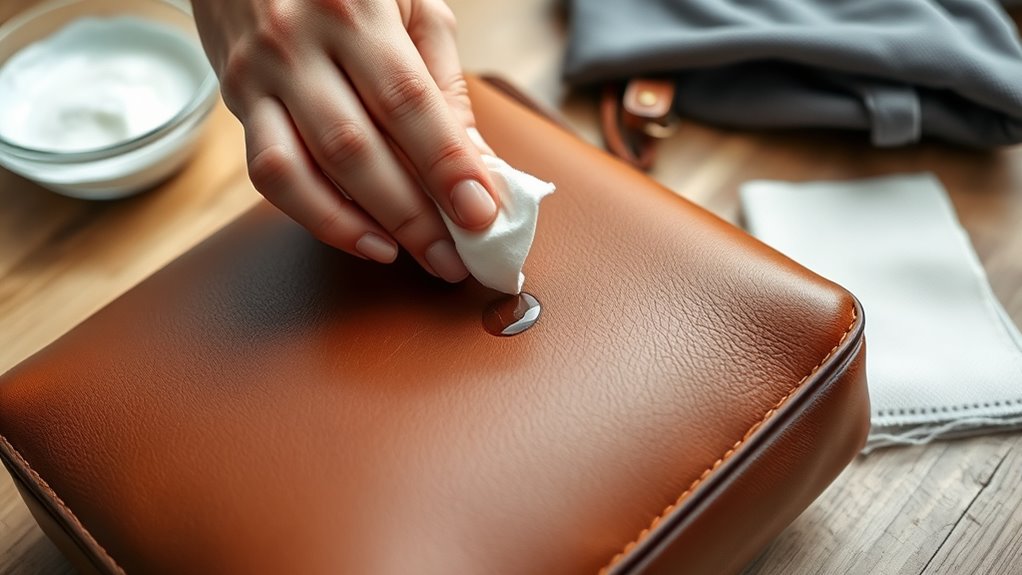
Gently dab the ink stain with the solution using a soft cloth, working from edges inward for the best results.
After that, wipe away residue with a damp cloth and let the purse air dry naturally.
Avoid using heat or direct sunlight, as it can dry out the leather.
Finally, apply conditioner to restore moisture and softness, keeping your leather purse looking its best for longer.
If you want tips on choosing the right products and protecting your purse, keep exploring. It’s all about keeping your favorite leather accessory clean and well cared for!
Key Takeaways
- Identify the leather type to choose the safest cleaning method for your purse’s material. This step is super important because different leathers react differently to cleaning products.
- Test your chosen cleaning solution on a hidden area to check for adverse reactions. You don’t want any surprises on your main purse surface, right?
- Gently dab the ink stain with a cotton swab dipped in cleaner, avoiding rubbing or spreading. Be patient here; rubbing can make it worse.
- Wipe the area with a damp cloth and let the leather air dry away from heat or sun. Heat can damage leather, so just let it dry naturally.
- Apply a suitable leather conditioner after cleaning to restore moisture and maintain softness. This keeps your purse looking great and feeling soft for longer.
Identify the Type of Leather
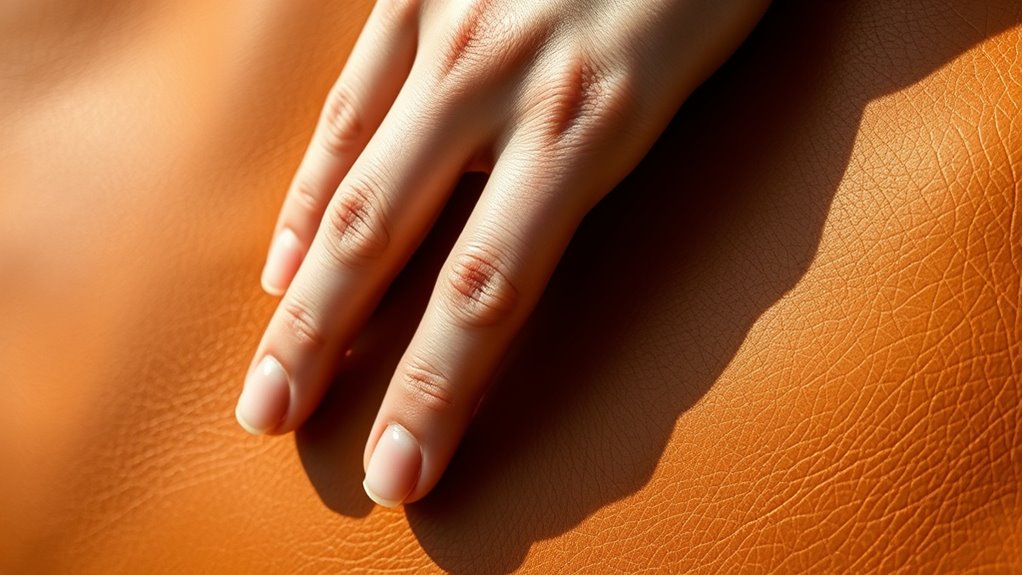
Before you begin removing ink from your leather purse, you need to identify the type of leather it’s made from. Different leathers react differently to cleaning methods, so knowing this helps you avoid damage.
Check the label or any tags for clues—terms like “full-grain,” “top-grain,” “corrected grain,” or “genuine leather” indicate the leather’s quality and finish. If there’s no label, feel the surface: smooth and shiny usually means a coated finish, while a natural, porous texture suggests aniline or semi-aniline leather.
You can also test a small hidden spot with a damp cloth; if it darkens, it’s likely aniline and needs gentle care. Identifying your leather type assures you choose the safest, most effective cleaning method.
Gather Cleaning Supplies
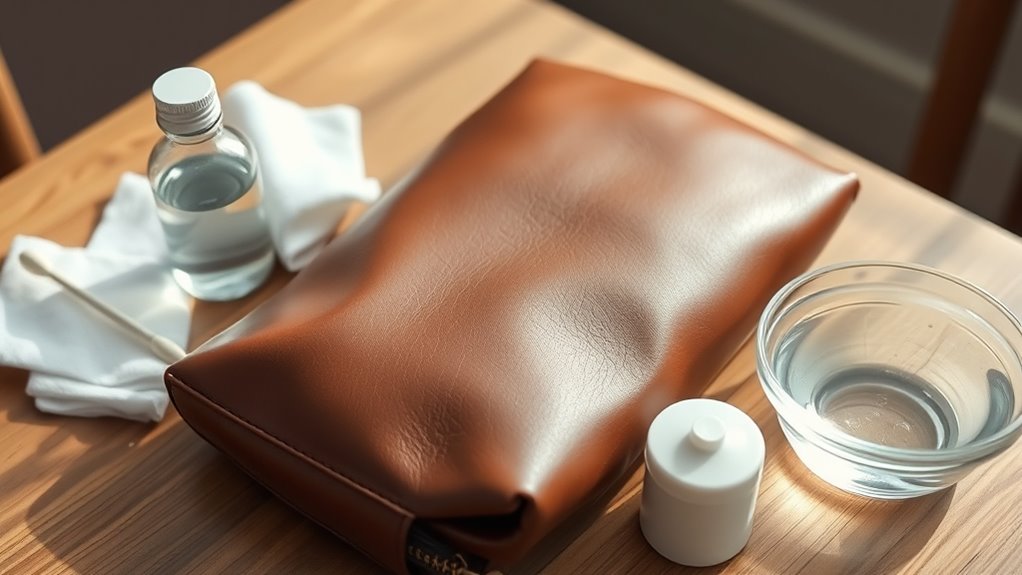
Once you’ve identified the type of leather, you can gather the right cleaning supplies to safely tackle the ink stain. Having the proper tools on hand guarantees you won’t damage your purse while removing the ink.
Here’s what you’ll need:
- Leather cleaner or mild soap – Use a product specifically designed for leather or a gentle soap diluted with water.
- Cotton swabs or soft cloths – These help apply the cleaner precisely without spreading the ink.
- Rubbing alcohol or non-acetone nail polish remover – Use sparingly and only if the leather type is safe for solvents.
- Leather conditioner – Essential for restoring moisture after cleaning to keep the leather supple.
Make sure to gather these supplies before you begin. That way, the cleaning process will go smoothly and effectively.
Test Cleaning Solution on a Hidden Area
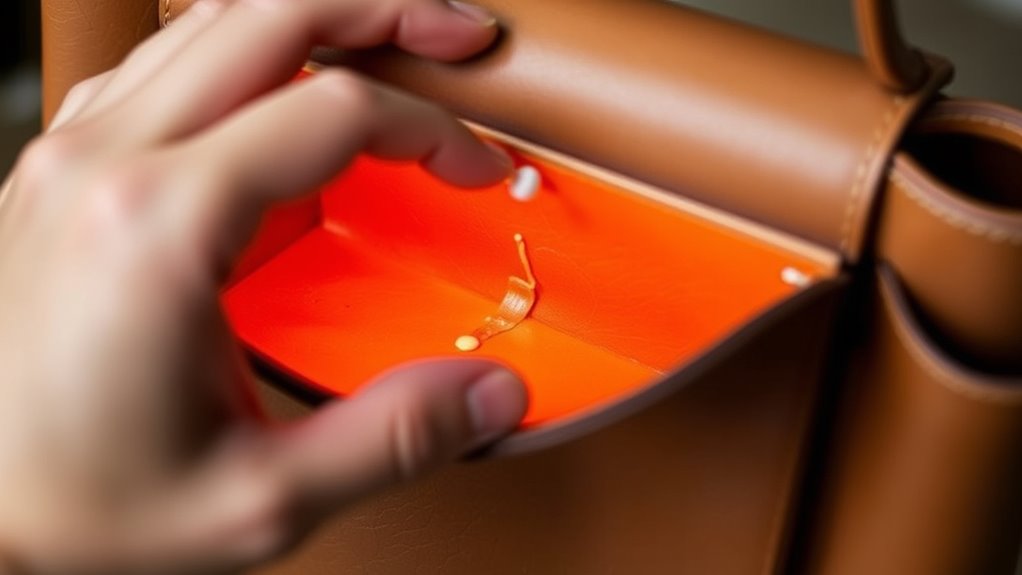
Although it might seem like an extra step, testing your cleaning solution on a hidden area of the leather purse guarantees you won’t accidentally cause discoloration or damage. Choose a small, inconspicuous spot, such as inside a seam or under a flap.
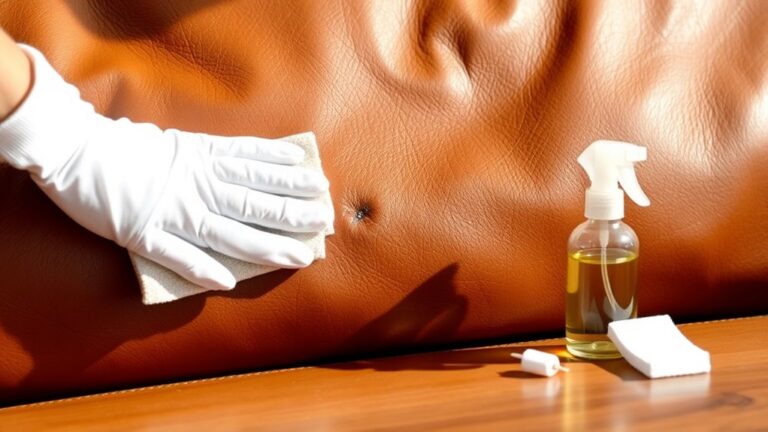
Apply a small amount of the solution using a cotton swab or soft cloth. Then, wait several minutes to observe any changes in color, texture, or finish.
If the leather darkens, fades, or feels rough, avoid using that solution on the visible ink stain. Testing first lets you identify a safe and effective cleaner, protecting your purse’s appearance.
If no adverse effects appear, you can confidently proceed to treat the ink stain without risking further harm to the leather.
Gently Apply Cleaning Solution to Ink Stain
After confirming the cleaning solution won’t harm your leather, you can start treating the ink stain. Take your time and be gentle to avoid damaging the material.
Here’s how to apply the solution effectively:
- Dip a cotton swab or soft cloth lightly into the cleaning solution.
- Dab the ink stain gently, focusing only on the affected area—don’t rub hard.
- Work from the edges of the stain inward to prevent spreading the ink.
- Repeat dabbing with fresh swabs or cloth sections as needed until the ink begins to lift.
Wipe and Dry the Leather Surface
While the ink starts to lift, you’ll want to carefully wipe away any excess cleaning solution and loosened ink with a clean, damp cloth. Use gentle, circular motions to avoid damaging the leather’s surface.
Don’t scrub hard; leather is delicate and can easily get scratched or discolored. After removing the ink residue, take a dry microfiber cloth and gently blot the area to absorb remaining moisture.
Avoid rubbing, as this may spread any lingering ink or cause uneven drying. Let the leather air dry completely in a cool, well-ventilated space, away from direct sunlight or heat sources that might cause stiffness or cracking.
This step guarantees the leather is clean and dry, setting you up perfectly for the next stage of care.
Condition the Leather After Cleaning
Now that your purse is clean and dry, you’ll want to choose the right leather conditioner to restore moisture and softness. Apply it evenly using a soft cloth, then let it absorb fully before gently buffing to bring out the shine.
Proper conditioning keeps your leather supple and helps prevent future damage. It’s a simple step that really makes a big difference in how your purse looks and feels!
Choosing the Right Conditioner
Because leather can dry out and crack after cleaning, you’ll want to select a conditioner that restores moisture without causing damage. Choosing the right conditioner ensures your purse stays soft and supple.
Here’s what to consider:
- Leather Type Compatibility: Match the conditioner to your purse’s leather type—aniline, semi-aniline, or pigmented.
- Ingredients: Look for natural oils like mink oil or lanolin; avoid harsh chemicals or petroleum-based products.
- Finish: Choose a conditioner that maintains the leather’s natural finish and color without leaving a greasy residue.
- Brand Reputation: Opt for products from reputable brands known for leather care to ensure quality and safety.
Picking the right conditioner protects your purse and extends its life after ink removal. So, it’s worth taking a little extra time to find the best one for your leather.
Application Techniques
Selecting the right conditioner sets the stage for proper leather care, but how you apply it makes all the difference in restoring your purse’s softness and luster. Start by placing a small amount of conditioner on a clean, soft cloth.
Gently rub it into the leather using circular motions, ensuring even coverage without over-saturating. Focus on the areas where you removed the ink, but don’t neglect the entire surface to maintain uniformity.
Let the conditioner absorb naturally; avoid applying too much at once, as this can cause buildup or a sticky feel. Regular, careful application not only replenishes moisture but also protects the leather from future damage.
Drying and Buffing Tips
Once you’ve applied conditioner, let the leather dry naturally in a well-ventilated area. Make sure it’s away from direct heat or sunlight to prevent cracking. This way, you’ll keep the leather’s texture and durability intact.
After it’s dry, go ahead and buff the leather gently to bring back its shine and softness. Here’s how you can do it:
- Use a soft, dry cloth for buffing to avoid scratching.
- Apply gentle, circular motions to evenly distribute oils.
- Be careful not to over-buff, as that can dull the finish.
- If you feel it’s needed, repeat conditioning after buffing to keep it supple.
Frequently Asked Questions
Can Ink Stains Be Completely Removed From All Leather Types?
You can’t always remove ink stains completely from all leather types. Some leathers absorb ink deeply, making full removal difficult.
However, you can often considerably reduce the stain with proper cleaning and care techniques. It’s all about using the right methods and being patient.
How Often Should I Condition My Leather Purse After Cleaning Ink?
You should condition your leather purse about once a month after cleaning ink, or whenever it feels dry.
Think of it like moisturizing your skin—it keeps leather soft, supple, and prevents cracking over time.
Are There Any Household Items to Avoid When Cleaning Leather Ink Stains?
You should avoid using household items like bleach, ammonia, or alcohol-based cleaners on leather ink stains, as they can damage the leather.
Stick to gentle, leather-safe products to keep your purse looking great without harm. It’s really the safest way to clean without risking any damage.
Is It Safe to Use Alcohol-Based Cleaners on Leather Purses?
You shouldn’t use alcohol-based cleaners on leather purses because they can dry out and damage the leather.
Instead, stick to products designed specifically for leather to keep your purse looking great and avoid harm.
What Should I Do if the Ink Stain Is Old and Set In?
Think of old ink stains like stubborn weeds; you’ll need a stronger approach. Try a leather-safe ink remover or consult a professional cleaner to avoid damage.
Don’t rush—patience preserves your purse’s beauty. Taking your time can make all the difference.
Conclusion
Now that you’ve carefully cleaned your leather purse, cherish its charm by conditioning consistently. Remember, removing ink requires patience and precision—rushing risks ruining the rich texture.
By testing, treating, and tending to your treasured item, you’ll keep it looking lively and luxurious. With every wipe, watch your wallet’s wear vanish, welcoming a wonderfully well-maintained wallet that wows wherever you wander.
Stay steady, stay smart, and show your leather some loving care! Taking these steps ensures your leather purse stays in great shape, free from ink stains and looking fresh. Keep up with regular cleaning and conditioning to maintain that smooth, rich feel you love.