
What Removes Ink From Skin?
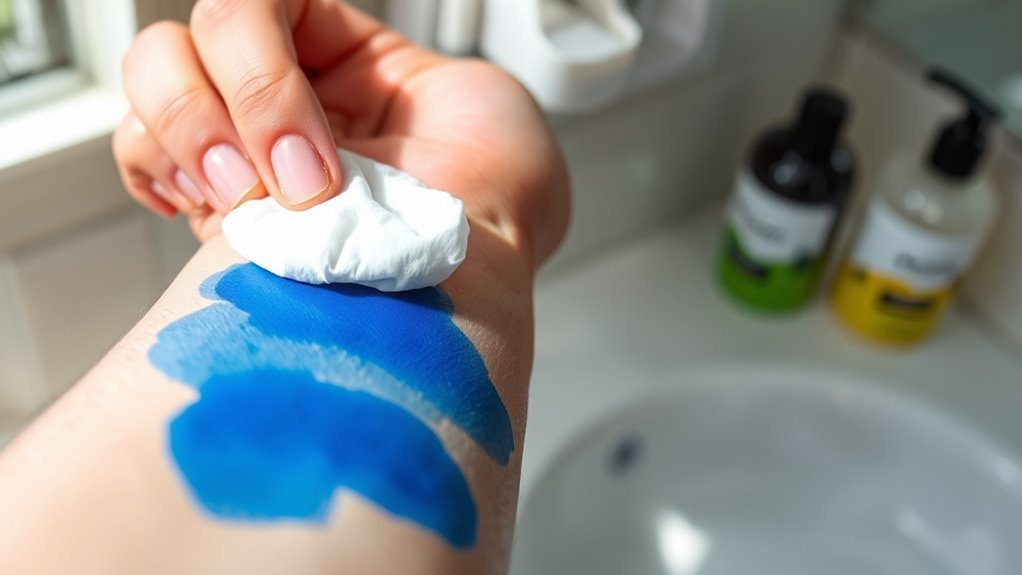
You can remove ink from your skin using common items like rubbing alcohol, hand sanitizer, or baking soda mixed with water. These everyday products are effective and usually easy to find around the house.
Just apply a small amount, rub gently, and rinse with warm water and soap.
Oils like baby oil or coconut oil also help break down ink stains when massaged in and wiped away. They’re gentle on the skin and can be a great alternative if you have sensitive skin.
Just be sure to moisturize afterward to keep your skin feeling soft and healthy.
Be careful on sensitive skin, as some products might cause irritation. Keep going to explore more effective tricks and tips for ink removal that can help you get rid of stubborn stains quickly and safely.
Key Takeaways
– Dish soap and warm water effectively break down and wash away ink oils from skin. It’s a simple, go-to method that usually does the trick pretty fast.
Just lather up, rub gently, and rinse. Easy!
– Hand sanitizer’s alcohol content dissolves ink; apply it, rub gently, then rinse with soap and water. It’s handy when you don’t have water nearby.
Just be sure to moisturize afterward if your skin feels dry.
– Rubbing alcohol on a cotton ball lifts ink stains nicely. Dab it on, avoid harsh rubbing, and you’ll see the ink start to fade.
Afterwards, don’t forget to moisturize so your skin stays happy.
– A baking soda and water paste exfoliates ink gently. Mix them into a paste, rub it on, let it sit briefly, then rinse thoroughly.
It’s a gentle way to get rid of stubborn stains.
– Baby oil or coconut oil loosens ink particles. Massage it in, wipe off the loosened ink, then wash your skin with mild soap.
These oils are great if your skin is sensitive or dry.
Common Household Items for Removing Ink
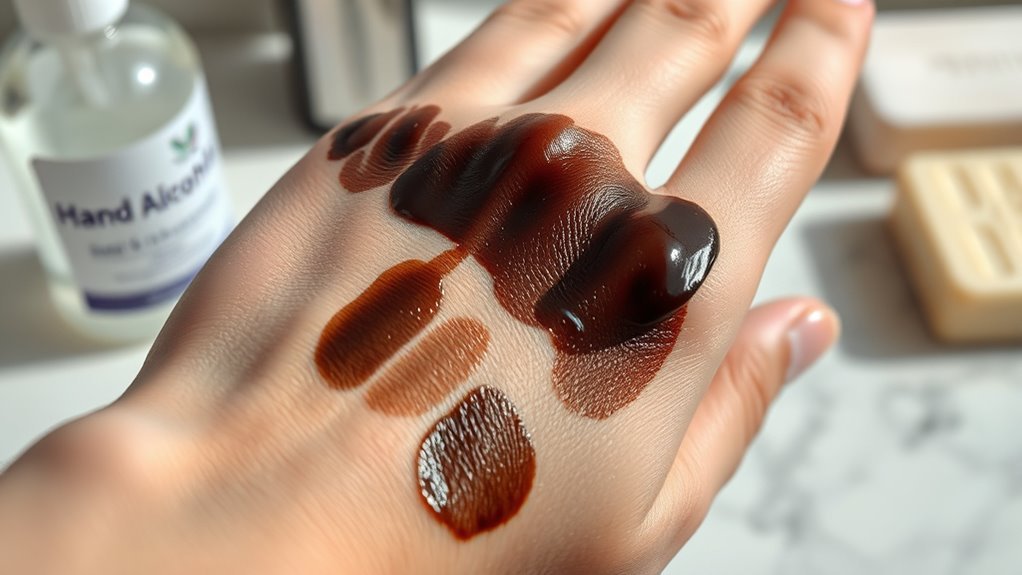
You can remove ink from your skin using several common household items that are likely already in your kitchen or bathroom. For example, dish soap works well because it breaks down the oils in ink, making it easier to wash away.
You can also try hand sanitizer, which contains alcohol that helps dissolve ink stains. Another handy option is toothpaste—non-gel varieties with mild abrasives gently scrub ink off without irritating your skin.
Baking soda mixed with a bit of water forms a paste that acts as a natural exfoliant, lifting ink from your skin’s surface. Even milk can help because its fats and proteins can loosen ink particles.
Each of these items is easy to use and safe for most skin types. So, next time you get ink on your hands, you’ve got plenty of simple tricks to try!
How to Use Rubbing Alcohol on Ink Stains
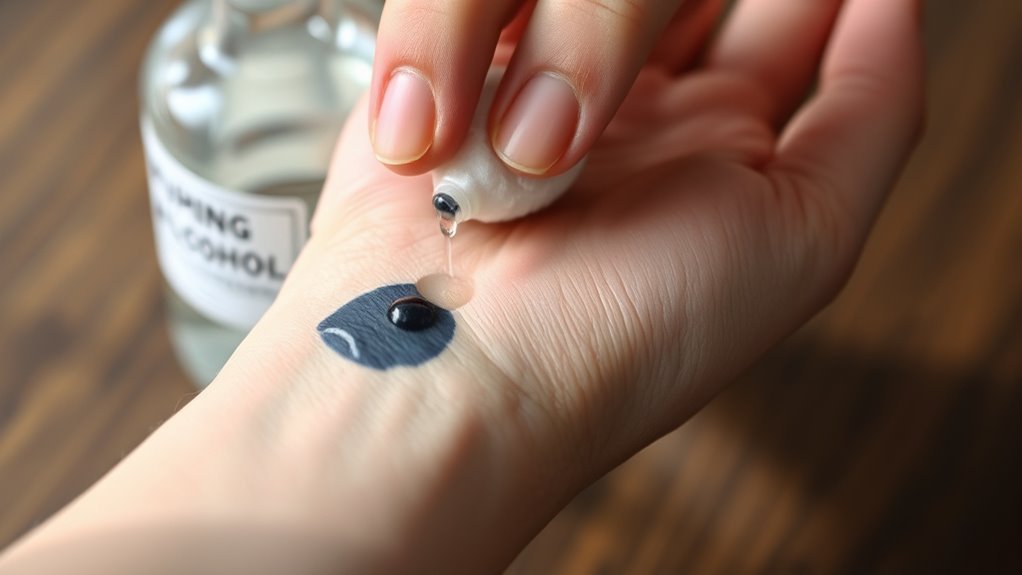
Although ink stains can be stubborn, rubbing alcohol offers an effective way to break them down quickly. To use it, start by pouring a small amount of rubbing alcohol onto a cotton ball or pad.
Gently dab the stained area, avoiding harsh rubbing that might irritate your skin. You’ll notice the ink beginning to lift almost immediately. Keep dabbing until the stain fades.
Afterward, rinse your skin with warm water and mild soap to remove any residue. If your skin feels dry afterward, go ahead and apply a moisturizer to soothe it.
Just be cautious not to use rubbing alcohol on broken or sensitive skin. This method works well because alcohol dissolves the ink’s pigments, making removal easy and efficient without causing damage when used properly.
Using Hand Sanitizer to Remove Ink From Skin
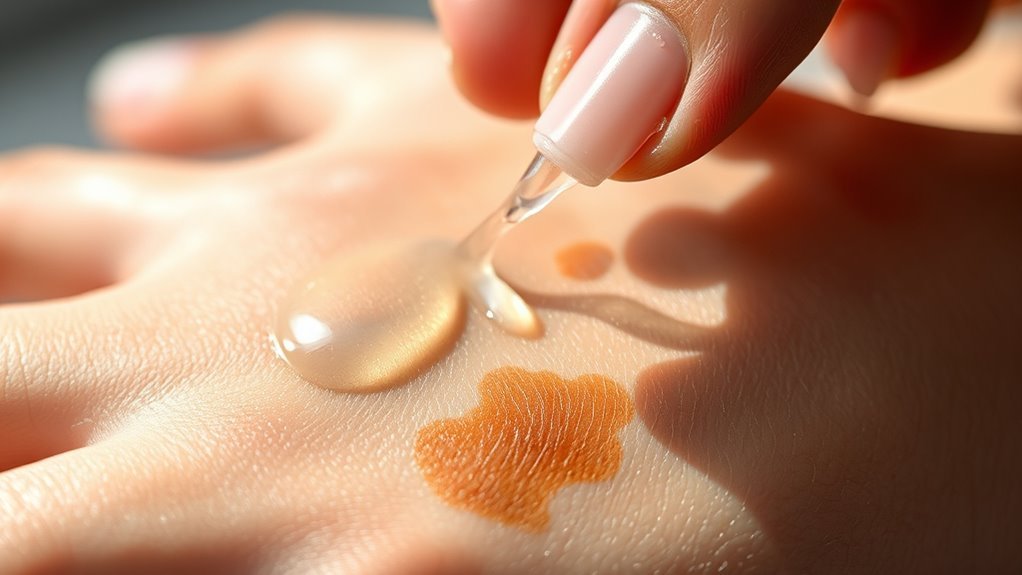
If rubbing alcohol isn’t available, hand sanitizer can serve as a convenient alternative for removing ink from your skin. Most hand sanitizers contain alcohol, which helps break down the ink’s pigments.
Start by applying a small amount of hand sanitizer directly onto the ink stain. Rub it gently into the skin using your fingers or a soft cloth. Let it sit for about 30 seconds to loosen the ink.
Apply hand sanitizer to the ink, rub gently, and let it sit for 30 seconds to loosen the stain.
Then, rinse the area with warm water and mild soap to remove the sanitizer and ink residue. Repeat the process if necessary, but avoid excessive scrubbing to prevent skin irritation.
Hand sanitizer works well for quick ink removal when you’re on the go and don’t have access to other cleaning agents. It’s a handy little trick to keep in mind!
Removing Ink With Baking Soda and Water
When ink stains your skin and you want a gentle yet effective solution, baking soda mixed with water offers a great option. This mixture acts as a mild abrasive that helps lift ink without irritating your skin.
Simply create a paste by mixing equal parts baking soda and water, then gently rub it on the stained area. Rinse with warm water and repeat if necessary.
| Step | Action | Tip |
|---|---|---|
| 1 | Mix baking soda and water | Use a 1:1 ratio for paste |
| 2 | Apply paste to ink stain | Rub gently in circular motion |
| 3 | Let sit for 1-2 minutes | Avoid prolonged contact |
| 4 | Rinse with warm water | Pat dry with a soft cloth |
| 5 | Repeat if needed | Don’t over-scrub skin |
Tips for Using Baby Oil or Coconut Oil
Since oils like baby oil and coconut oil break down ink effectively without harsh chemicals, you can use them to gently remove stains from your skin. Start by applying a small amount of oil to the inked area.
Rub it in circular motions for about a minute—this helps loosen the ink particles. Then, let the oil sit for a couple of minutes to really penetrate the stain.
After that, wipe the area with a soft cloth or cotton ball. If some ink remains, just repeat the process until the stain fades away.
Finally, wash your skin with mild soap and warm water to get rid of any oily residue. Using these oils not only cleans your skin but also keeps it moisturized, so you won’t have to worry about dryness or irritation while removing the ink.
Precautions When Removing Ink From Sensitive Skin
Although removing ink from your skin is usually straightforward, you need to be extra careful with sensitive skin to avoid irritation or allergic reactions. First, always test any product on a small patch of skin before applying it broadly.
Avoid harsh chemicals like acetone or alcohol, as they can cause dryness and redness. Instead, opt for gentle options like baby oil or coconut oil.
Use a soft cloth or cotton ball to apply the remover, and never scrub aggressively. If you notice any burning, itching, or redness, stop immediately and rinse with cool water.
Finally, moisturize your skin after removal to soothe and protect it. Taking these precautions helps keep your skin healthy and ink-free without discomfort.
Frequently Asked Questions
Can Ink Stains Cause Allergic Reactions on Skin?
Yes, ink stains can cause allergic reactions on your skin, especially if you’re sensitive to certain chemicals.
If you notice redness, itching, or swelling, you should wash the area gently and avoid further exposure.
It’s always a good idea to keep an eye on any changes and take care of your skin. If symptoms persist, you might want to check with a healthcare professional.
Is It Safe to Use Nail Polish Remover on Skin Ink Stains?
You shouldn’t use nail polish remover on your skin—it’s like inviting a tiny chemical storm that can burn, irritate, or dry your skin badly.
Instead, opt for gentler methods like soap, oil, or specialized cleansers. These options are much kinder and safer for your skin.
How Long Does Ink Typically Stay on Skin Without Removal?
Ink typically stays on your skin for a few days to a week without removal, depending on the ink type and how often you wash.
It naturally fades as your skin exfoliates and regenerates over time. So, the longer you leave it, the more it will disappear on its own.
Can Certain Inks Be Toxic if Absorbed Through the Skin?
Imagine dark ink seeping through your skin like a shadow—yes, some inks contain harmful chemicals that can be toxic if absorbed.
Are There Natural Remedies Besides Oils for Ink Removal?
Yes, you can use natural remedies like lemon juice or baking soda mixed with water to remove ink from your skin. They work gently and effectively without relying solely on oils or harsh chemicals.
These options are pretty easy to find and use at home. Plus, they’re a great alternative if you want to avoid stronger chemicals. Give them a try next time you have ink stains!
Conclusion
Now that you know several easy ways to remove ink from your skin, why let stubborn stains linger? Whether you reach for rubbing alcohol, hand sanitizer, or even baby oil, you’ve got simple solutions at your fingertips.
Just remember to be gentle, especially on sensitive skin. With these tips, you can quickly erase those marks and get back to feeling clean and confident.
Removing ink from skin doesn’t have to be a hassle. Using common household items like rubbing alcohol or hand sanitizer can do the trick without harsh scrubbing. Baby oil is great too, especially if you have sensitive skin that needs a gentler touch.
So next time you find ink stains on yourself, don’t stress. These easy methods to remove ink from skin make it simple to get rid of those pesky marks quickly and safely. You’ll be ink-free and feeling fresh in no time!