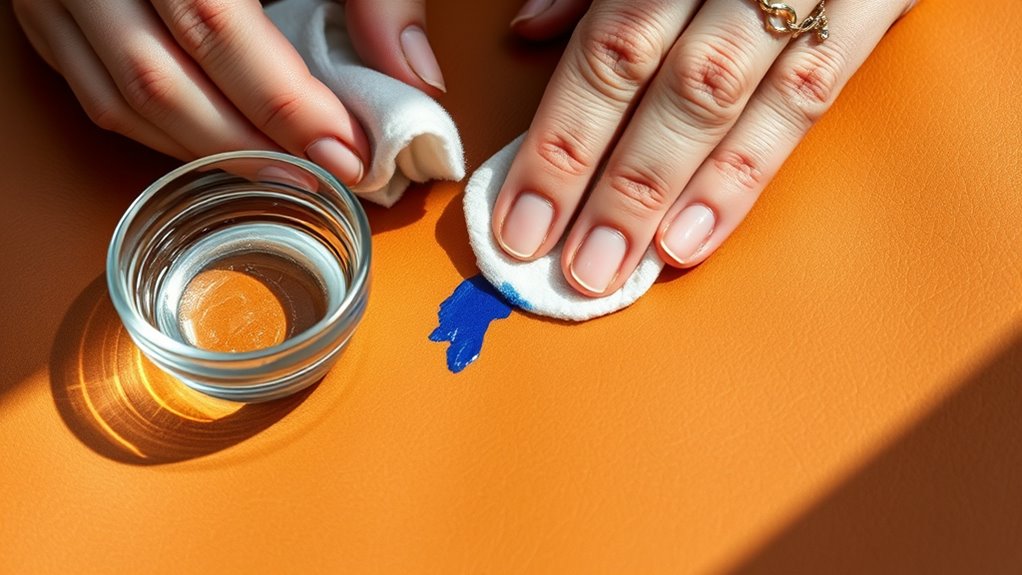
How to Remove Ballpoint Ink From Leather Step by Step
First, identify your leather type and test any cleaner on a hidden spot to avoid damage. This step is crucial because different leathers react differently to cleaning agents.
Gather cotton swabs, rubbing alcohol, mild leather cleaner, soft cloths, and conditioner to have everything ready.
Lightly dab the ink with alcohol using a cotton swab, but be careful not to soak the leather.
If the stain is stubborn, gently apply a pH-balanced leather cleaner to lift the ink without harming the surface.
Once the ink is removed, condition the leather to restore moisture and protect it from future damage.
Keep following for more detailed steps to guarantee lasting care and prevention. Taking these careful measures will help you remove ballpoint ink from leather safely and keep your leather items looking great.
Key Takeaways
- Identify your leather type first, and always test cleaning products on a hidden spot. This way, you can avoid any damage before applying an ink removal method.
- Dab the ink stain gently with a cotton swab that’s lightly dipped in rubbing alcohol. Make sure to use a fresh section of the swab each time so you don’t spread the ink around.
- For deeper stains, use a pH-balanced leather cleaner. Apply it with a soft cloth in circular motions, then wipe off any residue after you’re done.
- After cleaning, condition the leather by applying a suitable leather conditioner evenly. Then, buff it to bring back moisture, shine, and flexibility.
- To keep your leather looking great, maintain it regularly by cleaning and conditioning. Also, store it properly, and keep pens separate to avoid future ink stains and damage.
Identify the Type of Leather and Test Cleaning Products
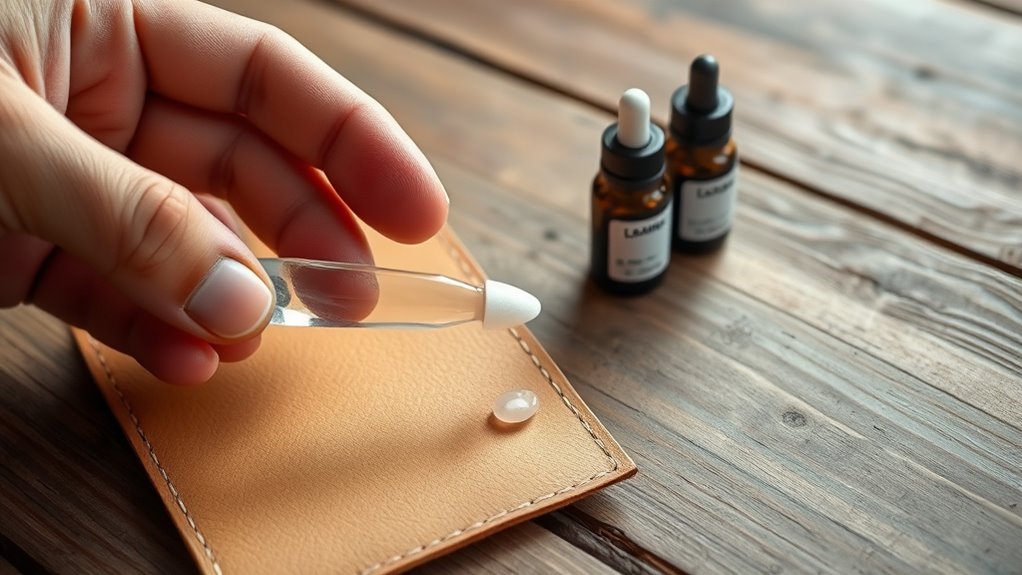
Before diving into ink removal, start by identifying the type of leather you’re dealing with. Different leathers react differently to cleaning agents, so knowing whether your leather is aniline, semi-aniline, or pigmented is essential.
You can usually find this info on the product label or by checking with the manufacturer. Once you know the type, pick a hidden spot on the leather to test any cleaning product you plan to use.
Check the product label or contact the manufacturer, then test cleaning products on a hidden leather spot first.
Apply a small amount, wait a few minutes, and watch for color changes, discoloration, or texture damage. This step protects you from ruining the leather.
Taking the time to identify your leather type and testing products ensures you remove ink safely and effectively without causing further damage.
Gather Necessary Cleaning Materials
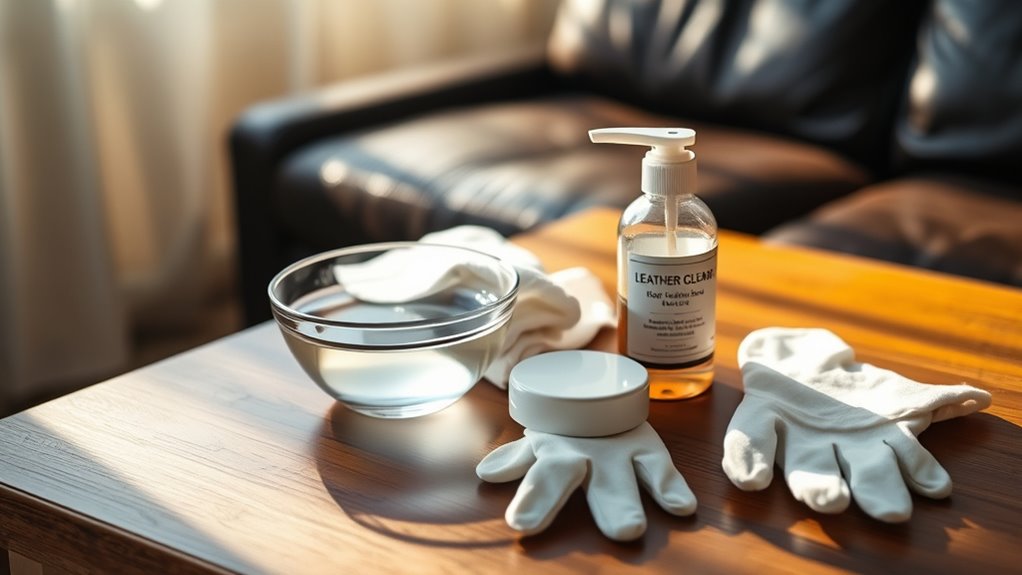
Since ink stains can be stubborn, you’ll need to gather the right cleaning materials to tackle the job effectively. Start by grabbing some clean cotton swabs and soft, white cloths—these won’t damage your leather.
Have a small bowl of clean water ready for dampening the cloth if needed. You’ll also want to prepare some rubbing alcohol, but hold off on using it until you’re ready.
Additionally, keep a mild leather cleaner or saddle soap nearby for post-treatment cleaning. It’s helpful to have a soft-bristled brush on hand for gently working cleaners into textured leather.
Finally, keep some leather conditioner ready to restore moisture once the ink’s removed. Having these materials ready ensures a smooth, controlled cleaning process without rushing or causing damage.
Apply Rubbing Alcohol With a Cotton Swab
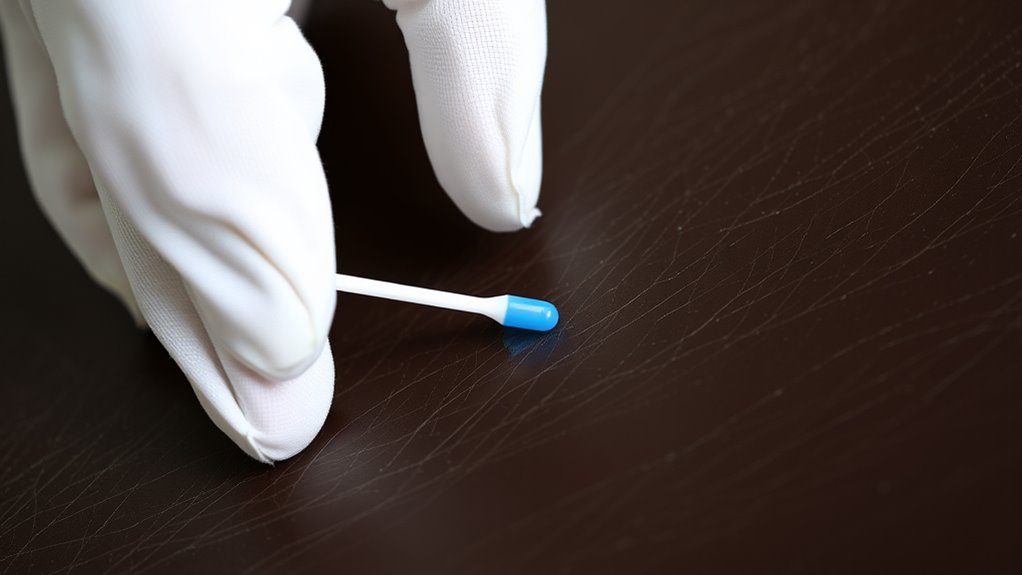
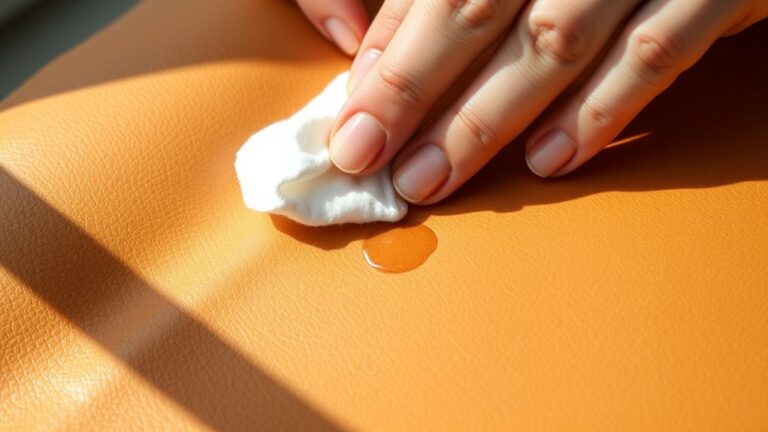
When you’re ready, dip a cotton swab lightly into the rubbing alcohol and gently dab it onto the ink stain. Avoid soaking the leather, as too much liquid can damage it.
Focus on the stained area, applying the alcohol sparingly to prevent spreading the ink. You’ll notice the ink starting to lift as you dab.
Apply alcohol sparingly on the stain, gently dabbing to lift the ink without spreading it further.
Use a clean section of the cotton swab each time to avoid reapplying the ink. Keep at it patiently, letting the rubbing alcohol break down the ink without rubbing harshly.
After the stain fades, let the leather air dry completely. This method targets the ink effectively while minimizing harm to your leather’s surface, setting you up nicely for any further cleaning if needed.
Use a Leather Cleaner for Deeper Stains
If the ink stain is stubborn, you’ll want to pick a leather cleaner designed specifically for your type of leather. Apply it carefully, following the product instructions to avoid damage.
After cleaning, condition the leather to keep it soft and protected. This step really helps maintain the leather’s look and feel.
Choosing the Right Cleaner
To tackle stubborn ink stains on leather, you’ll need the right cleaner designed specifically for leather materials. Avoid harsh chemicals that can damage the surface. Instead, look for pH-balanced cleaners that gently lift ink without drying or discoloring the leather.
Always test the cleaner on a hidden spot first to make sure it’s safe to use. Here’s a quick guide to help you choose:
| Cleaner Type | Best For | Notes |
|---|---|---|
| Leather Cleaner | General ink stains | pH-balanced, gentle |
| Rubbing Alcohol | Quick spot removal | Use sparingly, test first |
| Vinegar Solution | Mild stains | Dilute, avoid frequent use |
| Commercial Leather Cleaner | Deep, set-in stains | Follow product instructions |
Choosing the right cleaner is super important for effective and safe ink removal. So, take your time picking the right one!
Application Techniques
How should you apply a leather cleaner for the best ink removal results? Start by testing the cleaner on a hidden spot to avoid damage.
Then, follow these steps to tackle deeper ballpoint ink stains effectively:
- Dampen a soft cloth slightly with the cleaner, avoiding soaking it.
- Gently rub the stained area in a circular motion without applying too much pressure.
- Let the cleaner sit for a few minutes to break down the ink.
- Wipe off any residue with a clean, dry cloth.
- Repeat the process if the stain persists, but don’t overdo it to protect the leather.
Post-Cleaning Care
Although you’ve removed most of the ink, you’ll want to nourish and protect the leather to prevent drying and cracking. Using a leather cleaner suited for deeper stains helps restore the material’s natural oils and keeps it supple.
Apply the cleaner gently with a soft cloth and follow up with a leather conditioner to seal in moisture. Regular maintenance extends the life of your leather items and keeps them looking fresh.
| Step | Product Type | Purpose |
|---|---|---|
| 1. Clean | Leather cleaner | Remove deep stains |
| 2. Gently rub | Soft cloth | Avoid damage |
| 3. Dry | Air dry | Prevent moisture trap |
| 4. Condition | Leather conditioner | Restore oils |
| 5. Buff | Dry soft cloth | Enhance sheen |
Condition the Leather After Cleaning
Once you’ve cleaned the ink, it’s important to choose the right conditioner to restore your leather’s moisture and flexibility. You’ll want to apply it evenly using a soft cloth, making sure not to over-saturate the surface.
Conditioning not only maintains the leather’s appearance but also protects it from future damage. It’s a simple step that really makes a difference in keeping your leather looking great.
Choosing the Right Conditioner
Because ink removal can dry out your leather, you’ll want to choose a conditioner that restores moisture without causing damage. Pick one specifically formulated for leather to maintain its softness and durability.
Avoid products with harsh chemicals or heavy oils that might clog pores or discolor the material. Here’s what to look for in the right conditioner:
- Natural ingredients like beeswax or lanolin
- pH-balanced formulas safe for leather
- Non-greasy, fast-absorbing texture
- Hypoallergenic and free from dyes or fragrances
- Positive reviews for restoring leather’s suppleness
Selecting a conditioner with these qualities guarantees your leather stays nourished and looks great after cleaning. Always test on a small, hidden area first to confirm compatibility.
Application Techniques
After you’ve thoroughly cleaned the ink from your leather, applying conditioner properly guarantees it absorbs evenly and restores the material’s natural texture. Start by using a clean, soft cloth—microfiber works best.
Dab a small amount of conditioner onto the cloth, but be careful not to over-saturate the leather. Then, gently rub it into the surface using circular motions, covering the entire affected area and blending outward to prevent visible patches.
Let the conditioner sit for about 10-15 minutes so it can really penetrate the leather fibers. Finally, buff the leather lightly with a dry cloth to remove any excess product and enhance its natural shine.
Benefits of Conditioning
Conditioning your leather right after cleaning it keeps the material supple and prevents it from drying out or cracking. When you remove ballpoint ink, the leather might lose some of its natural oils, so conditioning restores moisture and flexibility. This step ensures your leather stays soft and looks great longer.
Here’s why you shouldn’t skip conditioning:
- Replenishes lost oils and nutrients
- Protects against future stains and dirt
- Enhances leather’s natural shine
- Prevents stiffness and cracking over time
- Extends the life of your leather item
Trust me, taking this extra step really pays off in the long run!
Prevent Future Ink Stains on Leather
While you can’t always control every spill, taking proactive steps can substantially reduce the risk of ink stains on your leather items.
Start by keeping pens away from your leather goods and storing them in secure cases. Regularly clean and condition your leather to maintain its protective barrier, making it less absorbent to ink.
| Prevention Tip | Why It Helps |
|---|---|
| Store pens separately | Minimizes accidental contact |
| Use leather protectors | Adds a stain-resistant layer |
| Regular conditioning | Maintains leather’s natural barrier |
Frequently Asked Questions
Can Ink Stains on Suede Leather Be Removed the Same Way?
You can’t treat suede like regular leather; it’s more delicate. Instead, gently blot ink with a suede eraser or use a small amount of white vinegar.
Avoid harsh chemicals to prevent damage or discoloration. It’s all about being gentle and patient with suede.
Is It Safe to Remove Ink From Vintage Leather Items?
Removing ink from vintage leather is like walking a tightrope—careful balance is key. You can do it safely, but you’ve got to use gentle methods and test a small spot first to avoid damaging the precious material.
It’s all about being patient and cautious. Rushing or using harsh chemicals can ruin the leather, so take your time and treat it with care.
What Should I Do if the Ink Stain Is Old and Dried?
If the ink stain is old and dried, you should gently dab it with a leather-safe cleaner or rubbing alcohol on a soft cloth.
Make sure to test first on a hidden spot to avoid damage before treating the stain fully.
This way, you can be sure the cleaner won’t harm your leather. Just take it slow and be gentle!
Can Professional Leather Cleaning Damage My Leather Item?
Worried about damage from professional cleaning? You shouldn’t be.
Professionals use specialized products and techniques designed for leather, so they’re less likely to harm your item.
Would you trust a pro to handle it carefully?
How Long Does It Take for Leather to Dry After Cleaning?
It usually takes leather about 4 to 6 hours to dry after cleaning, but you’ll want to let it air dry naturally.
Avoid direct heat or sunlight, as that can cause the leather to crack or fade.
Conclusion
Now that you’ve learned how to tackle ballpoint ink on leather, remember that patience is your best ally—like a gentle rain wearing down the hardest stone. By testing products first, cleaning carefully, and conditioning afterward, you’ll keep your leather looking fresh and vibrant.
Don’t forget to protect your prized items from future mishaps. Regular care and proper storage can go a long way in preventing ballpoint ink stains and other damage. With these steps, you’re ready to restore your leather’s charm and keep it shining for years to come.
Removing ballpoint ink from leather isn’t always easy, but with patience and the right techniques, it’s definitely doable. Follow these steps carefully, and your leather will stay beautiful and well-maintained. Keep your leather protected, and it will reward you with lasting style and durability.