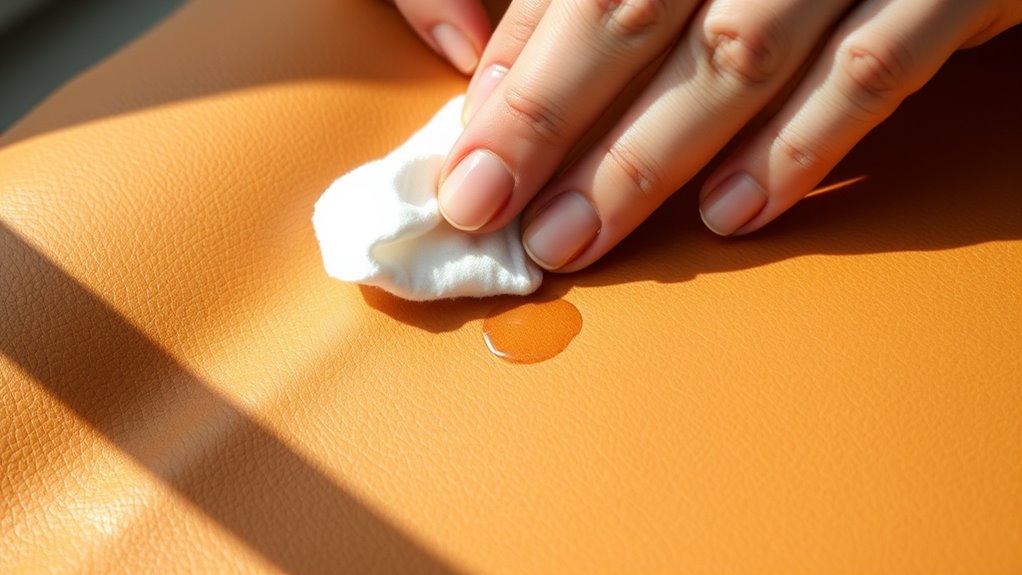
How to Take Ink Off Leather
To take ink off leather, start by identifying your leather type and testing a small hidden spot. This step is super important because different leathers react differently to cleaning methods. You don’t want to accidentally damage your favorite leather piece!
Next, gently dab the stain with a cotton ball lightly moistened with rubbing alcohol. Be careful not to soak or rub the area too hard. Gently does it—that way you avoid spreading the ink or harming the leather surface.
After that, wipe away any residue with a soft cloth and let it air dry naturally. Don’t rush the drying process; leather needs to breathe.
Once dry, apply a leather cleaner and conditioner to restore moisture and keep the leather soft and supple.
Acting quickly and choosing the right method really helps prevent damage. Keeping your leather safe means knowing more about how to protect and properly care for it. So, if you want your leather to look great for years, these steps are a good place to start!
Key Takeaways
– Act quickly by gently blotting ink with a soft, damp cloth to prevent deeper leather absorption.
This helps stop the ink from setting in further.
– Test rubbing alcohol on a hidden spot, then lightly dab ink with a cotton ball without soaking the leather.
Be careful not to over-wet the leather, or it might get damaged.
– Use a leather-specific cleaner and apply gently in circular motions, avoiding harsh scrubbing to protect the surface.
Taking it slow helps keep your leather looking great.
– After cleaning, apply leather conditioner to restore moisture and maintain flexibility of the leather.
This step is key to keeping the leather soft and supple.
– Regularly protect and condition leather to minimize future ink stains and ease potential removal.
It’s all about prevention as much as treatment!
Assessing the Type of Leather and Ink
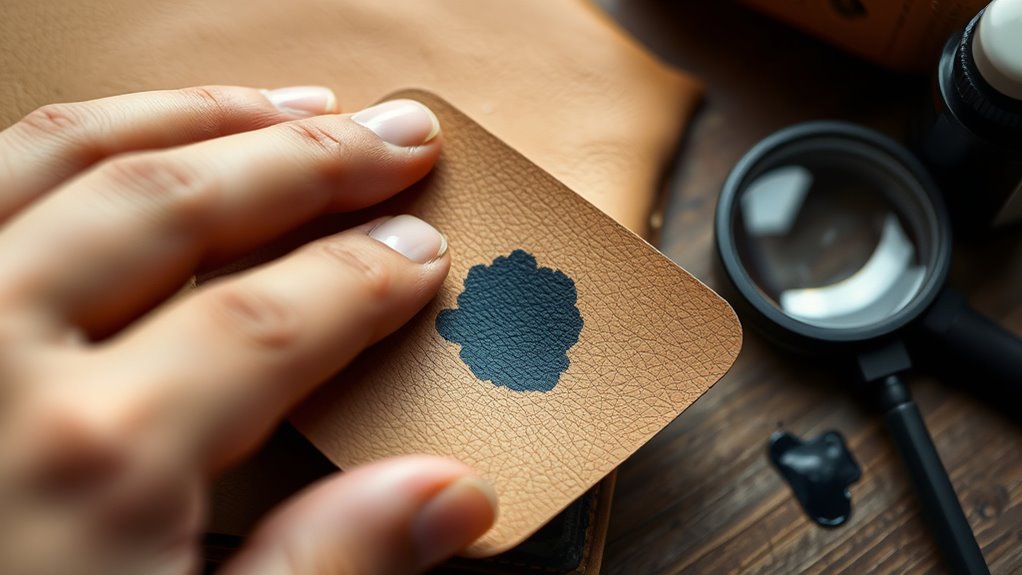
Before you begin removing ink from leather, you need to identify both the type of leather and the kind of ink involved. Different leathers—like aniline, semi-aniline, or pigmented—react uniquely to cleaning agents.
You’ll want to be extra cautious with delicate or untreated leather, as harsh chemicals can cause damage or discoloration. Next, figure out the ink type: is it ballpoint, gel, or permanent marker?
Water-based inks usually respond better to gentle cleaning, while permanent inks require stronger, more careful approaches. Knowing these details helps you choose the safest and most effective method.
Preparing Your Cleaning Materials
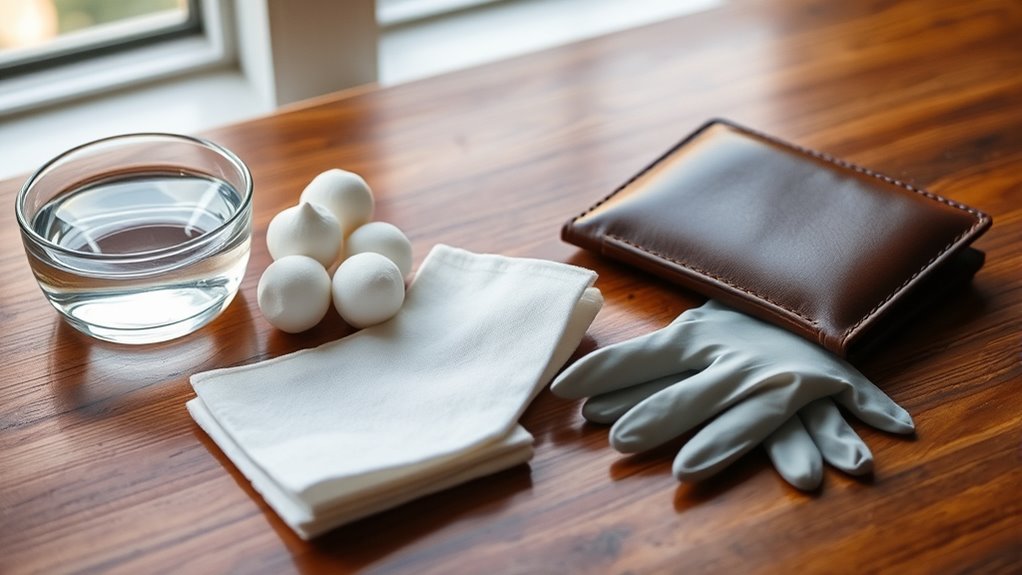
When you’re ready to tackle the ink stain, gather all necessary cleaning materials to guarantee a smooth process. Having everything at hand saves time and prevents interruptions that could worsen the stain.
Here’s a simple checklist to prepare:
| Cleaning Material | Purpose |
|---|---|
| Soft white cloth | To gently dab and wipe |
| Mild soap | For light cleaning without damage |
| Cotton swabs | To target small, precise areas |
| Distilled water | To avoid minerals damaging leather |
Make sure your cloth is lint-free to avoid leaving fibers behind. Also, use distilled water rather than tap water to prevent mineral stains.
Having cotton swabs helps you stay precise, especially on delicate leather surfaces. And remember, avoid harsh chemicals until you’re sure they’re safe for your specific leather type.
Using Rubbing Alcohol to Remove Ink Stains
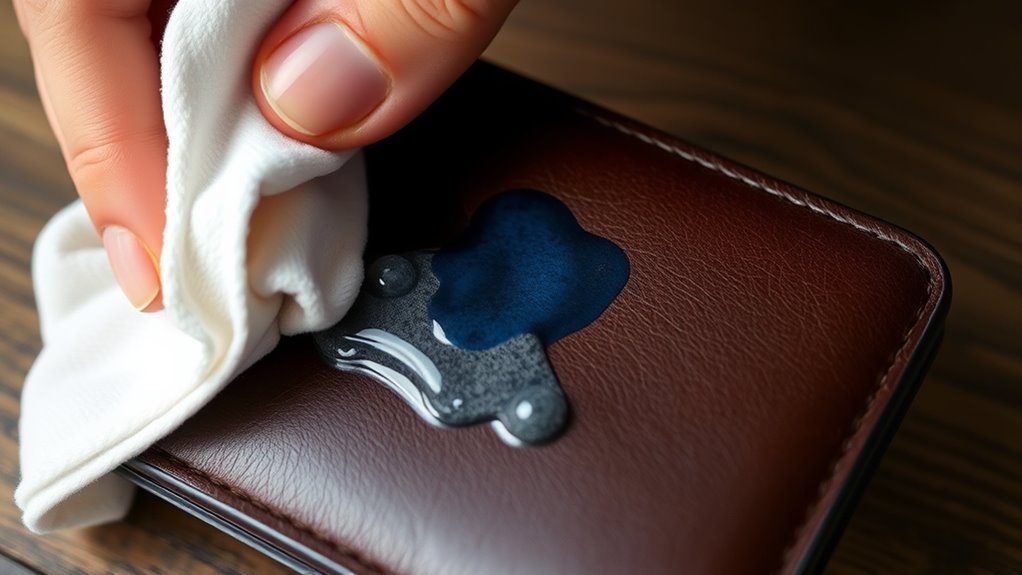
Once you have your cleaning materials ready, you can move on to tackling the ink stain with rubbing alcohol. Dampen a cotton ball or soft cloth with a small amount of rubbing alcohol—avoid soaking it to prevent damage.
Gently dab the ink stain, working from the outside in to stop the ink from spreading. Don’t rub aggressively; instead, use light, repeated motions. You should see the ink lifting onto the cotton ball.
Replace the cotton ball as it absorbs the ink to avoid reapplying it to the leather. After the stain starts fading, let the leather air dry completely.
Keep in mind that rubbing alcohol can sometimes lighten leather, so test it first on a hidden spot. This method is effective for fresh or small ink stains.
Applying Leather Cleaner and Conditioner
You’ll want to pick a leather cleaner that’s gentle but effective for your specific type of leather. Apply it carefully, using a soft cloth and gentle motions to avoid damage.
After cleaning, don’t forget to condition the leather to restore moisture and keep it supple. This step really helps maintain its look and feel over time.
Choosing the Right Cleaner
Although many cleaners claim to remove ink stains effectively, not all are suitable for leather. When choosing a cleaner, look for one specifically designed for leather to avoid damage or discoloration.
Avoid harsh chemicals like bleach or ammonia, which can dry out and crack leather. Instead, opt for a gentle, pH-balanced leather cleaner that maintains the material’s natural oils.
If you’re unsure, test the cleaner on a hidden area first to check for adverse reactions. After cleaning, use a leather conditioner to restore moisture and flexibility, preventing the leather from becoming stiff or brittle.
Picking the right products ensures you remove ink without compromising your leather’s appearance and durability. This way, you keep it looking great for years to come.
Proper Application Techniques
When applying leather cleaner and conditioner, starting gently makes sure you protect the material while effectively removing ink stains. Use a soft cloth or sponge to apply the cleaner in small, circular motions, focusing on the stained area without soaking the leather.
Avoid harsh scrubbing, which can damage the surface. After cleaning, wipe away residue with a damp cloth and let the leather air dry.
Apply conditioner sparingly to restore moisture and flexibility, ensuring you cover the treated area evenly.
- Test the product on a hidden spot first
- Use minimal amounts to avoid oversaturation
- Work in a well-ventilated space
- Follow manufacturer instructions precisely
- Let each layer dry fully before applying more
These steps help keep your leather safe and looking its best.
Conditioning After Cleaning
Since cleaning can strip leather of its natural oils, conditioning your leather afterward helps restore its softness and prevents cracking. After removing the ink, apply a small amount of leather conditioner to a clean, soft cloth. Gently rub it into the leather using circular motions, ensuring even coverage.
Let the conditioner absorb for about 15 minutes, then buff the surface with a dry cloth to remove any excess. Conditioning not only replenishes moisture but also protects the leather from future damage.
Avoid applying too much product, as this can cause buildup or sticky residue. Regularly conditioning your leather, especially after cleaning, keeps it supple and extends its lifespan. This way, you maintain the material’s natural beauty and durability over time.
Alternative Home Remedies for Ink Removal
You can try using common household ingredients like rubbing alcohol or vinegar to remove ink from leather. Just be sure to apply them gently and test on a small area first to avoid damage.
Following some simple precautions will help protect your leather while cleaning. It’s always better to be safe than sorry, right? Give it a try carefully and see how it goes!
Common Household Ingredients
Although professional leather cleaners offer effective solutions, you can often remove ink stains using common household ingredients. These items are usually readily available and can be surprisingly effective when applied carefully.
Before you start, test any ingredient on a hidden spot to ensure it won’t damage your leather. Better safe than sorry, right?
Here are five household ingredients you can try:
- Rubbing alcohol: Dab gently to lift ink without soaking the leather.
- White vinegar: Mix with water for a mild cleaning solution.
- Baking soda: Create a paste to absorb fresh ink stains.
- Lemon juice: Use sparingly to lighten ink marks.
- Toothpaste (non-gel): Apply a small amount to rub out stains gently.
Using these ingredients thoughtfully can help restore your leather’s appearance without costly products. Give them a shot—you might be surprised at the results!
Application Tips and Precautions
When applying home remedies to remove ink from leather, proceed with caution to avoid causing damage. Always test the solution on a hidden spot first.
Use a soft cloth, not abrasive materials, and apply gently. Avoid soaking the leather, as excess moisture can cause stains or warping.
Work in small sections and wipe off residue quickly. This way, you keep your leather looking its best without any unwanted marks.
| Tip | Why It’s Important | What to Avoid |
|---|---|---|
| Test first | Prevents discoloration | Skipping spot testing |
| Use soft cloth | Protects leather texture | Using rough scrubbers |
| Apply sparingly | Avoids moisture damage | Soaking leather |
Preventing Future Ink Stains on Leather
Since leather is porous and easily absorbs ink, taking proactive steps can save you a lot of hassle down the road. To keep your leather items looking pristine, it’s essential to prevent ink stains before they happen.
You can protect your leather by adopting simple habits and using the right products. Here are five effective tips to prevent future ink stains:
- Keep pens and markers away from leather surfaces.
- Use a leather protector spray to create a barrier against ink.
- Clean spills immediately with a soft, damp cloth.
- Store leather items separately from ink-containing objects.
- Regularly condition your leather to maintain its resilience and reduce absorption.
Following these steps helps maintain your leather’s appearance and makes ink stains easier to manage if they occur. So, a little care now can save you a lot of trouble later!
Frequently Asked Questions
Can Ink Stains on Leather Cause Permanent Damage?
Yes, ink stains on leather can cause permanent damage if you don’t act quickly. The ink can seep deep into the leather fibers, making it difficult to remove.
It can also potentially ruin the finish and texture. So, the sooner you address it, the better your chances of saving the leather!
Is It Safe to Use Nail Polish Remover on Leather?
You shouldn’t use nail polish remover on leather because it contains acetone, which can damage or discolor the material.
Instead, try a leather cleaner designed for stains. This way, you can safely protect your leather’s finish and texture.
How Long Should I Wait Before Cleaning Fresh Ink Stains?
When ink lands on leather, time’s your enemy—don’t wait more than 5 minutes before acting.
The quicker you clean, the less chance the stain has to set, saving your leather’s smooth charm and shine.
Can Professional Leather Cleaning Services Remove Ink Stains?
Yes, professional leather cleaning services can often remove ink stains effectively. They use specialized products and techniques you likely don’t have at home, increasing your chances of restoring your leather without causing damage.
These experts know how to treat different types of leather safely. So, if you’ve got an ink stain, it’s usually worth letting them handle it.
Are Ink Stains More Common on Certain Leather Types?
Ever wonder if ink stains target specific leather types? Yes, they’re more common on smooth, lighter-colored leathers since ink sits on the surface.
You’ll find textured or darker leathers tend to hide stains better. So, if you’re worried about ink marks, those might be your best bet!
Conclusion
Removing ink from leather is like wiping away a stubborn fog—you just need the right touch and tools. By understanding your leather and carefully applying cleaning methods, you can restore its natural shine and keep it looking fresh.
Remember, prevention is your best shield. It turns your leather into a fortress against future stains, helping you avoid the hassle of tough ink marks later on.
With patience and care, your leather will continue to tell its story, unmarred and beautifully vibrant. Taking ink off leather might seem tricky, but with the right approach, it’s completely doable. Keep these tips in mind, and your leather items will stay looking great for years to come.