Do Fire Alarms Have Ink?
You won’t find ink inside fire alarms because they rely completely on electronic sensors to detect smoke and heat. These sensors respond quickly to environmental changes, triggering alarms without any printed indicators.
Ink can’t sense or alert you to danger in real time—it’s static and purely visual, which doesn’t help in emergencies.
Fire alarms focus on fast, accurate detection using advanced technologies.
If you’re curious about how these devices actually work or want to know the best ways to maintain them, keep exploring. Understanding the tech behind fire alarms can really help you stay safe.
Key Takeaways
– Fire alarms do not contain ink; they rely on electronic sensors for fire detection.
Ink can’t detect smoke, heat, or the environmental changes that fire alarms need to notice.
– Fire alarms use ionization, photoelectric, or heat sensors instead of ink-based indicators.
Ink doesn’t provide real-time alerts or triggers, which are essential for fire alarm functionality.
– Regular maintenance focuses on keeping sensors clean and checking wiring, not inspecting any ink.
How Fire Alarms Detect Smoke and Heat
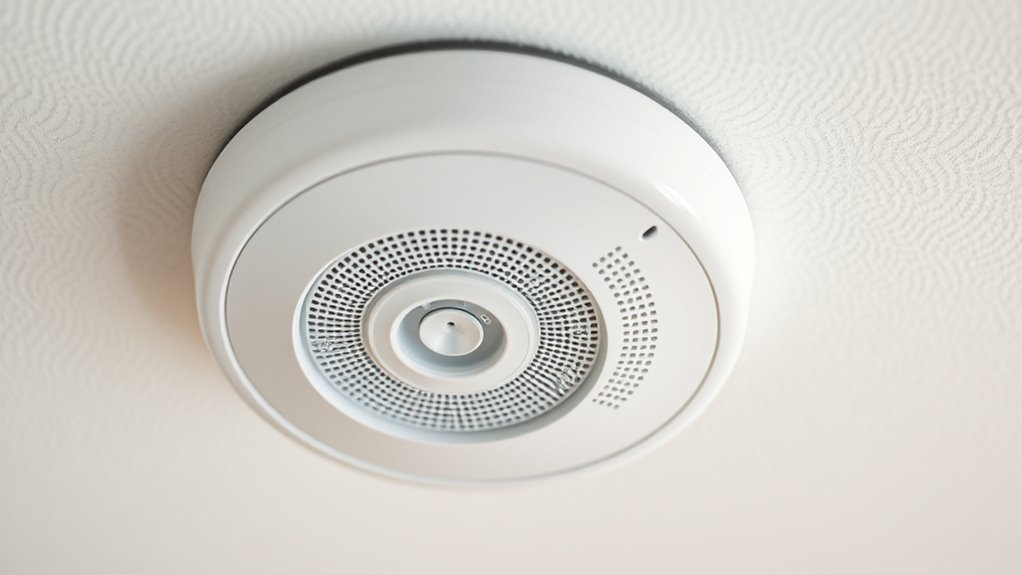
Although you might not see it, fire alarms constantly monitor the air for signs of danger by detecting smoke and heat. When smoke particles enter the alarm’s sensing chamber, they disrupt a light beam or ionized air, triggering the alarm.
You’ll find that photoelectric alarms use a light sensor to spot smoke, while ionization alarms detect tiny charged particles from combustion. Heat detectors work differently; they sense rapid temperature rises or reach a preset threshold.
Common Components Inside Fire Alarms
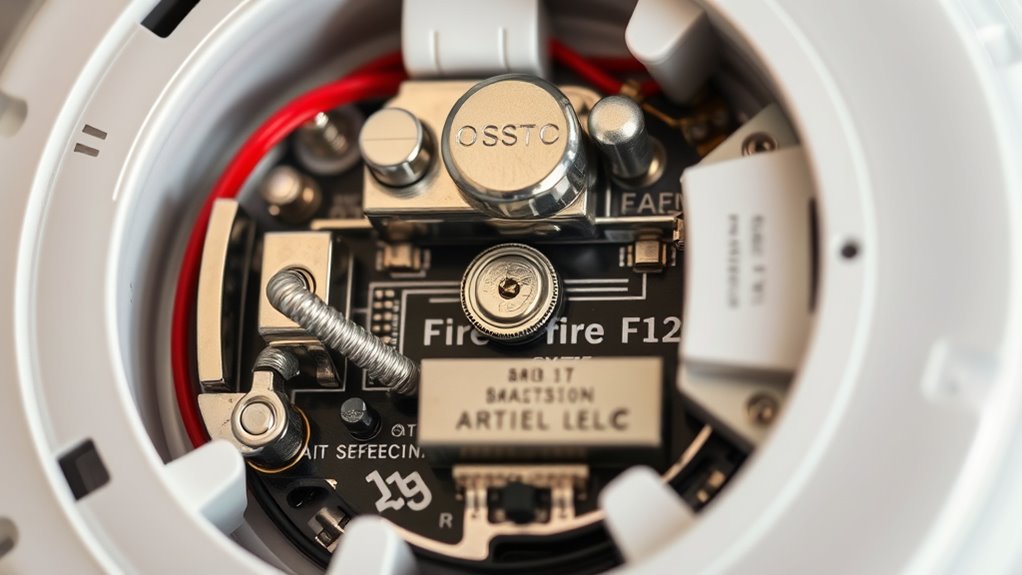
You’ll find several key components inside a fire alarm that work together to keep you safe. Sensors detect smoke or heat, while power sources keep the device running continuously.
Once triggered, signal and alert systems make sure you hear the warning loud and clear. It’s all designed to give you enough time to react and stay safe.
Sensors and Detection Mechanisms
When you look inside a fire alarm, you’ll find several sensors working together to detect smoke, heat, or flames quickly. Most alarms use either ionization or photoelectric smoke sensors.
Ionization sensors detect tiny particles from fast-flaming fires, while photoelectric sensors spot larger particles from smoldering fires. Some alarms also include heat sensors that trigger when temperatures rise sharply.
Flame detectors, less common in home alarms, use ultraviolet or infrared light to identify fire directly. These detection mechanisms continuously monitor the environment, sending signals to activate the alarm when they sense danger.
Power Sources Explained
The sensors inside fire alarms constantly scan for signs of danger, but they need a reliable power source to keep running without interruption. Most fire alarms use batteries—usually 9-volt or AA types—that ensure the device stays active even during power outages.
Some are hardwired into your home’s electrical system, providing constant power without worrying about battery life. Many models combine both: they run on electricity but include backup batteries for emergencies.
You’ll also find rechargeable batteries in newer alarms, which maintain power longer and reduce waste. Understanding these power sources helps you keep your alarms functional—always check batteries regularly or test hardwired connections, so your fire alarm won’t fail when you need it most.
Signal and Alert Systems
Although fire alarms rely on sensors to detect danger, their ability to alert you quickly depends on effective signal and alert systems. These systems include audible alarms, visual indicators, and communication modules that guarantee you’re promptly warned.
You’ll find these components essential in making sure the alarm doesn’t just detect fire but also notifies you clearly and reliably.
| Component | Function | Importance |
|---|---|---|
| Audible Alarm | Emits loud sound | Alerts occupants immediately |
| Visual Indicator | Flashing lights | Assists those with hearing loss |
| Communication Module | Sends alerts to devices | Notifies emergency services |
| Control Panel | Manages signals | Coordinates alarm responses |
Understanding these parts helps you appreciate how fire alarms keep you safe beyond detection. It’s more than just sensing danger; it’s about making sure you get the message loud and clear.
The Role of Sensors in Fire Alarm Functionality
You rely on different types of fire sensors to detect smoke, heat, or flames quickly. Each sensor uses a specific detection mechanism, like ionization or photoelectric technology, to spot danger.
Understanding how these sensors work helps you see why fire alarms are so effective. It’s pretty fascinating once you get into the details!
Types of Fire Sensors
How do fire alarms detect danger before a fire spreads? They rely on different types of sensors designed to spot early signs of fire. You’ll find smoke sensors, which sense tiny particles in the air caused by combustion.
Photoelectric sensors detect smoke by using a light beam—when smoke disrupts the light, the alarm triggers. Then there are ionization sensors that react to smaller, invisible smoke particles from fast-flaming fires.
Heat sensors monitor temperature rises and alert you if things get too hot. Some alarms combine these sensors to improve detection accuracy, giving you a better chance to respond quickly.
Understanding these sensor types helps you appreciate how fire alarms work tirelessly to keep you safe. It’s pretty cool how these devices work behind the scenes, right?
Sensor Detection Mechanisms
Fire alarms rely on their sensors to spot danger early and alert you before a fire gets out of control. These sensors detect specific signs of fire, like smoke particles, heat, or gases, triggering the alarm system instantly. Understanding how these detection mechanisms work helps you appreciate why your alarm responds so quickly.
Here’s how sensors detect fire:
- Photoelectric sensors use light beams to sense smoke particles disrupting the beam.
- Ionization sensors detect ions produced by combustion, sensing smaller smoke particles.
- Heat sensors respond to rapid temperature increases or fixed high temperatures.
Each sensor type targets different fire characteristics, ensuring your alarm can detect fires no matter how they start. This precision keeps you safer by providing reliable early warnings.
Why Ink Is Not Used in Fire Alarms
Although ink plays an essential role in many devices, it doesn’t have a place in fire alarms because these systems rely on electronic sensors rather than printed indicators. You won’t find ink inside a fire alarm since its purpose is to detect smoke or heat and trigger an alert immediately.
Ink is static and doesn’t provide real-time feedback or detection capabilities. Fire alarms need to respond quickly to changing environmental conditions, something ink cannot do.
Instead of relying on printed elements, these devices use electronic components designed for sensitivity and speed. So, if you’re wondering why manufacturers skip ink, it’s because it simply doesn’t fit the functional requirements of fire alarms.
They prioritize rapid and accurate detection over visual displays or printed messages. That’s why ink just isn’t part of the equation when it comes to fire alarm technology.
Types of Fire Alarms and Their Internal Mechanisms
Since ink doesn’t play a role in fire alarms, it’s worth exploring what actually makes these devices work. Fire alarms rely on different internal mechanisms to detect fire or smoke quickly and alert you.
Fire alarms don’t use ink—they rely on advanced sensors to detect smoke or heat and alert you promptly.
Here are three common types:
- Ionization Alarms: These use a small amount of radioactive material to ionize air between two plates. When smoke enters, it disrupts the current, triggering the alarm.
- Photoelectric Alarms: These contain a light source and sensor; smoke scatters the light, activating the sensor and sounding the alarm.
- Heat Alarms: These detect a rapid rise in temperature or a fixed high temperature, alerting you when a fire generates enough heat.
Each type uses precise technology, not ink, to keep you safe. So yeah, it’s all about science, not ink!
Maintenance and Testing of Fire Alarm Systems
To guarantee your fire alarm system works reliably when you need it most, you should perform regular maintenance and testing. Start by checking batteries every six months and replacing them as needed.
Test your alarm monthly by pressing the test button to ensure the sound is loud and clear. Clean your detectors regularly to remove dust and debris that can block sensors.
Schedule professional inspections annually so experts can examine wiring, sensors, and control panels for faults. Keep a log of all maintenance activities to track your system’s health and identify recurring issues.
Frequently Asked Questions
Can Fire Alarms Be Connected to Smart Home Systems?
Yes, you can connect fire alarms to smart home systems. Many modern alarms integrate with apps, sending alerts to your phone.
This way, you’ll get notified instantly, even when you’re away from home. It’s super convenient and adds an extra layer of safety to your place.
How Long Do Fire Alarm Batteries Typically Last?
Fire alarm batteries typically last 6 to 12 months, like a candle burning steadily until it’s time to replace it.
You should check and replace them yearly to keep your home safe and sound.
It’s just a small task, but it makes a big difference in keeping everyone protected.
Are There Wireless Fire Alarm Options Available?
Yes, you can find wireless fire alarm options that connect seamlessly without messy wires. They’re easy to install, often battery-powered, and can link to other alarms.
This setup enhances your home’s safety with modern convenience and flexibility. It’s a smart choice if you want a hassle-free, reliable alarm system.
What Is the Best Placement for Fire Alarms in a Home?
You should place fire alarms inside each bedroom, outside sleeping areas, and on every level of your home, including the basement.
Make sure to install them high on walls or ceilings, away from windows and vents to guarantee proper detection.
This way, you’ll have the best chance of being alerted quickly in case of a fire. It’s all about keeping you and your family safe.
Can Fire Alarms Detect Carbon Monoxide?
Yes, some fire alarms can detect carbon monoxide, but not all.
You’ll need a combination smoke and carbon monoxide detector to stay fully protected from both fire and CO hazards in your home.
It’s a smart idea to check the specifications of your alarms to be sure. That way, you won’t miss out on any important safety features!
Conclusion
You probably didn’t realize that fire alarms don’t use ink at all—they rely on sensors to detect smoke and heat. In fact, smoke detectors can sense particles as small as 0.3 microns, smaller than a grain of salt!
Knowing this, you can appreciate how these devices quietly keep you safe every day without any ink involved. Regular maintenance guarantees they’ll keep working when you need them most.
So, do fire alarms have ink? Nope! Instead, they depend on sensitive technology designed to spot fire hazards early. This makes them reliable and essential safety tools in any home or building. Keeping your fire alarms in good shape ensures they’ll protect you effectively, without a drop of ink anywhere in the system.