
How Long Does UV Ink Last Guide
You can expect UV ink to last from one to several years, depending on your surface type and environment. UV ink is especially effective on smooth, non-porous materials, making it a popular choice for many projects.
It resists fading and scratching better than traditional inks, which is a big plus.
However, sunlight, temperature changes, and humidity can shorten its lifespan. These environmental factors can wear down the ink faster than you’d like.
Proper storage and protective coatings help keep prints vibrant longer.
If you want to guarantee your UV ink stays fresh and durable, understanding these factors will give you a clear advantage. Taking a little extra care can really pay off when it comes to how long your prints look great.
Key Takeaways
- UV ink lasts longer on smooth, non-porous surfaces compared to porous materials. That’s because it sticks better and cures more effectively on those surfaces.
- When used indoors, UV ink prints can keep their quality for several years with just minimal fading. This is especially true if they’re kept in controlled conditions.
- For outdoor use, UV ink usually lasts between 1 to 3 years. How long it really lasts depends on things like sunlight exposure and whether protective coatings are applied.
- Environmental factors play a big role too. UV exposure, humidity, temperature, and extreme weather can all impact how long UV ink lasts.
- Storing UV ink prints properly can help extend their life. Keeping them in cool, dry, dark places and using protective sleeves makes a noticeable difference.
Factors Influencing the Longevity of UV Ink
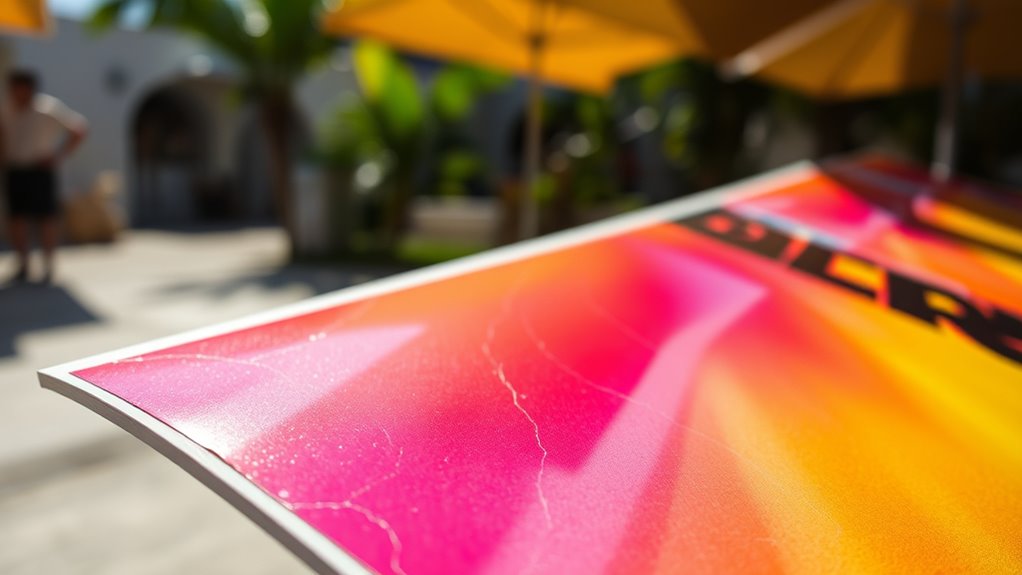
Although UV ink is known for its durability, several factors can affect how long it lasts on your materials. First, the type of surface you’re printing on plays a big role—smooth, non-porous surfaces like glass or metal tend to hold UV ink longer than porous materials like paper or fabric.
Exposure to sunlight is another key factor; UV rays can eventually degrade the ink, so if your item will be outdoors, expect some fading over time. Additionally, the quality of the UV ink and curing process matters. Proper curing ensures the ink bonds well and resists wear.
Environmental conditions such as humidity and temperature also impact longevity. By considering these factors, you can better predict and optimize how long your UV ink designs will endure. So, it’s all about knowing what you’re working with and where your design will live.
UV Ink vs. Traditional Ink Durability
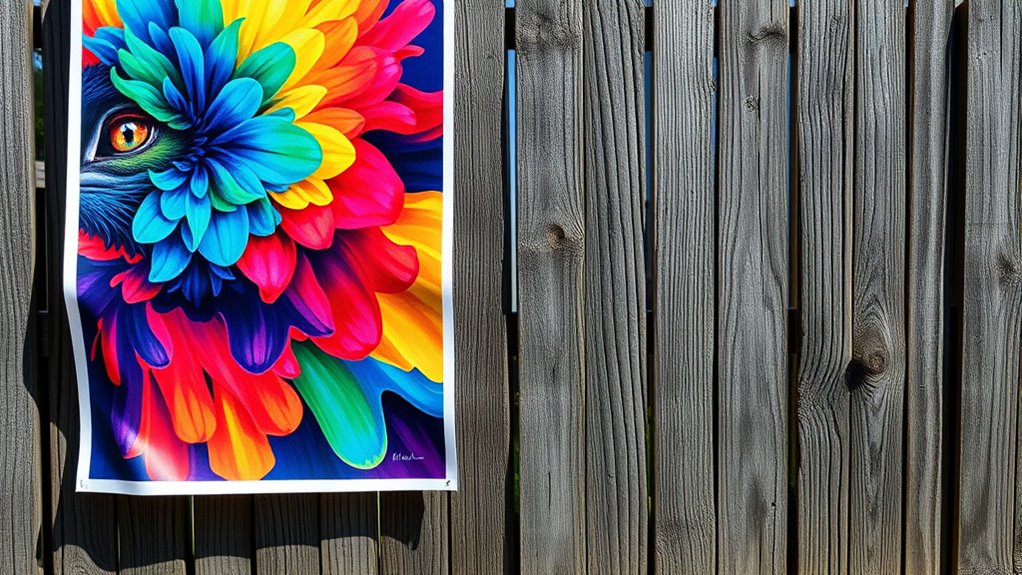
Understanding the factors that affect UV ink’s longevity helps when comparing it to traditional ink options. You’ll find that UV ink generally outperforms traditional inks in durability.
It cures instantly under UV light, creating a tough, flexible layer that resists fading, scratching, and chemical exposure better than solvent or water-based inks. Traditional inks often soak into the substrate, which can lead to faster wear and color degradation over time.
However, UV ink’s durability shines especially on non-porous surfaces, while traditional inks may still be suitable for porous materials. If you want your print to last longer under demanding conditions, UV ink is usually the smarter choice.
Keep in mind, though, that the best ink depends on your specific application and surface type.
Environmental Conditions Affecting UV Ink Lifespan
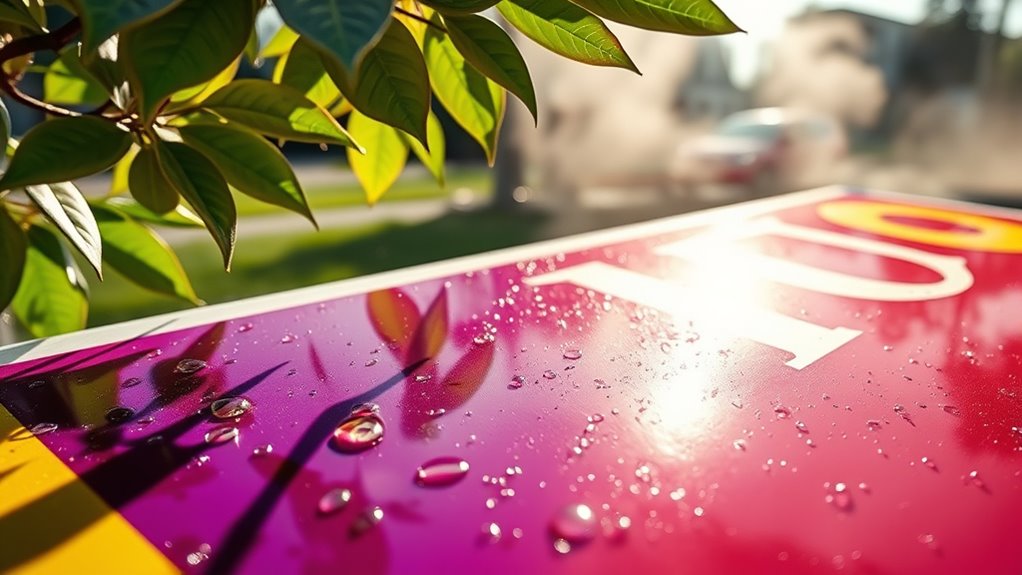
When you expose UV ink to harsh environmental conditions like intense sunlight, extreme temperatures, or high humidity, its lifespan can shorten considerably. These factors accelerate fading, cracking, or peeling, reducing the print’s durability.
To understand how environment impacts UV ink, consider these key points:
- UV Exposure: Prolonged sunlight can break down ink pigments, causing colors to fade faster.
- Temperature Fluctuations: Extreme heat or cold can cause the ink to expand or contract, leading to cracking.
- Humidity Levels: High moisture can weaken ink adhesion, promoting peeling or smudging over time.
Being aware of these conditions helps you anticipate how your UV-printed materials will perform outdoors or in challenging environments. It’s always good to plan ahead!
Best Practices for Preserving UV Ink Prints
To keep your UV ink prints looking sharp, store them in a cool, dry place away from direct sunlight. You’ll want to minimize their exposure to UV rays, which can cause fading over time.
Taking these steps helps extend the life of your prints considerably. It’s pretty simple but makes a big difference in preserving those vibrant colors.
Proper Storage Conditions
Although UV ink prints are known for their durability, you’ll need to store them carefully to maintain their vibrant colors and sharp details. Proper storage prevents damage from moisture, dust, and temperature fluctuations.
All of these can degrade the print over time. Here are three key tips to keep your UV ink prints in top shape:
- Store prints flat in acid-free, archival-quality sleeves or folders. This helps avoid bending and chemical deterioration.
- Keep them in a cool, dry place with consistent temperature and humidity. That way, you prevent warping or mold growth.
- Avoid stacking prints directly on top of each other. Instead, use interleaving sheets to protect surfaces from abrasion.
Following these steps ensures your UV ink prints stay vivid and crisp for years. It’s pretty simple, but it really makes a big difference!
Avoiding UV Exposure
Since UV exposure can quickly fade your prints, you’ll want to minimize their contact with direct sunlight and strong artificial lights. Place your UV ink prints in areas with indirect lighting, and avoid windows or spaces where sunlight streams in for extended periods.
Consider using UV-protective glass or acrylic when framing your prints to shield them without compromising visibility. If you’re displaying prints outdoors, opt for shaded locations or install UV-blocking films on windows nearby.
When storing, keep your prints in dark, cool environments to prevent unnecessary exposure. Also, avoid fluorescent and halogen lights, as they emit UV rays that can degrade ink over time.
Common Applications and Their Expected UV Ink Durability
When choosing UV ink for your project, you’ll want to consider whether it’s for indoor or outdoor use, as exposure impacts durability.
Industrial applications usually demand tougher, longer-lasting prints compared to commercial settings. Understanding these differences helps you pick the right ink for your specific needs.
Indoor vs. Outdoor Use
Whether you’re planning to use UV ink indoors or outdoors, understanding how different environments affect its durability is essential.
Indoor UV ink applications typically last longer since they’re shielded from harsh elements like sunlight, rain, and temperature changes. Outdoor use exposes the ink to UV rays and weather, which can cause fading and degradation over time.
Here are key points to consider:
- Indoor Use: UV ink can last several years without significant fading, ideal for signage, packaging, and decorative items.
- Outdoor Use: Expect UV ink to last 1-3 years depending on exposure to sunlight and weather conditions.
- Protective Coatings: Applying a laminate or clear coat can extend outdoor UV ink durability considerably.
Industrial vs. Commercial Durability
Although industrial and commercial settings both rely on UV ink, their durability expectations differ considerably due to varying usage conditions.
In industrial environments, UV ink often faces harsher conditions like chemicals, abrasion, and extreme temperatures. So, you’ll need inks designed for maximum resistance. These inks can last several years without significant fading or damage.
On the other hand, commercial uses, such as signage or packaging, typically encounter less wear and tear. Here, UV ink durability usually ranges from one to three years, depending on exposure to sunlight and handling.
When choosing UV ink, consider your specific environment and application needs. That way, you’ll ensure your prints maintain their quality and longevity, whether in a rugged factory or a retail space.
Signs Your UV Ink Print Needs Refreshing or Replacement
If your UV ink print starts to fade, peel, or lose its vibrancy, it’s a clear sign you need to revitalize or replace it. Ignoring these signs can really compromise your print’s appearance and effectiveness.
Keep an eye out for these key indicators:
- Color Fading: When colors look dull or washed out compared to the original, the ink’s UV resistance is wearing off.
- Peeling or Cracking: Visible damage like peeling edges or cracks means the ink’s adhesion is failing.
- Surface Texture Changes: If the print feels rough, sticky, or uneven, the curing process may have degraded over time.
Regular checks help you maintain high-quality prints and avoid costly replacements later. Refreshing your UV ink at the right time keeps your visuals sharp and professional.
Frequently Asked Questions
What Is UV Ink Made Of?
UV ink’s made of photoinitiators, monomers, oligomers, and pigments. When you cure it with UV light, it quickly hardens, creating a durable, vibrant print that resists fading and smudging over time.
It’s pretty cool because the curing process happens almost instantly. So, you get a sharp and long-lasting image right away!
Can UV Ink Be Used on Fabric?
Yes, you can use UV ink on fabric. You’ll need special coatings, curing methods, and fabric types.
When you apply UV ink correctly on textiles, you’ll enjoy vibrant colors, durability, and wash resistance. It’s all about getting the process right!
Is UV Ink Safe for Food Packaging?
UV ink can be safe for food packaging if it’s specifically formulated and certified for that use. Always check for FDA or relevant food safety approvals to guarantee it won’t contaminate or affect your food’s quality.
It’s super important to make sure the ink meets all the safety standards. That way, you can be confident your packaging is both safe and effective.
How Quickly Does UV Ink Dry?
Imagine printing labels for a new juice brand—you’ll see UV ink dry almost instantly, typically within seconds, thanks to UV light curing.
This quick drying helps you speed up production without smudging or waiting around. It’s pretty handy when you’re on a tight schedule!
Are UV Inks Environmentally Friendly?
UV inks can be more environmentally friendly since they emit fewer volatile organic compounds and use less energy to cure.
However, you’ll still want to contemplate disposal and recycling practices to minimize their environmental impact effectively.
It’s always good to think about the whole picture when it comes to eco-friendliness. Taking care of how you dispose of or recycle these inks really makes a difference.
Conclusion
Think of UV ink like a vibrant garden under the sun—its colors thrive when you nurture them right. But without care, they’ll fade like petals in the wind.
By understanding the factors that affect its lifespan and following best practices, you can keep your prints blooming bright much longer.
Stay attentive to the signs of wear, and you’ll guarantee your UV ink creations remain as vivid as a freshly painted masterpiece. Proper maintenance and protection from harsh elements are key to extending how long UV ink lasts.
With the right approach, your UV ink prints will maintain their brilliance and durability, making them a lasting, eye-catching choice for any project.