What Does Tattoo Ink Last Long?
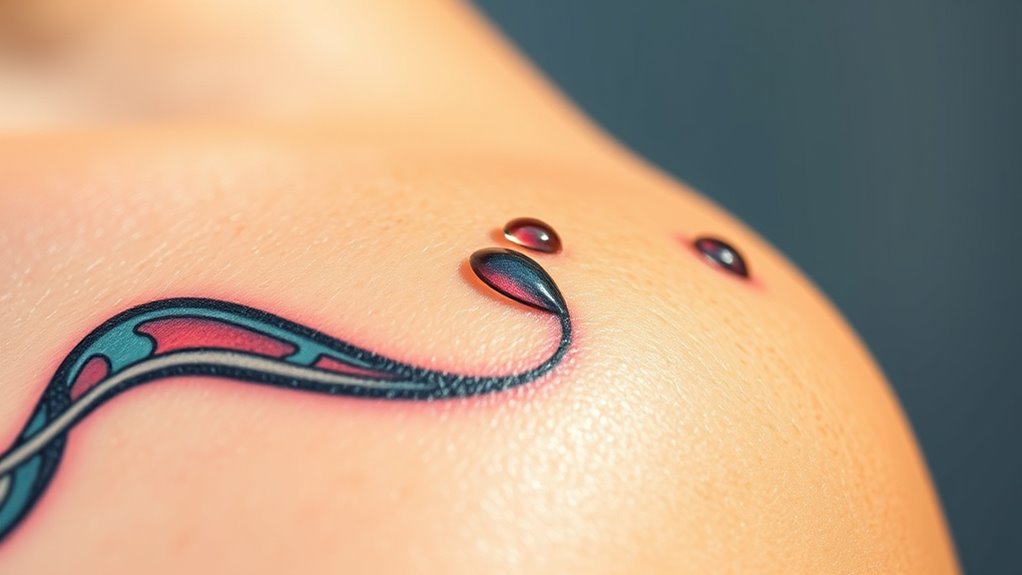
To make your tattoo ink last long, it’s important to choose high-quality ink and follow proper aftercare. Keeping your skin clean and moisturized helps your tattoo heal better and hold its color.
Also, protect your tattoo from sun exposure by applying sunscreen regularly. UV rays can fade colors much faster than you might expect.
Your skin type plays a role too—oily or sensitive skin may cause your tattoo to fade more quickly.
Tattoos naturally fade over time, so touch-ups can keep your design looking sharp and vibrant.
Understanding these factors will help you maintain your tattoo’s look for years to come. Taking good care of your ink means enjoying your artwork longer!
Key Takeaways
- High-quality tattoo ink with finely ground pigments lasts longer and maintains vibrant colors over time.
- Proper aftercare, including cleaning, moisturizing, and avoiding sun exposure, significantly extends tattoo ink longevity.
- Tattoos on areas with less friction and thicker skin tend to retain ink better and fade more slowly.
- Regular use of sunscreen protects tattoos from UV damage, preventing premature fading of colors.
- Touch-ups are often necessary to restore faded ink and maintain the tattoo’s sharpness and vibrancy.
Factors That Influence Tattoo Ink Longevity
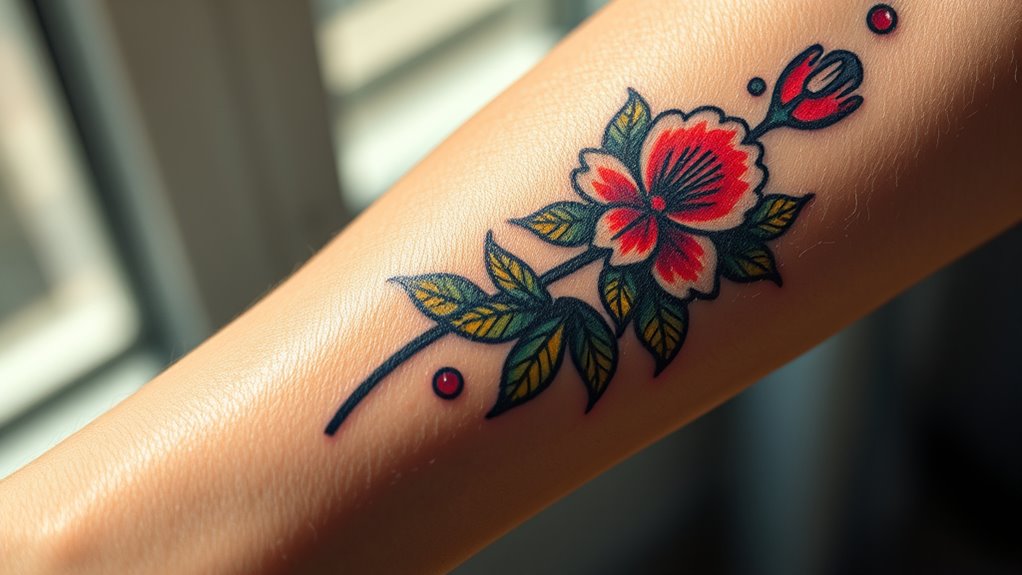
Although tattoo ink is designed to last, several key factors influence how long your tattoo stays vibrant. Your skin type plays a major role; oily or dry skin can affect how the ink settles and fades.
Placement matters too—areas with frequent friction, like hands or feet, tend to fade faster. Sun exposure breaks down ink pigments, so you’ll want to protect your tattoo with sunscreen.
How well you care for your tattoo during healing also impacts its longevity; keeping it clean and moisturized helps prevent premature fading. Lastly, your body’s immune system gradually breaks down ink particles, varying from person to person.
The Role of Ink Quality in Tattoo Durability
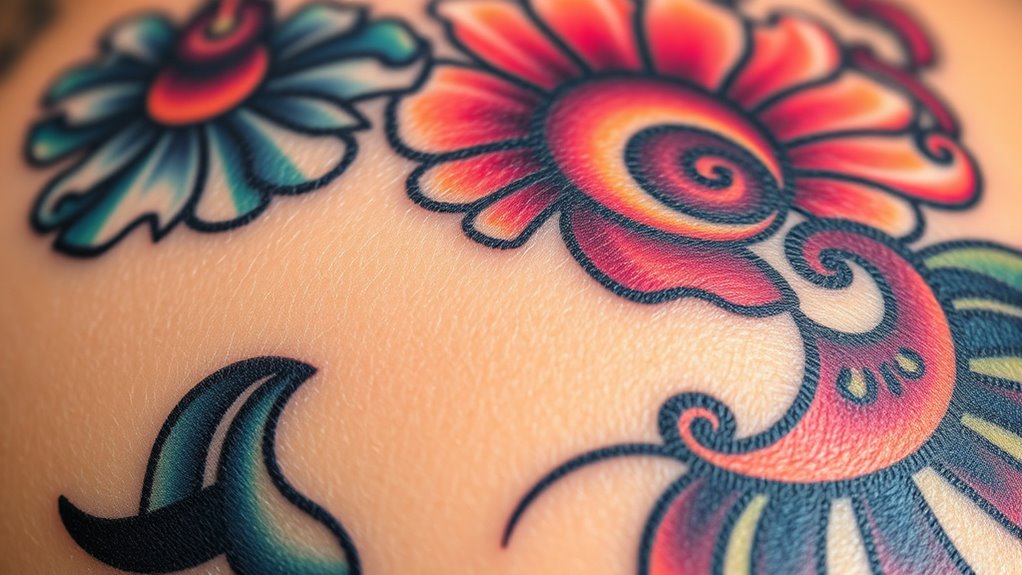
When you choose high-quality tattoo ink, you give your artwork a better chance to stay vibrant and clear over time. Premium inks contain finely ground pigments that resist fading and maintain their color longer than lower-grade options.
They’re also formulated to be safe and stable under your skin, reducing the risk of allergic reactions and ink migration. Cheaper inks often use fillers or low-quality pigments that break down faster, causing your tattoo to blur or lose sharpness.
How Skin Type Affects Tattoo Fading
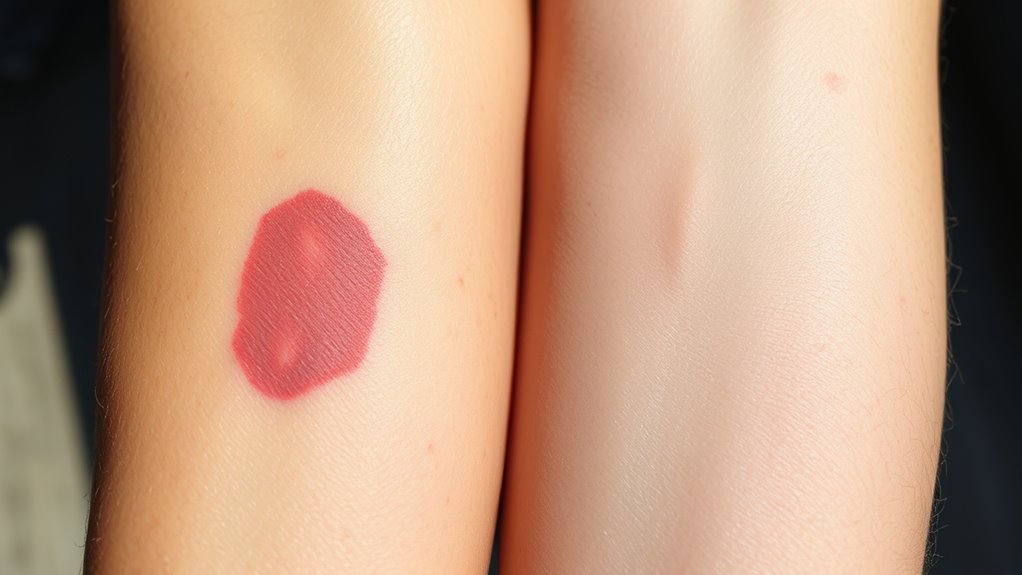
Choosing high-quality ink sets a strong foundation for your tattoo’s longevity, but how your skin interacts with that ink also plays a big role in fading.
If you have oily skin, the excess sebum can cause ink to blur and fade faster, as it breaks down pigments more quickly. Dry skin, on the other hand, might lead to flaking during healing, which can pull out ink and dull your tattoo’s appearance.
Sensitive skin may react more strongly to the tattooing process, potentially causing uneven healing and affecting the final look. Additionally, the thickness and elasticity of your skin influence how deeply ink settles, impacting color retention.
Understanding your skin type helps you take better care of your tattoo to preserve its vibrancy longer. So, knowing what your skin needs can really make a difference!
Impact of Sun Exposure on Tattoo Vibrancy
Since your skin is constantly exposed to sunlight, understanding how UV rays affect your tattoo is essential for keeping its colors vibrant. UV rays break down the ink pigments, causing your tattoo to fade faster than it would otherwise.
When your tattoo spends too much time in direct sunlight without protection, its sharp lines and bright hues can blur and dull over time. You might notice that colors like red and yellow fade quicker, while black tends to hold up better but still loses intensity.
To preserve your tattoo’s vibrancy, be mindful of how often it’s exposed to the sun throughout the day. Limiting unprotected sun exposure can considerably slow down the fading process and keep your tattoo looking fresh longer.
Proper Aftercare to Extend Tattoo Life
Although getting a tattoo is just the start, how you care for it afterward plays a crucial role in how long it stays vibrant and sharp. Right after getting inked, keep the tattoo clean and moisturized with a fragrance-free lotion to prevent dryness and peeling.
Avoid picking at scabs—they protect your skin while it heals. Steer clear of soaking your tattoo in water, like swimming or baths, for at least two weeks to prevent ink fading and infection.
Wear loose clothing over the tattoo to reduce irritation. Over time, continue moisturizing regularly and always apply broad-spectrum sunscreen when exposed to sunlight to shield your tattoo from fading.
When and Why Touch-Ups Are Necessary
Even with the best aftercare, tattoos can lose their vibrancy over time due to skin regeneration, sun exposure, and daily wear. You’ll need touch-ups to keep your tattoo looking fresh and sharp.
Tattoos fade naturally from skin renewal and sun exposure—touch-ups help keep your ink vibrant and sharp.
Knowing when and why to schedule them helps maintain your ink’s longevity. It’s all about keeping that design looking as good as the day you got it.
Here are three key reasons to contemplate a touch-up:
- Fading Colors: Over time, pigments break down and fade, especially in areas exposed to sunlight.
- Blurring Lines: Fine details may blur as your skin ages or stretches.
- Healing Issues: If your tattoo didn’t heal perfectly, some spots might have gaps or uneven color.
Touch-ups restore color vibrancy and definition, ensuring your tattoo stays vibrant for years to come. So, think of them as a little refresh to keep your ink poppin’!
Frequently Asked Questions
Can Tattoo Ink Cause Allergic Reactions?
Yes, tattoo ink can cause allergic reactions, especially if you have sensitive skin or allergies to certain pigments.
You might experience redness, itching, or swelling, so it’s important to do a patch test before getting tattooed.
Better safe than sorry, right? Taking that extra step can help you avoid any unpleasant surprises later on.
Are There Any Health Risks Associated With Tattoo Ink?
Yes, you can face health risks from tattoo ink, like allergic reactions, infections, or skin irritation.
Always choose a reputable artist who uses sterile equipment and high-quality ink to minimize these risks and stay safe.
How Is Tattoo Ink Removed if Desired?
You can remove tattoo ink using laser treatments that break down the pigment, allowing your body to absorb it. Multiple sessions are usually needed.
And, just so you know, some tattoos might not fully disappear. But the fading definitely improves with time.
Do Different Ink Colors Last Longer Than Others?
Yes, darker colors like black and blue generally last longer than lighter ones like yellow or white. You’ll notice lighter inks fading faster, so choose colors wisely if you want your tattoo to stay vibrant over time.
It’s kind of like picking paint for a room—you want something that holds up well. So, if longevity matters to you, sticking with those deeper shades is usually the way to go.
Can Tattoo Ink Migrate or Blur Over Time?
Yes, tattoo ink can migrate and blur over time. You’ll notice it spreading, you’ll notice it fading, you’ll notice it losing sharpness.
Proper care, tattoo placement, and quality ink help you keep your design crisp longer. Taking care of your tattoo is key to maintaining its look.
Conclusion
Want your tattoo ink to last as long as possible? It all comes down to a few key factors: choosing high-quality ink, understanding your skin type, protecting your tattoo from the sun, and following proper aftercare.
You can’t control everything, but you can control how well you care for your tattoo. So, why let your artwork fade when a little effort can keep it vibrant for years?
Taking care now means enjoying your ink longer. Remember, the best way to make your tattoo ink last long is consistent care and protection. Keep it moisturized, avoid excessive sun exposure, and use quality products. Your tattoo is a piece of art—treat it like one, and it will stay bright and beautiful for years to come.