How to Remove Ink From Leather Step by Step
First, identify your leather and ink types to choose a safe cleaning method. This step is crucial because different leathers react differently to cleaning agents, and certain inks may require special treatment.
Then, gather supplies like a soft cloth, rubbing alcohol, and mild leather cleaner.
Test your chosen cleaner on a hidden spot to check for damage. This helps ensure you won’t ruin your leather while trying to remove the ink stain.
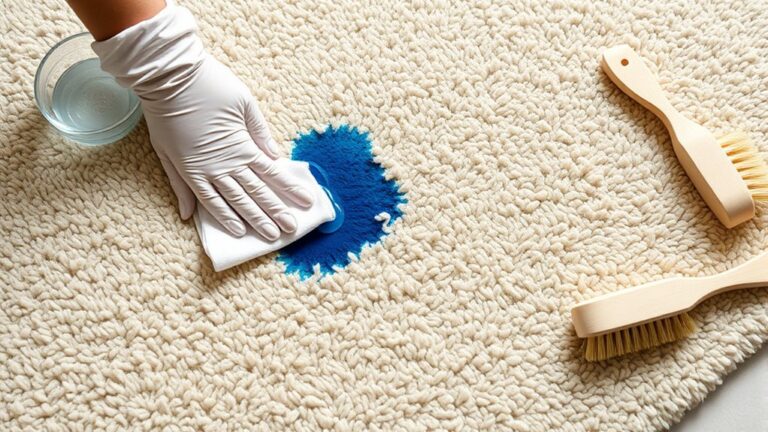
Next, gently blot the ink stain, avoiding soaking the leather. Be patient—rubbing harshly can make things worse.
After the stain lifts, apply leather conditioner to restore moisture and texture. This step keeps your leather soft and looking great after cleaning.
Follow these steps carefully, and you’ll find tips to prevent future ink mishaps that preserve your leather’s look.
Cleaning ink from leather doesn’t have to be stressful when you know the right approach!
Key Takeaways
- Identify leather and ink types to choose the safest and most effective removal method for your specific leather item.
- Test cleaning solutions on a hidden leather area to ensure no discoloration or damage occurs before treating the visible stain.
- Gently blot the ink stain with a soft cloth dampened with rubbing alcohol or mild leather cleaner, avoiding excessive moisture.
- Repeat blotting using clean cloth sections, working from the stain’s edges inward, then allow the leather to air dry naturally.
- Apply a leather conditioner afterward to restore moisture, maintain flexibility, and enhance the leather’s appearance and longevity.
Assess the Type of Leather and Ink
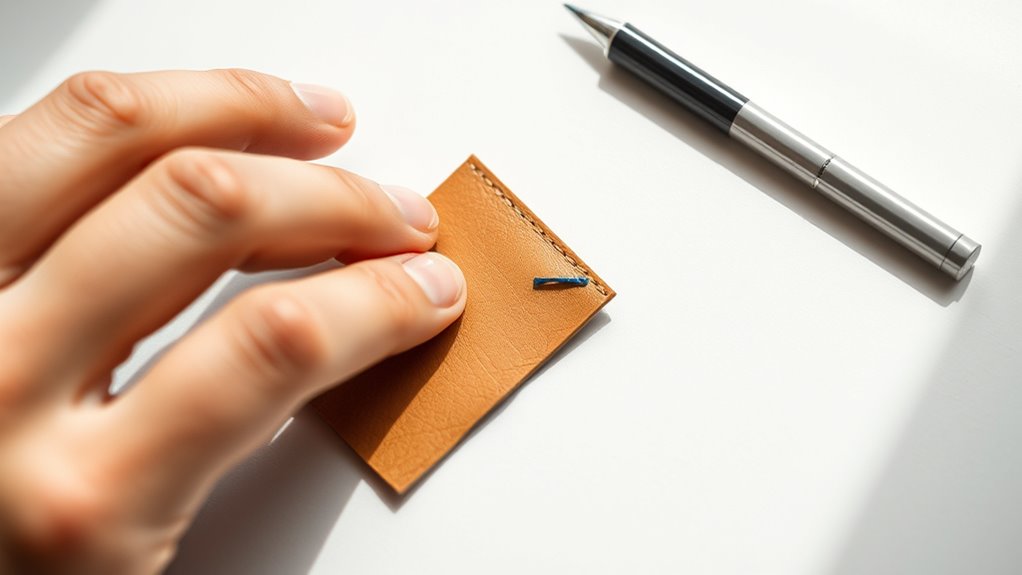
Before you begin removing ink, you need to identify the type of leather and ink involved. Different leathers—like full-grain, top-grain, or suede—react differently to cleaning methods.
Identify your leather and ink type before cleaning to ensure safe and effective stain removal.
Full-grain and top-grain leathers are more durable and can handle gentle cleaning solutions. Suede, on the other hand, is delicate and requires special care to avoid damage.
Next, check the ink type. Permanent marker, ballpoint pen, or gel ink all behave differently and may need distinct treatments.
Knowing this helps prevent worsening the stain or harming the leather. If you’re unsure about the leather or ink, test a small, hidden area first.
Taking this step guarantees you choose the safest and most effective cleaning method for your specific situation.
Gather Necessary Cleaning Supplies
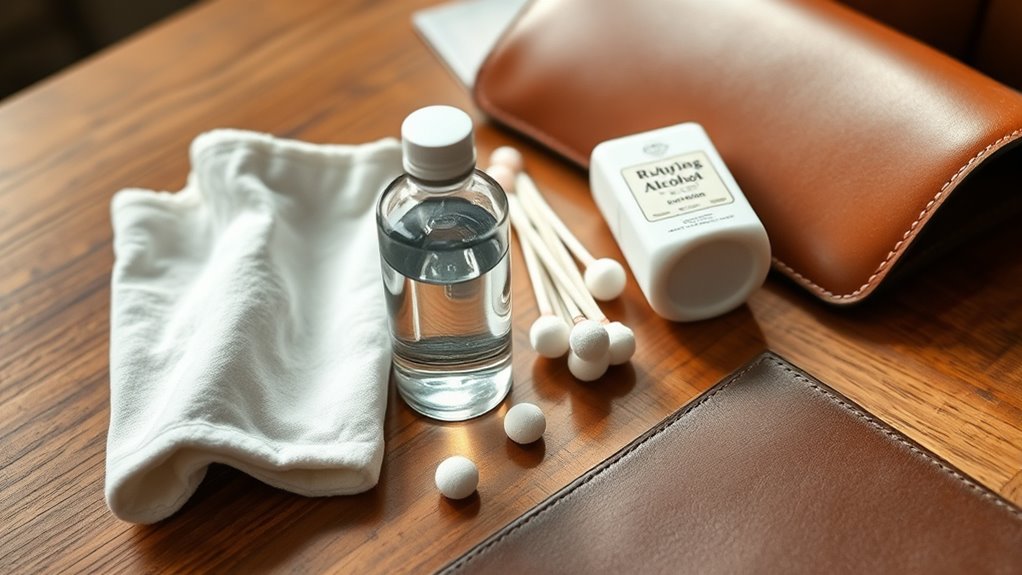
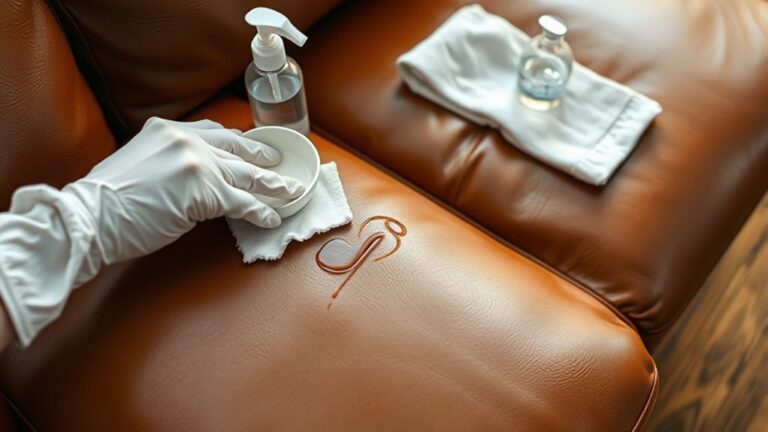
Once you know the type of leather and ink you’re dealing with, gather the right cleaning supplies to tackle the stain effectively. You’ll need a few essentials: a soft, clean cloth or microfiber towel, isopropyl alcohol or rubbing alcohol, cotton swabs, a mild leather cleaner, and a small bowl of lukewarm water.
Having a gentle, unscented soap can help if your leather is sensitive. Avoid harsh chemicals or abrasive tools that can damage the leather’s surface.
Additionally, keep a dry towel nearby to blot moisture and a leather conditioner to restore suppleness after cleaning. Preparing these supplies beforehand ensures you can work quickly and carefully, minimizing the risk of spreading the ink or harming the leather during the removal process.
Test Cleaning Products on a Hidden Area
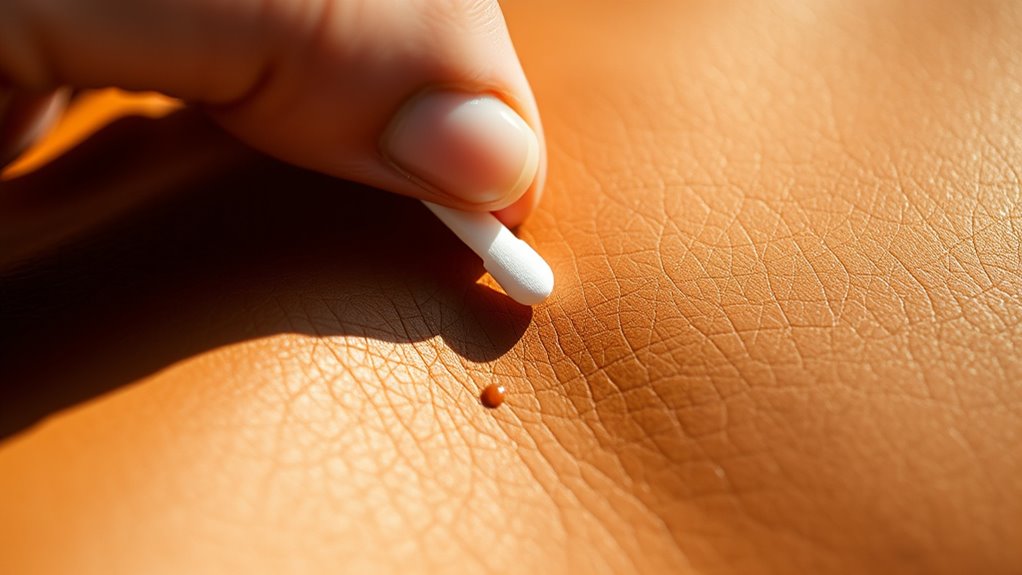
Although it might seem like an extra step, testing cleaning products on a hidden area safeguards you from potential damage.
Before applying anything to the visible ink stain, pick a discreet spot on your leather item, like inside a seam or under a flap.
Apply a small amount of the cleaner and wait a few minutes to check for discoloration, texture change, or damage.
Use the table below to track your results:
| Product Name | Tested Area Location | Result (Safe/Unsafe) |
|---|---|---|
| Leather Cleaner | Inside seam | Safe |
| Rubbing Alcohol | Under flap | Unsafe |
| Baby Wipes | Back pocket | Safe |
This step ensures you protect your leather while effectively removing the ink.
Better safe than sorry, right? Taking this little precaution can save your leather from unwanted harm.
Apply a Gentle Cleaning Solution
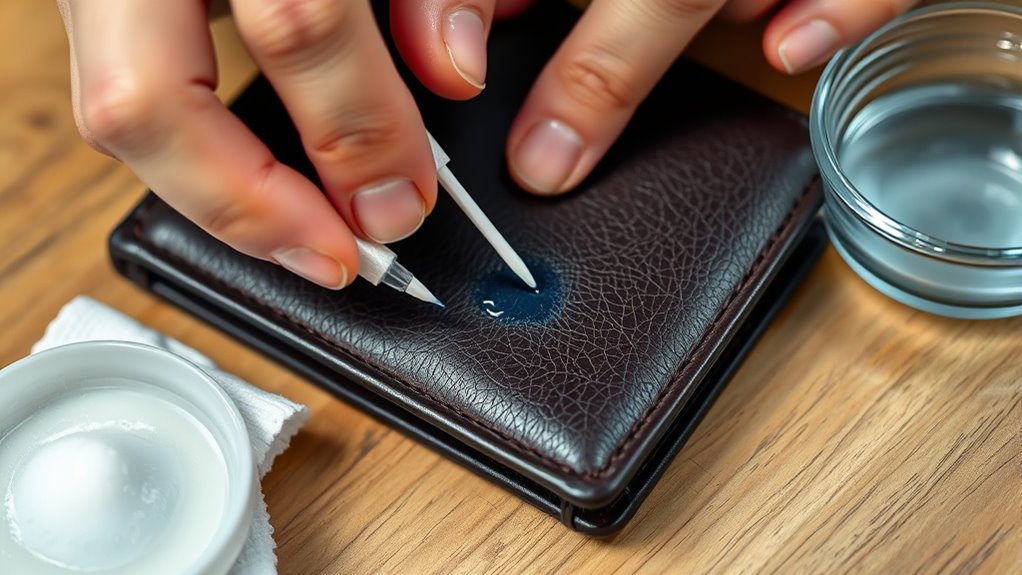
After confirming a cleaning product won’t harm your leather, you can apply a gentle solution to tackle the ink stain. Dampen a soft cloth with the solution—avoid soaking it—and gently blot the stained area. Don’t rub, as this can spread the ink or damage the leather’s surface.
Work from the outside of the stain toward the center to prevent it from spreading. Repeat blotting with fresh cloth sections until the ink starts lifting.
Blot from the stain’s edge inward, using clean cloth areas until the ink lifts gently.
If the stain persists, try a mild mixture of water and a few drops of dish soap or a leather-specific cleaner. Always use minimal moisture and let the leather air dry naturally.
Patience is key; harsh scrubbing or excessive product can worsen the stain or harm the leather’s finish. So, take your time and be gentle with it!
Use a Leather Conditioner After Cleaning
Because cleaning can strip your leather of its natural oils, you’ll want to apply a leather conditioner to restore moisture and keep it supple. After removing the ink, gently rub a small amount of conditioner into the leather using a soft cloth. This prevents drying and cracking, ensuring your leather stays smooth and flexible.
| Step | Action | Tip |
|---|---|---|
| 1. Choose product | Select a conditioner made for leather | Avoid harsh chemicals |
| 2. Apply conditioner | Use a soft cloth | Work in small circular motions |
| 3. Let it absorb | Wait 10-15 minutes | Don’t overapply |
| 4. Buff | Buff with a dry cloth | Enhances shine and softness |
Conditioning keeps your leather looking fresh and extends its lifespan. It’s a simple step that really makes a difference. So, don’t skip it!
Tips for Preventing Future Ink Stains
How can you keep your leather free from ink stains in the future? Start by being mindful when handling pens around leather items—avoid placing uncapped pens on leather surfaces.
Use protective covers or cases for your leather belongings, especially if you often carry writing tools nearby. Regularly clean and condition your leather to maintain its protective layer, which helps resist stains.
If you must write near leather, place a barrier like a cloth or paper beneath your hand to prevent accidental smudges. Finally, store leather items separately from ink products to reduce the risk of spills.
Frequently Asked Questions
Can Ink Stains on Leather Cause Permanent Damage?
Yes, ink stains on leather can cause permanent damage if you don’t act quickly. The ink can soak in and discolor the material, so you’ll want to treat it as soon as you notice the stain.
It’s really all about timing here. The longer you wait, the harder it is to get the stain out. So, grab a cloth or some cleaner and start working on it right away!
Is It Safe to Use Alcohol-Based Cleaners on Leather?
You shouldn’t use alcohol-based cleaners directly on leather; they can dry it out and cause damage.
Instead, test a small hidden area first, and opt for leather-specific cleaners to keep your leather safe and supple.
How Long Does It Take for Ink Stains to Set in Leather?
Ink stains can start setting in leather within minutes, so you’ll want to act quickly. The longer you wait, the harder it gets to remove.
Prompt treatment makes a big difference in results. So, don’t hesitate when you notice a stain! Acting fast really pays off.
Are There Professional Services for Removing Ink From Leather?
Yes, you can find professional services that specialize in removing ink from leather. They’ll use safe, effective techniques to restore your item without damaging it.
Just make sure to choose a reputable cleaner near you. That way, you can trust your leather will be in good hands.
Can Homemade Remedies Damage Leather Surfaces?
Like a storm can wreck a garden, homemade remedies can damage leather if you’re not careful. You shouldn’t use harsh chemicals or scrub aggressively, or you’ll risk discoloration, drying, and weakening the leather’s surface.
It’s kinda like treating leather gently, you know? Being too rough or using the wrong stuff can mess it up pretty quick. So, always be cautious when trying out any DIY treatments on your leather items.
Conclusion
Remember, “a stitch in time saves nine.” By acting quickly and carefully following these steps, you can effectively remove ink from your leather without causing damage.
Always assess your leather type and test products first. This helps ensure you don’t accidentally ruin the material. After cleaning, finish with a conditioner to keep your leather soft and supple.
With a little patience and the right approach, you’ll protect your leather’s beauty and prevent future stains. Keeping these ink removal tips handy will save you time and frustration.
So, when you need to remove ink from leather, remember to act fast, use gentle methods, and always condition afterward. This way, your leather stays looking fresh and lasts longer. You’ll be glad you took the time to care for your leather properly!