
How Do You Remove Ink From Leather Step by Step
First, identify your leather type and the kind of ink stain you’re dealing with. Gather soft cloths, mild leather cleaner, rubbing alcohol, and cotton swabs before you start. It’s important to test your chosen cleaning method on a hidden spot to make sure it won’t damage the leather.
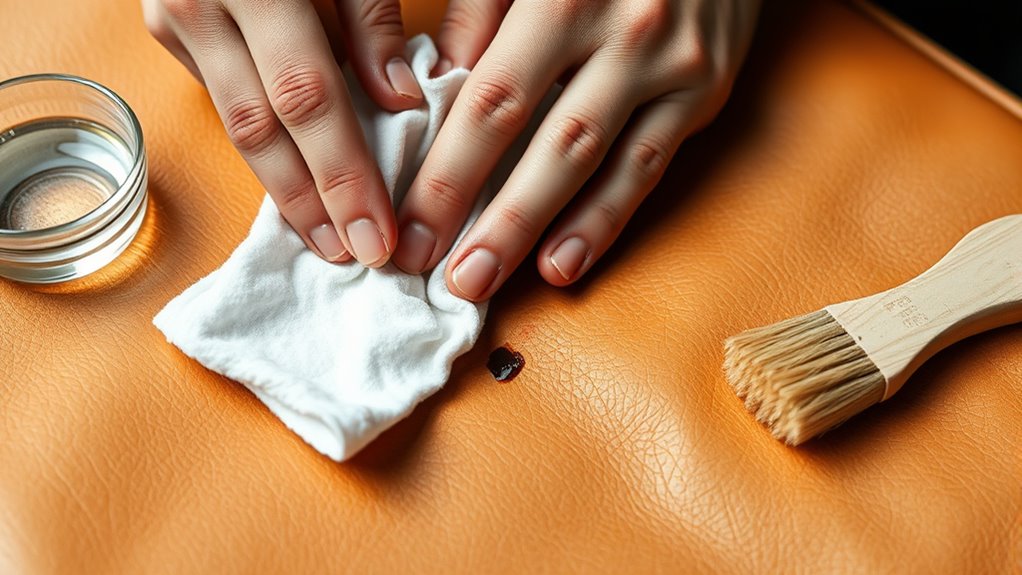
Next, gently dab the ink stain with rubbing alcohol. Start from the outside and work your way inward to avoid spreading the stain around.
After that, wipe the area with a damp cloth to remove any residue.
Let the leather dry completely, then apply a conditioner to restore moisture and bring back the leather’s natural shine.
If you want more detailed tips on how to remove ink from leather, keep reading—we’ve got you covered with step-by-step advice!
Key Takeaways
- Identify leather type and ink freshness to choose the appropriate cleaning method for the best results.
- Test any cleaning solution on a hidden leather area to prevent damage or discoloration.
- Use a soft cloth with a mild leather cleaner or rubbing alcohol, dabbing gently from the outside inward.
- Wipe the treated area with a damp cloth to remove residue and avoid spreading the ink stain.
- Allow the leather to air dry, then condition and buff it to restore moisture and shine.
Assessing the Type of Leather and Ink Stain
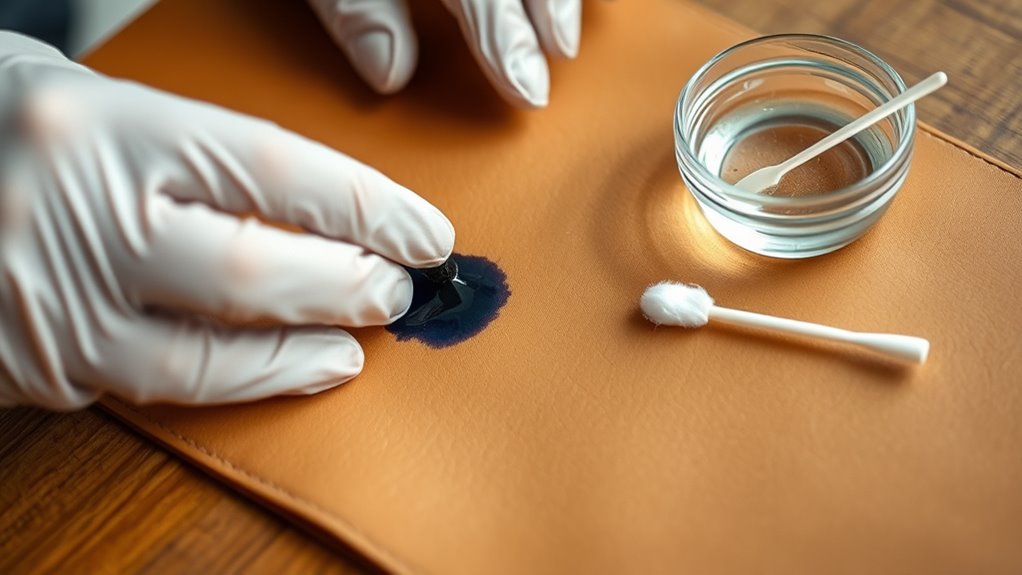
Before you begin removing ink from leather, you need to identify the type of leather and the ink stain you’re dealing with. Different leathers—like aniline, semi-aniline, and pigmented—react differently to cleaning methods.
For example, aniline leather absorbs liquids quickly and is more delicate, so harsh treatments can damage it. Next, examine the ink stain: Is it fresh or dried? Ballpoint pen ink behaves differently than permanent marker or printer ink.
Fresh stains are easier to treat, while dried ones may require more careful consideration to avoid spreading. By evaluating both the leather type and the ink’s nature, you’ll choose the safest, most effective cleaning approach. This way, you prevent further damage and keep your leather item in good condition.
Gathering Necessary Cleaning Supplies
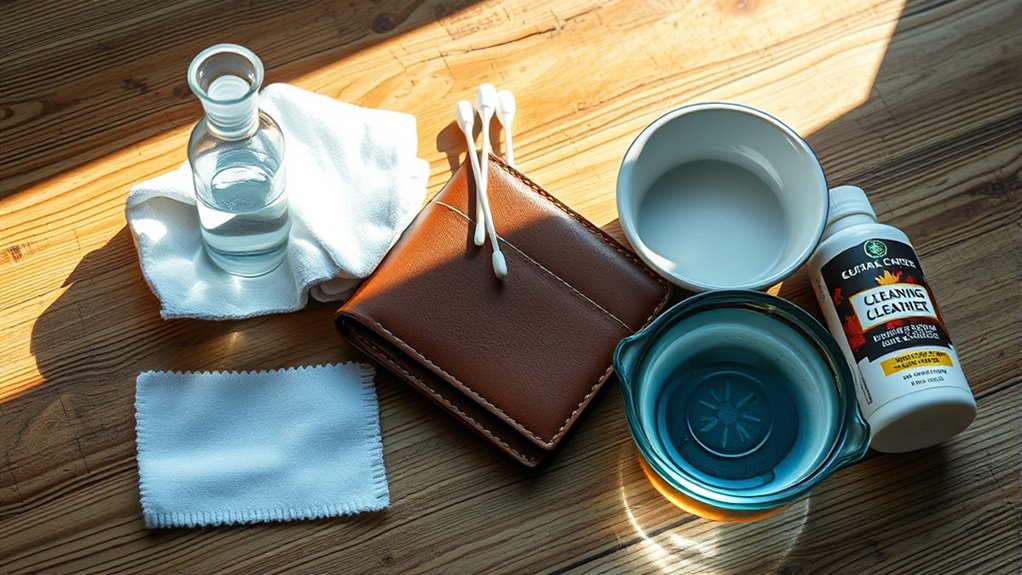
Understanding the type of leather and ink stain helps you choose the right cleaning supplies for the job. Gather soft, lint-free cloths to avoid scratching the leather.
Knowing your leather and stain type guides you to the best, gentlest cleaning supplies.
You’ll need a mild leather cleaner or saddle soap, which gently lifts stains without damaging the surface. Have isopropyl alcohol or rubbing alcohol on hand for tougher ink marks, but use it sparingly.
A cotton swab works well for precise application. Also, keep a small bowl of distilled water ready for diluting solutions or rinsing.
Avoid harsh chemicals or abrasive tools that could harm the leather’s finish. Finally, get a leather conditioner to restore moisture and protect your leather after cleaning.
Having these supplies ready ensures you tackle the stain effectively and safely. It’s all about being prepared and gentle with your leather.
Testing Cleaning Methods on a Hidden Area
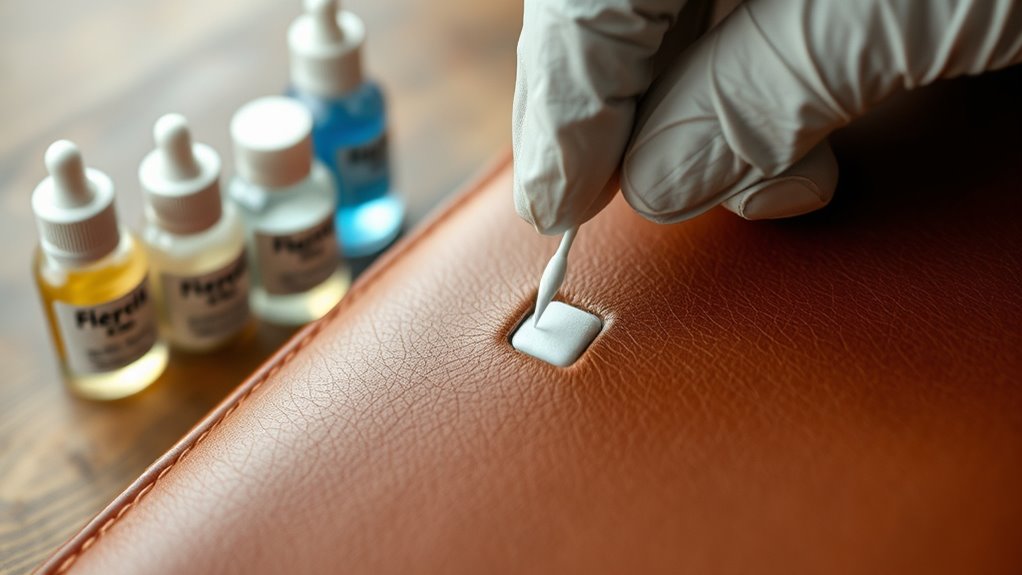
Since leather varies in texture and finish, you’ll want to test any cleaning method on a hidden area first. This step helps prevent damage or discoloration on the visible parts of your leather item.
Here’s how to do it effectively: choose a discreet spot like the inside seam or underside. Then, apply a small amount of your cleaning solution using a cotton swab or soft cloth.
Wait a few minutes to observe any changes in color, texture, or sheen. If the leather shows no adverse effects, you can proceed with the cleaning method confidently.
But if you notice any damage or discoloration, try a milder solution or a different approach before treating the ink stain. Testing guarantees you protect your leather’s appearance while cleaning.
Applying a Gentle Cleaning Solution
Choose a cleaning solution that’s safe for leather to avoid damage. You’ll want to apply it gently using a soft cloth or cotton swab to target the ink stain.
Taking your time with careful application helps protect the leather’s finish while lifting the ink. Just be patient, and you’ll see better results without harming the leather.
Choosing Safe Cleaning Agents
How do you guarantee your cleaning method won’t damage your leather? Choosing safe cleaning agents is vital to protect its texture and color.
You want a product that’s effective yet gentle.
Here’s what you should consider:
- Use pH-balanced cleaners: These maintain leather’s natural oils without causing dryness or cracking.
- Avoid harsh chemicals: Stay away from bleach, ammonia, or alcohol-based cleaners—they can strip and discolor leather.
- Opt for specialized leather cleaners: These are formulated specifically to clean without harming the material.
Proper Application Techniques
Although selecting a safe cleaning agent is crucial, applying it correctly guarantees you won’t damage your leather.
Start by testing the solution on a hidden spot to check for any discoloration. Use a soft, clean cloth or cotton swab to apply the cleaner gently—never pour it directly onto the leather.
Lightly dab the ink stain, working from the outside in to prevent spreading. Avoid scrubbing, which can scratch or wear down the leather’s surface.
Allow the solution to sit briefly, then wipe away with a damp cloth, removing residue without saturating the leather. Finish by letting the area air dry naturally, then condition it to restore moisture.
This careful approach ensures effective ink removal while preserving your leather’s integrity.
Removing Ink Stains With Rubbing Alcohol or Leather Cleaner
When ink stains appear on your leather, using rubbing alcohol or a specialized leather cleaner can effectively lift the mark without damaging the material. You’ll want to act quickly and carefully to avoid spreading the stain.
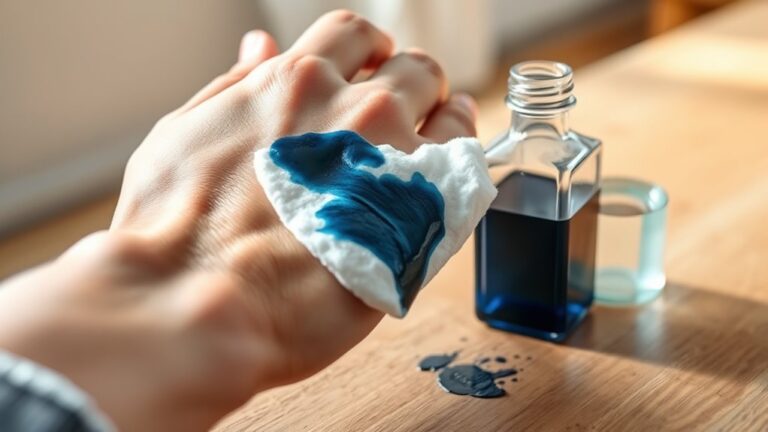
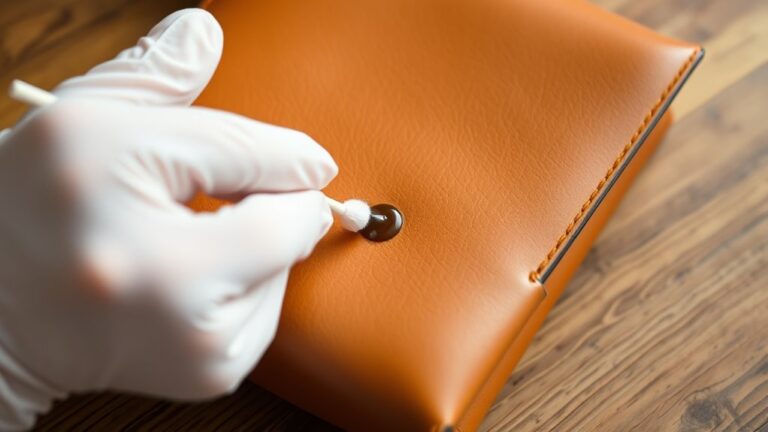
Start by dampening a cotton swab with rubbing alcohol or applying a small amount of leather cleaner to a soft cloth. Then, gently dab the ink stain, working from the outside in to prevent it from spreading.
Next, wipe the area with a clean, damp cloth to remove any residue. Let it air dry completely after that.
Make sure to test the cleaner on a hidden spot first to check it doesn’t discolor your leather. This method works best on fresh stains and can be repeated if necessary, but avoid over-saturating the leather.
Conditioning and Protecting the Leather After Cleaning
After removing ink stains, you’ll want to choose the right conditioner to restore your leather’s softness and prevent cracking.
Apply it evenly with a soft cloth, then buff gently to bring out a natural shine.
Taking these steps helps protect your leather and keeps it looking great for longer.
Choosing the Right Conditioner
How do you guarantee your leather stays soft and vibrant once the ink is gone? Choosing the right conditioner is essential to restore moisture and protect the surface.
Not all conditioners suit every leather type, so pick one designed specifically for your leather’s finish to avoid damage.
Here’s how to choose the best conditioner:
- Identify your leather type—aniline, semi-aniline, or pigmented—and find a conditioner formulated for it.
- Look for natural ingredients like lanolin or beeswax that nourish without clogging pores.
- Avoid harsh chemicals or silicone-based products, which can degrade leather over time.
Applying and Buffing Leather
Applying conditioner evenly and buffing leather gently helps lock in moisture and restore its natural sheen. Start by placing a small amount of conditioner on a clean, soft cloth. Rub it into the leather using circular motions, covering the entire surface to guarantee even absorption.
Don’t over-saturate; a thin layer is enough. Let the conditioner sit for about 10-15 minutes, allowing the leather to soak in the nutrients. Afterward, take a dry microfiber cloth and buff the leather gently.
This step removes excess conditioner and brings out a subtle shine. Regular conditioning keeps your leather supple, prevents cracking, and extends its lifespan. By following this method, you’ll protect your leather and maintain its smooth, polished look after removing ink stains.
Frequently Asked Questions
Can Ink Stains on Leather Cause Permanent Damage if Untreated?
Yes, ink stains on leather can cause permanent damage if you don’t treat them quickly. The ink can soak in, discoloring and weakening the leather, so you’ll want to act fast to prevent lasting harm.
If you let the stain sit, it becomes much harder to remove. So, grabbing a gentle cleaner or a leather-specific treatment right away really helps keep your leather looking good.
Are There Natural Alternatives to Chemical Leather Cleaners?
Yes, you can use natural alternatives like white vinegar, lemon juice, or olive oil to clean leather. Just test on a small area first and gently rub to avoid damaging the leather’s surface.
These options are handy when you want to avoid harsh chemicals. Just remember, a little goes a long way!
How Often Should Leather Be Conditioned After Cleaning?
Like watering a thirsty plant, you should condition your leather every 3 to 6 months after cleaning. This keeps it supple and prevents cracking.
Doing this ensures your leather stays soft and vibrant over time. It’s a simple step that really makes a difference!
Can Ink Removal Methods Vary by Leather Color?
Yes, ink removal methods can vary by leather color since lighter shades show stains more easily.
You’ll want to test any cleaner on a hidden area first to avoid discoloration or damage before treating the ink spot.
Is Professional Leather Cleaning Necessary for Severe Ink Stains?
About 70% of severe ink stains resist home treatments, so yes, you should get professional leather cleaning for tough stains.
They’ll use specialized products and techniques, ensuring your leather stays intact and looks great again.
Conclusion
Now that you’ve tackled that stubborn ink stain, you’re basically a leather-cleaning superhero! Remember, always assess your leather type first and test your cleaning method in a hidden spot before diving in. Being gentle with solutions like rubbing alcohol or leather cleaner is key to avoiding damage.
Don’t skip conditioning afterward—your leather deserves some love to stay soft and protected. Conditioning helps maintain the leather’s natural oils and keeps it looking supple. With these steps, you’ll keep your leather looking flawless, like new, no matter what ink mishaps come your way!
So, whenever you wonder how to remove ink from leather, just follow these simple steps carefully. Testing, gentle cleaning, and proper conditioning are your best bets for success. This way, your leather items stay beautiful and ink-free for years to come!