
How to Get Pen Ink Out of Skin Step by Step
To get pen ink off your skin, the first step is to identify the type of ink. Knowing this helps you pick the best removal method.
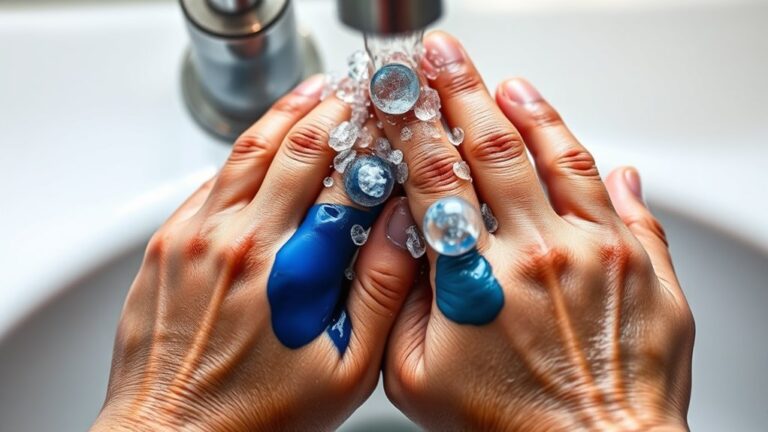
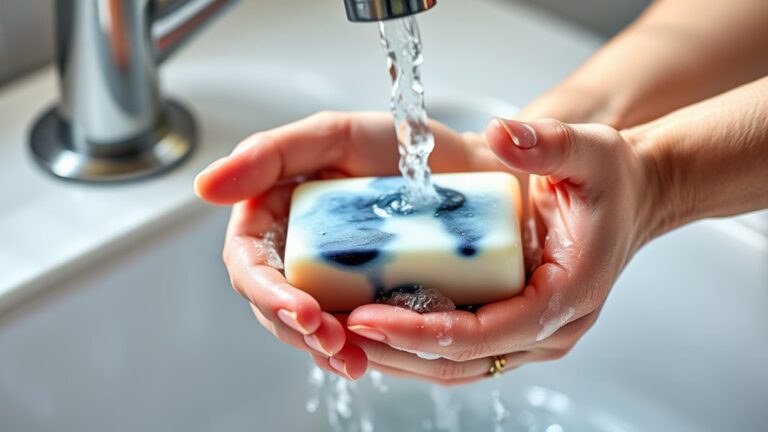
Start by washing the area with mild soap and warm water. Gently rub in small circles to lift the ink.
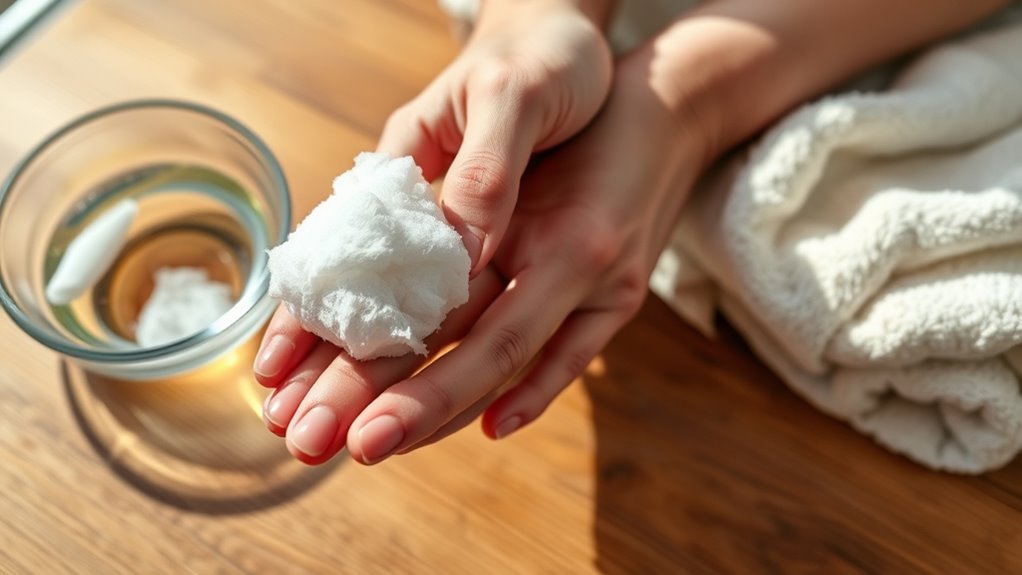
If the ink is still there, try applying rubbing alcohol or hand sanitizer on a cotton ball. Then, gently rub the stained spot.
Sometimes, stubborn ink requires a bit more effort. You can use natural remedies like a baking soda paste or lemon juice to help break down the ink.
Once the ink is gone, don’t forget to moisturize your skin. This soothes and protects the area after cleaning.
Keep reading to discover more handy tips and important safety precautions when removing pen ink from your skin.
Key Takeaways
- Identify the ink type (ballpoint, felt-tip, gel, or permanent) to choose the safest, most effective removal method. This helps you pick the right approach without damaging your skin.
- Apply rubbing alcohol or hand sanitizer with a cotton ball, gently rubbing the ink in circular motions to loosen it. Be gentle, so you don’t irritate your skin.
- Wash the area with mild soap and warm water, scrubbing softly to remove remaining ink and rinse thoroughly. This cleans off any leftover ink and product.
- Pat the skin dry and apply a fragrance-free moisturizer or aloe vera gel to soothe and protect sensitive skin. Your skin will thank you for the extra care.
- Repeat the process if needed, avoid harsh chemicals, and monitor for irritation, seeking medical advice if necessary. It’s better to be safe and keep an eye on how your skin reacts.
Identify the Type of Ink on Your Skin
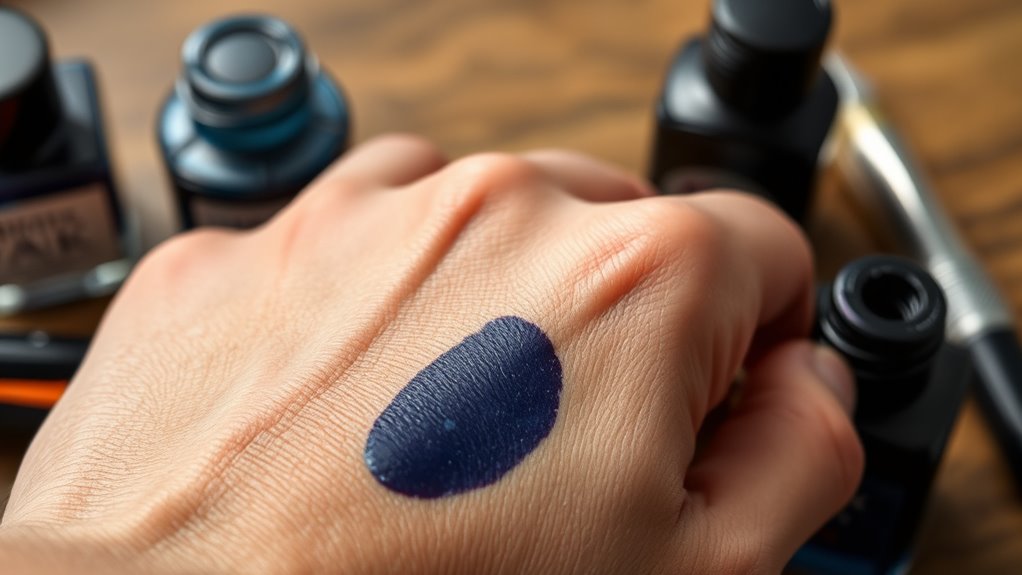
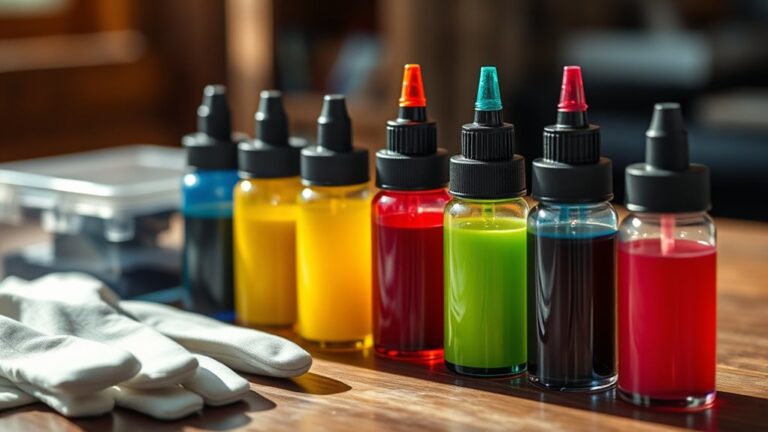
How do you know which method will work best to remove pen ink from your skin? First, you need to identify the type of ink you’re dealing with. Is it from a ballpoint pen, a felt-tip marker, or a gel pen?
Ballpoint ink is oil-based and tends to be more stubborn, while felt-tip or marker ink is water-based and might come off easier. Gel pen ink is a bit trickier because it’s water-soluble but thicker.
Also, consider whether the ink is permanent or washable; permanent ink usually requires stronger removal methods. By recognizing the ink type, you can choose the safest and most effective cleaning approach, avoiding unnecessary irritation or staining.
This step saves time and protects your skin during the removal process.
Gather Household Items for Ink Removal
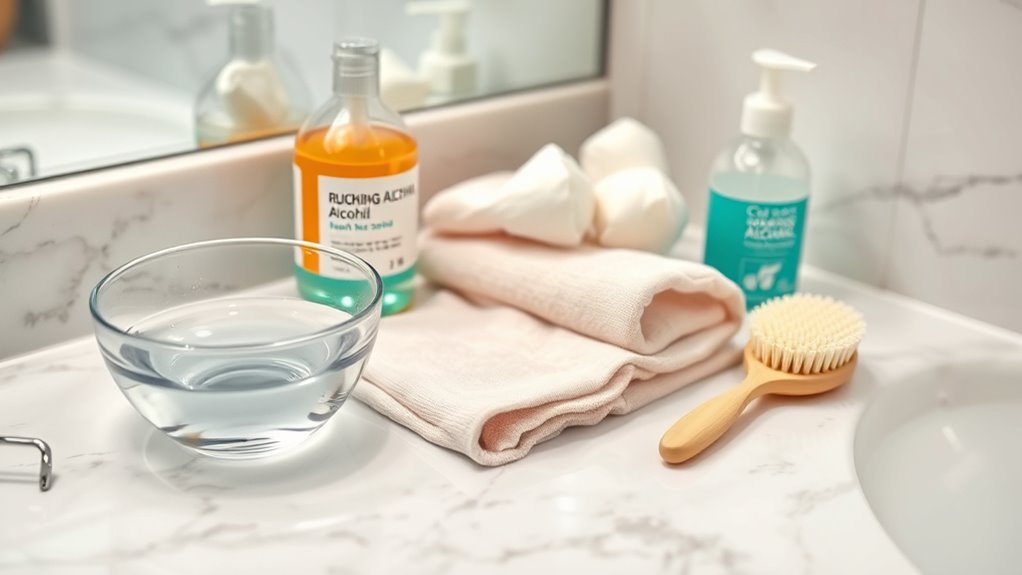
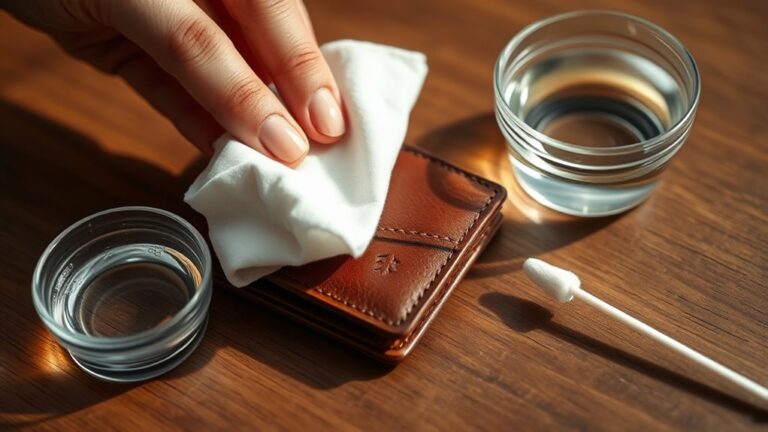
Before you start removing ink, gather some common household ingredients like rubbing alcohol, hand sanitizer, or baking soda. You’ll also need tools such as cotton balls, soft cloths, or a gentle scrub brush to apply these items effectively.
Remember to test a small skin area first to avoid irritation and keep everything safe. It’s always better to be cautious!
Common Household Ingredients
Although pen ink can be stubborn, you can often remove it using common household items you already have. Start by gathering ingredients like rubbing alcohol, hand sanitizer, or even nail polish remover with acetone—they break down ink effectively.
If you prefer gentler options, try applying a bit of coconut oil, olive oil, or baby oil; these help loosen ink without harsh chemicals. Baking soda mixed with water creates a mild abrasive paste that can scrub away stains safely.
Toothpaste, especially the whitening kind, also works well to lift ink from skin. Before you begin, make sure you have clean cotton balls, soft cloths, or paper towels ready to use with these ingredients for best results.
Using these common items can save you a trip to the store and get your skin ink-free quickly. Give it a try—you might be surprised how well it works!
Tools for Application
Since removing pen ink requires gentle but effective application, you’ll want to gather the right tools to make the process easier and more efficient. Start with cotton balls or cotton swabs—they’re perfect for applying cleaning solutions without irritating your skin.
Have a soft washcloth or microfiber towel ready to gently wipe away loosened ink. Rubber gloves can protect your hands if you’re using stronger cleaning agents.
A small bowl for mixing any homemade solutions will keep things tidy. You might also want a soft-bristled toothbrush for stubborn ink spots, but use it carefully to avoid skin irritation.
Finally, keep a bottle of lotion or moisturizer nearby to soothe your skin after cleaning. These simple household items will help you remove pen ink safely and effectively.
Safety Precautions
When you gather household items for ink removal, you need to prioritize safety to protect your skin and avoid irritation. Always test a small skin patch with your chosen product, like rubbing alcohol or hand sanitizer, to check for allergic reactions.
Avoid using harsh chemicals such as bleach or nail polish remover, which can damage your skin. Use gloves if your skin is sensitive or if you’re handling strong substances.
Work in a well-ventilated area to prevent inhaling fumes, especially when using alcohol-based products. Keep all items out of reach of children and pets.
Finally, wash your hands thoroughly after treatment to remove any residual chemicals. By taking these precautions, you’ll safely and effectively remove ink without harming your skin.
Use Soap and Warm Water to Wash Ink
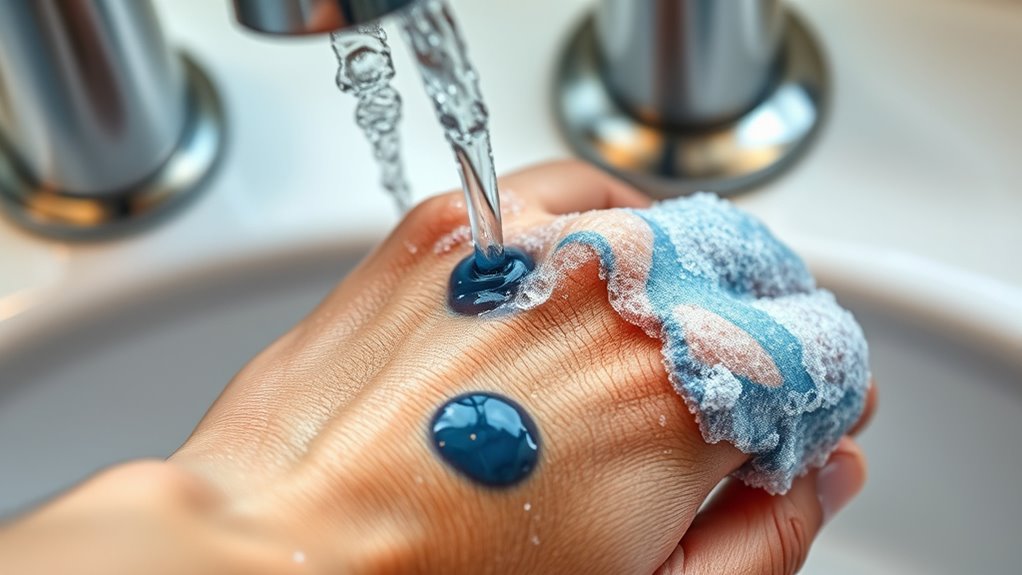
Start by choosing a mild soap to avoid irritating your skin. Use warm water to help loosen the ink without causing discomfort.
Gently scrub the stained area to lift the ink effectively without damaging your skin. It’s all about being gentle but thorough!
Choose Mild Soap
A mild soap can effectively break down pen ink without irritating your skin. When choosing soap, look for options labeled “gentle,” “for sensitive skin,” or “fragrance-free.”
These soaps contain fewer harsh chemicals that might cause redness or dryness. Avoid heavy-duty detergents or antibacterial soaps, as they can strip your skin’s natural oils, making it more prone to irritation.
Using a mild soap ensures you can clean the ink thoroughly while keeping your skin comfortable. Simply apply a small amount to the stained area and lather gently.
This approach helps loosen the ink particles without causing damage. Remember, the goal is to remove ink safely, so selecting the right soap plays a vital role in protecting your skin during the process.
Use Warm Water
Although mild soap is essential, pairing it with warm water helps break down pen ink more effectively on your skin. Warm water loosens the ink particles, making it easier for the soap to lift them away.
Here’s how you can use warm water with soap to tackle that stubborn ink:
- Turn on warm water—make sure it’s comfortable, not hot, to avoid irritating your skin.
- Wet the ink-stained area thoroughly to soften the ink.
- Apply a small amount of mild soap directly to the wet skin.
- Rinse the area under warm water, letting the soap and water wash away the loosened ink.
You might need to repeat the process if the ink doesn’t come off right away. Just be gentle and avoid harsh scrubbing so you don’t irritate your skin.
Gently Scrub Skin
While warm water and soap loosen the ink, you’ll need to gently scrub your skin to fully remove it. Apply a mild soap to the stained area, then use a soft cloth or your fingertips to rub in small, circular motions.
Avoid using harsh scrubbing tools or excessive force, as this can irritate your skin. Focus on the ink spots, working patiently until they start to fade.
Rinse your skin occasionally to check progress and remove loosened ink. If the stain persists, repeat the process a few times, but give your skin breaks to prevent irritation.
Once the ink is gone, rinse thoroughly with warm water and pat dry with a clean towel. Moisturize afterward to soothe your skin and maintain softness.
Apply Rubbing Alcohol or Hand Sanitizer
If you want to quickly break down ink stains on your skin, rubbing alcohol or hand sanitizer can be your best allies. These products contain alcohol that dissolves ink effectively.
Here’s how to use them:
- Pour a small amount of rubbing alcohol or hand sanitizer onto a cotton ball or directly on the stain.
- Gently rub the stained area in circular motions for about 30 seconds.
- Rinse your skin with warm water to remove the dissolved ink and alcohol residue.
- Pat your skin dry and apply moisturizer to prevent dryness or irritation.
Just remember, don’t use too much rubbing alcohol because it can irritate sensitive skin. This method works fast and saves you from stubborn ink marks!
Try Natural Remedies Like Baking Soda or Lemon Juice
When you prefer a gentler approach, natural remedies like baking soda or lemon juice can effectively lift pen ink from your skin without harsh chemicals.
To use baking soda, mix it with a few drops of water until you get a paste. Gently rub this paste onto the ink-stained area in circular motions, then rinse with warm water.
For lemon juice, soak a cotton ball or cloth with fresh lemon juice and dab it onto the ink mark. Let it sit for a minute or two before rinsing off.
Both methods rely on mild abrasiveness and natural acidity to break down ink. Just remember to be gentle, especially if your skin is sensitive.
And don’t over-scrub, so you avoid any irritation.
Moisturize and Care for Your Skin After Cleaning
Because ink removers can dry out your skin, you should moisturize the treated area promptly to restore hydration and soothe any irritation. After cleaning, follow these steps to care for your skin effectively:
- Apply a gentle, fragrance-free moisturizer to prevent dryness and irritation.
- Avoid using harsh soaps or chemicals that can strip natural oils further.
If your skin feels sensitive or inflamed, try using aloe vera gel or a calming lotion. Keep the area clean and avoid scratching or rubbing to let your skin heal properly.
Taking these simple steps will help your skin recover quickly and keep it healthy after removing pen ink. Remember, good aftercare is just as important as the cleaning process itself.
Frequently Asked Questions
Can Pen Ink Cause Allergic Reactions on Skin?
Yes, pen ink can cause allergic reactions on your skin, especially if you’re sensitive to certain chemicals.
You might notice redness, itching, or rash, so it’s best to wash it off quickly and avoid prolonged contact.
Better safe than sorry, right? Just try to keep ink away from your skin as much as possible.
How Long Does Pen Ink Stay on Skin Without Washing?
Ink lingers like a stubborn shadow, usually sticking around for one to three days without washing.
You’ll notice it fades faster with regular handwashing, but if left alone, it might stubbornly cling until natural skin oils break it down.
Is It Safe to Use Nail Polish Remover on Skin Ink Stains?
You shouldn’t use nail polish remover on your skin ink stains often, as it contains acetone, which can irritate or dry out your skin.
If you do, use it sparingly and moisturize afterward to protect your skin. It’s kind of a harsh chemical, so treating your skin gently is key.
Can Children Use the Same Ink Removal Methods as Adults?
You shouldn’t use harsh removers like nail polish remover on kids’ skin. Instead, opt for gentle methods like soap, warm water, or baby oil to avoid irritation.
Always test a small area first for safety. It’s better to be cautious, especially with little ones.
How to Prevent Pen Ink Stains From Happening on Skin?
You can prevent pen ink stains by handling pens carefully and using pens with secure caps.
Try washing your hands before and after writing, and avoid touching wet ink.
Wearing gloves during messy tasks also helps keep ink off your skin.
It’s a simple way to keep your hands clean and stain-free!
Conclusion
Now that you’ve navigated the nuisances of nasty pen ink, you’re ready to refresh your skin with simple solutions. Start by spotting your specific stain, then swiftly select safe substances like soap, sanitizer, or soothing natural scrubs.
Stay steady, scrub smartly, and savor spotless skin. Remember to moisturize to maintain your skin’s smoothness and strength.
With these steps, you’ll skillfully say sayonara to stubborn stains and skin stress! Getting pen ink out of skin doesn’t have to be a hassle when you follow these easy methods. Keep your skin healthy and ink-free by acting quickly and using gentle, effective remedies.