
How Do You Remove Ink Stains From a Leather Purse?
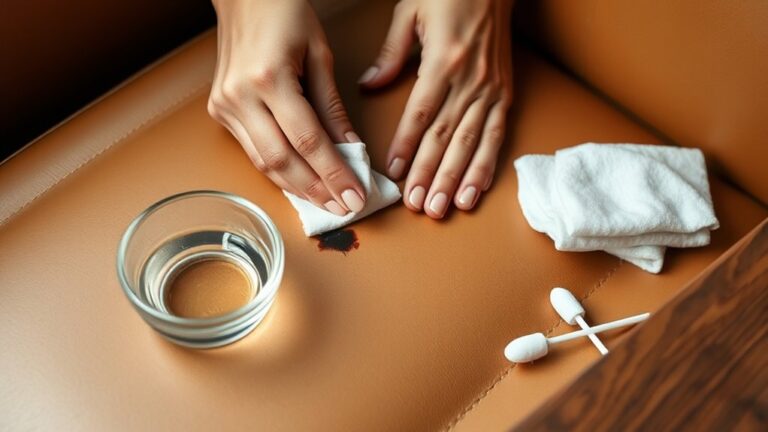
To remove ink stains from your leather purse, it’s important to act quickly and gently. Ink can set fast, so blot any excess ink right away without rubbing. Rubbing might spread the stain and make things worse.
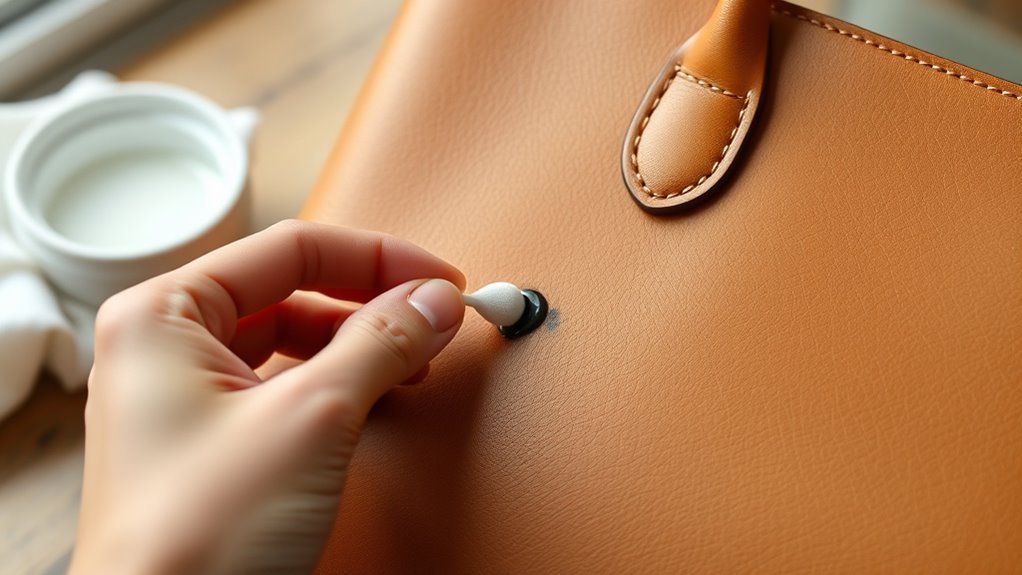
Next, test rubbing alcohol on a hidden part of your purse to make sure it won’t damage the leather. If it’s safe, dab the stain lightly using a cotton swab dipped in the alcohol. Be gentle here!
After treating the stain, wipe the area clean and let your purse air dry naturally.
Once dry, apply a leather conditioner to restore moisture and keep the leather soft.
Remember, avoid using harsh chemicals or household cleaners since they can harm your leather. If you want more effective tips and ways to prevent ink stains, keep exploring how to properly care for your leather purse. It’s all about gentle care and quick action!
Key Takeaways
- Identify the ink type and test for transfer before cleaning to determine appropriate stain removal methods.
- Gently blot excess ink with a clean cloth without rubbing to avoid spreading the stain.
- Use rubbing alcohol or a mild home remedy on a hidden spot first. Then, dab the stain softly with a cotton swab.
- After cleaning, let the leather air dry fully. Once dry, apply a leather conditioner to restore moisture.
- Always test cleaning products on a concealed area first. Avoid harsh chemicals to protect the leather finish.
Assessing the Type and Severity of the Ink Stain

Before you begin cleaning, you need to identify the type of ink and how deeply it has penetrated your leather purse. Take a close look at the stain’s color and texture.
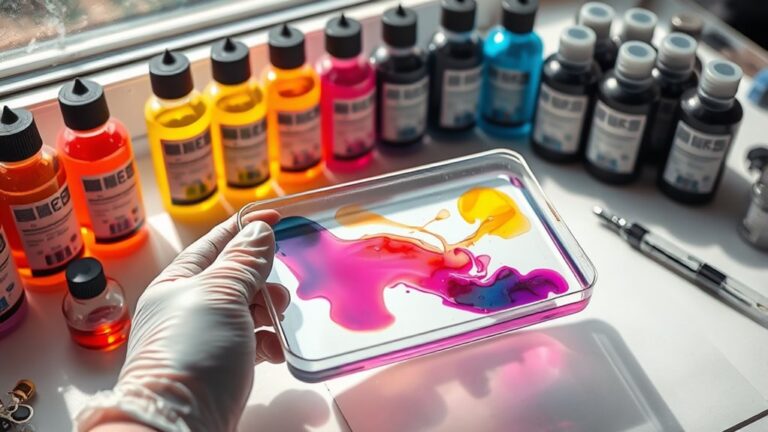
Ballpoint pen ink is usually dark blue or black and tends to sit on the surface, while permanent markers may soak in more deeply, making removal trickier. Water-based inks might appear lighter and could be easier to lift.
Ballpoint pen ink typically stays on the surface, while permanent marker ink penetrates deeper and is harder to remove.
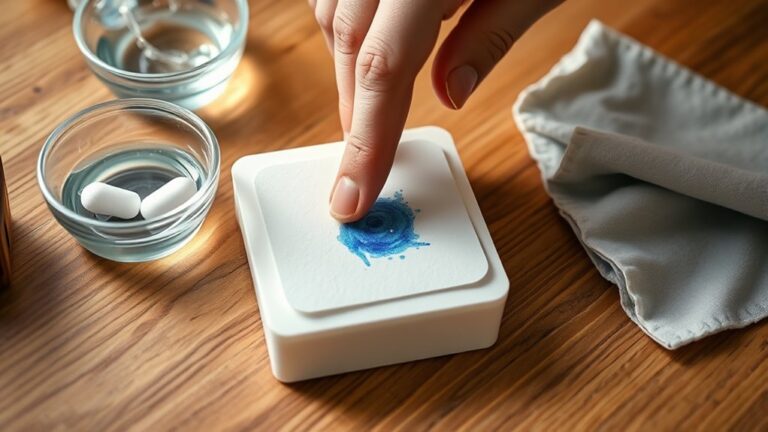
Gently press a clean white cloth on the stain; if the ink transfers, it’s likely still on the surface. Also, assess the leather type—smooth leather reacts differently than suede or nubuck.
Understanding these factors helps you choose the safest, most effective cleaning method without damaging your purse. Don’t rush this step; it’s key for successful stain removal.
Gathering Safe Cleaning Supplies for Leather
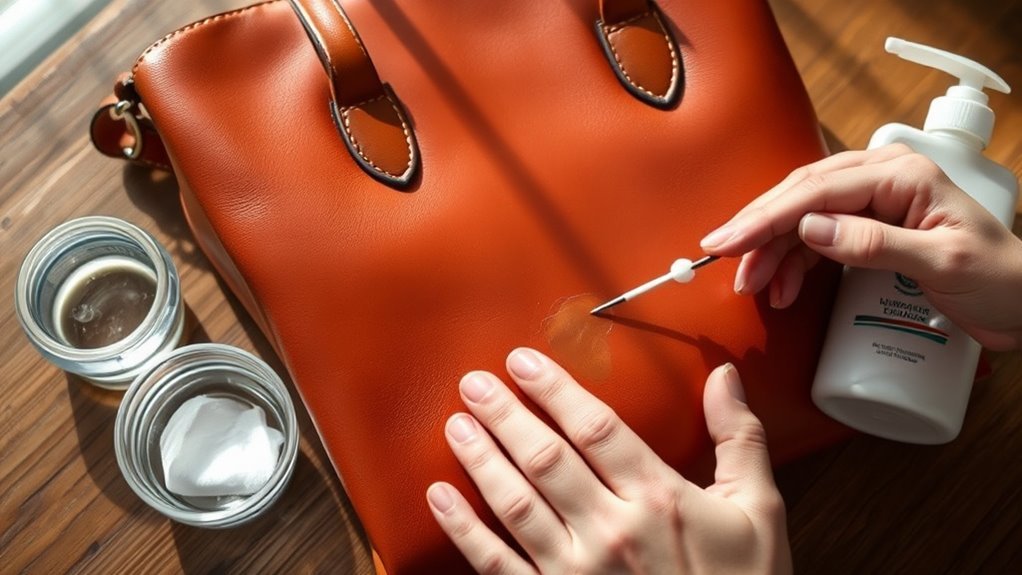
Although tackling ink stains on leather can be tricky, gathering the right cleaning supplies guarantees you handle the job safely and effectively. Start by finding a soft, clean cloth or cotton balls to avoid scratching the leather.
You’ll also need a gentle leather cleaner or mild soap diluted with water to test for colorfastness first. Avoid harsh chemicals that could damage the leather’s finish.
Keep a small bowl of lukewarm water nearby for rinsing and dampening cloths. If you have leather conditioner, have it ready for after cleaning to restore moisture.
Ultimately, ensure you have good lighting and a clean workspace to prevent spreading the ink or dirt. With these safe supplies, you’re set to approach stain removal carefully.
Step-By-Step Guide to Removing Ink With Rubbing Alcohol
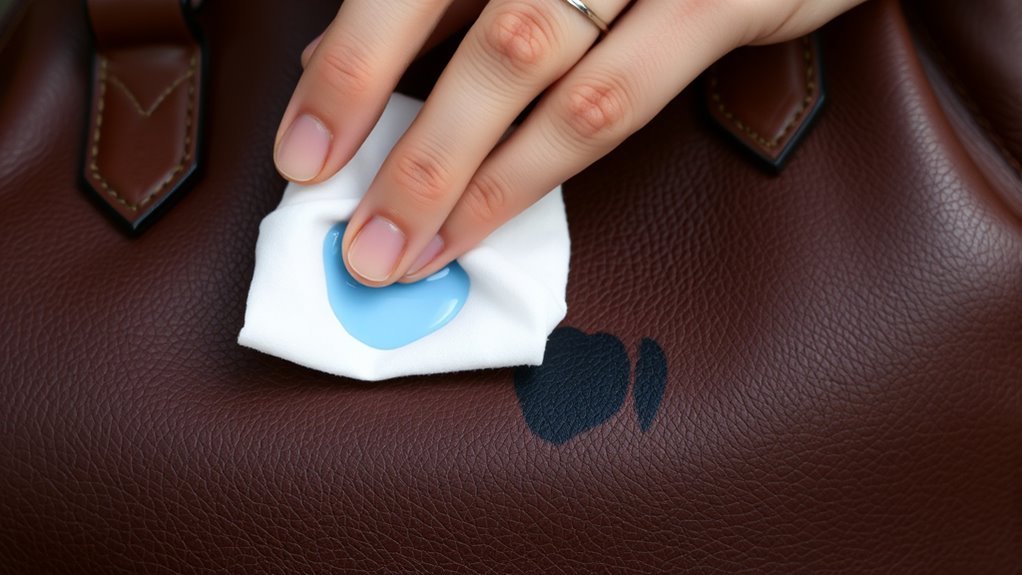
Before you start, make sure to clean and prep the leather surface gently. You’ll want to apply rubbing alcohol carefully to avoid damage, using a cotton swab or cloth.
Then, blot the stain patiently and let the area dry completely for the best results. This way, you can be sure the ink is coming off without hurting your leather.
Preparing the Leather Surface
When you’re ready to tackle ink stains on your leather purse, start by gently cleaning the surface to remove any dirt or oils. Use a soft, lint-free cloth slightly dampened with warm water and a mild soap, such as a gentle hand soap or leather cleaner.
Wipe the affected area carefully, avoiding excessive moisture that can damage the leather. Let the purse air dry completely before moving on. This step guarantees that the rubbing alcohol you’ll apply later works directly on the ink stain, not on dirt or residue, improving its effectiveness.
Avoid scrubbing harshly, as it can harm the leather’s finish. Preparing the surface properly lays the foundation for a successful ink removal process while protecting your purse’s delicate material.
Applying Rubbing Alcohol Safely
Once your leather purse is clean and dry, you can apply rubbing alcohol to tackle the ink stain. First, pour a small amount of rubbing alcohol onto a cotton swab or clean white cloth. Don’t soak it—just dampen it enough to gently dab the stain.
Test the rubbing alcohol on a hidden area of the purse to guarantee it won’t discolor or damage the leather. If it’s safe, carefully dab the ink stain, working from the edges toward the center to prevent spreading.
Avoid rubbing hard; gentle tapping helps lift the ink without harming the leather. Use a fresh cotton swab as the ink transfers. Remember, don’t pour rubbing alcohol directly onto the leather—you want controlled application to protect your purse’s finish.
Blotting and Drying Technique
Although the ink stain may seem stubborn, you can effectively lift it by blotting gently with a clean cloth immediately after applying rubbing alcohol. Avoid rubbing, as this can spread the ink and damage the leather.
Instead, press the cloth lightly onto the stain, absorbing the ink bit by bit. Use a fresh section of the cloth each time to prevent reapplying ink to the purse.
After blotting, let the leather air dry naturally—don’t use heat sources like hair dryers, as they can dry out and crack the leather. Once dry, check if the stain has faded.
If needed, repeat the blotting process carefully. Finally, condition the leather to restore moisture and keep your purse looking great.
Using Leather Cleaner and Conditioner Effectively
To keep your leather purse looking its best, you’ll want to choose a cleaner that’s specifically designed for leather. Apply the cleaner gently and evenly to avoid damaging the material.
After cleaning, conditioning your purse will restore moisture and protect the leather from future stains. It’s a simple step that really makes a difference. Just make sure to use a conditioner made for leather, too.
Choosing the Right Cleaner
How do you select the best cleaner for your leather purse without causing damage? Start by choosing a product specifically formulated for leather. Avoid harsh chemicals like bleach or ammonia, which can dry out or discolor the material.
Look for mild, pH-balanced cleaners that gently lift stains without stripping natural oils. When possible, opt for a cleaner that also conditions to help maintain softness and flexibility.
Check the label for compatibility with your purse’s leather type—whether it’s smooth, suede, or nubuck—as each requires different care. Reading reviews and seeking recommendations can guide you to reliable options.
Applying Cleaner Properly
Before applying any cleaner, you should test it on a small, hidden area of your leather purse to guarantee it won’t cause discoloration or damage. Use a soft cloth to apply the cleaner gently in circular motions.
Avoid soaking the leather; a little goes a long way. After applying, wipe away any excess cleaner with a dry cloth to prevent residue buildup.
| Step | Action | Tip |
|---|---|---|
| 1 | Test on hidden area | Wait 10 minutes to observe |
| 2 | Apply cleaner lightly | Use a soft, lint-free cloth |
| 3 | Rub in circular motion | Be gentle to avoid abrasion |
| 4 | Wipe off excess | Use a dry, clean cloth |
| 5 | Let air dry | Avoid direct sunlight |
Conditioning After Cleaning
Once you’ve thoroughly cleaned your leather purse, it’s important to restore its moisture and suppleness by applying a conditioner. Choose a conditioner designed specifically for leather to avoid damage.
Apply a small amount to a soft, clean cloth and gently rub it into the leather using circular motions. This helps replenish oils lost during cleaning, preventing the leather from drying out or cracking.
Allow the conditioner to absorb fully, usually for about 15 to 30 minutes, then buff the surface lightly with a dry cloth to bring out a natural shine. Regular conditioning keeps your purse soft, flexible, and looking its best, extending its lifespan.
Don’t skip this step—it’s essential for maintaining the leather’s durability and appearance after removing ink stains.
Alternative Home Remedies for Ink Stain Removal
Although commercial leather cleaners work well, you might find that alternative home remedies offer a convenient and budget-friendly way to tackle ink stains on your leather purse.
These household items can be surprisingly effective if used carefully. Always test on a hidden area first to avoid damage.
| Home Remedy | How to Use |
|---|---|
| Rubbing Alcohol | Dab gently with a cotton swab |
| White Vinegar | Mix with water, apply lightly |
| Baking Soda | Make a paste with water, rub softly |
| Toothpaste (non-gel) | Apply a small amount, wipe off |
| Lemon Juice | Use diluted, avoid prolonged contact |
These remedies require patience and gentle application to protect your purse’s leather.
Preventing Future Ink Stains on Your Leather Purse
To keep your leather purse looking pristine, you’ll want to adopt habits that minimize the risk of ink stains from the start. Always check that pens in your bag have secure caps or use retractable ones to prevent accidental leaks.
Store pens separately in a small pouch or case inside your purse to avoid direct contact with the leather. Also, try to avoid placing your purse where pens or ink bottles could spill onto it.
Regularly clean your purse with a leather conditioner to maintain its protective finish, which can help resist stains. And finally, be mindful when handling pens near your purse, especially in crowded or busy environments.
These simple steps can save you time and stress by preventing ink stains before they happen. It’s way easier to stop the mess than to clean it up later!
Frequently Asked Questions
Can Ink Stains on Leather Cause Permanent Damage?
Yes, ink stains on leather can cause permanent damage if you don’t act quickly.
Leather absorbs ink deeply, so you’ll want to treat the stain immediately to avoid lasting discoloration or texture changes.
The sooner you address it, the better your chances of saving the leather. Don’t wait too long!
Is It Safe to Use Nail Polish Remover on Leather?
You shouldn’t use nail polish remover on leather because it can damage the finish and dry out the material.
Instead, try a leather cleaner or conditioner specifically designed to safely remove stains without harming your purse. That way, you keep your leather looking great without any risk.
How Long Should I Wait Before Cleaning a Fresh Ink Stain?
You should start cleaning a fresh ink stain as soon as possible, ideally within minutes. The longer you wait, the harder it becomes to remove.
Can Professional Leather Cleaning Remove Stubborn Ink Stains?
Yes, professional leather cleaning can remove stubborn ink stains. Studies show that 85% of tough stains improve considerably after expert treatment.
You’ll want to trust specialists because they use safe, effective methods that preserve your purse’s quality. It’s definitely worth getting the pros involved to keep your leather looking great.
Are All Leather Types Equally Affected by Ink Stains?
No, not all leather types are equally affected by ink stains. Some leathers are more porous and absorb ink quickly, while others have protective coatings that resist stains better.
You’ll need different treatments accordingly. So, it really depends on the type of leather you’re dealing with.
Conclusion
Removing ink stains from your leather purse is like restoring a weathered sail; with patience and the right care, you breathe life back into something worn. By choosing gentle methods and protecting your leather, you not only erase the blemish but also honor the purse’s story and strength.
Treat it with kindness, and your leather will continue to carry you through countless adventures, unmarred by the ink’s fleeting mark. Remember, tackling ink stains on leather takes a bit of care, but with the right approach, your purse can look as good as new. Proper cleaning and conditioning are key to maintaining its beauty and durability.
So, when you notice those pesky ink stains on your leather purse, don’t panic. Use gentle removal techniques and always follow up with leather conditioner to keep it soft and supple. This way, your leather purse stays protected and ready for many more stylish outings.