
How to Get Ink Off Your Hands Quickly
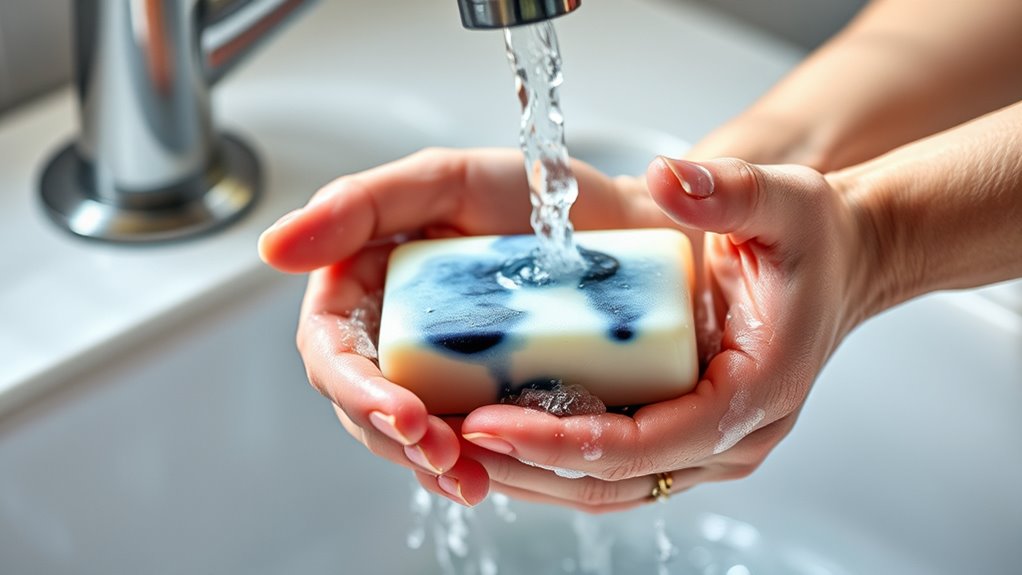
If you get ink on your hands, don’t panic! Getting ink off your hands quickly is easier than you might think. First, rinse your hands with water and use some soap to scrub gently. This helps wash away the fresh ink before it sets in.
For those stubborn ink stains that just won’t budge, try using rubbing alcohol or lemon juice. These natural solutions break down ink quickly and effectively.
You can also mix baking soda with water to create a gentle abrasive paste that helps lift the ink from your skin.
After cleaning, it’s super important to moisturize your hands. Ink removal can dry out your skin, so a good moisturizer keeps your hands soft and healthy. Just avoid harsh scrubbing or strong chemicals—they can cause irritation and make things worse.
Keep these simple tips handy, and next time ink gets on your hands, you’ll know exactly how to handle it quickly and safely!
Key Takeaways
- Rinse hands under warm water and wash with soap immediately to remove fresh ink stains.
- Apply rubbing alcohol or hand sanitizer with alcohol content to dissolve stubborn ink spots.
- Use lemon juice or a baking soda paste to gently scrub and break down ink pigments.
- Avoid harsh scrubbing to prevent skin irritation and repeat cleaning if ink persists.
- Moisturize hands after cleaning to restore skin hydration and prevent dryness.
Common Causes of Ink Stains on Hands
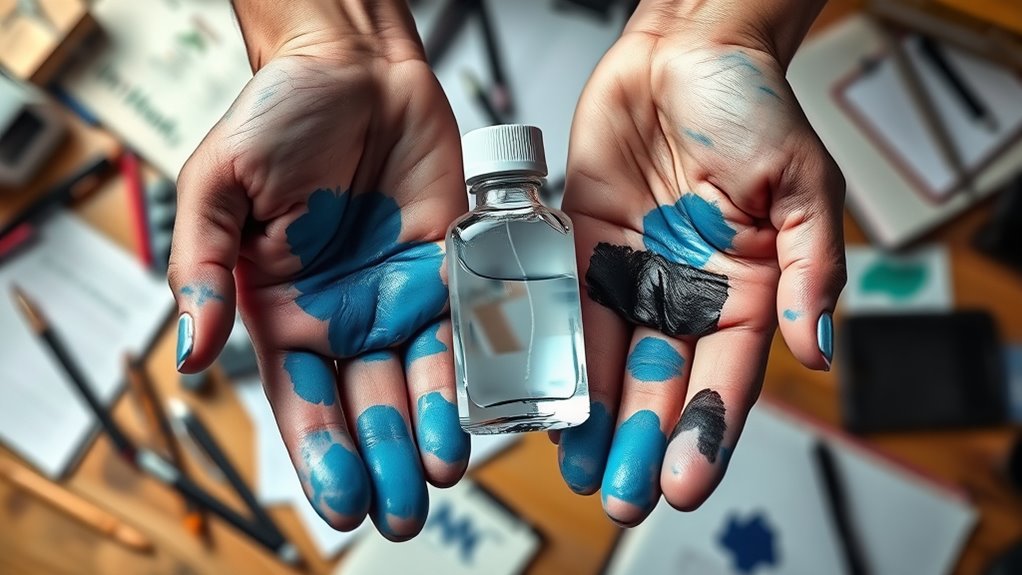
Although ink stains might seem like a minor annoyance, they often happen when you least expect it. You might be jotting down notes, signing documents, or handling a leaky pen, and suddenly, your fingers bear the evidence.
Ink stains commonly occur when pens leak, especially ballpoints or gel pens. If you’re using a fountain pen, ink can smudge easily before it dries.
You may also get stains from handling newspapers or printed materials with fresh ink. Artists and crafters who use markers or ink pads often find ink on their hands too.
Even kids playing with pens or markers can end up with ink stains. Being aware of these common causes helps you stay alert and prepared to deal with ink on your hands.
Immediate Actions to Take After Getting Ink on Your Hands
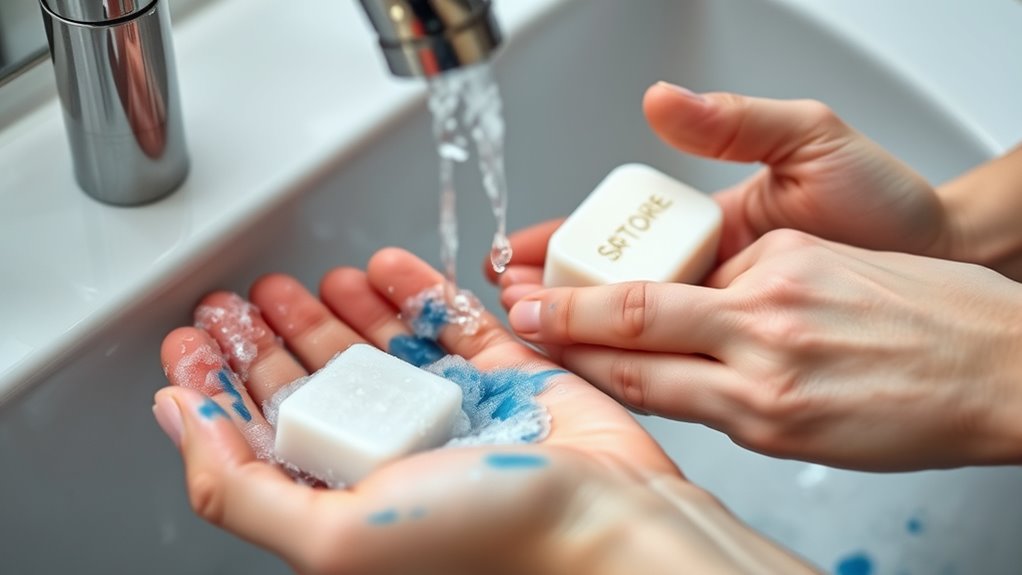
Ink stains can catch you off guard, but acting quickly makes a big difference in removing them. The first thing you should do is avoid rubbing the stain further, as this can spread the ink and make it harder to remove.
Instead, gently blot the area with a clean cloth or paper towel to absorb as much ink as possible. Next, rinse your hands under cool running water to wash away loose ink particles. Don’t use hot water, as it can set the stain.
After rinsing, pat your hands dry with a towel and assess the stain. Taking these immediate steps helps prevent the ink from soaking deeper into your skin, setting you up for easier and more effective cleaning in the next stage.
Using Household Items to Remove Ink
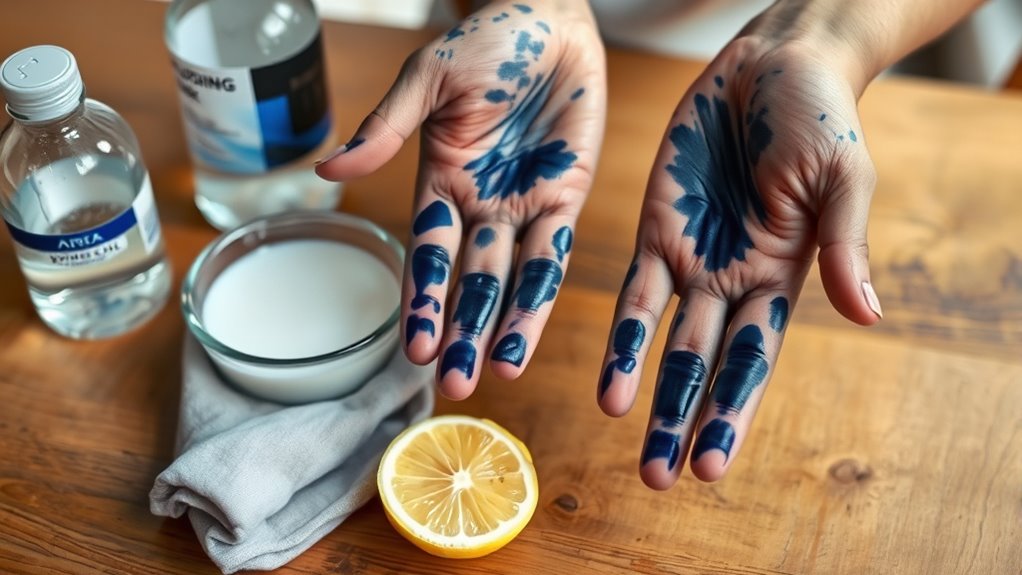
You can quickly remove ink from your hands using common household items like lemon juice. It naturally breaks down ink stains, making it easier to clean up.
Mixing baking soda with water creates a gentle abrasive paste. This helps lift ink away without being too harsh on your skin.
Rubbing alcohol is also effective because it dissolves ink for easy removal. Just be sure to moisturize afterward since it can dry out your skin a bit.
Lemon Juice Effectiveness
Few household items work as effectively as lemon juice when it comes to removing ink from your hands. Its natural acidity breaks down ink pigments, making it easier to wash away.
To use lemon juice, simply squeeze fresh juice onto the stained area, rub gently for a minute, then rinse with warm water. You’ll notice ink fading quickly.
Here’s a quick comparison of lemon juice’s ink removal benefits:
| Feature | Lemon Juice |
|---|---|
| Effectiveness | High; breaks down ink |
| Application | Directly apply and rub |
| Skin Sensitivity | Mild; may cause slight tingling |
| Availability | Common in most kitchens |
| Additional Benefits | Natural, non-toxic cleaner |
Try lemon juice next time—you’ll get ink off your hands fast and naturally.
Baking Soda Paste
Although lemon juice works wonders, baking soda paste offers another powerful and accessible way to lift ink stains from your hands. You just need baking soda and a little water to create a gritty paste that gently scrubs away ink without harsh chemicals.
Here’s why you’ll love this method: It’s safe for sensitive skin, so no worries about irritation. Baking soda’s mild abrasiveness targets ink effectively.
Plus, you probably already have it in your kitchen, ready to use. And it’s quick—just rub, rinse, and watch the ink fade.
Simply mix baking soda with water until you get a thick paste. Apply it to the stained area, then rub gently for about a minute before rinsing.
This simple trick turns a frustrating ink mishap into an easy fix.
Rubbing Alcohol Use
When stubborn ink stains won’t budge, rubbing alcohol can quickly come to your rescue using common household items. Grab some rubbing alcohol and a cotton ball or clean cloth. Dab the alcohol onto the stained areas gently, letting it break down the ink.
Avoid rubbing too hard to prevent skin irritation. After a minute or two, rinse your hands with warm water. If any ink remains, just repeat the process until your skin looks clean.
Rubbing alcohol evaporates fast, so it dries quickly and leaves no oily residue. Remember to moisturize afterward because alcohol can dry out your skin.
This method works well for fresh and dried ink, making it a reliable and easy option to remove those stubborn marks from your hands.
Effective Commercial Products for Ink Removal
If you want a fast and reliable way to remove ink from your hands, commercial products are designed specifically for this purpose. They often work better than household remedies and save you time and frustration.
Here are some effective options to try:
- Ink Remover Wipes: Convenient and quick, perfect for on-the-go fixes.
- Hand Sanitizers with Alcohol: Not just for germs, they break down ink stains effectively.
- Specialized Ink Remover Gels: Formulated to dissolve ink without harsh scrubbing.
- Nail Polish Remover (Acetone-based): Strong but use sparingly to avoid skin dryness.
These products can get rid of stubborn ink swiftly, leaving your hands clean and ink-free. Just follow the instructions, and you’ll avoid lingering stains and irritation.
Tips to Prevent Ink Stains in the Future
To avoid ink stains on your hands, try wearing protective gloves whenever you handle ink. Opt for quick-dry ink to reduce smudging, and keep hand wipes nearby for immediate cleanup.
These simple steps can save you time and hassle in the long run. It’s all about making your life easier and mess-free!
Use Protective Gloves
Because ink stains can be stubborn and frustrating, wearing protective gloves is one of the simplest ways to keep your hands clean. Gloves act as a barrier, preventing ink from touching your skin and making cleanup easier.
Whether you’re handling markers, pens, or printers, gloves save you from the hassle of scrubbing later.
Here’s why you’ll want to use gloves every time:
- Protect your skin from harsh chemicals in inks
- Avoid the embarrassment of visible ink stains
- Save time by skipping intense cleaning sessions
- Keep your hands feeling fresh and comfortable
Choose disposable or reusable gloves depending on your task. You’ll thank yourself for the mess-free hands and peace of mind!
Choose Quick-Dry Ink
Choosing quick-dry ink can save you from smudges and stubborn stains on your hands. When you pick pens with fast-drying ink, you reduce the chance of ink spreading before it sets.
This means less waiting and less risk of accidental smears. Whether you’re jotting notes or signing documents, quick-dry ink minimizes messes by solidifying almost instantly.
Look for pens labeled as “quick-dry” or “fast-drying” at your local store or online. Gel and ballpoint pens often offer quick-dry options.
Keep Hand Wipes Handy
A handy pack of hand wipes can be your best defense against ink stains. When you keep them nearby, you can act fast, stopping ink from setting into your skin.
Whether at your desk, in your bag, or even in the car, having wipes ready means less stress and less mess. Here’s why you should always carry them with you:
- Instant cleanup prevents stubborn stains.
- Easy to use anywhere, anytime.
- Saves you from scrubbing harsh chemicals later.
- Keeps your hands fresh and clean during busy days.
Caring for Your Skin After Ink Removal
Once you’ve removed the ink from your hands, it’s important to care for your skin to prevent irritation and dryness. Start by rinsing your hands with cool water to remove any residue.
Then, gently pat your skin dry with a soft towel—avoid rubbing, which can cause irritation. Apply a fragrance-free moisturizer to restore hydration and soothe any redness or tightness.
If your skin feels particularly sensitive, consider using a healing ointment like petroleum jelly to lock in moisture. Avoid harsh soaps or alcohol-based sanitizers immediately after ink removal, as they can worsen dryness.
Taking these simple steps helps maintain your skin’s natural barrier and keeps your hands feeling comfortable and healthy after ink cleanup. Just a little care goes a long way!
Frequently Asked Questions
Can Ink Stains Cause Allergic Reactions on the Skin?
Yes, ink stains can cause allergic reactions on your skin, especially if you have sensitive skin or allergies to certain chemicals in the ink.
If you notice redness, itching, or swelling, wash it off and avoid further contact.
It’s always a good idea to be cautious and treat your skin gently when dealing with ink stains.
Are Some Ink Types More Harmful Than Others?
Did you know some ink types are more harmful than others? Yes, solvent-based and permanent inks can irritate your skin or cause allergic reactions.
On the other hand, water-based inks are generally safer and less toxic for your hands. So, if you’re worried about irritation, water-based might be the way to go!
How Long Does Ink Typically Stay on Skin Without Treatment?
Ink typically stays on your skin for a few hours to several days without treatment, depending on the ink type and your skin’s oiliness.
You’ll notice it fading gradually as your skin naturally exfoliates. It’s kind of like your skin’s way of gently shaking off the ink over time.
Is It Safe to Use Nail Polish Remover on Ink Stains?
You can use nail polish remover on ink stains, but you shouldn’t overdo it. Also, avoid applying it on broken skin, and don’t leave it on too long.
Use it sparingly and make sure to wash your hands afterward. It’s a handy trick, but a little caution goes a long way!
Can Ink Stains Transfer to Clothes From Stained Hands?
Yes, ink stains can transfer to clothes from your stained hands. To avoid this, wash your hands thoroughly before touching fabrics.
Using gloves or a barrier can also help prevent accidental transfers while handling ink. It’s a simple way to keep your clothes ink-free!
Conclusion
Getting ink off your hands quickly is like wiping fog from a mirror—you just need the right approach to see clearly again. By acting fast, using household items or commercial products, and caring for your skin afterward, you can erase those stubborn stains with ease.
Remember, prevention is your best shield, so keep your hands protected to avoid ink mishaps. Trust me, once you know these quick and easy tricks, you’ll handle ink stains like a pro every time.
So next time you find yourself with ink on your hands, don’t stress. With the right methods, getting ink off your hands quickly is totally doable. Just follow these tips and you’ll be ink-free in no time!