
How Do You Remove Ink From Hands Quickly and Safely?
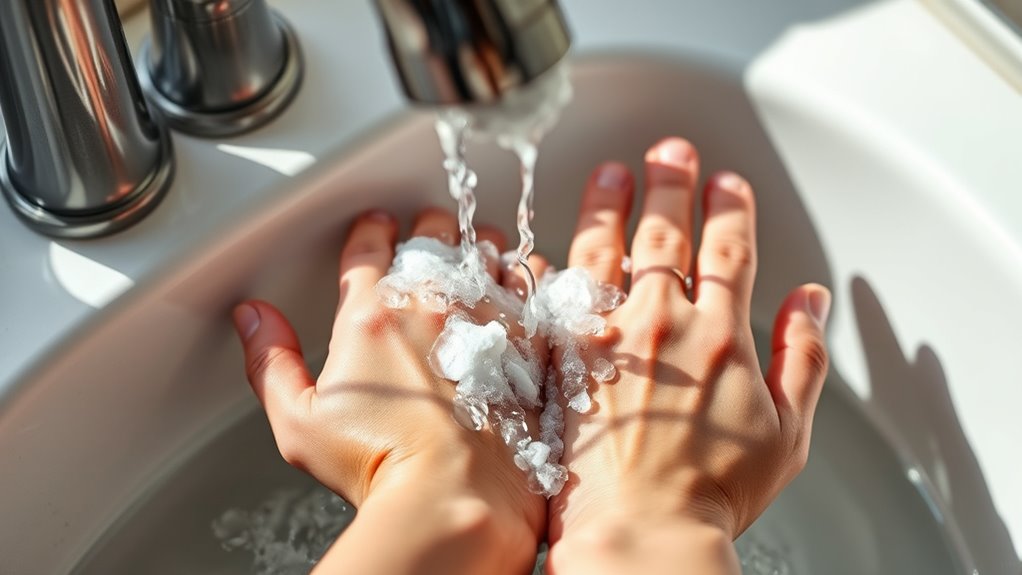
To remove ink from your hands quickly and safely, start by washing with warm water and a grease-cutting soap. Scrub gently to avoid irritation, as harsh rubbing can hurt your skin.
If the ink lingers, try rubbing olive or coconut oil on the stain. These oils help loosen the ink while keeping your skin moisturized and soft.
You can also make a gentle baking soda paste or use milk to lift the ink without harsh chemicals. Just remember to rinse well afterward.
Finally, moisturize your hands to keep your skin smooth and healthy. Keep going to discover more effective and skin-friendly tips for ink removal!
Key Takeaways
- Use warm water and a grease-cutting soap to scrub hands thoroughly, focusing on ink-stained areas and under nails. This helps break down the ink effectively.
- Apply olive or coconut oil to loosen ink while moisturizing the skin, then wipe away gently with a cloth. It’s a gentle way to get rid of ink without drying your hands out.
- Create a baking soda paste with water for mild scrubbing to break down ink without harsh chemicals. This method is great if you want something natural and safe.
- Dab white vinegar on a cotton ball and gently rub the ink to break down pigments safely. Just be careful not to scrub too hard to avoid skin irritation.
- Avoid harsh scrubbing or hot water; rinse with lukewarm water, pat dry, and moisturize to prevent irritation. Taking care of your skin is just as important as removing the ink!
Common Causes of Ink Stains on Skin
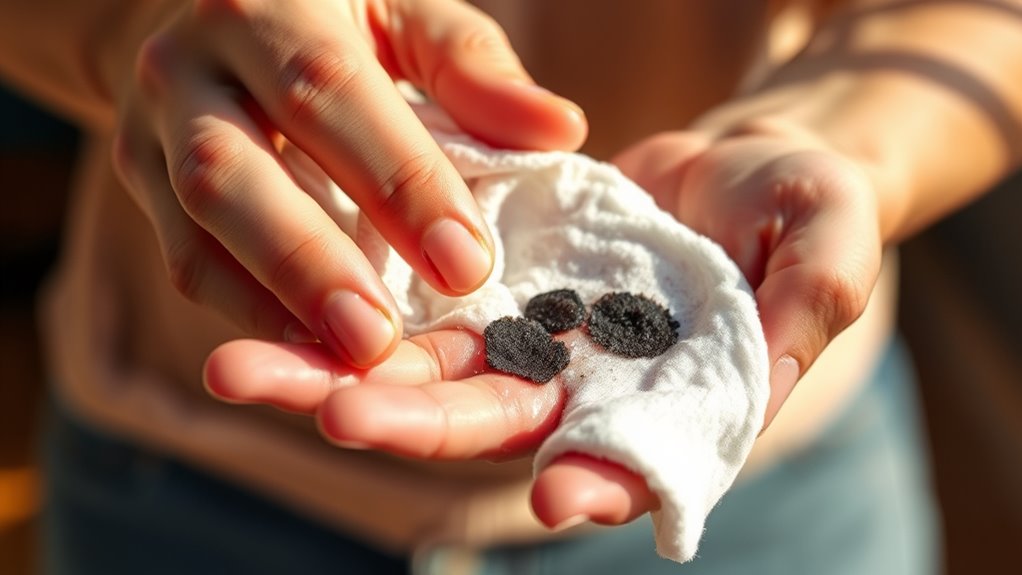
Although ink stains on your hands often happen by accident, they usually result from everyday activities like writing, drawing, or handling printed materials. You might get ink on your skin when you’re jotting down notes with a pen that leaks or when you’re sketching with markers.
If you handle newspapers, magazines, or printed flyers, the ink can easily rub off onto your fingers. Even signing documents or stamping papers can leave marks. Sometimes, you might not notice until you touch your face or clothes.
Kids often get ink on their hands while coloring or crafting. And if you work in an office, classroom, or art studio, ink stains become even more common. Recognizing these causes helps you prevent stains and prepare to remove them quickly and safely.
Gentle Household Items for Ink Removal
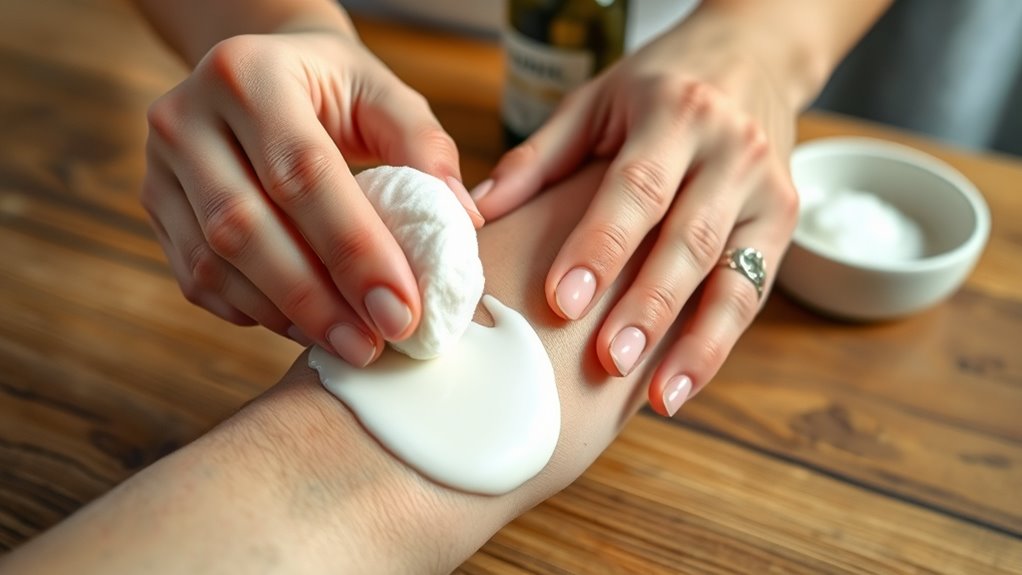
You can use common kitchen ingredients like baking soda and olive oil to gently remove ink from your hands. These items are safe and effective when applied with simple cleaning techniques.
Let’s explore how to use them without irritating your skin. It’s easier than you might think, and you probably already have everything you need at home!
Common Kitchen Ingredients
When ink stains your hands, common kitchen ingredients can come to the rescue with gentle yet effective cleaning power. You can use baking soda, which acts as a mild abrasive to lift ink without irritating your skin. Just mix it with a little water to form a paste and rub it gently on the stain.
Another option is white vinegar, which helps break down ink pigments. Apply it with a cotton ball and rinse after a minute.
Olive oil or coconut oil also work well by loosening ink while moisturizing your skin. Simply rub a small amount on the affected area, then wash off with soap and water.
These kitchen staples offer safe, accessible ways to tackle ink without harsh chemicals. Handy, right?
Safe Cleaning Techniques
Since harsh chemicals can irritate your skin, opting for gentle household items guarantees safe and effective ink removal. You don’t have to rely on strong solvents; instead, use these safe cleaning techniques to protect your skin while erasing ink stains.
Try these gentle options:
- Milk: Soak a cotton ball in milk and gently rub the inked area. The fats help break down ink without drying your skin.
- Olive Oil: Apply a small amount of olive oil to your hands and massage it in. It loosens ink and moisturizes simultaneously.
- Baking Soda Paste: Mix baking soda with a little water to form a paste, then gently scrub your hands. This mild abrasive lifts ink without harm.
These methods clean effectively while keeping your skin soft and healthy. Give them a try—you’ll be surprised how well they work!
Step-by-Step Guide to Using Soap and Water
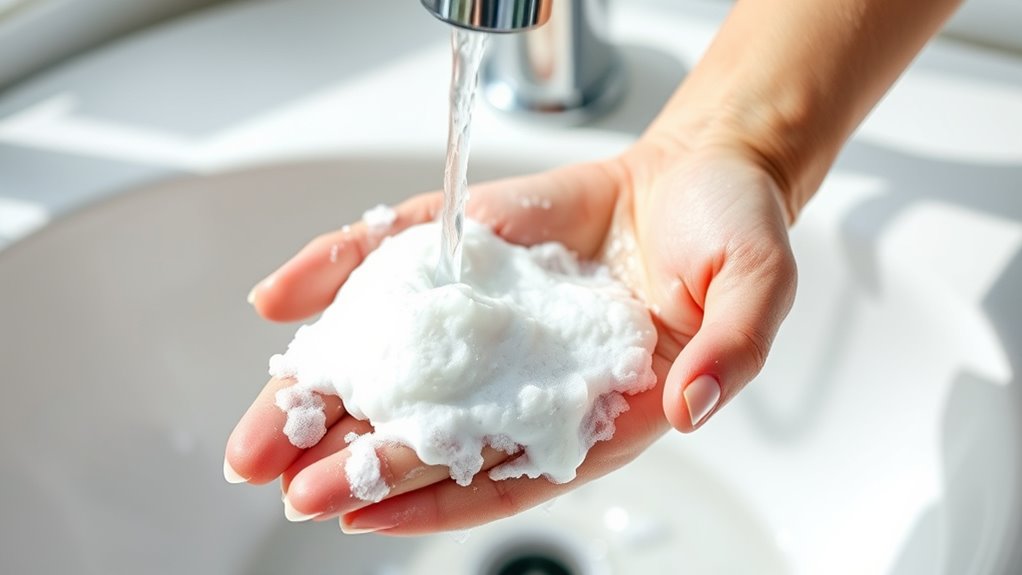
When it comes to removing ink, choosing the right soap makes all the difference—look for ones with strong grease-cutting abilities. You’ll want to use warm water and create a good lather to break down the ink effectively.
Follow these steps carefully to get your hands clean without irritating your skin. It’s easier than you might think! Just take it step by step and you’ll be ink-free in no time.
Best Soap Choices
How do you choose the best soap to remove ink from your hands effectively? Picking the right soap speeds up the process and protects your skin.
Look for soaps that break down ink pigments and oils without causing irritation. Here are three top options to contemplate:
- Dish soap: Known for cutting through grease, it’s great at dissolving ink.
- Antibacterial soap: Helps remove stubborn ink and keeps hands clean.
- Hand soap with exfoliants: Contains gentle scrubbing agents that lift ink from your skin.
Avoid harsh soaps that dry out your hands, as they can cause irritation. Using the right soap makes the next steps easier and ensures your skin stays healthy while you get rid of that ink.
Effective Washing Techniques
Although choosing the right soap is essential, mastering the washing technique is what truly removes ink from your hands. Start by wetting your hands with warm water; it helps open your pores and loosens the ink.
Apply a generous amount of soap—liquid soap usually works best. Rub your hands together vigorously, making sure to cover every area: palms, backs, between fingers, and under nails.
Keep scrubbing for at least 20 seconds to break down the ink effectively. Rinse thoroughly with warm water, ensuring no soap or ink residue remains.
If ink persists, just repeat the process. Finally, dry your hands with a clean towel. This method maximizes ink removal while protecting your skin from irritation.
Using Oil-Based Products to Lift Ink
Since ink tends to cling to the oils in your skin, using oil-based products can effectively break down and lift the stain. You’ll find that oils dissolve the ink, making it easier to wipe away without harsh scrubbing.
Try applying a small amount of any of these to the stained area:
- Coconut oil or olive oil: natural and gentle on your skin
- Baby oil: widely available and effective for ink removal
- Makeup remover or cleansing oil: designed to break down pigments
Rub the oil gently into your skin for a minute, then wipe off with a soft cloth. After that, follow up with warm water and soap to remove any oily residue.
This method is quick, safe, and helps preserve your skin’s moisture while tackling stubborn ink. It’s a handy trick to keep in mind!
Tips to Prevent Skin Irritation During Cleaning
When you remove ink from your hands, you’ll want to protect your skin from irritation by choosing gentle products and avoiding excessive scrubbing. Use mild soaps or cleansers instead of harsh chemicals to prevent dryness and redness.
Apply a small amount of product and gently rub the stained area with your fingertips, not nails or abrasive materials. Rinse with lukewarm water to soothe the skin and avoid hot water, which can worsen irritation.
Gently rub ink with fingertips and rinse with lukewarm water to protect your skin from irritation.
After cleaning, pat your hands dry with a soft towel and apply a moisturizer to restore hydration. If your skin feels tight or itchy, take breaks during cleaning and avoid over-washing.
These simple steps help maintain your skin’s health while effectively removing ink. It’s all about being gentle and kind to your skin!
When to Seek Professional Help for Ink Stains
If you’ve tried home remedies and your ink stains won’t budge, it’s time to contemplate professional help. Persistent ink stains can sometimes require specialized treatment to avoid skin damage or permanent discoloration.
You should consider consulting a dermatologist or a professional cleaner if the ink has deeply penetrated your skin and won’t come off after several attempts. Also, if you notice any unusual skin reactions like redness, swelling, or rash around the stained area, that’s a sign to get expert advice.
Another reason to seek help is if the ink is from industrial or unknown sources that might be toxic or harmful. Getting professional help guarantees safe removal without irritating your skin further.
Frequently Asked Questions
Can Ink Stains Cause Allergic Reactions on Sensitive Skin?
Yes, ink stains can cause allergic reactions on sensitive skin. If you’re sensitive, you might experience redness, itching, or irritation.
It’s best to wash the ink off gently and avoid harsh chemicals to prevent worsening reactions. Taking care early on can really help keep your skin calm.
Are There Specific Inks That Are Harder to Remove Than Others?
Yes, permanent inks like India ink and some gel inks are harder to remove than water-based ones.
You’ll need stronger removers or repeated cleaning to get them off your skin safely without irritation.
How Long Does It Typically Take for Ink Stains to Fade Naturally?
When it comes to ink stains, time’s the best medicine—usually about a week or two for them to fade naturally.
But don’t just sit on your hands; quicker action can speed up the process considerably.
Is It Safe to Use Ink Removal Products on Children’s Skin?
You shouldn’t use harsh ink removal products on children’s skin since they can irritate.
Instead, opt for gentle soap and water or baby oil. Always test a small area first and avoid strong chemicals.
It’s better to be safe than sorry when it comes to kids’ sensitive skin!
Can Ink Stains on Hands Affect Fingerprint Recognition?
Yes, ink stains on your hands can temporarily affect fingerprint recognition by obscuring the ridges. Cleaning your hands thoroughly helps restore clarity.
This ensures scanners can read your fingerprints accurately without interference from the ink. So, if you notice any smudges, just wash up before trying again!
Conclusion
Removing ink from your hands quickly and safely doesn’t have to be a headache. By using gentle household items like soap, water, or oil-based products, you can tackle those stubborn stains without harming your skin.
Just remember to be patient and avoid harsh scrubbing—don’t throw the baby out with the bathwater. If the stain won’t budge or your skin reacts badly, don’t hesitate to seek professional help to keep your hands healthy and ink-free.
In summary, the best way to remove ink from hands quickly and safely is to use mild cleaners such as soap and water or natural oils. Being gentle with your skin helps prevent irritation while effectively fading ink stains. If you’re dealing with tough ink marks, try repeated gentle washing or oil applications before considering harsher methods. And always remember: if you notice any skin reaction or the ink persists, consulting a healthcare professional is the safest choice to maintain healthy, ink-free hands.