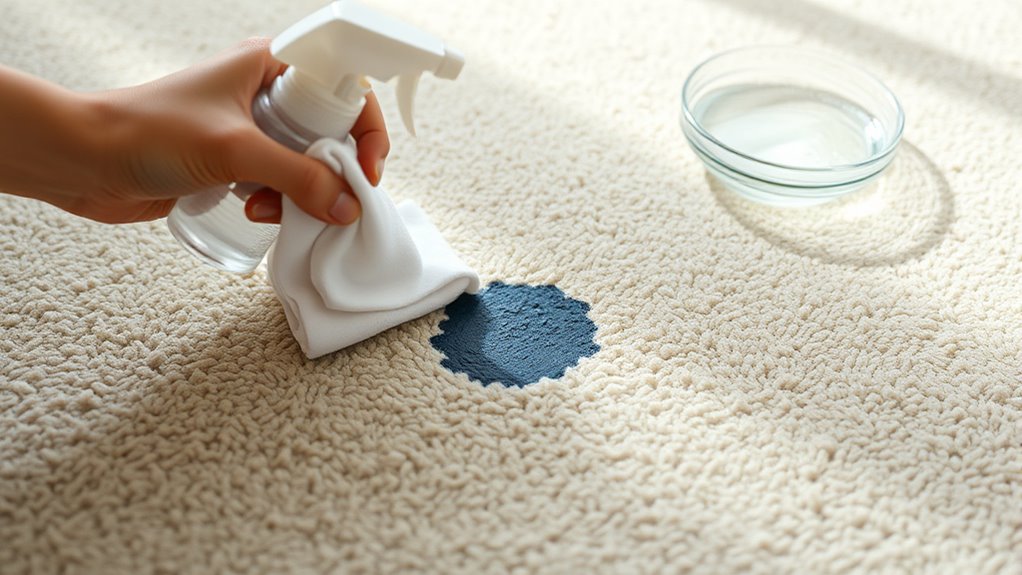
7 Steps to Get Ink Out of Carpet Fast
First, identify your ink type and carpet material so you can pick the right cleaning method. Quickly blot the ink stain with a clean cloth—don’t rub, as that can spread it further.
Next, gently apply a mild detergent mixture to the spot. If the stain sticks around, try using rubbing alcohol to break it down.
Sometimes a commercial stain remover becomes necessary if home remedies don’t do the trick.
After treating the stain, rinse the area with cold water to prevent the ink from setting deeper into the fibers.
Finally, dry and fluff your carpet to bring back its original texture.
Keep following these steps for more detailed tips on getting ink out of carpet fast and keeping your floors spotless!
Key Takeaways
- Identify the ink type and carpet material to choose the safest and most effective cleaning method.
- Immediately blot the ink stain with a clean, white cloth to prevent spreading and deeper penetration.
- Apply mild detergent mixed with warm water by dabbing gently, avoiding rubbing to lift the stain.
- Use rubbing alcohol on a cloth to gently blot stubborn ink stains, testing a hidden area first.
- Rinse with cold water, blot dry, and air dry thoroughly while fluffing carpet fibers to restore texture.
Assess the Type of Ink and Carpet Material
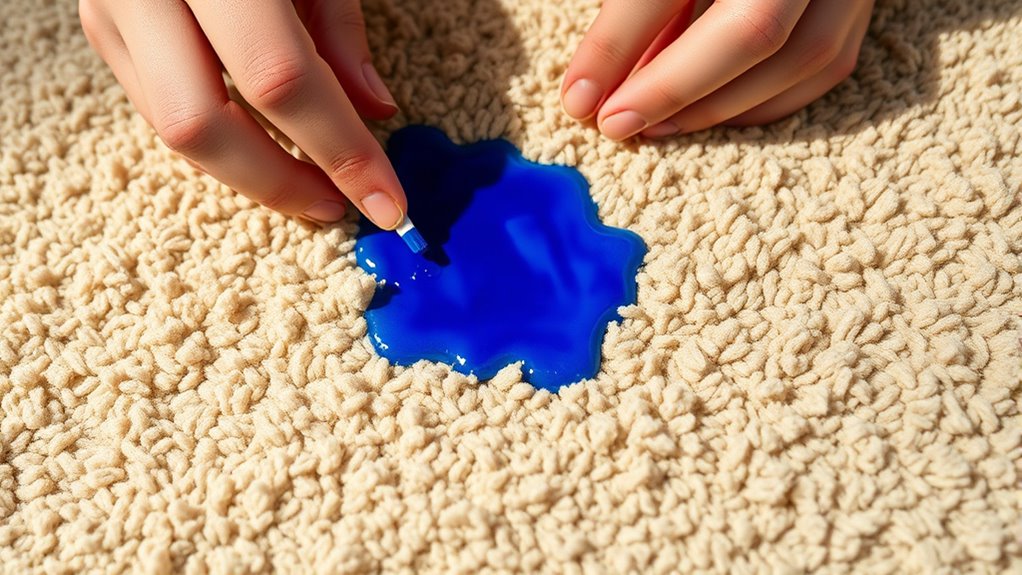
Before you plunge into cleaning, take a moment to identify the type of ink and carpet material you’re dealing with. Different inks—like ballpoint, gel, or permanent markers—react differently to cleaning agents. Knowing this helps you choose the right method and avoid making the stain worse.
Next, check your carpet’s fabric. Synthetic fibers like nylon or polyester tend to handle cleaning solutions better than natural fibers such as wool or cotton, which might require gentler care. If you’re unsure, look for the manufacturer’s label or test a small hidden area first.
This quick assessment guarantees you use the safest and most effective approach to remove the ink without damaging your carpet, setting you up for success in the next cleaning steps.
Blot the Stain Immediately With a Clean Cloth
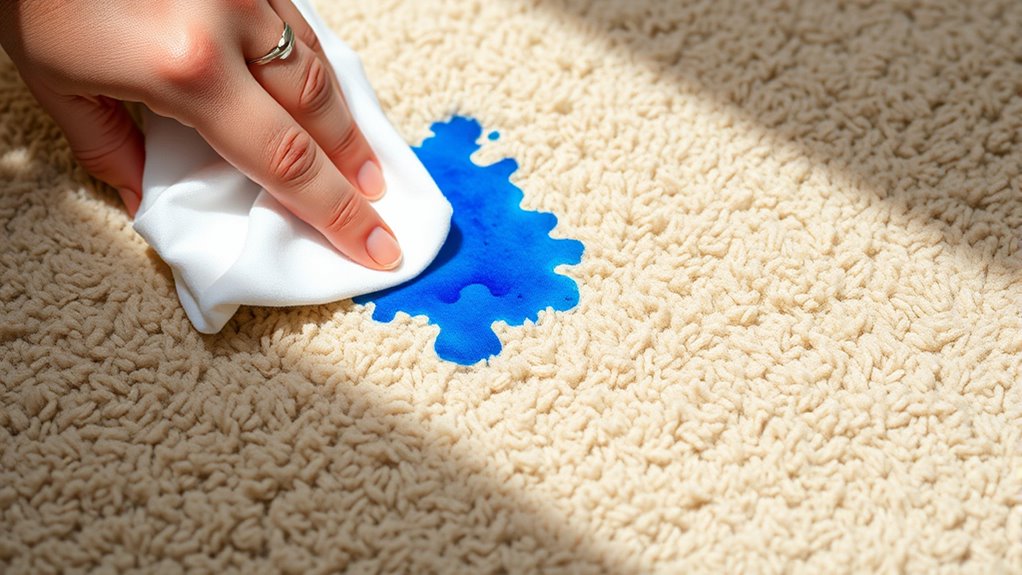
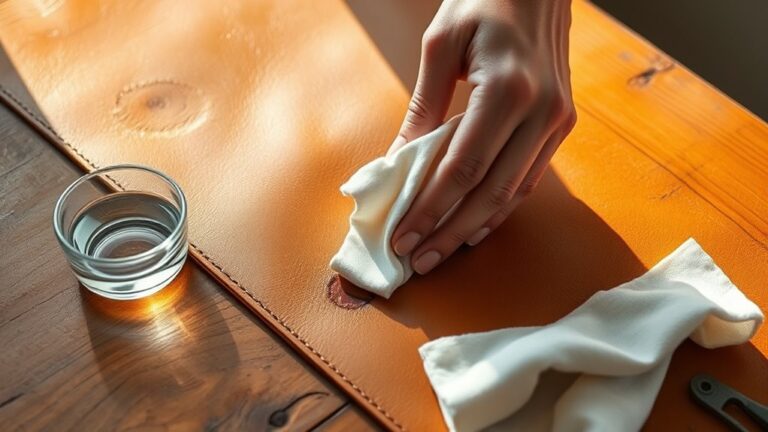
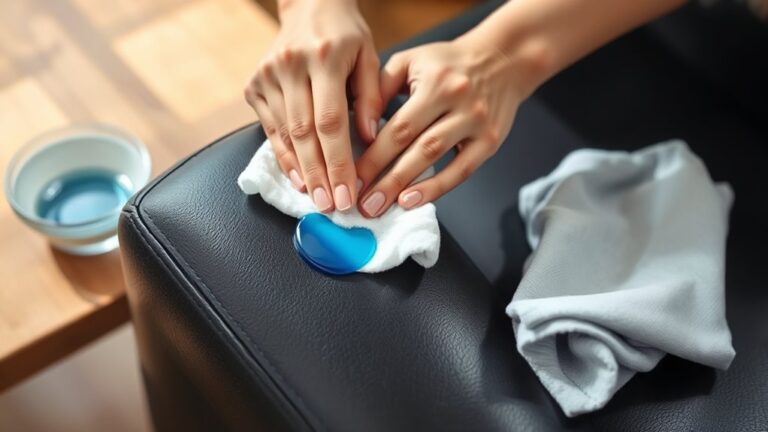
As soon as you notice the ink stain, grab a clean cloth and start blotting gently to absorb the excess ink. Avoid rubbing, as it can push ink deeper into the fibers.
Use a fresh section of the cloth frequently to prevent spreading the stain. Blotting promptly limits the damage and makes subsequent cleaning easier.
| What to Do | What to Avoid |
|---|---|
| Use a clean, white cloth | Rubbing the stain |
| Blot gently, don’t scrub | Using colored cloths |
| Change cloth sections often | Delaying the blotting |
| Act immediately | Ignoring the stain |
Following these tips helps you prevent the ink from settling, giving you a better chance of removing it completely. Just remember, quick action is key!
Apply a Mild Detergent Solution
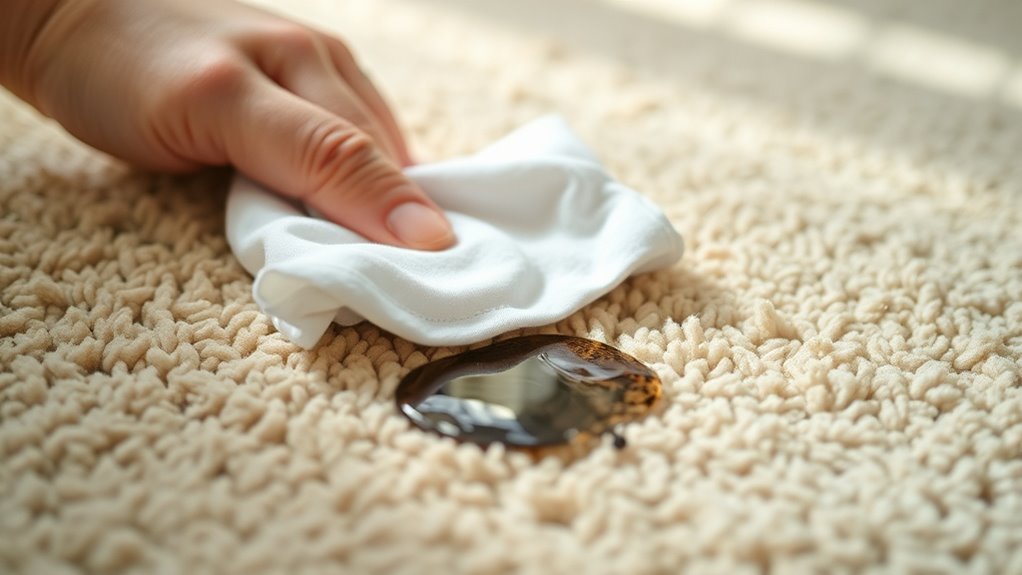
Once you’ve blotted up as much ink as possible, it’s time to tackle the remaining stain with a mild detergent solution. Mix a few drops of gentle dish soap with warm water to create an effective cleaning agent that won’t damage your carpet fibers.
Here’s how to apply it:
- Dip a clean white cloth into the solution and gently dab the stained area.
- Avoid rubbing, which can spread the ink or push it deeper.
- Repeat the process, switching to a fresh cloth as the stain lifts.
This method helps break down the ink without harsh chemicals, preserving your carpet’s color and texture. After treating the stain, blot with a dry cloth to absorb excess moisture and let the carpet air dry before moving on to stronger treatments if needed.
Use Rubbing Alcohol for Persistent Stains
If the ink stain still won’t budge after using mild detergent, you’ll want to reach for rubbing alcohol. Dab a small amount onto a clean white cloth or cotton ball, then gently blot the stain. Avoid rubbing, as this can spread the ink or damage the carpet fibers.
The alcohol will break down the ink, making it easier to lift. Keep blotting with a fresh cloth until the stain lightens. Once the ink starts to fade, rinse the area with a little cold water to remove any alcohol residue.
Finally, blot the spot dry with a clean towel. Remember to test rubbing alcohol on a hidden carpet area first to guarantee it won’t cause discoloration or damage before treating the stain.
Try a Commercial Carpet Stain Remover
When home remedies don’t fully remove the ink stain, you can turn to a commercial carpet stain remover designed specifically to tackle tough spots. These products are formulated to break down ink pigments quickly and lift them from carpet fibers without damaging the material.
Before applying, test the remover on a hidden area to guarantee it won’t discolor your carpet. Follow the instructions carefully for the best results.
Always test stain remover on a hidden spot to ensure color safety and follow instructions precisely for optimal results.
Look for removers that are safe for your carpet type. Also, check if they contain solvents effective against ink and include stain-fighting enzymes or surfactants.
Apply the product directly to the stain, let it sit for the recommended time, then blot gently to lift the ink. This method can save you a lot of effort when dealing with stubborn ink marks.
Rinse the Area With Cold Water
Although it might seem simple, rinsing the stained area with cold water helps prevent the ink from setting deeper into the carpet fibers.
After applying your chosen stain remover, grab a clean cloth or sponge and gently blot the spot with cold water. Avoid using hot water, as heat can cause the ink to bond more permanently with the carpet.
Instead, cold water helps lift the ink particles without spreading the stain further. Be careful not to saturate the carpet; just enough water to rinse the area will do.
After rinsing, gently blot the area again with a dry cloth to absorb excess moisture. This step prepares your carpet for the final drying process, ensuring the ink stain doesn’t become permanent.
Dry and Fluff the Carpet Fibers
After rinsing the ink stain, you’ll want to dry and fluff the carpet fibers promptly to prevent any lingering moisture from causing damage or attracting dirt. Start by gently blotting the area with a clean, dry cloth or paper towel to soak up excess water. Avoid rubbing, as it can spread the stain further.
Next, use a fan or open windows to increase airflow and speed up drying. Finally, fluff the carpet fibers to restore their texture and appearance.
Here’s how to dry and fluff effectively:
- Blot with a dry cloth to absorb moisture without spreading ink
- Use air circulation to speed drying and prevent mildew
- Gently lift fibers with your fingers or a soft brush to revive carpet texture
Frequently Asked Questions
Can Ink Stains Cause Permanent Damage to Carpets?
Yes, ink stains can cause permanent damage to your carpet if you don’t act quickly.
You should treat the stain right away to prevent it from setting and becoming nearly impossible to remove later.
Are Ink Stains Harmful to Pets or Children?
Oh, sure, ink stains are just perfect snacks for pets and kids—except they’re not.
You shouldn’t let them lick or chew ink; some inks contain harmful chemicals that can cause irritation or poisoning.
Keep it clean!
How Long Do I Have to Treat an Ink Stain Before It Sets?
You usually have about 10 to 15 minutes to treat an ink stain before it starts setting into the carpet fibers. Acting quickly prevents permanent damage and makes removal much easier for you.
Can Professional Carpet Cleaning Remove Old Ink Stains?
Think of old ink stains as stubborn shadows in a sunlit room. Yes, professionals can often erase those shadows with powerful tools.
But some stains may leave a faint trace, like memories fading but never gone.
Is It Safe to Use Bleach on Carpet Ink Stains?
You shouldn’t use bleach on carpet ink stains—it can damage fibers and cause discoloration. Instead, try rubbing alcohol or a specialized carpet cleaner.
Just make sure to test a small hidden area first to avoid ruining your carpet. That way, you can be sure the cleaner won’t cause any damage or unwanted color changes.
Conclusion
Now that you’ve tackled the ink stain step by step, don’t you feel more confident in saving your carpet? Quick action and the right approach make all the difference.
Remember to always assess the ink type first and act fast by blotting, treating, and rinsing carefully. These steps are crucial for effective ink removal.
With these simple steps, you can keep your carpet looking fresh and ink-free. So next time ink spills, you’ll know exactly what to do!
By following these 7 steps to get ink out of carpet fast, you’ll protect your investment and maintain a beautiful home. It’s all about acting quickly and using the right techniques to remove ink stains without damaging your carpet fibers. Keep this guide handy, and you’ll handle future spills like a pro!