
What Is Archival Ink and How to Use It for Long-Lasting Documents
Archival ink uses stable, pigment-based formulas designed to resist fading, smudging, and chemical breakdown over time, keeping your documents vibrant and clear for decades. This type of ink is essential for anyone interested in preserving important papers, photos, or artwork because it stays crisp without deteriorating.
Plus, archival ink is usually pH neutral or slightly alkaline, which helps protect your paper from damage and yellowing.
To use archival ink effectively, start by preparing the surface to ensure the best adhesion. Apply the ink with fine-tip tools for precision, and make sure to let it dry completely before handling.
When storing your documents, keep them in cool, dry, acid-free environments away from sunlight to preserve both the ink and the paper. Want to learn more? Keep exploring for additional tips on long-lasting preservation!
Key Takeaways
- Archival ink contains stable pigments in pH-neutral or alkaline carriers. This ensures fade resistance and durability for long-lasting document preservation.
- It resists water, light, heat, and environmental pollutants. So, your documents maintain clarity and vibrancy over decades.
- Use fine-tip tools on prepared surfaces and allow complete drying. This helps avoid smudging and ensures sharp, professional results.
- Store documents in cool, dry, acid-free conditions away from sunlight. Also, handle them minimally with clean hands or gloves.
- Regular inspections and proper handling prevent deterioration. This way, you preserve legibility and structural integrity for future generations.
Understanding the Composition of Archival Ink
Although archival ink might seem like any other ink, its composition sets it apart by ensuring durability and resistance to fading. When you use archival ink, you’re working with pigments or dyes suspended in a stable solution, often water-based or alcohol-based, designed to withstand environmental factors.
Archival ink’s unique composition ensures durability and fade resistance, using stable pigments in water or alcohol-based solutions.
The pigments are finely ground, preventing them from breaking down or changing color over time. Additionally, archival inks avoid acidic compounds, which can cause paper deterioration.
You’ll find that the ink’s formula resists water, light, and heat better than regular inks. This careful balance of ingredients means your documents stay clear and legible for decades.
Understanding this composition helps you appreciate why archival ink is essential for preserving valuable records and artworks. It’s pretty cool how something as simple as ink can make such a big difference, right?
Key Benefits of Using Archival Ink
When you choose archival ink, you’re getting fade resistance that keeps your documents clear for years. It also offers chemical stability, so your work won’t degrade or react with other materials over time.
These benefits make archival ink a smart choice for preserving important records. It’s all about making sure your work lasts as long as you need it to.
Fade Resistance Properties
Because archival ink contains specially formulated pigments and dyes, it maintains its vibrancy far longer than standard inks. This means your important documents, photos, and artworks stay sharp and clear over time.
You won’t have to worry about fading caused by light exposure, humidity, or air pollutants. When you use archival ink, you benefit from:
- Exceptional resistance to sunlight and UV rays
- Minimal color change even after years of display
- Protection against fading from moisture and humidity
- Durability that preserves details for decades
Chemical Stability Advantages
Since archival ink is engineered with chemically stable pigments, it prevents degradation that can cause smudging, bleeding, or discoloration over time. This chemical stability means your documents maintain their clarity and sharpness, even when exposed to environmental factors like humidity or light.
You won’t have to worry about your important papers fading or becoming unreadable years down the line. Because the ink resists chemical reactions that typically break down standard inks, it stays intact on various paper types.
When you use archival ink, you’re investing in durability that standard inks simply can’t match. This stability also reduces the chance of ink transferring onto other surfaces, keeping your documents clean and professional-looking.
Differences Between Archival Ink and Regular Ink
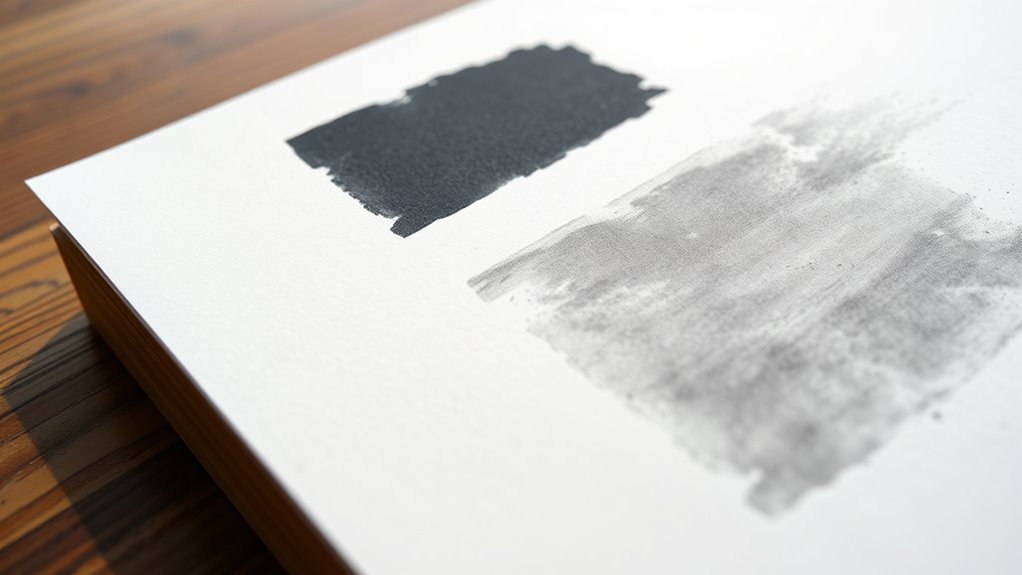
You’ll notice archival ink uses special ingredients that make it more durable and resistant to fading compared to regular ink. It also behaves differently when applied, often drying faster to preserve your work longer.
Understanding these differences helps you choose the right ink for your projects. It’s pretty handy to know what you’re working with, right?
Composition and Ingredients
Although both archival ink and regular ink serve the purpose of marking surfaces, their compositions differ considerably to guarantee longevity and stability. When you choose archival ink, you’re picking a formula designed to last.
Here’s what sets it apart:
- Pigment-Based Particles: Archival inks use stable pigments instead of dyes, resisting chemical breakdown.
- pH Neutral or Alkaline: These inks avoid acidity, preventing paper degradation over time.
- Lightfast Additives: Ingredients minimize color changes when exposed to light.
- Water-Resistant Binders: They hold the pigment to the surface better, reducing smudging or bleeding.
Regular inks often rely on dye-based formulas and acidic components that fade or damage documents faster. So, knowing these differences really helps you pick archival ink when preserving important records.
Durability and Fade Resistance
When you want your writing to stand the test of time, durability and fade resistance become crucial factors. Archival ink is specially formulated to resist fading caused by light exposure, humidity, and aging.
Unlike regular ink, which often contains dyes prone to fading and smudging, archival ink uses pigments that bond more securely to paper fibers. This means your documents won’t lose clarity or color intensity over years or even decades.
If you’re preserving important records, artwork, or photographs, archival ink helps keep them legible and vibrant. Regular ink might seem fine short-term, but it can deteriorate quickly, especially when exposed to sunlight or moisture.
Choosing archival ink ensures your work remains sharp and readable, safeguarding your documents against time’s wear and tear. So, if you want your writing to last, going archival is definitely the way to go.
Application and Drying Time
Beyond durability and fade resistance, how ink applies to paper and how quickly it dries can impact your project’s outcome. Archival ink typically flows smoothly and absorbs evenly, preventing smudges and ensuring sharp lines. It dries faster than many regular inks, cutting down wait times and minimizing accidental smearing.
When you use archival ink, keep these points in mind:
- Archival ink penetrates paper fibers deeply for lasting impressions.
- It dries quickly, allowing faster handling and layering.
- Regular ink often sits on the surface, risking smudges and uneven drying.
- Archival ink maintains color vibrancy without feathering or blotting.
Choosing archival ink means your documents stay crisp, readable, and professional over time. Plus, you’ll spend less time waiting for ink to dry during your work.
Common Types of Archival Ink for Various Applications
Since archival ink must withstand the test of time, you need to choose types specifically formulated for durability and resistance to fading. Here are common archival inks suited for different uses:
| Ink Type | Best For | Key Feature |
|---|---|---|
| Pigment Ink | Art prints, photographs | Waterproof, fade-resistant |
| Iron Gall Ink | Historical documents | Chemical permanence |
| Carbon Ink | Calligraphy, manuscripts | Deep black, highly stable |
Each type offers unique benefits. Pigment ink is ideal if you want water resistance.
Iron gall ink is perfect for documents needing chemical stability. Carbon ink provides rich black tones that last centuries.
Knowing these helps you pick the right ink tailored to your project’s needs.
Best Practices for Applying Archival Ink on Documents
Although choosing the right archival ink is essential, applying it properly guarantees your documents remain intact and legible for years. To get the best results, follow these best practices when using archival ink:
- Prepare the surface by ensuring the paper is clean and dry to prevent smudging or uneven absorption.
- Use a fine-tip pen or a high-quality printer designed for archival inks to maintain clarity and precision.
- Allow the ink to dry completely without touching the surface. Premature handling can cause smears or fading.
- Avoid heavy layering of ink, which might cause bleeding or cracking as it ages. So, keep it light and steady.
Storing and Maintaining Documents Printed With Archival Ink
When you store documents printed with archival ink properly, you guarantee their longevity and readability. Keep them in a cool, dry place away from direct sunlight to prevent fading.
Use acid-free folders or sleeves to protect against environmental damage. Handle documents with clean hands or gloves to avoid oils and dirt.
Regularly check for signs of deterioration and address issues promptly. Doing these simple things can really make a difference in preserving your documents over time.
| Storage Tip | Benefit |
|---|---|
| Cool, dry environment | Prevents ink fading and paper warping |
| Acid-free materials | Protects against acid damage |
| Minimal handling | Reduces risk of smudging |
| Regular inspection | Detects damage early |
Frequently Asked Questions
Can Archival Ink Be Used for Fabric or Textiles?
You can use archival ink on fabric, but make sure it’s specifically designed for textiles. Regular archival ink might not bond well or remain permanent on fabric, so choose inks labeled for fabric use to guarantee durability.
It’s a good idea to double-check the product details before you start. That way, you’ll know your design will last and won’t fade or wash out easily.
Is Archival Ink Safe for Use by Children?
About 40% of parents worry about art supplies’ safety. Archival ink isn’t typically toxic, but you shouldn’t let kids use it unsupervised.
Always check labels and choose kid-friendly, non-toxic alternatives to keep them safe. It’s better to be cautious when it comes to little ones and art materials.
How Does Archival Ink Affect Printer Maintenance?
Using archival ink can actually reduce printer maintenance since it resists clogging and drying out.
Just make sure you run your printer regularly and store cartridges properly, so you don’t face unexpected issues or costly repairs.
Can Archival Ink Be Removed or Erased if Needed?
You can’t easily remove or erase archival ink because it’s designed to be permanent and resistant to fading or smudging.
If you try, you risk damaging the document, so be sure before you use it on important papers.
It’s made to last, so once it’s down, it’s pretty much there for good. Just something to keep in mind!
Does Archival Ink Work on Glossy or Coated Paper?
Yes, archival ink works on glossy or coated paper, but it may take longer to dry.
You should let it dry completely to avoid smudging and guarantee your documents stay crisp and long-lasting.
Conclusion
Using archival ink is like planting a timeless seed in your documents, ensuring they bloom through the years without fading. By choosing the right ink and applying it carefully, you’re giving your work a shield against time’s relentless march.
Treat your documents with care—store them properly and keep their stories alive for generations. With archival ink, you’re not just writing; you’re crafting a legacy that won’t wash away.
Incorporating archival ink into your writing process means your documents gain durability and resistance to fading, smudging, or discoloration. Whether you’re preserving family records, important certificates, or creative works, archival ink ensures your memories and messages stand the test of time. So next time you put pen to paper, remember that archival ink is your best bet for long-lasting documents that truly endure.