
How to Get Ink Removed From Leather Effectively
To remove ink from leather effectively, it’s important to start by testing a small hidden area with rubbing alcohol. This step helps you avoid any potential damage.
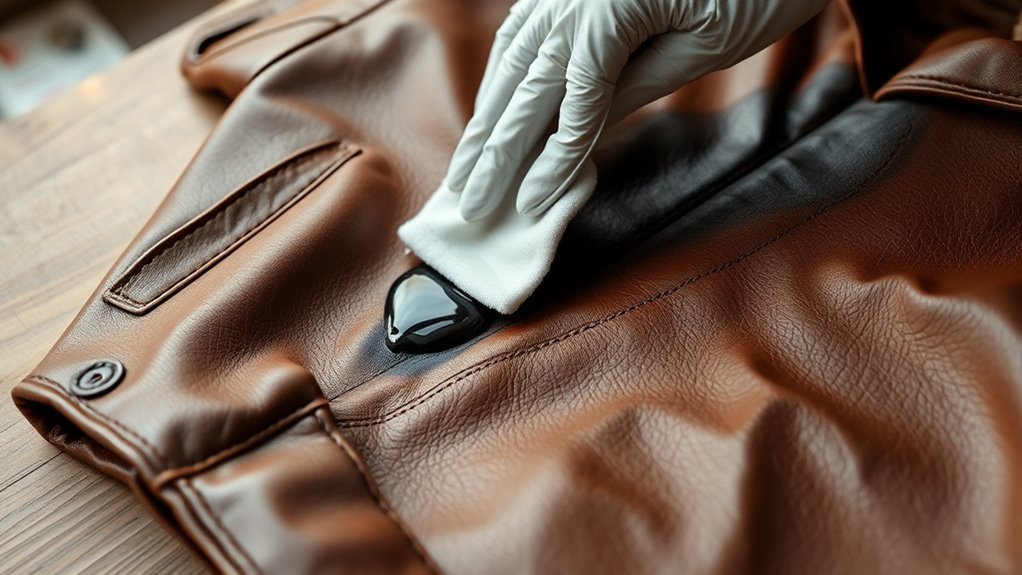
Next, gently dab the stain with a cotton ball soaked in diluted alcohol. Then, wipe the area with a damp cloth to lift the ink away.
Once the stain begins to fade, apply a leather cleaner to refresh the surface. Follow up with a conditioner to keep the leather soft and prevent cracks.
Remember, the right method depends on your leather type and how old the ink stain is. Understanding these details will help you get the best results.
So, take your time and explore the proper steps carefully to handle each situation effectively. You’ll be surprised how well your leather can recover!
Key Takeaways
- Identify the leather type and ink stain to choose the safest and most effective cleaning method.
- Use a soft cloth or cotton swab to gently blot the ink with diluted rubbing alcohol or leather cleaner.
- Test any solvent on an inconspicuous leather area before full application to avoid damage or discoloration.
- Avoid harsh chemicals like acetone or undiluted alcohol that can harm the leather finish.
- After ink removal, apply a leather conditioner to restore moisture and maintain leather’s appearance and flexibility.
Assessing the Type of Leather and Ink Stain
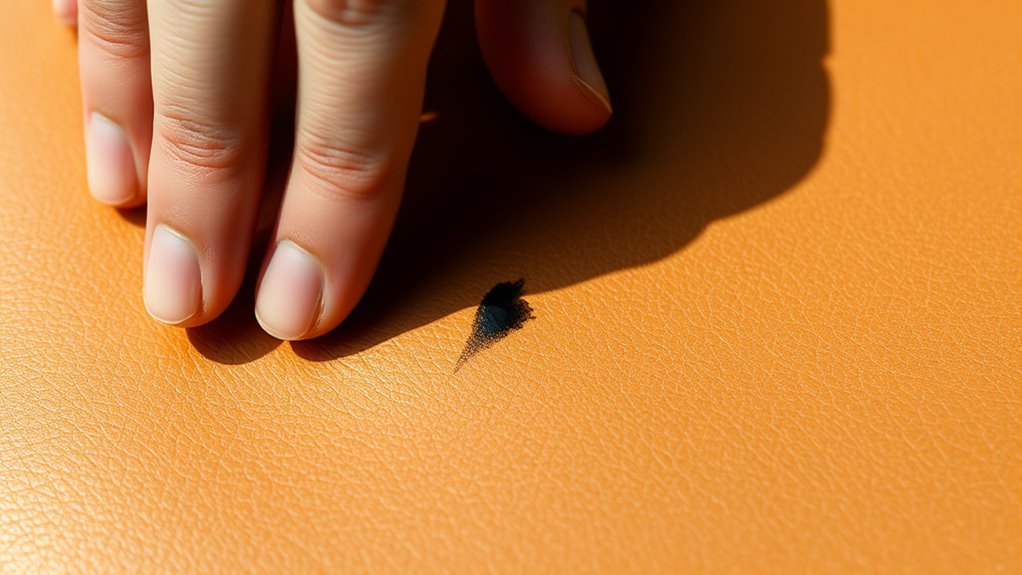
Before you begin removing ink from leather, you’ll need to identify both the type of leather and the nature of the stain. Different leathers—like aniline, semi-aniline, or pigmented—react differently to cleaning methods.
Identify your leather type and stain nature before tackling ink removal for the best results.
Aniline leather is more delicate and absorbs ink quickly, so you’ll want to be extra careful. Semi-aniline and pigmented leathers have protective coatings, making them easier to clean.
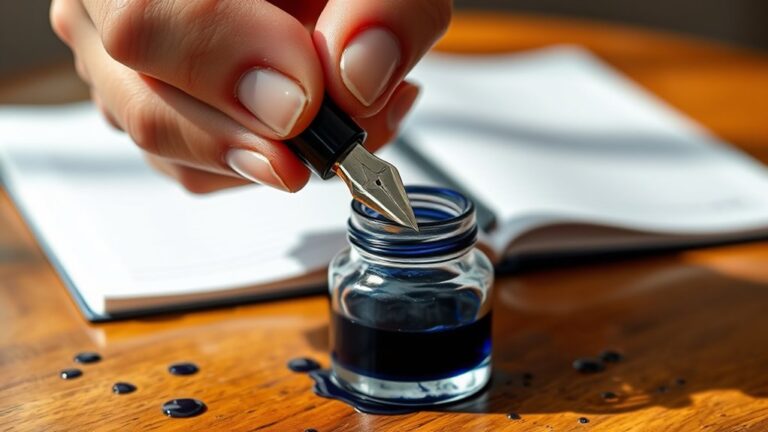
Next, check the ink type: is it ballpoint, gel, or permanent marker? Ballpoint ink tends to sit on the surface, while permanent ink soaks deeper.
Knowing the stain’s age also helps; fresh stains are simpler to remove than older, set-in ones. This assessment ensures you choose the safest, most effective cleaning approach without damaging your leather item.
Preparing Your Cleaning Supplies
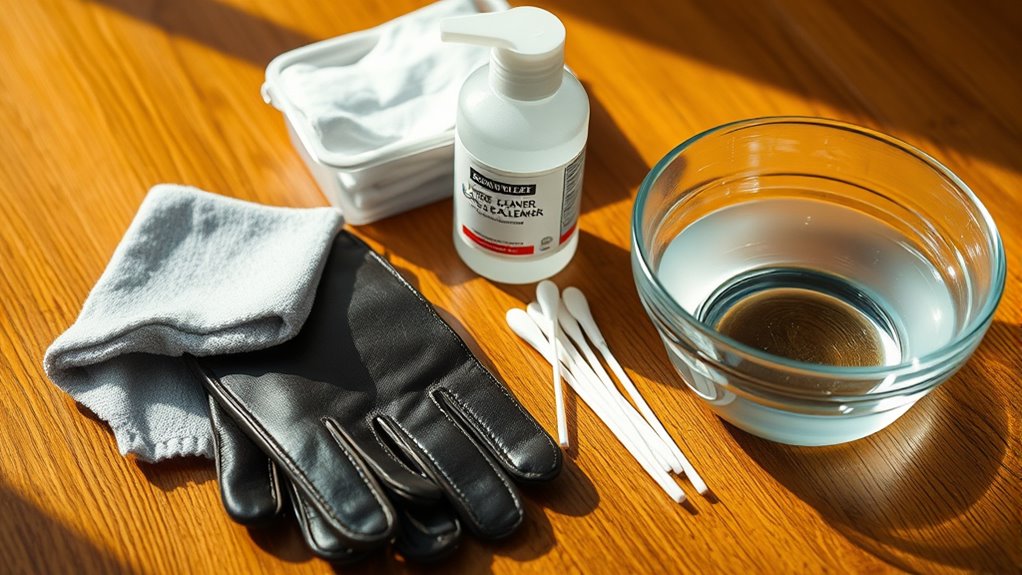
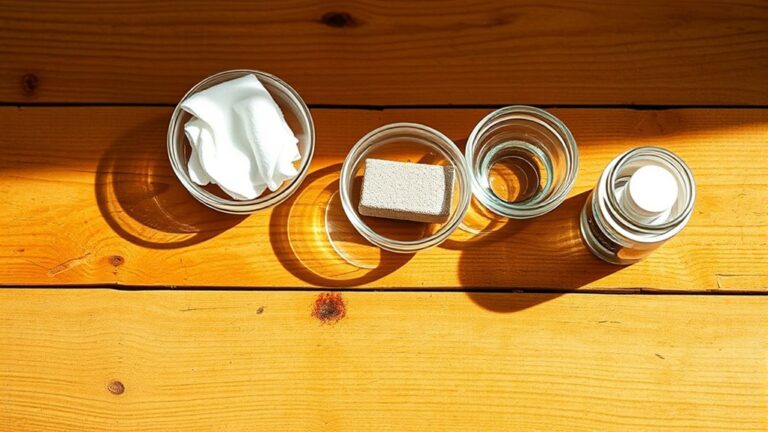
Before you start, gather essential cleaning materials like soft cloths, cotton swabs, and a mild soap. Make sure to choose solvents that are safe for leather to avoid damage.
Preparing these supplies carefully will help you tackle the ink stain effectively. It’s all about having the right stuff on hand before you dive in!
Essential Cleaning Materials
What tools do you need to safely remove ink from leather? Start with a clean, soft cloth or microfiber towel to gently blot the stain without damaging the surface.
You’ll want cotton swabs for targeted application of cleaning solutions and a small bowl to mix any homemade cleaners. Keep a spray bottle handy if you’re using diluted solutions to avoid over-wetting the leather.
Have a soft-bristled toothbrush nearby for gently working stubborn ink spots without scratching. Keep paper towels or absorbent cloths ready to soak up excess moisture.
Finally, protect your workspace with old newspapers or a plastic sheet. Gathering these essential materials beforehand guarantees you’re prepared to clean carefully and effectively, minimizing any risk of further damage to your leather item.
Choosing Safe Solvents
Once you’ve gathered your cleaning materials, the next step is selecting solvents that won’t harm your leather. Avoid harsh chemicals like acetone or alcohol, as they can strip the leather’s finish and cause discoloration.
Instead, opt for gentle options such as rubbing alcohol diluted with water or specialized leather cleaners designed to remove ink stains safely. Always test your chosen solvent on a small, hidden area first to check for any adverse reactions.
If the leather shows no signs of damage or color change after a few minutes, proceed cautiously with the ink removal. Using safe solvents ensures you protect your leather’s texture and appearance, making the cleaning process effective without risking permanent harm.
Using Rubbing Alcohol to Remove Ink
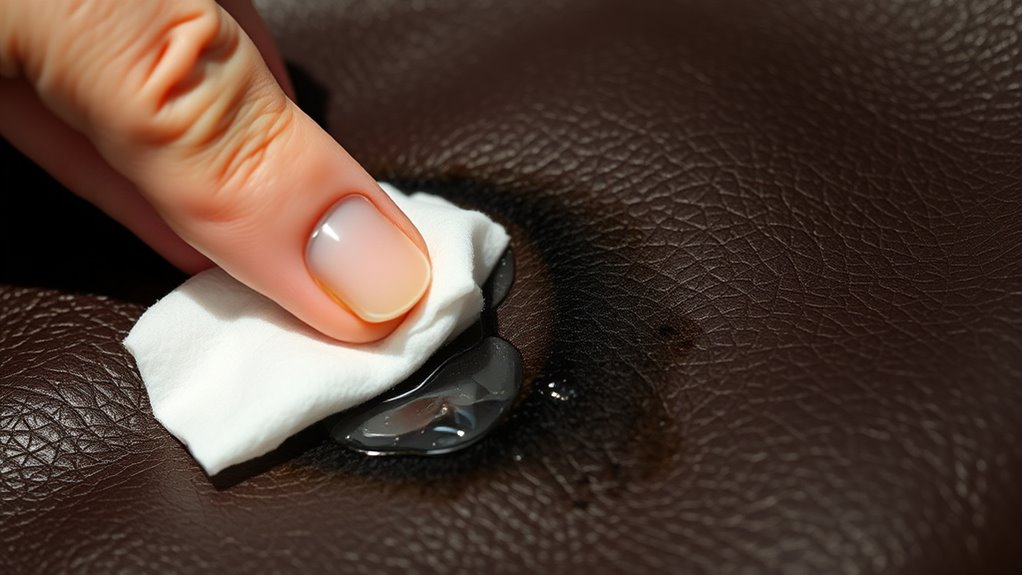
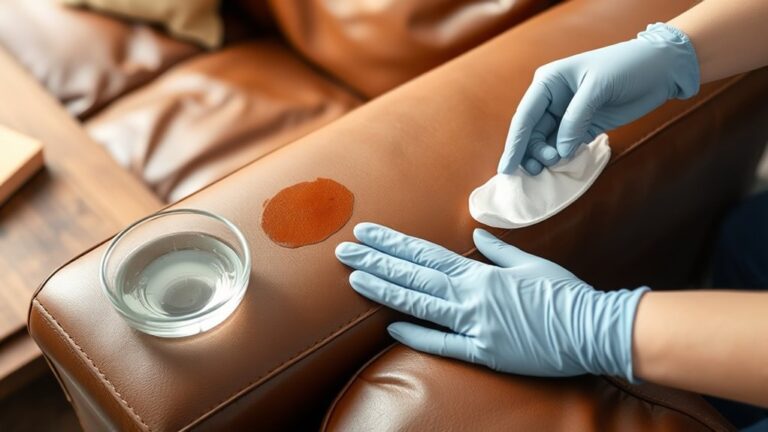
Although rubbing alcohol can be harsh on some materials, it’s highly effective at breaking down ink stains on leather. To use it safely, dab a small amount onto a cotton ball or cloth and gently blot the stained area.
Avoid rubbing aggressively to prevent damage. Test in an inconspicuous spot first. After blotting, wipe the area with a clean, damp cloth to remove residue and let it dry naturally.
| Step | Action |
|---|---|
| 1 | Test on hidden leather patch |
| 2 | Dab rubbing alcohol lightly |
| 3 | Blot ink stain gently |
| 4 | Wipe with damp cloth |
| 5 | Air dry and inspect |
This method targets ink efficiently without soaking the leather. Give it a try, but always be gentle!
Applying Leather Cleaner and Conditioner
After removing the ink stain, you’ll want to apply a leather cleaner and conditioner to restore moisture and protect the material. Start by choosing a cleaner specifically designed for leather.
Apply a small amount to a soft cloth and gently rub it onto the affected area in circular motions. This will lift any remaining residue and refresh the leather’s surface. Once clean, let it dry completely before moving on.
Next, apply a leather conditioner to keep the material supple and prevent cracking. Use a clean cloth to spread the conditioner evenly, again working in small circles.
Allow the conditioner to absorb fully, then buff lightly with a dry cloth to bring out the leather’s natural shine. Regular conditioning will extend your leather’s life and keep it looking great.
Alternative Home Remedies for Ink Removal
If you don’t have specialized leather products on hand, you can try several alternative home remedies to tackle ink stains. These options use common household items, but always test on a hidden spot first to avoid damage.
Dab gently and avoid rubbing harshly.
| Remedy | How to Use |
|---|---|
| Rubbing Alcohol | Apply with a cotton swab, blot gently |
| Hairspray | Spray lightly, wipe off quickly with cloth |
| Vinegar & Olive Oil | Mix equal parts, apply with soft cloth |
| Milk | Soak cloth, dab stain gently |
Each method can lighten ink stains, but patience and care are key to protect your leather’s finish.
Just take it slow and be gentle, and you should see some good results!
Preventing Future Ink Stains on Leather
Once you’ve tackled existing ink stains, taking steps to prevent new ones can save you time and effort. Start by keeping pens and markers away from your leather items. Use cases or holders for writing instruments to avoid accidental contact.
Regularly clean your leather with a soft cloth to remove dirt and oils that could attract ink. Applying a leather protector or conditioner creates a barrier that repels liquids and reduces staining risks.
Be cautious when handling leather near ink sources, like newspapers or magazines. Finally, educate household members or coworkers about the importance of keeping ink away from leather surfaces.
Frequently Asked Questions
Can Ink Stains on Leather Cause Permanent Damage?
Yes, ink stains can cause permanent damage to leather if you don’t act quickly.
The longer you wait, the more it soaks in, making it tough to remove and potentially ruining the leather’s appearance.
Is It Safe to Use Hair Spray on Leather Ink Stains?
You shouldn’t use hair spray on leather ink stains; it contains alcohol and chemicals that can damage the leather’s finish. Instead, opt for a leather cleaner or test any product on a hidden spot first to stay safe.
It’s always better to be cautious with leather. So, skip the hair spray and go for something made specifically for leather care. That way, you protect your leather and get better results.
How Long Should I Wait Before Cleaning Fresh Ink Stains?
Don’t wait too long—clean fresh ink stains as soon as possible, ideally within minutes.
The longer you delay, the harder it’ll be to remove. Acting quickly gives you the best shot at saving your leather’s look.
Can Professional Leather Cleaning Remove Old Ink Stains?
Yes, professional leather cleaners can often remove old ink stains effectively. They’ll use specialized products and techniques to minimize damage while lifting the stain.
However, results depend on the ink type and the condition of the leather, so don’t expect perfection. It really varies from case to case.
Are Ink Stains on Faux Leather Easier to Remove Than Real Leather?
Ink stains on faux leather usually play nicer, so you’ll find them easier to remove than on real leather, which can soak ink like a thirsty sponge.
Just be gentle, or you might damage its surface.
Conclusion
Now that you’ve learned the secrets to removing ink from leather, imagine your favorite jacket or sofa looking flawless again. But here’s the catch: act quickly and choose the right method. Otherwise, that stubborn stain could become a permanent shadow.
Don’t wait until it’s too late—grab your supplies and follow the steps carefully. Watch the ink vanish right before your eyes.
Your leather deserves this second chance. You’re just one cleaning away from restoring its original beauty. Effective ink removal from leather isn’t just about aesthetics; it’s about preserving the material’s integrity and value.
So, take action now and give your leather the care it needs to look fresh and new again.