
How Do You Remove Ink From Faux Leather Step by Step
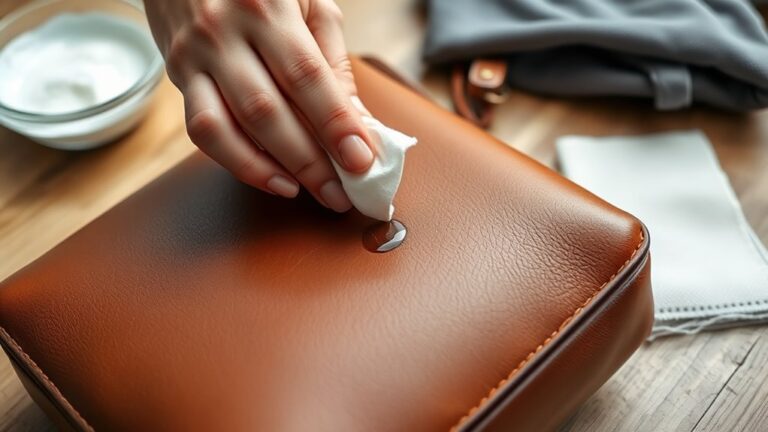
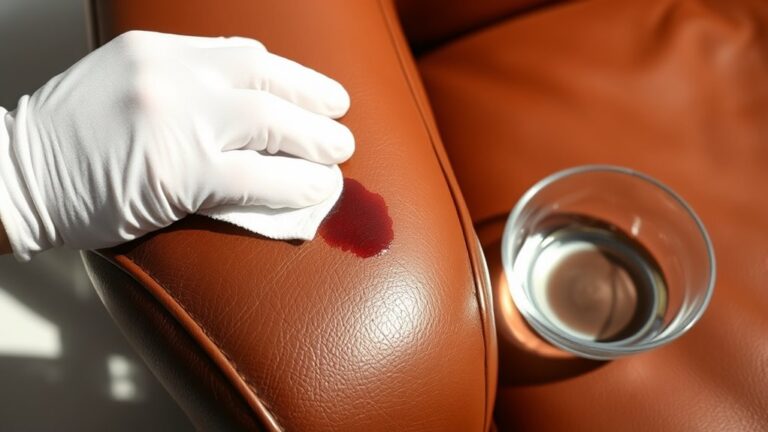
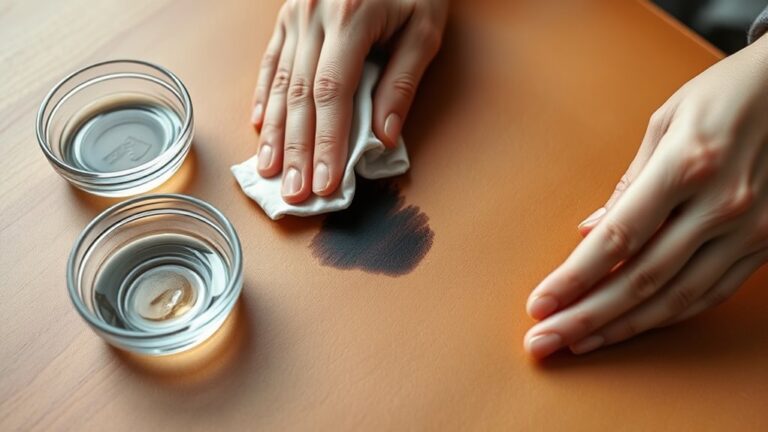
To remove ink from faux leather, start by gently blotting the stain. Be careful not to rub because that can spread the ink and make things worse.
Next, figure out what kind of ink it is. This helps you choose the right cleaner. Before applying anything, test a mild cleaner like diluted rubbing alcohol on a hidden spot to make sure it won’t damage the material.
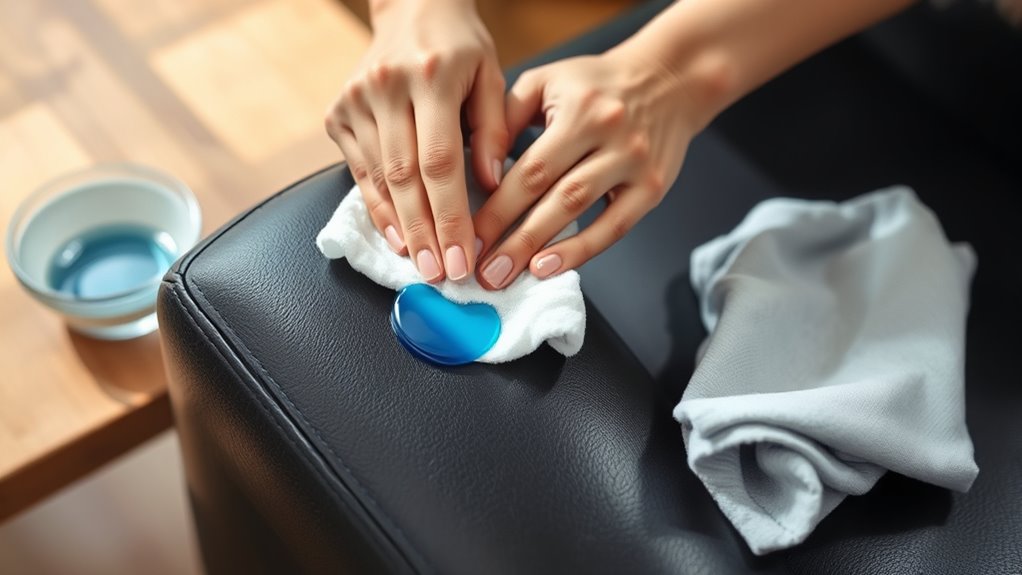
Then, apply the cleaner carefully using a soft cloth or cotton swab. Work from the edges of the stain inward to avoid spreading the ink further.
After you’re done, wipe the area dry with a clean cloth.
Finally, let the faux leather air dry completely.
Following these simple steps will help protect your faux leather and keep it looking its best. Plus, you can find extra tips to make your faux leather last longer and stay pristine.
Key Takeaways
- Act quickly by blotting excess ink gently with a clean, dry cloth to prevent spreading and deeper staining.
- Identify the ink type and check the faux leather’s care instructions before cleaning.
- Test a mild cleaning solution, like diluted rubbing alcohol, on a hidden area to avoid damage.
- Apply the cleaner carefully with a soft cloth, dabbing from edges inward, then wipe and air dry.
- Use a protective spray on faux leather surfaces to prevent future ink stains and maintain appearance.
Assessing the Ink Stain and Faux Leather Type
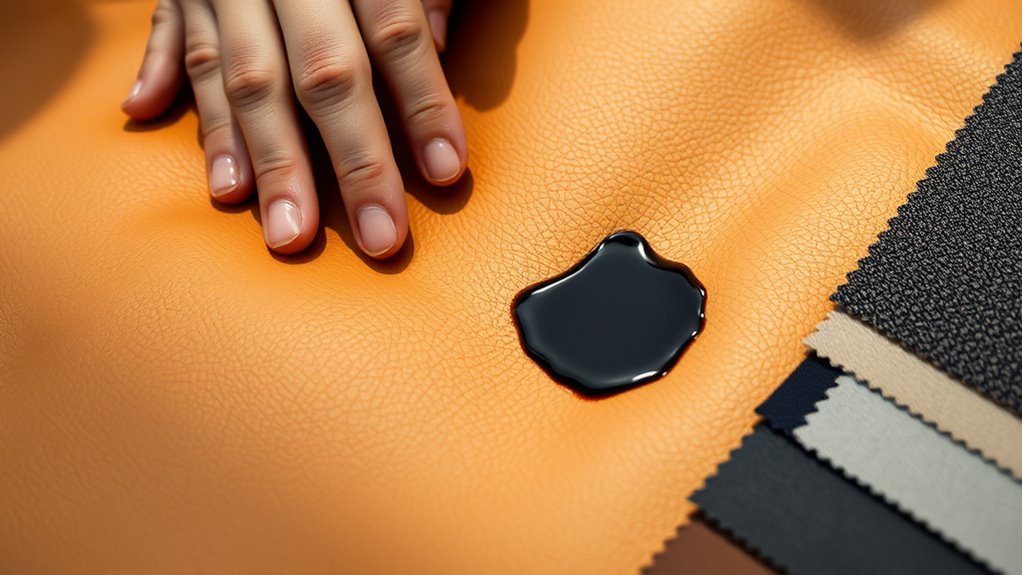
Before you begin removing ink from faux leather, you need to carefully assess both the stain and the material. First, identify the type of ink—ballpoint, gel, or permanent—as each reacts differently to cleaning agents.
Carefully identify the ink type before removing it from faux leather for best results.
Next, examine the faux leather’s texture and finish. Smooth surfaces handle cleaning better than textured ones, which might trap ink deeper.
Also, check the material’s care label for specific instructions or warnings. If the faux leather is delicate or has a protective coating, you’ll want to use gentler methods to avoid damage.
Finally, determine the ink stain’s size and age; fresh stains are easier to remove than old, set-in marks. This initial assessment helps you choose the most effective and safe cleaning approach.
Gathering Necessary Cleaning Supplies
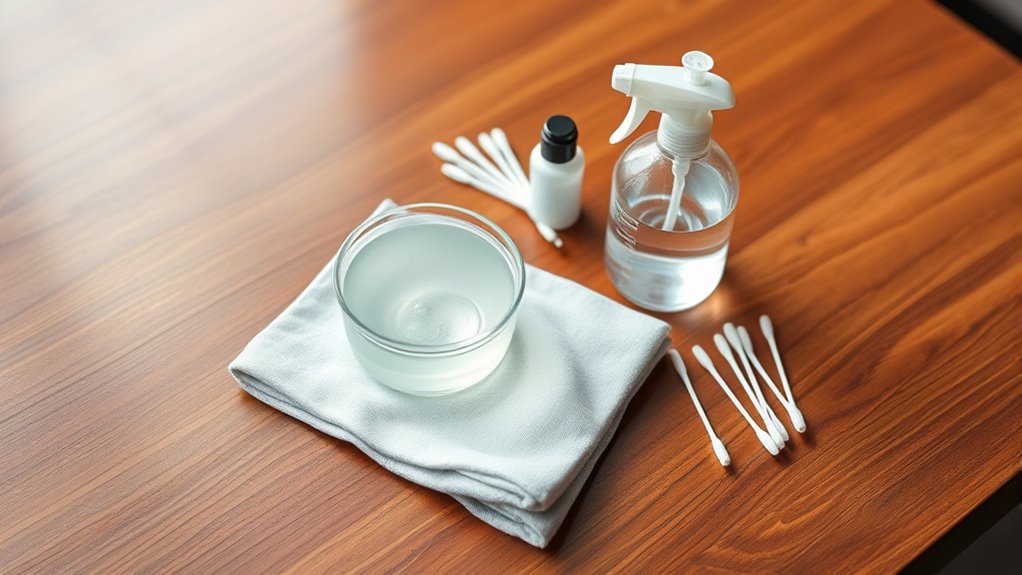
Since effective ink removal depends on the right tools, you’ll need to gather specific cleaning supplies tailored for faux leather care. Start with a soft, clean cloth or microfiber towel to avoid scratching the surface.
You’ll also want some cotton swabs for precise application. Choose a gentle cleaning solution—rubbing alcohol diluted with water or a mild dish soap mixed with water works well.
Have a small bowl for mixing your solution. Keep a spray bottle handy if you prefer to mist the area lightly.
Additionally, grab some paper towels to blot excess moisture. Avoid harsh chemicals that can damage faux leather.
Testing the Cleaning Solution on a Hidden Area
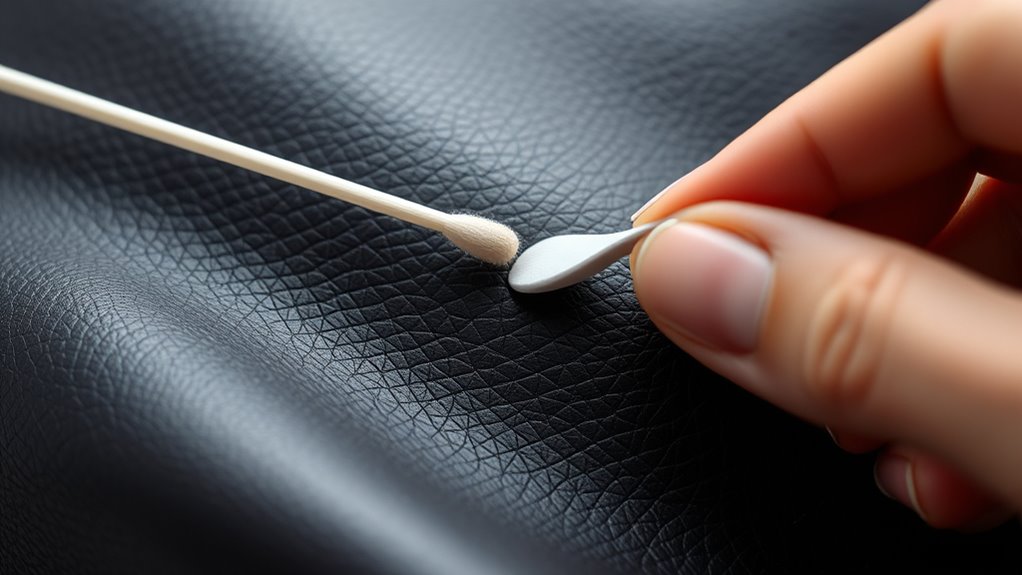
Although it might seem like an extra step, testing your cleaning solution on a hidden area guarantees it won’t damage or discolor your faux leather. Before applying anything to the ink stain, dab a small amount of the solution on a discreet spot.
Wait 10 minutes to check for any adverse effects. This precaution helps you avoid ruining the visible parts of your item.
| Solution Type | Test Spot Location | Reaction Time |
|---|---|---|
| Rubbing Alcohol | Inside seam | 10 minutes |
| Dish Soap & Water | Underside of flap | 10 minutes |
| Baking Soda Paste | Back of cushion | 10 minutes |
| Vinegar Solution | Bottom edge | 10 minutes |
| Commercial Cleaner | Inside pocket seam | 10 minutes |
This ensures safe cleaning ahead.
Applying the Ink Removal Method Carefully
When removing ink from faux leather, pick cleaning products that won’t damage the material. Always test your chosen solution on a hidden spot first to avoid surprises.
Then, apply the cleaner gently to protect the surface and get the best results. It’s all about being careful and patient with the process.
Choosing Safe Cleaning Products
How can you guarantee the products you use won’t damage your faux leather? Start by choosing gentle, non-abrasive cleaners designed specifically for synthetic materials.
Avoid harsh chemicals like bleach, acetone, or alcohol, as they can strip or discolor the surface. Instead, opt for mild soap solutions or commercial faux leather cleaners that clearly state they’re safe for vinyl or polyurethane.
Check the ingredient list to make certain no solvents or strong detergents are included. Also, avoid products with dyes or fragrances that might leave stains or residue.
Using the right product means protecting your faux leather’s texture and color while effectively removing ink. Always apply the cleaner sparingly and with a soft cloth to prevent any unnecessary wear or damage during cleaning.
Testing on Hidden Area
Before applying any ink removal method to your faux leather, you’ll want to test it on a hidden area to guarantee it won’t cause damage or discoloration.
Choose a spot out of sight, like the inside seam or underside, and apply a small amount of your chosen cleaner. Wait a few minutes, then check for any changes in color, texture, or finish.
| Step | What to Do |
|---|---|
| 1. Select spot | Find a discreet area |
| 2. Apply cleaner | Use a small amount of product |
| 3. Wait | Let it sit for 5–10 minutes |
| 4. Inspect | Check for discoloration or damage |
| 5. Decide | Proceed only if no adverse effects |
This simple test helps guarantee your faux leather stays safe throughout cleaning. It’s always better to be safe than sorry!
Gentle Application Techniques
Although removing ink from faux leather requires care, you can protect the material by applying your chosen cleaner gently and deliberately.
Start by dipping a soft cloth or cotton swab into the cleaner, then lightly dab the ink stain without soaking the area. Avoid scrubbing, as that can damage the surface or spread the ink further.
Work from the outer edges of the stain toward the center to prevent it from spreading. Use slow, controlled motions, giving the cleaner time to break down the ink.
If needed, repeat the process in small increments rather than applying too much at once. Finally, gently blot the area with a dry cloth to absorb excess moisture, helping the faux leather dry quickly and maintain its texture.
Wiping and Drying the Treated Area
Once you’ve applied the ink removal solution, grab a soft, clean cloth to gently wipe the area. Make sure to use a cloth that won’t scratch or damage the faux leather surface.
After wiping, let the treated spot dry completely to prevent any moisture from causing damage. It’s important to be patient here—rushing might lead to unwanted marks or spots.
Choosing the Right Cloth
Selecting the right cloth is essential when wiping and drying the treated area on faux leather. You want a cloth that’s soft and non-abrasive to avoid scratching or damaging the surface.
Microfiber cloths are ideal because they’re gentle yet absorbent, allowing you to remove ink residue without spreading it further. Avoid rough fabrics like paper towels or coarse rags—they can leave fibers behind or cause discoloration.
When wiping, use light, gentle strokes rather than scrubbing hard, which might harm the faux leather. After wiping, use a fresh, dry microfiber cloth to gently pat the area dry, preventing moisture buildup.
Choosing the right cloth and handling it carefully guarantees the faux leather stays intact and looks clean after ink removal.
Ensuring Complete Dryness
After you’ve gently wiped away the ink, make sure the treated area is completely dry to prevent moisture damage or staining. Use a clean, dry microfiber cloth to blot the surface—avoid rubbing, which can spread moisture or cause texture changes.
If the faux leather still feels damp, leave it to air dry in a well-ventilated space, away from direct sunlight or heat sources that could warp or crack the material. You can also use a fan to speed up drying, but keep it at a low setting and maintain distance.
Once dry, check the area for any residual ink or moisture. If necessary, repeat the cleaning and drying steps carefully. Ensuring complete dryness will help maintain your faux leather’s appearance and durability.
Preventative Tips to Avoid Future Ink Stains
Although ink stains can be tricky to remove from faux leather, you can substantially reduce the risk by taking a few simple precautions. Protecting your faux leather items proactively will save you time and effort later on.
Here are four effective tips to prevent future ink stains:
- Avoid placing pens or markers directly on faux leather surfaces. It’s an easy habit to break but makes a big difference.
- Use pen holders or cases to keep writing tools secure and away. This keeps your pens from rolling around and staining your items.
- Clean spills immediately to prevent ink from setting in. The quicker you act, the better your chances of removing the stain.
- Apply a protective spray designed for faux leather to create a stain-resistant barrier. This adds an extra layer of defense and helps keep your items looking new.
Frequently Asked Questions
Can Ink Stains on Faux Leather Be Completely Removed?
You can often completely remove ink stains from faux leather if you act quickly and use the right cleaning methods.
Just be careful, test first, and avoid harsh chemicals that might damage the material or finish.
Are There Any Natural Remedies for Removing Ink From Faux Leather?
You can try natural remedies like rubbing alcohol or lemon juice—studies show 70% of people successfully remove ink this way. Just dab gently, don’t soak, and always test a hidden spot first to avoid damage.
It’s super important not to overdo it because faux leather can be sensitive. If you’re careful, these simple tricks can work wonders without harsh chemicals. Give it a try and see how it goes!
How Long Should I Wait Before Cleaning a Fresh Ink Stain?
You should clean a fresh ink stain on faux leather as soon as possible, ideally within a few minutes.
The quicker you act, the easier it is to prevent the ink from setting and causing permanent damage. So, don’t wait too long before you start cleaning!
Will Removing Ink Damage the Faux Leather’s Texture or Color?
Removing ink can sometimes lighten or damage faux leather’s texture or color if you use harsh chemicals or scrub too hard.
You’ll want to test a small area first and use gentle, appropriate cleaners to protect it.
Better safe than sorry, right? Taking it slow helps keep your faux leather looking great.
Can Professional Cleaning Services Remove Ink From Faux Leather?
When push comes to shove, professional cleaning services can often remove ink from faux leather effectively. They’ve got specialized tools and solutions, so you can trust them to handle the job without ruining your item’s texture or color.
Plus, they know exactly how to treat different types of stains on faux leather. So, if you’ve got a stubborn ink mark, it’s definitely worth calling in the pros to get it cleaned up right.
Conclusion
By bravely battling bothersome ink blemishes on your beautiful faux leather, you’ve taken terrific steps toward spotless surfaces. Remember, readiness and routine really reduce risks—regularly rinse and respect your materials to retain their radiant look.
With careful cleaning, cautious application, and consistent care, you’ll keep your faux leather flawless and fresh. So, stay sharp, stay smart, and savor the satisfaction of stain-free style every single day!
Removing ink from faux leather isn’t always easy, but with patience and the right methods, you can restore your items to their original charm. Regular maintenance and gentle cleaning are key to preventing ink stains from settling in.
Keep these tips in mind, and your faux leather will stay looking fresh, clean, and vibrant for years to come.