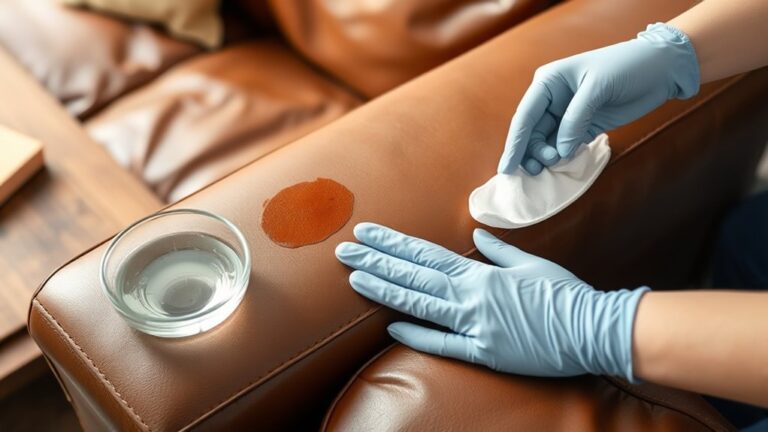

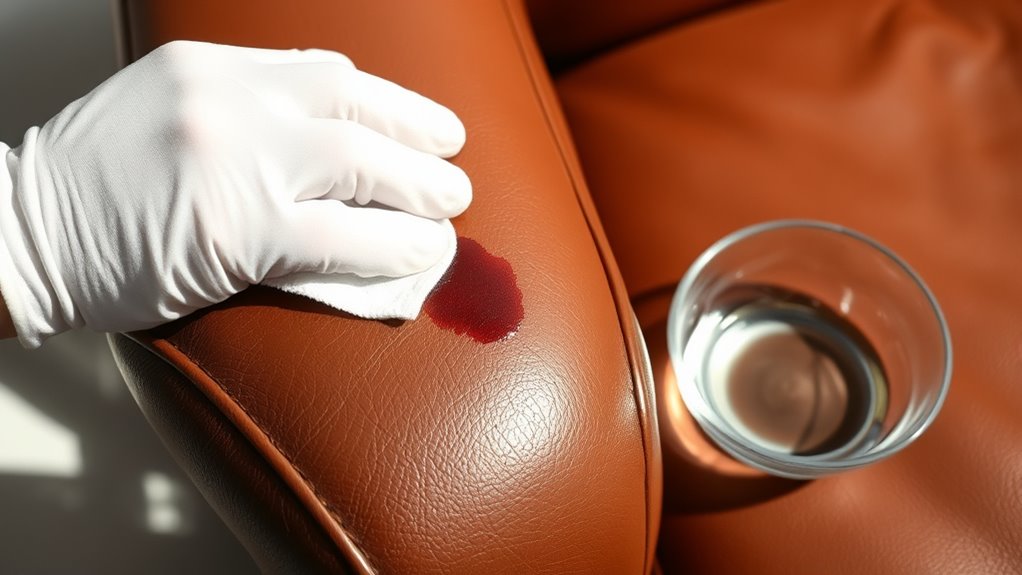
How to Remove Ink Stains From a Leather Chair
First, identify your leather type and test a hidden spot with water. This step is important because different leathers react differently to cleaning methods.
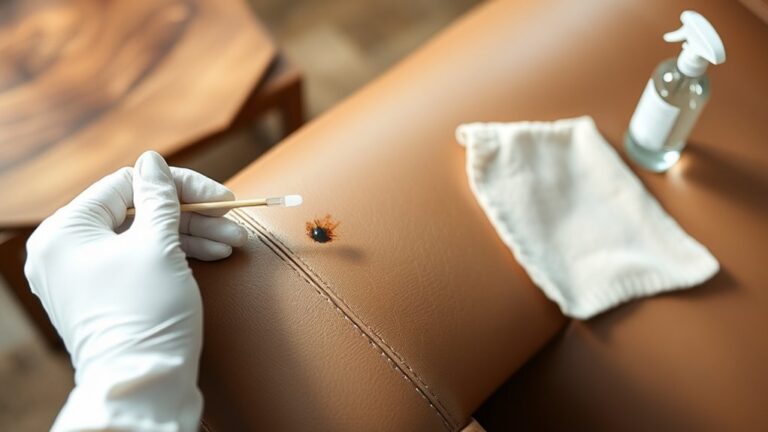
Use a soft cloth or cotton swab with isopropyl alcohol to gently dab the ink stain, working from the outside in.
Be careful not to over-saturate the leather, as too much liquid can cause damage.
After dabbing, wipe the area with a damp cloth to remove any residue.
Then, apply a leather conditioner to restore moisture and keep the leather soft.
For stronger ink stains, you might try using non-acetone nail polish remover cautiously.
Always test it first on a hidden spot to avoid discoloration.
Keeping your leather clean and protected helps prevent future ink marks.
Regular maintenance is key! Learn how to maintain and protect your chair effectively with a few simple steps to keep it looking fresh and stain-free.
Key Takeaways
- Test a hidden area first to identify the leather type and check for colorfastness before cleaning ink stains.
- Use isopropyl alcohol on a cotton swab, gently dabbing from outside the stain inward to lift ink without spreading.
- After ink removal, wipe the area with a damp cloth, then apply leather conditioner to restore moisture and texture.
- Avoid harsh chemicals and abrasive tools to prevent damaging the leather’s surface during the cleaning process.
- Implement prevention by keeping ink sources away and regularly maintaining the leather to reduce future stain risks.
Identifying the Type of Leather
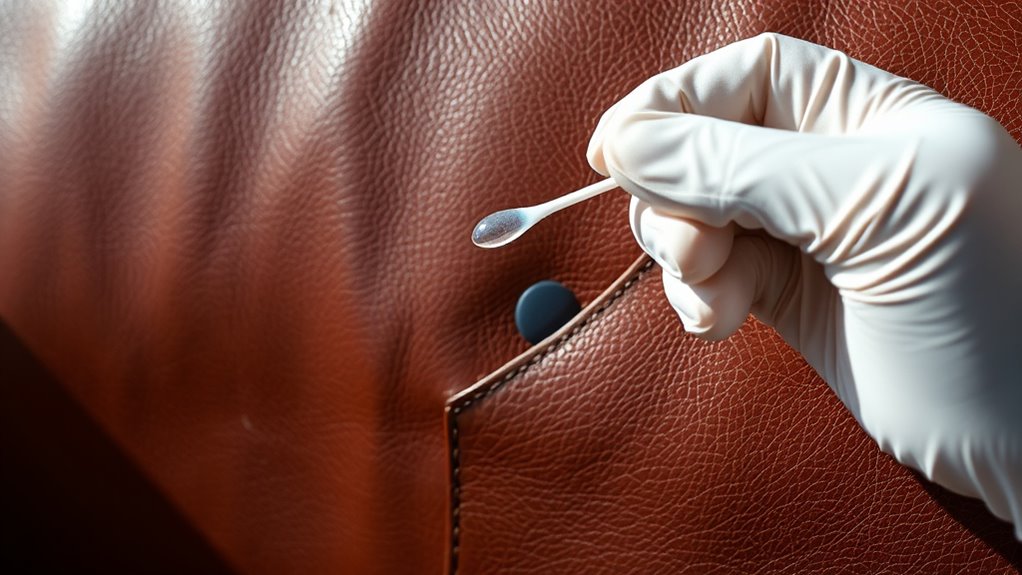
Before you begin removing ink stains, you need to identify the type of leather your chair is made from. Different leather types react differently to cleaning methods, so knowing yours helps prevent damage.
Look for labels or tags that specify if it’s full-grain, top-grain, corrected grain, or bonded leather. Full-grain leather is durable and has a natural texture, while top-grain is slightly sanded for uniformity.
Corrected grain is heavily treated, and bonded leather is made from scraps bonded together. You can also test a hidden spot by dabbing a bit of water—if it absorbs quickly, it’s likely genuine leather.
If water beads up, it might have a protective coating. Once you identify the type, you’ll know how gently or aggressively to tackle the ink stain.
Preparing Your Cleaning Supplies
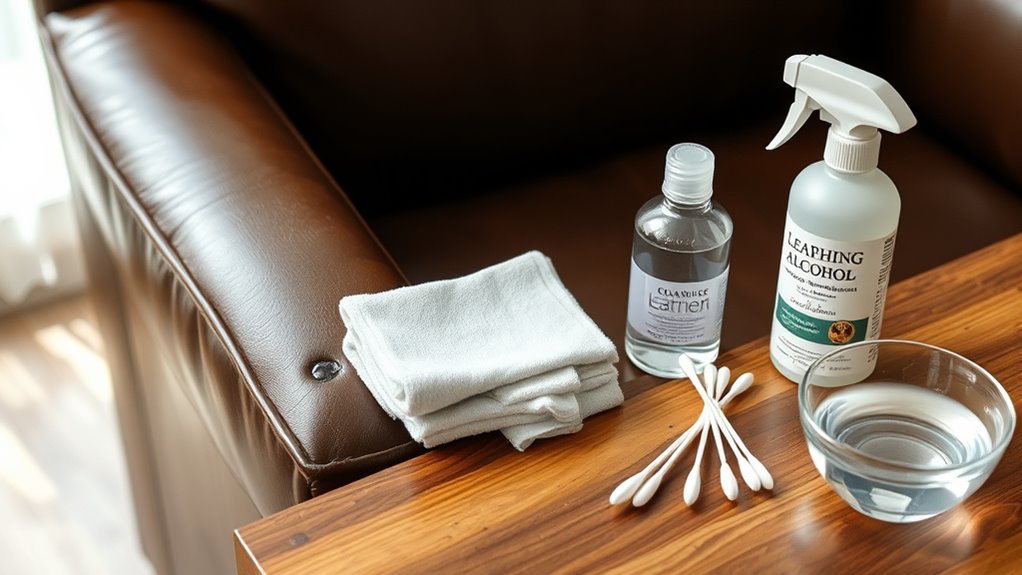
Although ink stains can be stubborn, having the right cleaning supplies ready will make the process much smoother and safer for your leather chair.
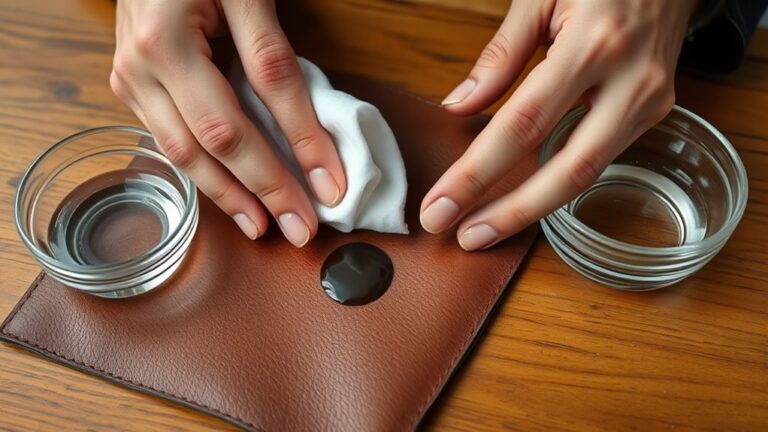
First, gather a soft microfiber cloth or cotton balls to avoid scratching the leather. You’ll also want a small bowl of distilled water to gently dampen the cloth if needed.
Keep a mild leather cleaner or saddle soap on hand, but test it on an inconspicuous area first to ensure it won’t damage the finish.
Additionally, have some paper towels ready to blot excess moisture quickly. Avoid harsh chemicals or abrasive tools that can worsen the stain or harm the leather.
Preparing these supplies beforehand helps you act swiftly and carefully when you tackle the ink stain.
Using Rubbing Alcohol to Lift Ink Stains
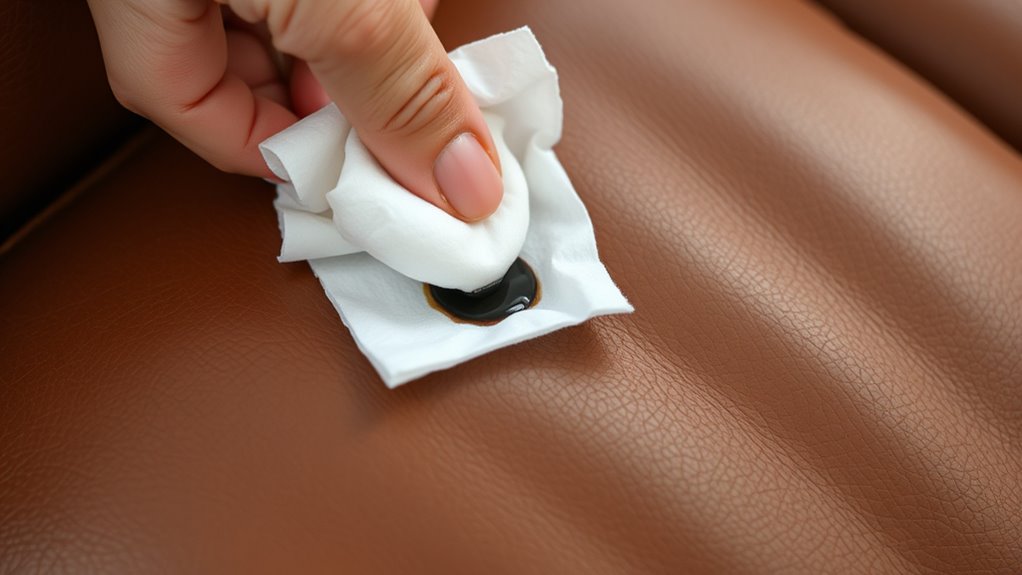
When using rubbing alcohol to lift ink stains, you’ll want to pick the right type—usually isopropyl alcohol works best. Apply it carefully with a cotton swab to avoid spreading the stain, and always test a hidden spot first.
After treating the stain, make sure to clean and condition the leather to keep it soft and prevent damage. That way, your leather stays looking good without any unwanted marks or cracks.
Choosing the Right Alcohol
Since not all alcohols are safe for leather, you’ll want to pick one that effectively lifts ink without damaging the material. Isopropyl rubbing alcohol, typically 70% concentration, is your best bet—it’s strong enough to break down ink yet gentle enough to avoid harming the leather’s finish.
Avoid using denatured alcohol or high-proof spirits like vodka or whiskey; these can dry out or discolor the leather. Also, steer clear of hand sanitizers that contain added fragrances or moisturizers, which might leave residues. Always opt for a pure, clear rubbing alcohol.
Before applying, test it on a hidden area to ensure it won’t dull or discolor the leather. Choosing the right alcohol sets a safe foundation for removing ink stains effectively.
Application Techniques
After selecting the right rubbing alcohol, you’ll want to apply it carefully to avoid spreading the ink or damaging the leather. Start by dampening a cotton ball or soft cloth with a small amount of rubbing alcohol—don’t soak it.
Gently dab the ink stain, working from the outside toward the center to prevent the ink from spreading. Avoid rubbing vigorously; instead, use light, repeated dabs. You’ll notice the ink starting to transfer onto the cloth.
Change to a clean section or a fresh cotton ball frequently to avoid reapplying the ink. Keep going with this process until the stain fades considerably.
Post-Treatment Care
Although rubbing alcohol effectively lifts ink stains, you’ll need to care for the leather afterward to restore its moisture and prevent damage. Start by gently wiping the treated area with a damp cloth to remove any leftover alcohol.
Next, apply a high-quality leather conditioner using a soft cloth, massaging it in circular motions. This will replenish oils stripped during cleaning and maintain the leather’s suppleness. Just be careful not to use too much conditioner, as excess moisture can cause issues.
Let the leather air dry naturally, away from direct heat or sunlight. Finally, buff the area lightly with a dry cloth to restore its shine.
Regular conditioning after stain removal helps keep your leather chair looking its best and extends its life. So, don’t skip this step!
Applying Non-Acetone Nail Polish Remover Safely
Before you use non-acetone nail polish remover, make sure it’s free of harsh chemicals that can damage your leather. Always test a small, hidden area first to see how your chair reacts.
Protect the surrounding leather by applying the remover carefully with a cotton swab or cloth. This way, you avoid spreading it too much or causing any unwanted damage.
Choosing the Right Remover
When you choose a remover for ink stains on leather chairs, non-acetone nail polish remover is often a safe bet, but you need to apply it carefully to avoid damaging the leather. Always test the remover on a hidden spot first to check for colorfastness.
Use a cotton swab or soft cloth to apply the remover gently, avoiding over-saturation. Don’t rub aggressively; instead, blot the stain lightly.
If non-acetone remover isn’t available, consider leather-specific cleaners designed to lift ink without harsh chemicals. Avoid acetone or alcohol-based removers, as they can strip the leather’s finish and cause discoloration.
Basically, picking the right remover is about balancing effectiveness with the leather’s sensitivity. You want to treat the stain without compromising your chair’s integrity.
Protecting Leather Surfaces
Since leather is delicate, you’ll want to apply non-acetone nail polish remover with care to protect its surface. First, test the remover on a hidden area to verify it won’t damage or discolor the leather.
Use a soft, clean cloth lightly dampened with the remover—never pour it directly onto the leather. Gently dab the ink stain rather than rubbing, which can spread the ink or harm the finish.
Work in small sections and avoid soaking the leather. After treating the stain, wipe the area with a slightly damp cloth to remove any residue.
Finally, condition the leather with a quality leather conditioner to restore moisture and maintain its texture. Taking these steps helps you safely remove ink without compromising your chair’s appearance.
Trying Leather Cleaner and Conditioner Products
Although home remedies can sometimes help, you’ll often get the best results by using a leather cleaner and conditioner specifically designed for ink stains. Start by testing the product on an inconspicuous spot to guarantee it won’t discolor or damage your leather.
Apply a small amount of cleaner to a soft cloth, then gently rub the ink stain in a circular motion. Just be careful not to soak the leather, as excess moisture can cause damage.
Once the ink starts to lift, wipe away any residue with a clean, damp cloth. After the stain is gone, go ahead and apply a leather conditioner to restore moisture and keep the leather supple.
Using these products regularly not only helps remove stains but also extends the life of your leather chair. It’s a simple step that really pays off in the long run!
Preventing Future Ink Stains on Leather Chairs
Taking care of your leather chair by regularly cleaning and conditioning it helps keep stains at bay, but preventing ink marks before they happen is even better. Always keep pens and markers away from your leather furniture to reduce the risk of accidental stains.
If you must use ink-based products nearby, place a protective cover or cloth over the chair. Consider applying a leather protector spray designed to create a barrier against spills and stains. Promptly wipe off any ink or spills before they soak in.
Also, educate family members or guests about the importance of keeping ink away from your leather. By combining these habits with regular maintenance, you’ll considerably reduce the chances of future ink stains and keep your leather chair looking pristine for years.
Frequently Asked Questions
Can Ink Stains Damage the Leather Permanently?
Yes, ink stains can permanently damage leather if you don’t act quickly.
You’ll want to clean the stain as soon as possible to prevent it from soaking in and causing lasting discoloration or damage.
The sooner you treat it, the better your chances of removing the ink without leaving a mark.
Is It Safe to Use Ink Stain Removers on All Leather Types?
You shouldn’t use ink stain removers on all leather types since some chemicals can damage delicate finishes. Always test on a hidden area first.
And make sure to choose products specifically designed for your leather’s type and finish. It’s better to be safe than sorry!
How Long Should I Wait After Cleaning Before Using the Chair?
Oh, sure, just sit immediately and watch the magic happen—stains spreading like a wild party.
Seriously, wait at least 2-4 hours after cleaning so the leather dries fully and you don’t ruin your hard work.
Can Sunlight Help in Fading Ink Stains on Leather?
Sunlight can help fade ink stains on leather, but you shouldn’t rely on it alone.
Too much sun can dry and damage the leather, so use it cautiously.
It’s best to combine sunlight exposure with proper cleaning methods for the best results.
Are There Professional Services for Ink Stain Removal on Leather?
Yes, you can find professional leather cleaning services specializing in ink stain removal. They’ll use specialized products and techniques to safely restore your chair without damaging the leather.
It’s often worth the investment for tough stains. Sometimes, a professional touch is all you need to bring your leather back to life.
Conclusion
Now that you know how to tackle ink stains on your leather chair, don’t you feel more confident handling those accidental spills? By identifying your leather type and using safe cleaning methods like rubbing alcohol or non-acetone nail polish remover, you can keep your chair looking great.
Remember to condition your leather afterward and take steps to prevent future stains. Regular conditioning helps maintain the leather’s softness and prevents cracking, which is key for long-lasting beauty.
With a little care and attention, your leather chair will stay beautiful and stain-free for years to come! Keeping it clean not only enhances its appearance but also protects your investment. So go ahead, enjoy your leather furniture without worrying about ink stains!