What Does the Curse Inked in Blood Mean?
You hold a symbol where life and spirit converge—a curse inked in blood that seals intent with personal sacrifice and ancient power. This act links the physical and spiritual worlds, making the curse deeply binding and potent.
Blood isn’t just ink here; it’s an essential force that amplifies the magic behind the mark. If you want to uncover how this practice shaped cultures and the powerful rituals behind it, there’s much more to explore.
Key Takeaways
- A curse inked in blood symbolizes a powerful, personal magical bond linking physical and spiritual realms through the caster’s life force. Blood ink amplifies the curse’s potency, making it unbreakable and deeply connected to the caster’s intent and sacrifice.
- Historically, blood-written curses were ritualistic, used for protection, vengeance, or binding pacts in ancient Egypt and medieval Europe. These weren’t just casual spells; they carried serious weight and meaning.
- Such curses signify serious commitment, often invoking divine or spiritual wrath to seal and enforce the curse’s effects. It’s like calling on higher powers to make sure the curse sticks.
- In modern culture, blood-inked curses represent mystery, supernatural power, and dark magic. They influence both identity and how society perceives those connected to them.
Origins of Blood-Inked Curses in Ancient Cultures
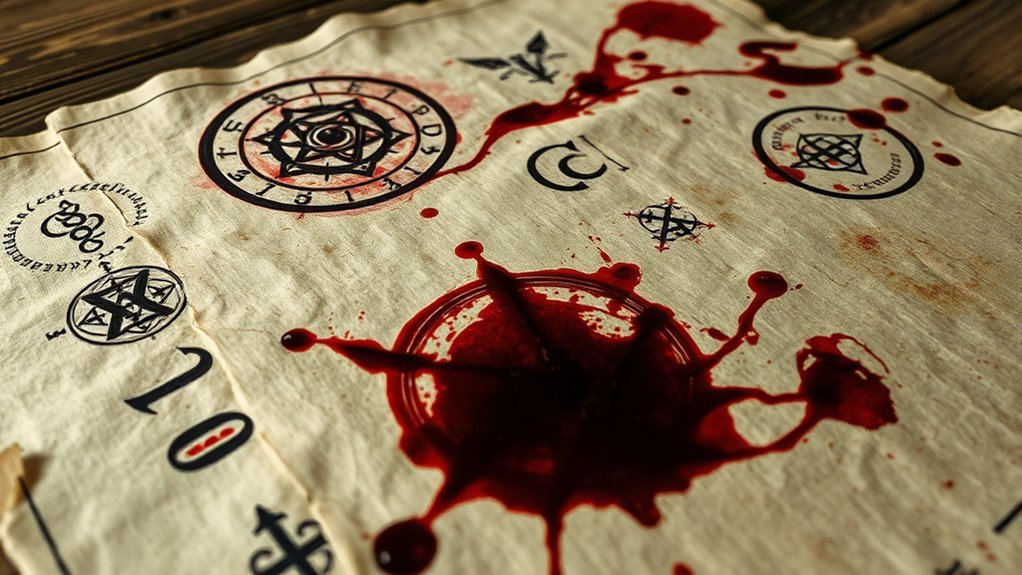
Although blood-inked curses might seem like a modern fantasy, ancient cultures actually practiced them as powerful rituals. You’d find these curses used in societies where blood was believed to connect the physical and spiritual worlds.
When you inscribe a curse with blood, you’re tapping into a deep, potent force thought to bind the spell to its target. Ancient Egyptians, for example, used blood in magical texts to invoke divine wrath or protection.
Similarly, some Celtic tribes believed that writing curses with blood sealed the hex’s strength. When you look at these origins, you see that blood ink wasn’t just symbolic—it was a deliberate tool to amplify the curse’s effect.
This made it more personal and unbreakable. You’re witnessing an ancient form of magic that blends ritual and intent.
Symbolic Meaning of Blood in Magical Practices

You’ll find that blood is often seen as the essence of life itself in magical practices, making it a powerful tool for binding and protection rituals. When you use blood in spells, it symbolizes a deep connection to the magic’s intent and the life force behind it.
Understanding this symbolism helps you grasp why blood is so vital in curse ink traditions. It’s pretty fascinating how something so personal can carry such strong magical significance, don’t you think?
Blood as Life Essence
Why does blood hold such a powerful place in magical practices? You see, blood symbolizes life itself—it’s the essence flowing through your veins, carrying your vitality.
When magic involves blood, it taps into this core force, making rituals more potent.
Here’s why blood as life essence matters in magic:
- It connects the physical and spiritual domains intimately.
- Blood’s life-giving properties amplify spell strength.
- Offering blood signifies deep personal sacrifice.
- It’s believed to carry your unique energy or soul imprint.
- Blood links the caster directly to the magic’s outcome.
Binding and Protection Rituals
When you use blood in binding and protection rituals, it acts as a powerful link that seals intentions and shields against harm. Blood’s unique energy forms a strong bond, making your protective spells more effective.
Whether you’re creating barriers or limiting a target’s harmful actions, blood-inked symbols or written oaths reinforce your magic’s strength.
| Ritual Type | Purpose | Blood Usage |
|---|---|---|
| Binding | Restrict harmful actions | Blood seals contracts |
| Protection | Ward off negative forces | Blood marks protective sigils |
| Oath Sealing | Enforce promises | Blood signs binding pacts |
| Barrier Creation | Create energetic shields | Blood draws boundary lines |
| Curse Reversal | Undo harmful curses | Blood erases negative marks |
Using blood here intensifies your ritual’s intent and power. It really boosts the effectiveness of what you’re trying to accomplish.
Blood Symbolism in Spells
How does blood carry such potent symbolism in magical spells? You tap into blood’s deep connection to life and power when you use it in magic. It’s not just a physical substance but a bridge to energy and intent.
When you include blood, you signal seriousness and personal investment in your spellwork. It’s like telling the universe, “I’m all in.” Here’s why blood holds symbolic weight in spells:
- Represents life force and vitality
- Acts as a personal link between caster and spell
- Amplifies the spell’s power and focus
- Serves as a binding agent in rituals
- Connects physical and spiritual domains
Rituals and Methods for Blood-Inscribed Curses

Although blood-inscribed curses require precise preparation, you can perform them using a few essential rituals and methods that channel potent energy.
First, you’ll need to obtain a small amount of your own or a target’s blood, usually through a minor prick. Mix this blood with special inks or natural pigments to create the curse’s writing medium.
You’ll want to inscribe the curse carefully on a chosen surface—often parchment or skin—while focusing your intent. Lighting candles or burning herbs like sage can help purify the space and heighten your concentration.
Finally, sealing the curse with a ritual gesture or spoken invocation locks the energy in place. By following these steps, you guarantee the curse’s power remains active and directed toward your intended purpose.
Famous Historical Examples of Blood-Linked Curses
You’ve probably heard of ancient Egyptian blood curses used to protect tombs and punish thieves. These curses were believed to invoke powerful spirits to guard the resting places of pharaohs.
In medieval Europe, blood pacts sealed powerful curses between enemies or allies. These pacts weren’t just symbolic—they were thought to bind people’s fates together in very real ways.
Let’s explore how these historic examples shaped the meaning of blood-inscribed curses. They show us that blood has long been seen as a powerful link between the physical and spiritual worlds.
Ancient Egyptian Blood Curses
When you explore Ancient Egyptian blood curses, you’ll find they were deeply tied to the culture’s beliefs about life, death, and the afterlife. These curses often involved inscribing threats with blood to invoke powerful protection or vengeance.
They weren’t just superstition—they reflected serious spiritual and legal consequences. Here’s what you should know:
- Blood symbolized life force and connection to the gods.
- Curses were used to protect tombs and sacred sites.
- Priests often performed rituals to activate these curses.
- Ancient texts warned of dire punishments for grave robbers.
- Blood inscriptions aimed to bind the curse’s power eternally.
Medieval European Blood Pacts
Medieval European blood pacts often sealed alliances or invoked curses with a gravity that still fascinates historians today. When you look into these pacts, you see leaders and warriors used shared blood as a powerful symbol of loyalty or vengeance.
By mixing blood or pricking their fingers to sign documents, they believed the bond was unbreakable, often backed by dark curses. For example, the infamous Blood Oath of the Confederates in the 15th century tied knights’ fates together, threatening dire consequences if betrayed.
If you ever wonder why these curses felt so binding, it’s because blood symbolized life itself, making any betrayal a direct attack on one’s essence. You’ll find these rituals in tales of feuding clans and secret societies.
They really show how blood inked curses shaped medieval power dynamics. It’s pretty fascinating how something as simple as a drop of blood could carry so much weight back then.
Psychological Impact and Cultural Perceptions
Although curse ink tattoos carry a heavy cultural weight, their psychological impact varies widely depending on personal beliefs and societal context. When you encounter such tattoos, you might feel unease or curiosity, influenced by your background and the intent behind the ink.
Curse ink tattoos evoke unease or curiosity shaped by your beliefs and the tattoo’s cultural meaning.
Some view these markings as protective, while others see them as ominous. You may experience a heightened sense of caution around the bearer, or intrigue about the tattoo’s origin and meaning.
If you believe in curses, anxiety or fear might come up. On the other hand, you could feel respect for cultural traditions tied to the ink. Maybe you’re more skeptical and approach curses logically.
Understanding these perspectives helps you appreciate how curse ink tattoos shape identity, influence behavior, and reflect deep-rooted cultural narratives.
Modern Interpretations and Representations in Media
Your perception of curse ink tattoos doesn’t stop at personal or cultural beliefs; it extends into how they’re portrayed in movies, TV shows, and social media. You often see these tattoos symbolizing mystery, danger, or supernatural power, shaping how people interpret them today.
When characters bear curse ink, it usually signals a hidden curse or a link to dark magic, instantly adding depth to their story. Social media amplifies this by sharing designs and stories, mixing fact with fiction.
You might find yourself drawn to these images, intrigued by their symbolism but also cautious of their ominous reputation. In modern media, curse ink tattoos act as powerful storytelling tools, blending ancient fears with contemporary fascination.
They influence how you—and many others—view and understand them.
Frequently Asked Questions
Can Blood-Inked Curses Be Reversed or Nullified?
Yes, you can reverse or nullify blood-inked curses, but it takes powerful rituals, strong will, and sometimes assistance from skilled practitioners.
You’ll need to act quickly and carefully to break their binding effects.
It’s not something to take lightly, so if you’re dealing with one, don’t hesitate to seek help.
The right approach can definitely turn the tide in your favor.
What Types of Blood Are Typically Used in These Curses?
You’ll find both fresh and dried blood used in these curses, contrasting life’s vigor with eerie permanence.
Typically, human blood is preferred for its potency, but sometimes animal blood appears, adding a raw, primal edge to the spell.
Are Blood-Inked Curses Legally Recognized as Harmful?
No, blood-inked curses aren’t legally recognized as harmful since they’re considered symbolic or superstitious.
You can’t face legal consequences for them unless they involve threats or actual harm to others.
How Do Different Cultures View the Morality of Blood Curses?
You’ll find that some cultures see blood curses as sacred justice, while others view them as dark, unethical magic.
Your perspective depends on traditions and beliefs, shaping whether you consider them moral or taboo.
Can Blood-Inked Curses Physically Harm the Cursed Person?
Yes, you can suffer serious side effects since some blood-inked curses carry cruel consequences, causing physical pain or harm.
Beware, because binding blood brings brutal burdens beyond basic belief or broken body boundaries.
Conclusion
Imagine you’re holding a key dipped in blood, opening a door between worlds seen and unseen. The curse inked in blood isn’t just a mark—it’s a bridge forged with ancient power, binding intent and fate.
Like a shadow etched in scarlet, it carries weight beyond the physical, whispering secrets of fear, belief, and consequence. When you encounter such a curse, you’re stepping into a story where every drop pulses with meaning.
The curse inked in blood symbolizes more than just a warning; it’s a powerful connection between the spiritual and mortal realms. It embodies the binding force of curses, fate, and ancient rituals, intertwining belief and consequence. Understanding this inked blood curse means recognizing its role as a conduit of dark power and profound storytelling, inviting you to explore the mysteries hidden in its scarlet shadow.