Will Printer Ink Freeze and How to Protect It in Cold Weather
Yes, your printer ink can freeze, usually around 32°F (0°C), depending on the type—some inks freeze at slightly lower temperatures. When ink freezes, it changes consistency, which can lead to clogged nozzles, color shifts, and poor print quality. These issues can be frustrating, especially if you rely on your printer for important documents or creative projects.
To protect your ink from freezing, it’s best to store it indoors where temperatures stay between 59°F and 77°F (15°C–25°C). Keeping cartridges sealed tightly also helps prevent moisture and air from affecting the ink.
When you’re ready to use your printer in cold weather, warming it up first can make a big difference in print quality. Understanding how to care for your ink in chilly conditions will help keep your prints looking flawless every time.
Key Takeaways
– Printer ink can freeze at temperatures near or below 32°F (0°C). This depends on the type and formulation of the ink.
Freezing can damage the ink flow and affect color quality. It might also clog the printer nozzles, which impacts print performance.
– To prevent cold damage, store ink cartridges indoors where it’s between 59°F and 77°F (15°C–25°C).
Keep the cartridges sealed, and for extra protection in cold environments, use plastic bags with desiccants.
– After your printer or cartridges have been exposed to cold, warm them up gradually.
Then, do a test print to make sure the ink is working properly before you start printing for real.
Understanding the Composition of Printer Ink

Although you might not think about it often, printer ink is a carefully formulated mixture of pigments or dyes, solvents, and various additives designed to produce sharp, vibrant prints. You’ll find that pigments provide color and opacity, while dyes offer brightness and a wider range of hues.
The solvent keeps the ink fluid, allowing it to flow through your printer’s nozzles smoothly. Additives improve drying times, prevent clogging, and help the ink adhere to paper.
When you use your printer, these components work together to ensure consistent quality. Knowing this helps you appreciate why ink behaves differently under various conditions, like cold weather.
Understanding its composition lets you better protect your ink and maintain print quality, especially when temperatures drop. It’s pretty neat how all these ingredients come together to make your prints look great!
At What Temperature Does Printer Ink Freeze?
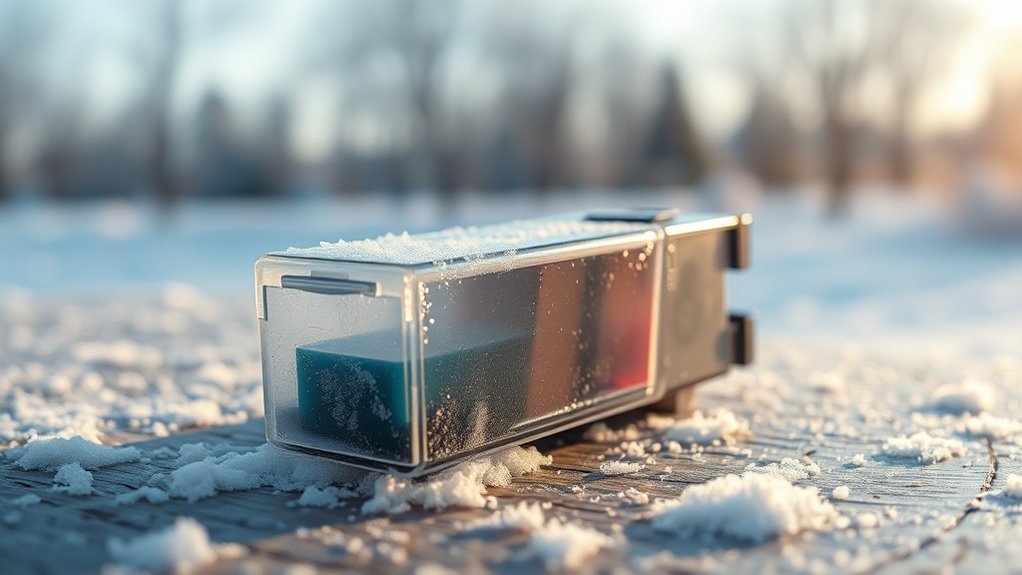
You might wonder at what temperature your printer ink actually freezes. Since ink is a mix of water, pigments, and other chemicals, its freezing point isn’t just 32°F (0°C).
Let’s explore how its composition affects when it solidifies in cold conditions. It’s a bit more complex than just water freezing, so hang tight!
Freezing Point of Ink
When temperatures drop below freezing, printer ink can solidify and cause printing issues. Generally, most printer inks freeze around 32°F (0°C), but the exact freezing point depends on the ink’s formulation.
Knowing this helps you avoid damage by keeping your printer in a temperature-controlled space. Here’s a quick guide to the freezing points of common ink types:
| Ink Type | Approximate Freezing Point | Notes |
|---|---|---|
| Dye-based Ink | 32°F (0°C) | Common in home printers |
| Pigment Ink | 28°F (-2°C) | Slightly more resistant |
| Solvent Ink | 14°F (-10°C) | Used in industrial printers |
| UV Ink | 10°F (-12°C) | Less likely to freeze |
Keep your ink above these temperatures to maintain print quality and avoid clogs. It’s pretty simple—just try to store and use your printer where it’s nice and warm.
Ink Composition and Cold
Understanding the freezing points of various inks leads directly to how their compositions react to cold temperatures. Printer ink isn’t just water; it’s a mix of water, pigments or dyes, and other additives like glycol to prevent freezing.
Because of these additives, most ink formulas freeze well below 32°F (0°C). For instance, water-based inks typically freeze around 20°F (-6°C), while pigment-based inks with antifreeze agents can withstand even lower temperatures.
However, if your ink does freeze, the pigments can clump, ruining print quality. So, knowing your ink’s specific composition helps you anticipate its freezing point and take precautions.
Keep your printer and cartridges in a stable, warm environment to avoid cold damage and ensure smooth printing, especially during winter months. It’s just a simple step to save yourself from headaches later on!
Effects of Freezing on Printer Ink Performance

Although freezing temperatures might seem harmless at first, they can seriously damage your printer ink’s quality and performance.
Freezing temperatures may appear harmless but can severely harm your printer ink’s quality and functionality.
When ink freezes, its chemical balance changes, which affects how it flows and adheres to paper.
If you don’t protect your ink from freezing, you might face:
- Clogged nozzles – Frozen ink can thicken, blocking the printer’s tiny nozzles and causing poor print quality or streaks.
- Color distortion – Freezing can alter pigment distribution, leading to faded or inconsistent colors.
- Reduced shelf life – Thawed ink may degrade faster, making your cartridges unusable sooner than expected.
To keep your printer working smoothly, avoid exposing your ink cartridges to freezing conditions.
Just take simple precautions to maintain print quality and extend your ink’s life.
Signs Your Printer Ink Has Been Damaged by Cold
You might notice your printed colors looking dull or off, which can be a clear sign cold has damaged your ink.
Blurry lines, streaks, or faded prints also indicate your ink isn’t performing right.
Keep an eye out for these issues to catch cold damage early.
Ink Color Changes
How can you tell if cold weather has damaged your printer ink? One of the clearest signs is a change in the ink’s color consistency. When ink freezes or gets too cold, its pigment can separate or degrade, causing noticeable differences.
Watch for these three telltale signs:
- Faded Colors – If your prints look washed out or dull, the cold may have thinned the ink’s pigments.
- Uneven Hues – Patches of inconsistent color on your prints often mean the ink didn’t mix properly after exposure to cold.
- Color Shifts – Unexpected color changes, like blues turning green or reds appearing brownish, can indicate damaged ink.
If you notice these color changes, it’s time to check your ink’s storage. Make sure you protect it from freezing temperatures to keep your prints looking great.
Printing Quality Issues
Noticing changes in ink color often signals deeper issues that affect your print quality. When your ink gets damaged by cold, you might see streaks, faded prints, or uneven color distribution.
Your pages could come out blotchy or with missing sections, making documents look unprofessional. You may also notice smudging because the ink isn’t drying properly.
If you ignore these signs, printheads can clog, leading to costly repairs or replacements. To avoid these problems, keep your printer and ink cartridges in a temperature-controlled environment.
If you suspect cold damage, run cleaning cycles and test prints to check for improvement. Acting quickly ensures your prints stay sharp and your printer remains in good working order, even during chilly weather.
How to Store Printer Ink to Prevent Freezing
Although cold temperatures can quickly damage your printer ink, proper storage techniques can keep it safe from freezing.
To protect your ink cartridges, you should:
- Store them indoors at room temperature, ideally between 59°F and 77°F (15°C to 25°C). Try to avoid basements or garages where temperatures tend to drop.
- Keep cartridges in their original sealed packaging until you’re ready to use them. This helps maintain moisture balance and prevents exposure to cold air.
- Place ink in a sealed plastic bag with a desiccant packet. This controls humidity and adds extra insulation.
Tips for Using Printers in Cold Environments
When you use your printer in cold environments, you’ll want to warm it up gradually to prevent issues like ink clumping or paper jams. Avoid placing the printer directly near cold drafts or unheated areas.
Keep the room temperature stable and allow the printer to acclimate before use. Also, print a test page to check ink flow.
| Tip | Why It Helps | How to Do It |
|---|---|---|
| Warm the printer slowly | Prevents ink from thickening | Turn on and let idle 15 minutes |
| Use quality paper | Reduces paper jams in cold air | Store paper in sealed container |
| Avoid sudden moves | Prevents internal damage | Handle printer gently |
Following these tips will keep your printer running smoothly in cold conditions. Just a little care goes a long way!
Frequently Asked Questions
Can Expired Printer Ink Freeze More Easily Than New Ink?
Yes, expired printer ink can freeze more easily than new ink because its chemical composition may degrade over time.
You should store ink properly to prevent freezing and maintain print quality. It’s a good idea to keep your ink in a cool, but not freezing, environment.
That way, you help ensure it stays in good condition for when you need it.
Does Freezing Affect All Types of Ink Cartridges Equally?
No, freezing doesn’t affect all ink cartridges equally. Dye-based inks usually handle cold better than pigment-based ones.
You’ll want to store them properly to avoid damage. Freezing can cause clogs or separation in some types, so it’s best to be careful.
Can Frozen Ink Cartridges Be Safely Thawed and Reused?
About 60% of users report successfully thawing frozen ink cartridges without damage. You can safely thaw them at room temperature.
But avoid heat sources to prevent ink clumping or cartridge warping. This way, you keep your printer working smoothly.
Are There Any Additives to Prevent Ink From Freezing?
You won’t find common additives designed specifically for printer ink to prevent freezing.
Instead, keep your cartridges warm and stored indoors to avoid freezing damage. Most inks aren’t formulated with antifreeze agents for safety and quality.
How Does Humidity Interact With Cold Weather to Affect Ink?
You might think humidity won’t matter, but it does—high humidity combined with cold can cause condensation inside your printer. This moisture can dilute ink and clog nozzles.
Conclusion
Now that you know printer ink can freeze like a stubborn winter frost, you’re better equipped to safeguard it. Keep your ink cartridges cozy by storing them in a warm, dry place and avoid exposing them to freezing temperatures.
By taking these simple steps, you’ll ensure your printer keeps running smoothly, no matter how cold it gets outside. Don’t let the chill freeze your creativity—keep your ink ready to flow!
Protecting your printer ink from freezing is key to maintaining its quality and performance. Remember, ink cartridges that freeze can clog or damage your printer, leading to costly repairs or replacements. So, whether you’re storing ink for a season or using your printer in colder climates, always keep your ink protected from the cold.
In summary, to prevent printer ink from freezing, store cartridges in controlled environments, away from extreme cold. This way, your printer will be ready to deliver crisp prints whenever you need them, ensuring your creativity never hits a cold stop.