How You Remove Ink From Leather Step by Step
First, identify your leather type and the ink source to choose the right cleaning method. This step is crucial because different leathers react differently to cleaning products, and the type of ink can affect how stubborn the stain is.
Gather soft cloths, mild leather cleaner, or isopropyl alcohol, and test any solution on a hidden spot to avoid damage.
Gently dab the ink stain with the solution, avoiding rubbing, and blot the area with a clean cloth to lift the ink. This careful approach helps prevent spreading the stain or damaging the leather’s surface.
Afterward, condition the leather to keep it supple and restore its natural oils.
Following these steps will help you safely remove ink from leather and restore your item’s look and feel without causing harm.
Key Takeaways
– Identify leather type and ink source to determine suitable cleaning method and ink penetration level.
This helps you choose the right approach and avoid damaging your leather.
– Gather soft cloths, mild leather cleaner, isopropyl alcohol, and cotton swabs for gentle stain removal.
Having these ready makes the process smoother and safer for your leather.
– Test cleaning solution on a hidden leather area to check for adverse reactions before full application.
You definitely don’t want any surprises, so this step is crucial.
– Gently dab the ink stain with solution-soaked cloth or swab, avoiding oversaturation and spreading ink.
Be careful here; too much liquid can make things worse.
– Blot the area softly with a clean cloth to lift ink, repeating carefully without rubbing to prevent damage.
Patience pays off—rubbing can harm the leather, so take your time.
Assess the Type of Leather and Ink Stain
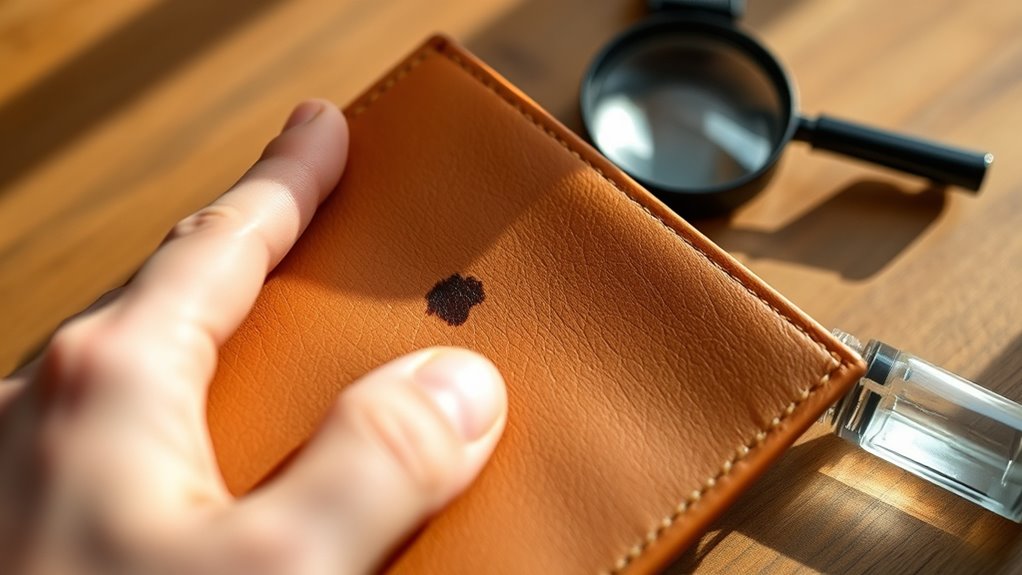
Before you begin treating an ink stain, you need to identify the type of leather you’re dealing with and the nature of the ink. Different leathers—like full-grain, corrected-grain, or bonded leather—react differently to cleaning methods.
Full-grain leather is more durable but sensitive to harsh chemicals, while bonded leather is more fragile. Next, examine the ink stain itself. Is it from a ballpoint pen, marker, or fountain pen?
Ballpoint ink tends to sit on the surface, making it easier to remove, whereas permanent marker ink penetrates deeper. Knowing this helps you choose the right approach and avoid damaging your leather item.
Take note of the stain’s size and how long it’s been there, as fresh stains are generally easier to treat than older ones.
Gather Necessary Cleaning Materials
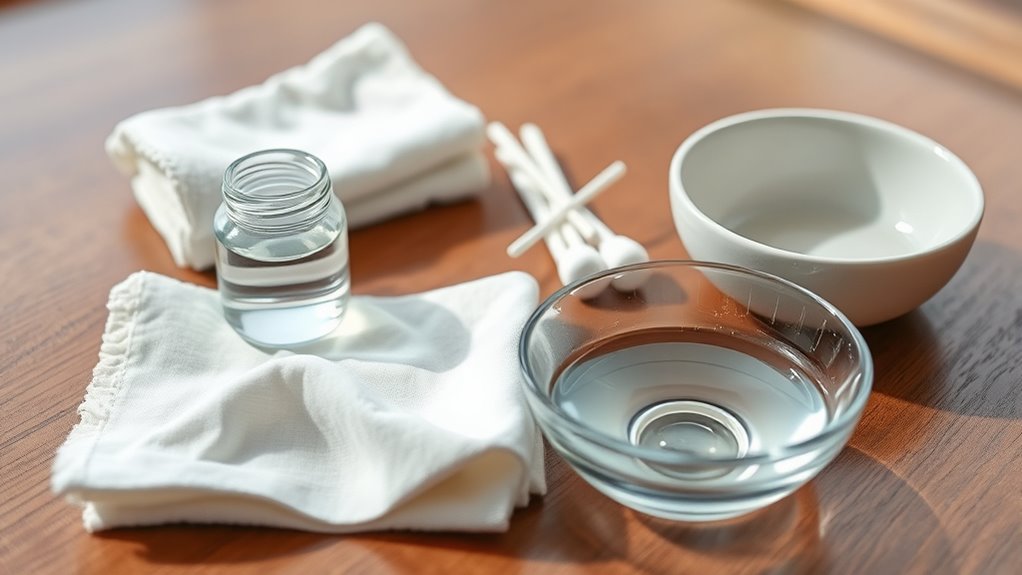
Once you know the type of leather and ink you’re dealing with, you can gather the right cleaning materials to tackle the stain effectively. Start with a soft, clean cloth or cotton swabs for gentle application.
You’ll also need a mild leather cleaner or a mixture of warm water and a few drops of mild dish soap. For tougher stains, consider isopropyl alcohol or a specialized leather ink remover, but use these cautiously.
Have a small bowl for mixing solutions and paper towels handy for blotting excess liquid. Avoid harsh chemicals that can damage leather.
Additionally, keep a soft-bristled brush nearby to help lift ink without scratching. Preparing these materials ahead of time ensures a smoother, quicker cleaning process and minimizes the risk of further damage to your leather item.
Test Cleaning Solution on a Hidden Area
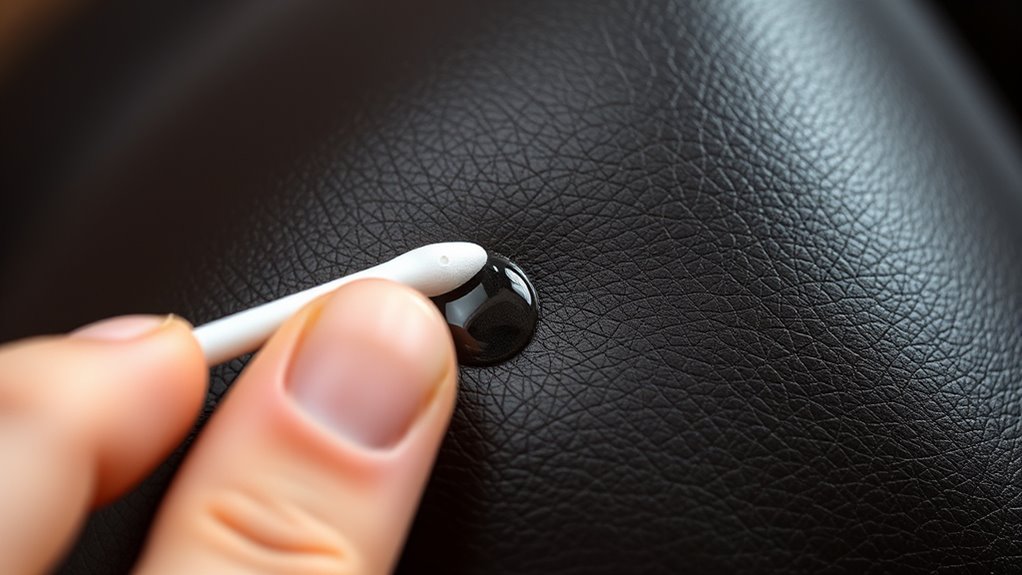
Although it might seem like an extra step, testing your cleaning solution on a hidden area of the leather is essential to prevent damage or discoloration. Before applying any product to the visible stain, dab a small amount on an inconspicuous spot like the inside seam or under a flap.
Wait a few minutes to see if the leather reacts negatively—look for fading, darkening, or texture changes. This simple test safeguards your leather from costly mistakes.
| Observation | Action Needed |
|---|---|
| No change | Safe to proceed |
| Slight discoloration | Use milder solution |
| Darkening | Avoid that solution |
| Texture change | Stop immediately |
| Residue present | Wipe and retry |
Testing ensures your cleaning method is both safe and effective. It’s a quick step that can save you a lot of trouble down the line.
Apply Cleaning Solution Gently to the Ink Stain
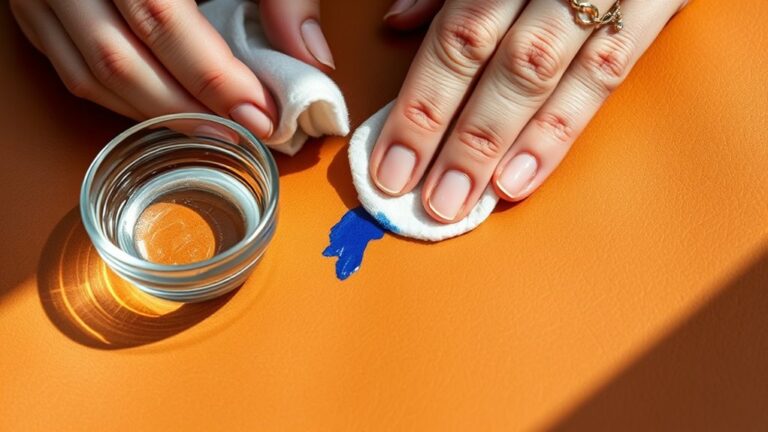
When you apply the cleaning solution, use a soft cloth or cotton swab to dab it gently onto the ink stain. Avoid vigorous rubbing that could damage the leather.
Follow these steps for the best results:
- Dip your cloth or swab lightly into the solution, making sure it’s not overly saturated.
- Gently press the cloth onto the ink stain. Let the solution soak in without spreading the ink further.
- Repeat the dabbing motion carefully. Focus only on the stained area to keep the surrounding leather safe.
Wipe and Blot the Treated Area Carefully
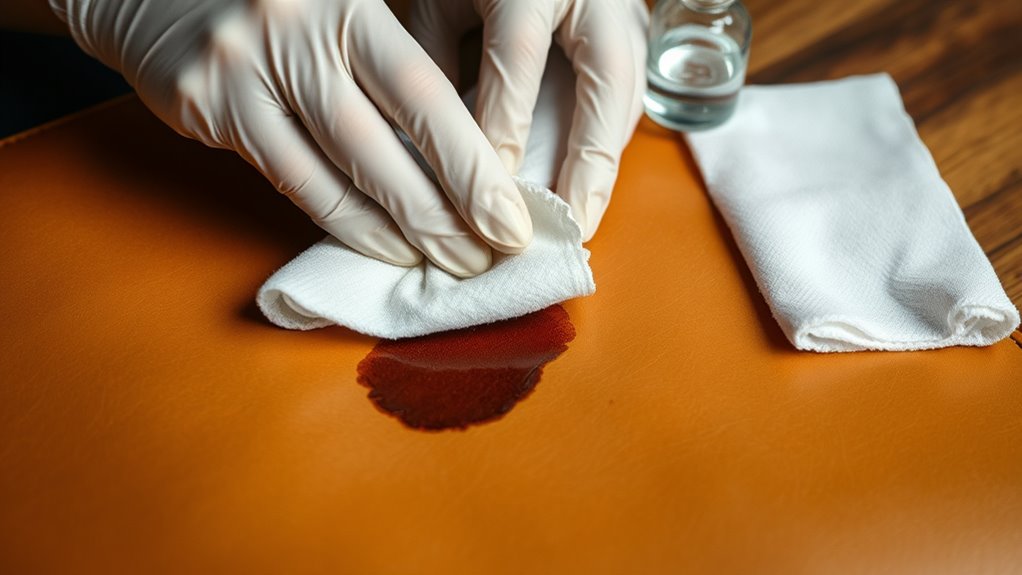
You’ll want to use a soft cloth to gently blot the treated area, avoiding harsh rubbing. Apply just enough pressure to lift the ink without damaging the leather’s surface.
This careful approach helps prevent spreading the stain and protects the material. Just take it slow and steady, and you’ll be fine.
Gentle Pressure Application
Since leather is delicate, you should apply gentle pressure when wiping or blotting the treated area to avoid damaging the surface. Pressing too hard can leave marks or push the ink deeper into the leather.
Here’s how to do it right:
- Lightly press the cloth or paper towel on the ink spot without rubbing, allowing the solvent to lift the ink.
- Blot repeatedly, using fresh parts of the cloth each time to absorb the ink effectively.
- Avoid scrubbing or circular motions; instead, use a gentle dabbing action to prevent abrasion.
Use Soft Cloth
After applying gentle pressure to lift the ink, choose a soft cloth to continue wiping and blotting the treated area carefully. Use a clean, lint-free cloth to avoid spreading the ink further or scratching the leather.
Lightly dab the spot instead of rubbing aggressively; this prevents the ink from embedding deeper into the leather fibers. Rotate the cloth to a fresh section as it absorbs the ink, making sure you don’t reapply it to the spot.
Blotting helps lift the remaining ink without damaging the surface. If the stain persists, just repeat the process with a slightly dampened cloth, but be careful not to soak the leather.
Always work patiently and gently—your careful attention here really makes all the difference in preserving your leather’s appearance.
Condition the Leather After Cleaning
After cleaning the ink, you’ll want to choose a leather conditioner that suits your leather type. Apply the conditioner evenly to restore moisture and prevent cracking.
Then, let the leather absorb it fully for the best results. This way, your leather stays soft and lasts longer!
Choose Suitable Leather Conditioner
Choosing the right leather conditioner is essential to restore your leather’s softness and protect it from drying out once the ink is removed.
To pick a suitable conditioner, consider these key points:
- Leather Type Compatibility: Check if the conditioner is designed for your specific leather type—aniline, semi-aniline, or pigmented leather—to avoid damage.
- Natural Ingredients: Opt for conditioners with natural oils like mink oil or beeswax, as they nourish the leather without harsh chemicals.
- Moisture and Protection Balance: Select a product that offers both hydration and a protective barrier to prevent future stains and cracking.
Choosing the right conditioner really makes a difference. It keeps your leather supple and durable after cleaning, effectively prolonging its life and appearance.
Apply Conditioner Evenly
Once you’ve selected the right conditioner, the next step is to apply it evenly across your leather surface. Use a soft, clean cloth or a sponge to spread a thin, uniform layer of conditioner, making sure every part of the cleaned area is covered.
Work the conditioner into the leather with gentle, circular motions to ensure it absorbs properly. Avoid over-applying, as too much conditioner can leave a sticky residue or clog the leather’s pores.
Focus on maintaining even coverage to restore moisture and flexibility without saturating the material. Applying conditioner evenly helps protect your leather against future damage and keeps it looking supple and vibrant.
Allow Leather to Absorb
While the conditioner is still fresh on the leather, let it absorb fully to maximize its benefits. This step restores moisture, keeps the leather supple, and protects it from future damage.
To ensure the best results, leave the leather undisturbed for at least 30 minutes. This gives the conditioner time to penetrate deeply.
Also, try to avoid exposing the leather to direct sunlight or heat sources during this time. They can dry it out, which you definitely don’t want.
After absorption, gently buff the surface with a clean, dry cloth. This helps remove any excess conditioner and brings out a natural shine.
Frequently Asked Questions
Can Ink Stains on Leather Be Completely Removed Without Damage?
You can often remove ink stains from leather without damage if you act quickly and use gentle, appropriate cleaners. However, complete removal isn’t always guaranteed, so test products on a hidden area before treating the stain.
It’s a bit of a delicate process, you know? Leather can be sensitive, so being cautious really helps avoid any unwanted marks or discoloration. Just take your time and follow the instructions carefully!
How Long Should I Wait Before Cleaning Fresh Ink on Leather?
You should start cleaning fresh ink on leather immediately, ideally within minutes. The longer you wait, the harder it gets to remove.
Acting quickly helps prevent the stain from setting and damaging the leather. So, don’t delay—grab a clean cloth and start treating the spot right away!
Are There Specific Ink Types That Are Impossible to Remove From Leather?
Yes, you’ll find permanent markers and some gel inks nearly impossible to remove from leather completely. They penetrate deeply, so acting fast helps, but total removal isn’t always guaranteed with these stubborn ink types.
It’s kind of like they soak right in, making it tough to get them out no matter what you try. So, if you spot these inks on your leather, the sooner you tackle it, the better your chances. But just keep in mind, sometimes those stains might just stick around.
Can Professional Leather Cleaning Services Guarantee Ink Stain Removal?
You want results, you want certainty, you want guarantees—but professional leather cleaning services can’t promise complete ink stain removal.
They’ll try their best and use expert methods, but some stains just won’t fully disappear. It’s tough to guarantee because ink can be stubborn and sometimes sets deep into the leather.
Still, these pros know how to handle your leather with care and improve the look as much as possible.
How Often Should Leather Be Conditioned After Cleaning Ink Stains?
You should condition your leather every 3 to 6 months after cleaning ink stains to keep it supple and protected.
If the leather feels dry, condition it more frequently to prevent cracking and damage. It’s all about keeping that leather looking and feeling its best!
Conclusion
Removing ink from leather might seem tricky, but with the right steps, you can restore your item’s look quickly. Did you know that over 60% of leather damage happens due to improper cleaning?
First, evaluate your leather type carefully. Then, always test any cleaning solution on a hidden spot before applying it to the stain. This helps avoid further damage and ensures the product is safe for your leather.
After treating the ink stain, don’t forget to condition the leather. Conditioning helps maintain its softness and prevents cracking, keeping your item looking great for longer.
Just follow these simple steps carefully, and you’ll tackle ink stains like a pro without causing any harm. Removing ink from leather effectively means protecting your investment and extending the life of your favorite leather goods. With patience and the right approach, you can bring your leather back to its original beauty in no time!